%50%72%65%73%69%64%65%6e%74
-
 KAIST and the National Assembly of Korea Create a Committee to Plan "Patent Hub Korea"
The KAIST Graduate School of Future Strategy (GSFS) and the National Assembly of the Republic of Korea held a meeting at the National Assembly building in Seoul on September 23, 2014.
At the meeting, the two organizations agreed to create a planning committee that will work for the construction of Korea as a global patent hub. In addition, the two also reviewed national laws and regulations related to patents and intellectual property rights (IPR) and discussed a future action agenda.
Dean Kwang-Hyung Lee of GSFS, Chairman Ui-Hwa Chung of the National Assembly, Chairman Jong-Yong Yoon of the Presidential Council on Intellectual Property, and many representatives from the academia, government, and law participated in the meeting.
Dean Lee, who is the co-chairman of the planning committee, said:
“Although Korea has globally ranked number five in patents and IPR, it still suffers from the lack of relevant legal systems and professionals. I hope that the planning committee will serve as a catalyst to make Korea stronger in the field of intellectual property and to accelerate the creation of the Patent Hub Korea.”
2014.09.24 View 12432
-
 Professor Jae-Kyu Lee Elected to Head the Association for Information Systems
Jae Kyu Lee, HHI (Hyundai Heavy Industries, Co., Ltd.) Chair Professor, College of Business at KAIST, was elected to lead the world major academic society, Association for Information Systems (AIS), from July 2015 to June 2016. Professor Lee will be the first Korean to serve the organization as president. From July 2014 to June 2015, he will serve as president-elect.
Currently, Professor Lee is the Director of EEWS (Energy, Environment, Water, and Sustainability) Research Center at KAIST, focusing on research and development in finding solutions to critical issues facing humanity. He also played a pivotal role in the conclusion of a memorandum of understanding between HHI and KAIST in June 2013 to establish HHI-KAIST EEWS Research Center within the KAIST campus.
The AIS is the premier professional association for individuals and organizations who lead the research, teaching, practice, and study of information systems worldwide.
A news article on his appointment:
Asian Scientist, May 16, 2014
Korean Engineer To Lead The Association For Information Systems
http://www.asianscientist.com/academia/korean-engineer-lead-association-information-systems-2014/
2014.05.19 View 18006
-
 Professor Jae-Kyu Lee Elected to Head the Association for Information Systems
Jae Kyu Lee, HHI (Hyundai Heavy Industries, Co., Ltd.) Chair Professor, College of Business at KAIST, has been elected to lead the world major academic society, Association for Information Systems (AIS), from July 2015 to June 2016. Professor Lee will be the first Korean to serve the organization as president. From July 2014 to June 2015, he will serve as president-elect.
Currently, Professor Lee is the Director of EEWS (Energy, Environment, Water, and Sustainability) Research Center at KAIST, focusing on research and development in finding solutions to critical issues facing humanity. He also played a pivotal role in the conclusion of a memorandum of understanding between HHI and KAIST in June 2013 to establish HHI-KAIST EEWS Research Center within the KAIST campus.
The AIS is the premier professional association for individuals and organizations who lead the research, teaching, practice, and study of information systems worldwide.
2014.05.14 View 16696
-
 Visit by Sir Paul Maxime Nurse, President of the Royal Society
Sir Paul Maxime
Nurse, who is an English geneticist and cell biologist, visited KAIST and gave
a lecture entitled The Great Ideas of
Biology on March 11, 2014.
Sir Paul was awarded the 2001 Nobel Prize in
Physiology or Medicine with Leland H. Hartwell and R. Timothy Hunt for their discoveries
of protein molecules that control the division of cells in the cell cycle.
He was Professor of Microbiology at the University
of Oxford, CEO of the Imperial Cancer Research Fund and Cancer Research UK, and
President of Rockefeller University in New York. Sir Paul is currently the President of
the Royal Society as well as Director and Chief Executive of the Francis Crick
Institute.
Founded in London in 1660, the Royal Society is composed of the world’s most distinguished scientists drawn from all areas of
science, engineering, and medicine.
Below is a summary of his lecture, The Great Ideas of Biology:
Four major ideas of biology
are the theory of genes, evolution by natural selection, the proposal that the
cell is the fundamental unit of all life, and the chemical composition of a cell.
When considering the
question “what is life?” these ideas come together. The special way cells reproduce
provides the conditions by which natural selection takes place, allowing living
organisms to evolve. The organization of chemistry within the cell provides
explanations for life’s phenomena.
In addition, an emerging idea
is the nature of biological self-organization with which living cells and organisms
process information and acquire specific forms. These great ideas have
influenced one another and changed the way we perceive biology and science
today.
2014.03.11 View 19154
-
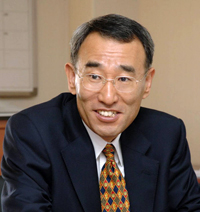 Professor Yong-Tak Im of Mechanical Engineering Appointed as President of Korea Institute of Machinery and Materials
Yong-Tak Im, Professor of the Department of
Mechanical Engineering at KAIST, was sworn in on February 25, 2014 as
the 16th president of the Korea Institute of Machinery and Materials
(KIMM), a leading government-funded research institution in Korea. KIMM was
established in 1976 to contribute to the development of
Korea through the invention of source technology and technology transfer in
mechanical engineering.
President Im graduated from Seoul National
University, obtaining degrees of Bachelor of Science and Master’s in mechanical
engineering. He later studied at the University of California in Berkeley and
received a doctoral degree in mechanical engineering.
After working as an assistant professor of
the Industrial and Systems Engineering at the Ohio State University,
President Im joined KAIST as a professor of mechanical engineering in 1989.
President Im took many important posts at
KAIST, including Dean of Planning Office, Dean of External Affairs and Public
Relations Office, and Associate Vice President of Special Projects and
Institutional Relations, making a great addition to the university’s endeavors for
globalization.
Among the awards President Im received was the
William Johnson Award in 2007 presented by the Advances in Materials and
Processing Technologies, the Research Achievement Award in 2010 by the Global
Congress on Manufacturing and Management, and the Presidential Award in 2012 by
the Republic of Korea. He was also elected as the vice president of the Korean
Society of Mechanical Engineers, the largest association of professionals in
the mechanical engineering field in Korea.
President Im is currently a professor at
POSCO, an internationally known Korean steel company, and a member of the
Korean Academy of Science and Technology and the National Academy of
Engineering of Korea, respectively.
President Im will serve KIMM for three
years until February 24, 2017.
2014.02.25 View 19225
-
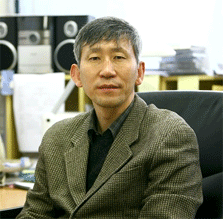 Professor Suk-Bok Chang receives 14th Korea Science Award in the field of Chemistry
Professor Suk-Bok Chang from the Department of Chemistry at KAIST received the “2013 Korea Science Award” in chemistry hosted by the National Research Foundation and the Ministry of Science, ICT, and Future Planning, Republic of Korea.
The Korea Science Award is a presidential award of Korea, which was first established in 1987 to recognize research excellence in natural science. Three scientists are selected for the award in every other year.
Professor Chang primarily researches the catalyzing mechanism of carbon-hydrogen bonds in organic molecules. He has succeeded in making great progress in the field of organic chemistry especially in developing a new type of transition metal catalytic behavior that can be applied to low-reactivity compounds.
Hydrocarbons are abundant in nature, but its unreactive nature in ambient conditions makes it unsuitable as reactant for compound synthesis. In addition, the mechanism behind transition metal catalyzed carbon-hydrogen bond synthesis has not been proven sufficiently.
The prediction that fossil fuels will be depleted before the end of the century makes hydrocarbon synthesis an extremely important matter.
The need for an effective hydrocarbon synthesis method inspired Professor Chang to pursue research in the transition metal catalysis method and to develop a catalytic system that would allow efficient synthesis even in ambient conditions.
Professor Chang has been the lead researcher for the Institute for Basic Science’s “molecule catalysis reaction research team” since December 2012 and has been carrying out this research in KAIST.
2014.01.27 View 18910
-
 KAIST welcomes Dr. Sung-Mo
The KAIST Board of Trustees appointed Distinguished Chair Professor Sung-Mo "Steve" Kang of Electrical Engineering at the University of California, Santa Cruz, as the 15th President of KAIST on January 31, 2013. President Kang has begun the duties of his office on February 23, 2013.
An acclaimed scientist, professor, and entrepreneur in the field of integrated-circuit design, Dr. Sung-Mo "Steve" Kang has earned a worldwide reputation for his outstanding research achievements. He led the development of the world’s first full 32-bit CMOS microprocessor chips and their peripheral chips, as well as designed satellite-based private communication networks while working at AT&T Bell Laboratories as a technical supervisor of high-end microprocessor design group (1977-1985).
Dr. Sung-Mo "Steve" Kang served as Chancellor of the University of California, Merced, from 2007 to 2011. During his tenure, he has increased student enrollment, improved the national and international visibility of the university, secured financial resources, expanded faculty and staff, and enhanced campus infrastructure.
Before joining UC Merced, Dr. Kang was Dean of Baskin School of Engineering and Professor of Electrical Engineering during 2001-2007 at UC Santa Cruz where he had initiated several interdisciplinary programs in such areas as biomolecular engineering, information systems and technology management, biomimetic microelectronic systems, quantitative biomedical research, and bioinformatics. He also served as President of Silicon Valley Engineering Council, the alliance for engineering leaders in Silicon Valley (2002-2003).
Dr. Sung-Mo "Steve" Kang was Head of the Department of Electrical and Computer Engineering at the University of Illinois at Urbana-Champaign from 1995 to 2000. He is a fellow of the Institute of Electrical and Electronics Engineers (IEEE), the Association for Computing Machinery (ACM), and the American Association for the Advancement of Science (AAAS), and the president of the IEEE Circuits and Systems Society. Dr. Kang was the founding editor-in-chief of the IEEE Transactions on Very Large Scale Systems (1992-1994).
Dr. Sung-Mo "Steve" Kang holds 15 U.S. patents and has written or co-authored nine books and more than 350 technical papers, and won numerous awards, among others, the Silicon Valley Engineering Hall of Fame (2009), ISQED Quality Award by the International Society for Quality Electronic Design (2008), Chang-Lin Tien Education Leadership Award (2007), IEEE Mac Van Valkenburg Award (2005), and Alexander von Humboldt Award for Senior US Scientists (1997). As an entrepreneur, he co-founded a fabless mobile memory chip design company, ZTI, which is currently located in San Jose, the US.
Dr. Kang earned his doctorate from the University of California, Berkeley; a Master of Science degree from the State University of New York at Buffalo, and a Bachelor of Science degree, graduating summa cum laude, from Fairleigh Dickinson University in Teaneck, NJ. All his academic degrees are in electrical engineering.
2013.02.19 View 16633
-
 KAIST Alumni Association Selects 'Proud Alums'
KAIST Alumni Association selected ‘Proud Alums’ who have contributed to the development of Korea and society and brought honor to KAIST.
The Alums selected were: CEO of Hyundai Heavy Industry Lee Jae Seong, Vice President of SK Hynix Park Sang Hoon, President of Samsung Display Kim Ki Nam, Director of Korea Research Institute of Standards and Science Kang Dae Lim, and President of Dawonsys Park Sun Soon.
Lee Jae Song (Department of Industrial and Systems Engineering, M.S. 3rd) has led Hyundai Heavy Industries through innovation and had contributed in the development of Korea and oversaw the growth of Hyundai Heavy Industries to number 1 in Shipbuilding.
Park Sang Hoon (Biological and Chemical Engineering, M.S. 5th) has led SK Hynix in the fields of energy, chemical and biological medicine and oversaw the development of world class R&D and production technologies to aid the development of Korea.
Kim Ki Nam (Electrical and Electronic Engineering, M.S. 9th) has led the development of innovative semiconductor technologies thereby helping strengthening the competitiveness of Korean semiconductor industry.
Kang Dae Lim (Mechanical Engineering, Ph.D. 1994 graduate) has helped in the development of Korean science and technology by leading the field of measurement standardization as Chairman of International Measurement Confederation and Chairman of Korea Association of Standards & Testing Organizations.
Park Sun Soon (Electrical and Electronic Engineering, M.S. 12th) has succeeded in advancing the field of electronics by pioneering the field of creative technology.
2013.01.22 View 16127
-
 Education 3.0: a change from teaching to learning
On October 16th, educationalists and Presidents from research-oriented universities around the world gathered in Seoul to attend the 2012 International Presidential Forum on Global Research Universities, where KAIST introduced its new smart learning model ‘Education 3.0’.
Smart learning ‘Education 3.0’ allows students to learn from lectures given by renowned scholars through the internet and encouraged student to professor discussion. This technology was created to deal with the ever-changing classroom dynamics due to the advancement of IT technology.‘Education 3.0’ differs from the traditional teaching-based lectures in that it offers a platform for self-directed learning. KAIST is working to spread ‘Education 3.0’ by providing specialized classrooms and running an online learning platform that complements it.
This spring, KAIST adopted ‘Education 3.0’ in 3 courses and received high praise from students (a rating of 4.4 out of 5.0). Hence, the number of courses was extended to 10 this fall.
Through this gathering, KAIST hopes to develop cooperative connections between foreign universities to share learning platforms and contents. On October 16th, KAIST signed a MOU with Denmark’s Danmarks Tekniske Universitet (DTU) to provide a cyber-dual degree program using ‘Education 3.0’. Hence, students studying Web science and Digital Media in either KAIST or DTU can receive degrees from both schools without physically visiting them.
President Suh said that “‘Education 3.0’ provides a new paradigm of learning which moves from the tradition cramming method of teaching to self-directed learning” and that this model will help the globalization of KAIST by initiating global cooperation with foreign universities.
Over 60 Universities from 27 different countries attended the forum, including ULCA and Caltech from the United States, DTU from Denmark, University of Southampton and University of York from England, University of Queensland from Australia, Nanyang Technological University from Singapore and Tokyo Institute of Technology from Japan. Members from Korean Universities such as Hanyang University, Handong Global University, Sogang University and Sookmyung Women"s University also attended.
2012.10.25 View 17566
-
 Honorary Doctorate Presented to President of the Royal Swedish Academy of Sciences
KAIST presented to Dr. Svante Lindqvist, President of the Royal Swedish Academy of Sciences and Marshal of the Realm to the Swedish Royal Court, an honorary doctorate in science and technology on the 21st of November at Fusion Hall, KI Building.
Dr. Lindqvist, a pioneer in the field of history of science and technology, showed how science and technology have affected the development of human civilization. His work in explaining the relationship between science and history made it easier to the public to understand the importance of science in our society, upon which he was conferred the honorary doctorate.
Director Lindqvist obtained a doctorate from the Uppsala University of Sweden in 1984 with the dissertation, “Introduction of Steam Locomotive in 18th century Sweden.” This single dissertation won him three awards, which has been regarded even today as an introductory reading text to readers in the field of science history.
Dr. Lindqvist established the Department of History of Science and Technology in Sweden Royal Institute of Technology in 1989 and was the department chair for nine years until 1997. He then became the founding director of the Nobel Museum from 1998 to 2009 and developed the museum from a mere display venue of Nobel’s legacy to a multifunctional research oriented institute that supports and holds various outreach activities such as seminars and public lectures.
From the visit of Dr. Lindqvist to KAIST, students had a wonderful opportunity to engage with an internationally renowned scholar and, once more, to remind the university"s vision and mission, whereby they make contributions to the development of science, and ultimately, to the advancement of humanity.
2011.12.13 View 14723
-
Interview with the president of Hong Kong University of Science and Technology
The president of Hong Kong University of Science and Technology (HKUST), Dr. Tony Chan, who is also a member of KAIST’s President Advisory Council (PAC), had an interview with the Korea Times, November 16, 2011 and shared his thoughts on some fundamental essentials that make a good science and technology university. He visited KAIST Campus on November 10th and had a meeting with students as part of the university’s mentor program between PAC members and the students. For the interview, please visit the link below: http://www.koreatimes.co.kr/www/news/special/2011/11/181_98928.html
2011.11.18 View 16909
-
 2011 International Presidential Forum on Global Research Universities
KAIST’s 4th International Presidential Forum Held in Seoul on November 8, 2011
The largest annual congregation of university presidents in Asia invited leaders from academia, government, and industry for talks on issues related to higher education in the Age of Globalization.
Borderless and Creative Education: the ability to cross borders a crucial key to dominate the information era
Seoul, Republic of Korea, November 8, 2011—The Korea Advanced Institute of Science and Technology (KAIST) hosted the “2011 International Presidential Forum on Global Research Universities (IPFGRU)” on Tuesday, November 8, 2011 at the Millennium Hilton Hotel in Seoul.
With more than 120 participants from 44 institutions in 27 countries present, the full-day forum provided participants with an opportunity to discuss challenges and responsibilities facing higher education in a time of globalization that has resulted from an ever-growing demand for technological innovation.
In his plenary speech, Dr. Robert Birgeneau, Chancellor of UC Berkeley, stressed that “Higher educational intuitions must be prepared to drive innovation and enhance competitiveness by educating a highly trained workforce that will have the critical skills necessary to solve problems and lead in today’s interdependent world.”
“Finding solutions to the world’s most challenging problems will depend on the ability to cross borders: national borders, border between different fields of discipline and research, and borders between academe, government, and industry,” said Chancellor Birgeneau to address the importance of “borderless and creative education,” the theme of the forum.
Other major keynote speakers were Jörg Steinbach, President of Technische Universität Berlin, Lars Pallesen, President of Technical University of Denmark, Paul F. Greenfield, President of University of Queensland, Marcelo Fernandes de Aquino, President of the University of the Sinos Valley (UNISINOS), and Eden Woon, Vice President of the Hong Kong University of Science and Technology.
Dr. Nam-Pyo Suh, President of KAIST, gave talks on the university’s new education plan, “The I-Four Education,” at the afternoon session. The four Is are information technology (IT), independent learning, integrated knowledge acquisitions, and an international learning environment.
“In this format, there are no formal lectures,” President Suh explained. “A group of students learn together by using the materials available on the internet, doing homework and conducting experiments together. Pre-recorded lectures are delivered in English by I-Four professors, some of them regular KAIST professors and some professors in other countries who participate in the I-Four Program as consulting professors.”
He added, “The overall purpose of the I-Four Education Program is to encourage students to learn independently, gain exposure to the best lectures by the most eminent professors in the world, accelerate the development of a global frame of reference in the students by dealing with information available throughout the world, and provide an integrated learning environment by using diverse examples from many disciplines to achieve understanding of basic principles.”
The 2011 IPFGRU, the fourth forum since its inception in 2008, rose to prominence in the past years as an international network for leaders of research universities from around the world to share information and exchange views about contemporary issues in higher education.
At this year’s forum, entitled “Borderless and Creative Education,” speakers took a deeper look into the transitions and transformations many research universities are undergoing today, delving into the following topics: the development of e-learning and cyber campuses; increased student mobility and international collaborations; multi-disciplinary and convergence approaches in research and education; and methodology of nurturing future global leaders.
Participants also discussed experiences and accomplishments earned from their own endeavors to accommodate such changes and presented ways to strengthen internationalization and improve the academic and research competitiveness of universities.
The 2011 International Presidential Forum on Global Research Universities (IPFGRU) was organized by KAIST and sponsored by the Ministry of Education, Science and Technology, POSCO, Hyundai Motor Company, Samsung Heavy Industries, S-Oil, and Elsevier Korea.
2011.11.09 View 21386