people
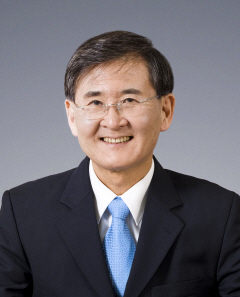
President Steve Kang of KAIST has been appointed to the Chairman of the Global Agenda Council (GAC) on the Future of Electronics of the World Economic Forum (WEF). He will serve the position for two years until September 2016.
President Kang and WEF council members co-hosted, with the government of the United Arab Emirates (UAE), the Future Circles Initiative, a future-focused, innovative brainstorming conference to help find strategies and ideas for the development of UAE. The conference took place on November 11-12, 2014 at the Mina Al Salam Hotel in Dubai.
WEF has about 80 GACs. Each council consists of 15 experts and thought leaders from the academia, industry, government, business, and non-profit sector and deals with specific issues that are important and relevant to the global community such as ageing, artificial intelligence and robotics, brain research, food and nutrition security, education, social media, and future of chemicals, advanced materials and biotechnology.
President Kang was recognized for his contribution to the advancement of science and higher education as an engineer, scholar, and professor. He led the development of the world’s premier CMOS 32-bit microprocessors while working at the AT&T Bell Laboratories. He also taught and conducted research at the University of California, Santa Cruz, and the University of Illinois, Urbana-Champaign. President Kang served as the chancellor of the University of California at Merced from March 2007 to June 2011.
-
research KAIST Develops a Venus Flytrap-Inspired 'Robot Hand' Material That Detects What Comes Near and Grasps It Under UV Light
A Venus flytrap closes its leaves to trap prey when it senses a stimulus. Taking inspiration from this plant, KAIST researchers have combined the roles of a skin that senses approaching objects and a muscle that grasps them in a single soft material. When an electrically charged object comes near, ions inside the material move and produce an electrical signal. When ultraviolet (UV) light is applied, the material bends and grasps the object. Because it holds its deformed shape for more than 10
2026-09-30 -
event AI Takes the Wheel in 'Mario Kart' as Students Use Generative AI in Eight-Hour Hacking Contest
AI will take the wheel in "Mario Kart," while students use generative AI tools to tackle an eight-hour hacking contest, as KAIST and POSTECH bring their scientific rivalry to the playing field. KAIST (President Choongsik Bae) and POSTECH (President Seong Keun Kim) announced on September 18 that the 23rd KAIST-POSTECH Science War, also known as the "KA-PO War," will take place at POSTECH on September 18 and 19. First held in 2002, the annual event brings students from both universities togeth
2026-09-18 -
research KAIST Technology Behind Toothbrushes and Sportswear Advances into High-Performance Graphene Fiber Research
KAIST’s discovery of graphene oxide liquid crystals in 2011 has laid the foundation for 15 years of research worldwide, leading to technologies for producing graphene fibers with high strength and thermal conductivity. The fundamental materials research that helped bring antibacterial toothbrushes and functional sportswear to market is now advancing into materials for thermal management. KAIST (President Choongsik Bae) announced on September 18 that Professor Sang Ouk Kim’s team
2026-09-18 -
research KAIST Researchers Uncover How Neurons Deliver RNA to Where It Is Needed
Much like a courier reading an address on a package, neurons must deliver RNA to the precise locations where it is needed. A KAIST research team has discovered how a small chemical modification on RNA acts as a “delivery tag,” helping selected RNAs travel to distant regions of neurons. The findings provide a basis for investigating RNA “delivery errors” in brain disorders—cases in which RNA is produced normally but fails to reach its intended destination—an
2026-09-14 -
people KAIST Professor Jaekyung Kim Selected as One of Asia's 12 Next-Generation Scientists
KAIST (President Choongsik Bae) announced on September 4 that Professor Jaekyung Kim from the Department of Biological Sciences has been selected as a Fellow of the “2026 Asian Young Scientist Fellowship (AYSF),” a program that supports promising young scientists across Asia. The Asian Young Scientist Fellowship (AYSF) is a privately funded research fellowship in Asia, established to support young scientists in carrying out creative and challenging research. Since selecting its fi
2026-09-04