%45%6e%76%69%72%6f%6e%6d%65%6e%74%61%6c%20%45%6e%67%69%6e%65%65%72%69%6e%67
-
 KAIST Finds Algal Blooms Make Plastic More Prone to Breaking Apart, Revealing a Mechanism of Microplastic Formation
Every summer, algal blooms turn rivers and lakes green. Although they are widely known as a major form of water pollution that makes the water murky, a KAIST research team has now shown for the first time that algal bloom conditions can make discarded plastics, such as plastic bags, more prone to breaking apart, potentially accelerating the formation of microplastics. The study points to a new direction for the era of climate change: water pollution and plastic pollution need to be managed together, rather than as separate problems.
KAIST (President Choongsik Bae) announced on July 29 that a research team led by Professor Jaewook Myung from the Department of Civil and Department of Civil and Environmental Engineering has found, through a microcosm experiment using water collected from Duck Pond, a pond on the KAIST campus, that algal blooms alter the microbial ecosystem on the surface of low-density polyethylene (LDPE) — a common plastic used in plastic bags — and accelerate its early-stage weathering, in which the surface oxidizes and develops microscopic cracks.
The study is significant because it suggests that, in natural environments, plastic pollution and the eutrophication that drives algal blooms can interact and lead to new ecological changes.
Over time, plastic debris discarded in rivers and lakes becomes colonized by a wide variety of microorganisms, creating a small ecosystem of its own on the plastic surface. This ecosystem is known as the “plastisphere.” The plastisphere is known to influence the spread of pathogens and the transport of microplastics, but little has been known about how algal blooms, a serious form of water pollution, affect this microbial ecosystem.
To investigate this question, the research team constructed microcosms — small-scale experimental systems that recreate natural environments in the laboratory — in which algal blooms were artificially induced by controlling light exposure and nutrient concentrations. Over the following six weeks, the researchers closely analyzed the biofilms forming on the plastic surface, the succession of microbial communities, and changes in their functional gene profiles.
The analysis showed that under eutrophic conditions in which excessive nutrients trigger algal blooms that cyanobacteria, a major group of photosynthetic bacteria, proliferated alongside a variety of other bacteria, forming a thicker biofilm on the plastic surface. Microorganisms capable of producing large amounts of extracellular polymeric substances (EPS) also became significantly more abundant. EPS is a sticky, mucilage-like material that binds microorganisms together and helps them adhere to plastic surfaces.
As the microbial ecosystem on the plastic surface changed, the early weathering of the plastic — including surface oxidation and the formation of microscopic cracks — also accelerated. The team found that microorganisms harboring genes encoding enzymes associated with plastic oxidation and early-stage degradation became more abundant under eutrophic conditions.
Analyses using Fourier-transform infrared spectroscopy (FT-IR) and scanning electron microscopy (SEM) directly confirmed these changes. Oxygen-containing functional groups associated with oxidation, including carbonyl and hydroxyl groups, increased on the plastic surface, while more fine, hairline cracks appeared. These changes indicate that the plastic had become more susceptible to further physical weathering and fragmentation. The results suggest that these changes were driven not by a single microbial species, but by the combined activity of a microbial ecosystem comprising photosynthetic and other bacteria.
Professor Myung said, “As algal blooms become more frequent because of climate change, we expect this work to provide an important scientific basis for integrated environmental management strategies that consider water quality management and plastic waste management together.”
The study was led by first author Youngju Kim, a doctoral student from the Department of Civil and Environmental Engineering, and was published online in the international environmental journal Water Research on May 25, 2026.
Paper title: Eutrophication drives taxonomic and functional trajectories in plastic-associated biofilms
DOI: 10.1016/j.watres.2026.126183
Author information: Youngju Kim, KAIST, first author; Yijin Wang, HKUST; Wenqian Xu, HKUST; Charmaine C.M. Yung, HKUST; and Jaewook Myung, KAIST, corresponding author — five authors in total
This research was supported by the National Research Foundation of Korea (NRF) grant funded by the Korea government (MSIT) (RS- 2023–00209472, RS-2024–00437656, and RS-2026–25393325), by the Ministry of Oceans and Fisheries, Korea (20200104), and by the grant for the “KAIST Grand Challenge 30 Program” funded by the Korea Advanced Institute of Science and Technology (N11250072)
2026.07.29 View 2793
-
 Professor Hoon Sohn of the Department of Civil and Environmental Engineering Selected as the June Winner of the 'Korea Scientist and Engineer Award'
Professor Hoon Sohn from KAIST Department of Civil and Environmental Engineering has been selected as the June winner of the 'Korea Scientist and Engineer Award.'
The Korea Scientist and Engineer Award is presented monthly by the Ministry of Science and ICT (MSIT) and the National Research Foundation of Korea (NRF) to a researcher who has made significant contributions to the advancement of science and technology through original research achievements over the past three years. The award includes a commendation from the Deputy Prime Minister and Minister of Science and ICT, along with a cash prize of 10 million KRW.
Professor Hoon Sohn was recognized for his contributions to developing an affordable, high-precision displacement sensor technology capable of detecting disaster and hazard risks in small-to-medium-sized infrastructure in real-time.
With the rapid aging of infrastructure such as bridges and buildings in recent years, the importance of technology that continuously monitors the structural safety of facilities has been growing. However, small-to-medium-sized structures—which make up the vast majority of infrastructure worldwide—exhibit very subtle movements on a millimeter scale, requiring highly precise measurement. Moreover, existing equipment is prohibitively expensive, making widespread adoption difficult.
To overcome these limitations, Professor Sohn combined millimeter-wave (mmWave) radar with Micro-Electro-Mechanical Systems (MEMS) accelerometers and applied signal processing algorithms. Through this, he successfully developed a technology that can simultaneously measure a structure's vibration, tilt, and displacement with a single sensor.
The production cost of this sensor is under 1 million KRW, which is approximately 1/40th the cost of conventional equipment, yet it boasts a high precision of 0.026 mm. Its power consumption has also been reduced to 1/100th of existing systems. Furthermore, it incorporates energy harvesting technology that utilizes ambient wasted energy, allowing for completely wireless operation.
The reliability of this technology has been proven through field demonstrations at more than 13 domestic and international sites, including a parking garage at Stanford University (USA), a highway in San Jose (USA), a bridge in Weifang (China), and the Geumgang Pedestrian Bridge in Sejong (South Korea).
Professor Sohn stated, "The significance of this research lies in establishing a technological foundation to precisely manage small-to-medium-sized structures that have previously been excluded from continuous, routine monitoring." He added, "Moving forward, I will continue my research on AI-based digital twins to lead the automation, unmanned operation, and intelligent advancement of the safety diagnosis market, thereby contributing to public safety and disaster prevention."
2026.06.04 View 3798
-
 Jaewook Myung, First Korean Selected as '40 Under 40 Recognition Program' Next Generation Environmental Engineering Leader
< Professor Jaewook Myung of KAIST Department of Civil and Environmental Engineering >
KAIST announced on December 12th that Professor Jaewook Myung of the Department of Civil and Environmental Engineering was selected as the first Korean recipient of the '40 Under 40 Recognition Program' for Next Generation Environmental Engineering Leaders, organized by the American Academy of Environmental Engineers and Scientists (AAEES).
< The '40 Under 40 Recognition Program' is an international award program selecting next-generation leaders in the field of Environmental Engineering and Science >
This award is presented annually by AAEES to select next-generation environmental engineering researchers who demonstrate innovative research achievements, social contribution, and educational leadership. Professor Myung's selection is particularly significant as he is the first Korean to be chosen since the program's inception. The award ceremony is scheduled to be held in Washington D.C. in April 2026.
AAEES is the world's highest-authority professional organization leading the global environmental engineering sector through operating the Professional Environmental Engineer (PEE) certification system, policy consultation, and international academic exchange. This award is highly regarded for greatly enhancing the international standing of domestic environmental engineering and sustainability research.
Amid the deepening problems of plastic waste increase and greenhouse gas emissions, where existing technologies are showing limitations in providing solutions, Professor Jaewook Myung has garnered significant attention from academia and industry by developing technology to convert greenhouse gases such as methane ($CH_4$) and carbon dioxide ($CO_2$) into biodegradable plastics. His research is highly praised for presenting a new industrial paradigm that fuses environmental microbiology and materials science to convert greenhouse gases into high-value bio-materials.
Professor Myung's research team secured microbial metabolic control technology to transform greenhouse gases into materials, an accelerated process that simultaneously enhances the synthesis and decomposition efficiency of plastics, and pilot process design and engineering technology applicable in industrial settings. This established a sustainable circular technology model capable of simultaneously addressing greenhouse gas reduction and plastic pollution issues.
Furthermore, the research team expanded these foundational technologies to develop various application products, such as biodegradable coating materials that naturally decompose in the ocean, biocompatible bio-based electronic materials, and industrial 3D printing filaments, realizing full-cycle innovation from basic research to application and industrialization. These achievements are recognized as world-class sustainable technology alternatives that can simultaneously overcome the problems of plastic downcycling and the economic limitations of greenhouse gas utilization technology.
Professor Myung also shows excellent performance in nurturing talent. His advised students are growing into next-generation environmental and sustainability researchers, having won major awards both domestically and internationally, including the American Chemical Society (ACS) Environmental Chemistry Graduate Student Award, the Presidential Science Scholarship, the Merck Innovation Cup Prize, and the Republic of Korea Talent Award. He is also establishing himself as a leading researcher in the commercialization of sustainable technology by expanding his research achievements into the social and industrial ecosystem through technology collaboration with industries, patents, and consultation with public institutions.
The AAEES Selection Committee evaluated Professor Jaewook Myung as "a researcher possessing technical excellence, social responsibility, and educational leadership, and an innovator who has pioneered new areas of environmental engineering." Professor Myung expressed his thoughts, saying, "This award is a result made possible by the students who researched and challenged alongside me and the collaborative research culture of KAIST," and added, "I will contribute to brightening the future of humanity and the planet through sustainable resource circulation technology."
2025.12.12 View 5291
-
 AI Finds Urban Commercial Districts Resilient to Climate Risk
< (From left) Integrated M.S.-Ph.D candidate Keonhee Jang, Postdoctoral Researcher Namwoo Kim, Professor Yoonjin Yoon, Researcher Seok-woo Yoon, Postdoctoral Researcher Young-jun Park, (Top) M.S candidate Juneyoung Ro >
KAIST announced on October 29th that its Urban AI Research Institute (Director, Distinguished Professor Yoonjin Yoon of Civil and Environmental Engineering conducted joint research in the field of 'Urban AI' with MIT's Senseable City Lab (Director, Professor Carlo Ratti) and disclosed the results at the 'Smart Life Week 2025' exhibition held at COEX, Seoul, in late September.
KAIST and MIT have been pursuing the 'Urban AI Joint Research Program' to interpret major urban problems using artificial intelligence. At this exhibition, the research results were presented in a form that citizens could directly experience, focusing on three themes: ▲Urban Climate Change, ▲Green Environment, and ▲Data Inclusivity.
Through this collaboration, the two institutions demonstrated that AI technology can expand beyond a tool for calculating urban problems to a new intelligence that promotes social understanding and empathy. They carried out three projects: ▲Urban Heat and Sales, ▲Nature That Heals, Seoul, and ▲Data Sonification.
The first project, 'Urban Heat and Sales,' is a study that analyzes the impact of climate change on urban commercial areas and the small business ecosystem using AI. An AI model was trained on over 300 million data points, including sales and weather for 96 business categories across 426 administrative dong (neighborhoods) in Seoul, to quantify the effect of climatic factors, such as temperature and humidity, on sales by industry type.
The results were visualized into 40,896 'Urban Heat Resilience' indicators, which score how well each region and business category can adapt to and recover from climate change. This allows the level of commercial area resilience to climate risk to be grasped at a glance, showing which areas are strong against temperature risks.
According to the study, for the convenience store sector, 64.7% of the total 426 dong were analyzed as 'climate-neutral areas,' which are relatively stable against climate change, while the remaining 35.3% belong to 'climate-sensitive areas,' which are significantly affected by climate change. This suggests that the operating environment for convenience stores varies significantly by region in terms of climate impact, and the data can be utilized for future location strategy planning from an urban resilience perspective.
< '3D Mesh Structure' that visually represents sales data for 426 regions in Seoul. The height and color of each region indicate the scale of sales. The left shows the distribution of sales in Seoul under actual temperature conditions, and the right shows the sales change predicted by AI when the temperature rises by 5 degrees. >
Visitors to the exhibition could select a region and business type on a real Seoul map and experience a system where the AI predicted sales changes in real-time based on future temperature rise scenarios.
This prediction model is a proprietary technology developed by KAIST, and plans are underway to expand cooperation with other major global cities, such as Boston and London. This research is expected to propose a new direction for establishing opening strategies for small business owners and developing urban climate risk response policies.
< Numerous visitors listening to explanations and experiencing the KAIST-MIT exhibition space >
The second project, 'Nature That Heals, Seoul,' is an extension of MIT's global project 'Feeling Nature' to Seoul. It combines urban environment data (Street View, maps, satellite images, etc.) with citizen survey data to train an AI to estimate the 'psychological green'—the actual psychological experience of green spaces felt by Seoul citizens.
This approach goes beyond simply calculating the area of trees or parks, offering new urban design directions that reflect citizens' emotional resilience and well-being. This research is expected to provide scientific evidence for future Seoul green space policies and locally tailored urban design.
The final project, 'Data Sonification,' is the world's first AI technology that translates over 300 million data points into sounds, like music, to be 'heard.' The AI uses data such as temperature, humidity, and sales to represent information through sound: for example, the pitch rises when the temperature goes up, and the sound lowers when sales decrease. This provides a new sensory experience of 'listening' to urban data through sound instead of sight.
This technology is a prime example of 'Barrier-Free AI' (AI for All), an inclusive AI technology that helps people with visual impairments or children—who may have difficulty accessing visual information—to intuitively understand data.
< A visitor experiencing Data Sonification, the world's first AI technology that converts data into sound >
Man-ki Kim, Chairman of the Seoul AI Hub (Seoul AI Foundation), which sponsored this research, stated, "We have achieved meaningful results by analyzing the urban environment and citizens' lives with artificial intelligence through collaboration with world-class research institutions like KAIST and MIT," adding, "This research has laid the groundwork for understanding urban change from the perspective of citizens and connecting it to policy and daily life."
Director Yoonjin Yoon remarked, "This exhibition demonstrated that artificial intelligence can evolve beyond a technology that merely calculates the city to an intelligence that understands and empathizes with people and the city," and concluded, "We will create data and experiences together with citizens, and collaborate with various cities worldwide to open a more inclusive and sustainable urban future."
This achievement is a global collaborative research project in the AI sector involving the KAIST Urban AI Research Institute and the MIT Senseable City Lab, and was conducted with sponsorship from the Seoul AI Hub.
※Research Results Images/Videos: https://05970c0c.slw-6vy.pages.dev/
2025.10.29 View 5871
-
 ANSYS Korea Donates Engineering Simulation Software
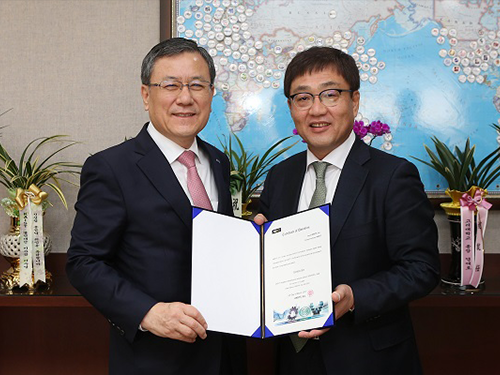
ANSYS Korea made an in-kind donation of engineering simulation software, Multiphysics Campus Solution, to KAIST on March 24. ANSYS Korea donated 10,000 copies for education and 1,000 copies for research valued at about 4 billion KRW (about 200 billion KRW commercially).
The ANSYS software will benefit the engineering simulation work in nine departments and 60 labs for three years, including the departments of mechanical engineering, aerospace engineering, electrical engineering, civil and environmental engineering, nuclear and quantum engineering, chemical and bimolecular engineering, bio and brain engineering, materials science and engineering, and the Cho Chun Shik Graduate School of Green Transportation.
ANSYS is a global engineering simulation company. It provides ANSYS CAE (Computer Aided Engineering) software products in various industries in the world as well as various support, training, and consulting services. Deemed an exemplary model of university-industry R&D collaboration especially in the Industry 4.0 era, their donation will help create the best engineering education environment possible at KAIST.
ANSYS's multi-physics campus solution is a comprehensive software suite that spans the entire range of physics, providing access to virtually any field of engineering simulation that a design process requires. It expands the fields of fluids, structures, electromagnetics, and semiconductors. Undergraduates use it to learn physics principles and gain hands-on, real-world experience that can lead to a deeper understanding of engineering concepts. Postgraduate researchers apply simulation tools to solve complex engineering problems and produce data for their theses.
"Engineering simulations are playing a stronger role in science and engineering. ANSYS software will help our undergraduates and our researchers learn the principles of physics and deepen their understanding of engineering concepts. We hope this will serve as an instrumental tool for multidisciplinary studies, critical to fostering our students," said President Sung-Chul Shin.
ANSYS Korea CEO Yong-Won Cho added, "We sincerely hope our software will help KAIST students and researchers experience the best engineering education and achieve significant research results."
(Photo caption: President Shin (left) poses with ANSYS Korea CEO Yong-Won Cho at the donation ceremony on March 24 at KAIST)
2017.03.24 View 16449
-
 KAIST Design Week 2011 Held
KAIST designated a week (from March 27th to April 2nd) as KAIST Design Week 2011 and will be hosting a series of international conferences on engineering designs.
The 21st CIRP Design Conference, the 6th International Conference on Axiomatic Design, and the 1st Design in Civil and Environmental Engineering Workshop will be held in Fusion hall in the KI Building from the 27th of March.
The CIRP Design Conference was held on the 27th and the 28th and annually provides an opportunity for researchers and industry developers to exchange information and knowledge.
The International Conference on Axiomatic Design was held on the 30th to the 31st and dealt with various presentations and discussions on the axiomatic design theory. The Axiomatic Design Theory was thought up by KAIST President Seo Nam Pyo and deals with analyzing the wants of the consumers and solves the problems associated with the product through making altercations on the product design.
Last The Design in Civil and environmental Engineering Workshop will be held on the 1st and 2nd of April and will deal with sustainable city design and development.
The Design Week will also be featuring humanoid robot HUBO, the Online Electric Vehicle that can charge its battery wirelessly, and the Mobile Harbor, and therefore show off KAIST’s achievements.
2011.04.01 View 16169