-
 KAIST Shows That the Brain Can Distinguish Glucose: Clues to Treat Obesity and Diabetes
<(From left)Prof. Greg S.B Suh, Dr. Jieun Kim, Dr. Shinhye Kim, Researcher Wongyo Jeong)
“How does our brain distinguish glucose from the many nutrients absorbed in the gut?” Starting with this question, a KAIST research team has demonstrated that the brain can selectively recognize specific nutrients—particularly glucose—beyond simply detecting total calorie content. This study is expected to offer a new paradigm for appetite control and the treatment of metabolic diseases.
On the 9th, KAIST (President Kwang Hyung Lee) announced that Professor Greg S.B. Suh’s team in the Department of Biological Sciences, in collaboration with Professor Young-Gyun Park’s team (BarNeuro), Professor Seung-Hee Lee’s team (Department of Biological Sciences), and the Albert Einstein College of Medicine in New York, had identified the existence of a gut-brain circuit that allows animals in a hungry state to selectively detect and prefer glucose in the gut.
Organisms derive energy from various nutrients including sugars, proteins, and fats. Previous studies have shown that total caloric information in the gut suppresses hunger neurons in the hypothalamus to regulate appetite. However, the existence of a gut-brain circuit that specifically responds to glucose and corresponding brain cells had not been demonstrated until now.
In this study, the team successfully identified a “gut-brain circuit” that senses glucose—essential for brain function—and regulates food intake behavior for required nutrients.
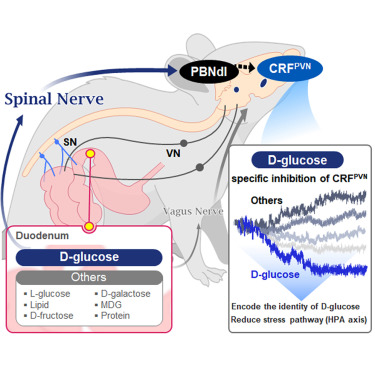
They further proved, for the first time, that this circuit responds within seconds to not only hunger or external stimuli but also to specific caloric nutrients directly introduced into the small intestine, particularly D-glucose, through the activity of “CRF neurons*” in the brain’s hypothalamus.
*CRF neurons: These neurons secrete corticotropin-releasing factor (CRF) in the hypothalamus and are central to the hypothalamic-pituitary-adrenal (HPA) axis, the body’s core physiological system for responding to stress. CRF neurons are known to regulate neuroendocrine balance in response to stress stimuli.
Using optogenetics to precisely track neural activity in real time, the researchers injected various nutrients—D-glucose, L-glucose, amino acids, and fats—directly into the small intestines of mice and observed the results.
They discovered that among the CRF neurons located in the paraventricular nucleus (PVN)* of the hypothalamus, only those specific to D-glucose showed selective responses. These neurons did not respond—or showed inverse reactions—to other sugars or to proteins and fats. This is the first demonstration that single neurons in the brain can guide nutrient-specific responses depending on gut nutrient influx.
*PVN (Paraventricular Nucleus): A key nucleus within the hypothalamus responsible for maintaining bodily homeostasis.
The team also revealed that glucose-sensing signals in the small intestine are transmitted via the spinal cord to the dorsolateral parabrachial nucleus (PBNdl) of the brain, and from there to CRF neurons in the PVN. In contrast, signals for amino acids and fats are transmitted to the brain through the vagus nerve, a different pathway.
In optogenetic inhibition experiments, suppressing CRF neurons in fasting mice eliminated their preference for glucose, proving that this circuit is essential for glucose-specific nutrient preference.
This study was inspired by Professor Suh’s earlier research at NYU using fruit flies, where he identified “DH44 neurons” that selectively detect glucose and sugar in the gut. Based on the hypothesis that hypothalamic neurons in mammals would show similar functional responses to glucose, the current study was launched.
To test this hypothesis, Dr. Jineun Kim (KAIST Ph.D. graduate, now at Caltech) demonstrated during her doctoral research that hungry mice preferred glucose among various intragastrically infused nutrients and that CRF neurons exhibited rapid and specific responses.
Along with Wongyo Jung (KAIST B.S. graduate, now Ph.D. student at Caltech), they modeled and experimentally confirmed the critical role of CRF neurons. Dr. Shinhye Kim, through collaboration, revealed that specific spinal neurons play a key role in conveying intestinal nutrient information to the brain.
Dr. Jineun Kim and Dr. Shinhye Kim said, “This study started from a simple but fundamental question—‘How does the brain distinguish glucose from various nutrients absorbed in the gut?’ We have shown that spinal-based gut-brain circuits play a central role in energy metabolism and homeostasis by transmitting specific gut nutrient signals to the brain.”
Professor Suh added, “By identifying a gut-brain pathway specialized for glucose, this research offers a new therapeutic target for metabolic diseases such as obesity and diabetes. Our future research will explore similar circuits for sensing other essential nutrients like amino acids and fats and their interaction mechanisms.”
Ph.D. student Jineun Kim, Dr. Shinhye Kim, and student Wongyo Jung (co-first authors) contributed to this study, which was published online in the international journal Neuron on June 20, 2025.
※ Paper Title: Encoding the glucose identity by discrete hypothalamic neurons via the gut-brain axis ※ DOI: https://doi.org/10.1016/j.neuron.2025.05.024
This study was supported by the Samsung Science & Technology Foundation, the National Research Foundation of Korea (NRF) Leader Research Program, the POSCO Cheongam Science Fellowship, the Asan Foundation Biomedical Science Scholarship, the Institute for Basic Science (IBS), and the KAIST KAIX program.
2025.07.09 View 2
KAIST Shows That the Brain Can Distinguish Glucose: Clues to Treat Obesity and Diabetes
<(From left)Prof. Greg S.B Suh, Dr. Jieun Kim, Dr. Shinhye Kim, Researcher Wongyo Jeong)
“How does our brain distinguish glucose from the many nutrients absorbed in the gut?” Starting with this question, a KAIST research team has demonstrated that the brain can selectively recognize specific nutrients—particularly glucose—beyond simply detecting total calorie content. This study is expected to offer a new paradigm for appetite control and the treatment of metabolic diseases.
On the 9th, KAIST (President Kwang Hyung Lee) announced that Professor Greg S.B. Suh’s team in the Department of Biological Sciences, in collaboration with Professor Young-Gyun Park’s team (BarNeuro), Professor Seung-Hee Lee’s team (Department of Biological Sciences), and the Albert Einstein College of Medicine in New York, had identified the existence of a gut-brain circuit that allows animals in a hungry state to selectively detect and prefer glucose in the gut.
Organisms derive energy from various nutrients including sugars, proteins, and fats. Previous studies have shown that total caloric information in the gut suppresses hunger neurons in the hypothalamus to regulate appetite. However, the existence of a gut-brain circuit that specifically responds to glucose and corresponding brain cells had not been demonstrated until now.
In this study, the team successfully identified a “gut-brain circuit” that senses glucose—essential for brain function—and regulates food intake behavior for required nutrients.
They further proved, for the first time, that this circuit responds within seconds to not only hunger or external stimuli but also to specific caloric nutrients directly introduced into the small intestine, particularly D-glucose, through the activity of “CRF neurons*” in the brain’s hypothalamus.
*CRF neurons: These neurons secrete corticotropin-releasing factor (CRF) in the hypothalamus and are central to the hypothalamic-pituitary-adrenal (HPA) axis, the body’s core physiological system for responding to stress. CRF neurons are known to regulate neuroendocrine balance in response to stress stimuli.
Using optogenetics to precisely track neural activity in real time, the researchers injected various nutrients—D-glucose, L-glucose, amino acids, and fats—directly into the small intestines of mice and observed the results.
They discovered that among the CRF neurons located in the paraventricular nucleus (PVN)* of the hypothalamus, only those specific to D-glucose showed selective responses. These neurons did not respond—or showed inverse reactions—to other sugars or to proteins and fats. This is the first demonstration that single neurons in the brain can guide nutrient-specific responses depending on gut nutrient influx.
*PVN (Paraventricular Nucleus): A key nucleus within the hypothalamus responsible for maintaining bodily homeostasis.
The team also revealed that glucose-sensing signals in the small intestine are transmitted via the spinal cord to the dorsolateral parabrachial nucleus (PBNdl) of the brain, and from there to CRF neurons in the PVN. In contrast, signals for amino acids and fats are transmitted to the brain through the vagus nerve, a different pathway.
In optogenetic inhibition experiments, suppressing CRF neurons in fasting mice eliminated their preference for glucose, proving that this circuit is essential for glucose-specific nutrient preference.
This study was inspired by Professor Suh’s earlier research at NYU using fruit flies, where he identified “DH44 neurons” that selectively detect glucose and sugar in the gut. Based on the hypothesis that hypothalamic neurons in mammals would show similar functional responses to glucose, the current study was launched.
To test this hypothesis, Dr. Jineun Kim (KAIST Ph.D. graduate, now at Caltech) demonstrated during her doctoral research that hungry mice preferred glucose among various intragastrically infused nutrients and that CRF neurons exhibited rapid and specific responses.
Along with Wongyo Jung (KAIST B.S. graduate, now Ph.D. student at Caltech), they modeled and experimentally confirmed the critical role of CRF neurons. Dr. Shinhye Kim, through collaboration, revealed that specific spinal neurons play a key role in conveying intestinal nutrient information to the brain.
Dr. Jineun Kim and Dr. Shinhye Kim said, “This study started from a simple but fundamental question—‘How does the brain distinguish glucose from various nutrients absorbed in the gut?’ We have shown that spinal-based gut-brain circuits play a central role in energy metabolism and homeostasis by transmitting specific gut nutrient signals to the brain.”
Professor Suh added, “By identifying a gut-brain pathway specialized for glucose, this research offers a new therapeutic target for metabolic diseases such as obesity and diabetes. Our future research will explore similar circuits for sensing other essential nutrients like amino acids and fats and their interaction mechanisms.”
Ph.D. student Jineun Kim, Dr. Shinhye Kim, and student Wongyo Jung (co-first authors) contributed to this study, which was published online in the international journal Neuron on June 20, 2025.
※ Paper Title: Encoding the glucose identity by discrete hypothalamic neurons via the gut-brain axis ※ DOI: https://doi.org/10.1016/j.neuron.2025.05.024
This study was supported by the Samsung Science & Technology Foundation, the National Research Foundation of Korea (NRF) Leader Research Program, the POSCO Cheongam Science Fellowship, the Asan Foundation Biomedical Science Scholarship, the Institute for Basic Science (IBS), and the KAIST KAIX program.
2025.07.09 View 2 -
 KAIST Develops Novel Candidiasis Treatment Overcoming Side Effects and Resistance
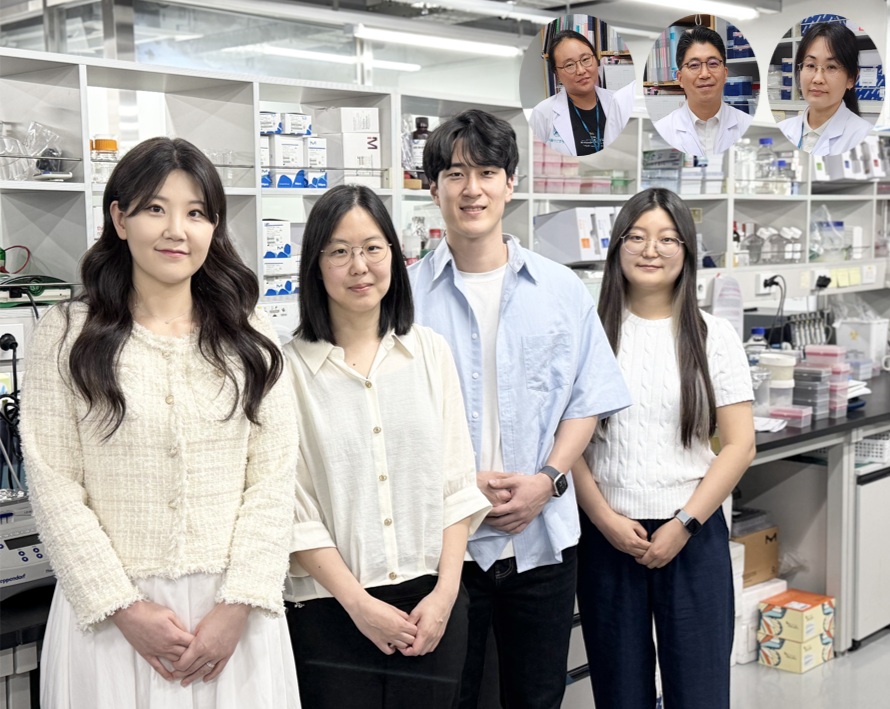
<(From left) Ph. D Candidate Ju Yeon Chung, Prof.Hyun Jung Chung, Ph.D candidate Seungju Yang, Ph.D candidate Ayoung Park, Dr. Yoon-Kyoung Hong from Asan Medical Center, Prof. Yong Pil Chong, Dr. Eunhee Jeon>
Candida, a type of fungus, which can spread throughout the body via the bloodstream, leading to organ damage and sepsis. Recently, the incidence of candidiasis has surged due to the increase in immunosuppressive therapies, medical implants, and transplantation. Korean researchers have successfully developed a next-generation treatment that, unlike existing antifungals, selectively acts only on Candida, achieving both high therapeutic efficacy and low side effects simultaneously.
KAIST (President Kwang Hyung Lee) announced on the 8th that a research team led by Professor Hyun-Jung Chung of the Department of Biological Sciences, in collaboration with Professor Yong Pil Jeong's team at Asan Medical Center, developed a gene-based nanotherapy (FTNx) that simultaneously inhibits two key enzymes in the Candida cell wall.
Current antifungal drugs for Candida have low target selectivity, which can affect human cells. Furthermore, their therapeutic efficacy is gradually decreasing due to the emergence of new resistant strains. Especially for immunocompromised patients, the infection progresses rapidly and has a poor prognosis, making the development of new treatments to overcome the limitations of existing therapies urgent.
The developed treatment can be administered systemically, and by combining gene suppression technology with nanomaterial technology, it effectively overcomes the structural limitations of existing compound-based drugs and successfully achieves selective treatment against only Candida.
The research team created a gold nanoparticle-based complex loaded with short DNA fragments called antisense oligonucleotides (ASO), which simultaneously target two crucial enzymes—β-1,3-glucan synthase (FKS1) and chitin synthase (CHS3)—important for forming the cell wall of the Candida fungus.
By applying a surface coating technology that binds to a specific glycolipid structure (a structure combining sugar and fat) on the Candida cell wall, a targeted delivery device was implemented. This successfully achieved a precise targeting effect, ensuring the complex is not delivered to human cells at all but acts selectively only on Candida.
<Figure 1: Overview of antifungal therapy design and experimental approach>
This complex, after entering Candida cells, cleaves the mRNA produced by the FKS1 and CHS3 genes, thereby inhibiting translation and simultaneously blocking the synthesis of cell wall components β-1,3-glucan and chitin. As a result, the
Candida cell wall loses its structural stability and collapses, suppressing bacterial survival and proliferation.
In fact, experiments using a systemic candidiasis model in mice confirmed the therapeutic effect: a significant reduction in
Candida count in the organs, normalization of immune responses, and a notable increase in survival rates were observed in the treated group.
Professor Hyun-Jung Chung, who led the research, stated, "This study presents a method to overcome the issues of human toxicity and drug resistance spread with existing treatments, marking an important turning point by demonstrating the applicability of gene therapy for systemic infections". She added, "We plan to continue research on optimizing administration methods and verifying toxicity for future clinical application."
This research involved Ju Yeon Chung and Yoon-Kyoung Hong as co-first authors , and was published in the international journal 'Nature Communications' on July 1st.
Paper Title: Effective treatment of systemic candidiasis by synergistic targeting of cell wall synthesis
DOI: 10.1038/s41467-025-60684-7
This research was supported by the Ministry of Health and Welfare and the National Research Foundation of Korea.
2025.07.08 View 78
KAIST Develops Novel Candidiasis Treatment Overcoming Side Effects and Resistance
<(From left) Ph. D Candidate Ju Yeon Chung, Prof.Hyun Jung Chung, Ph.D candidate Seungju Yang, Ph.D candidate Ayoung Park, Dr. Yoon-Kyoung Hong from Asan Medical Center, Prof. Yong Pil Chong, Dr. Eunhee Jeon>
Candida, a type of fungus, which can spread throughout the body via the bloodstream, leading to organ damage and sepsis. Recently, the incidence of candidiasis has surged due to the increase in immunosuppressive therapies, medical implants, and transplantation. Korean researchers have successfully developed a next-generation treatment that, unlike existing antifungals, selectively acts only on Candida, achieving both high therapeutic efficacy and low side effects simultaneously.
KAIST (President Kwang Hyung Lee) announced on the 8th that a research team led by Professor Hyun-Jung Chung of the Department of Biological Sciences, in collaboration with Professor Yong Pil Jeong's team at Asan Medical Center, developed a gene-based nanotherapy (FTNx) that simultaneously inhibits two key enzymes in the Candida cell wall.
Current antifungal drugs for Candida have low target selectivity, which can affect human cells. Furthermore, their therapeutic efficacy is gradually decreasing due to the emergence of new resistant strains. Especially for immunocompromised patients, the infection progresses rapidly and has a poor prognosis, making the development of new treatments to overcome the limitations of existing therapies urgent.
The developed treatment can be administered systemically, and by combining gene suppression technology with nanomaterial technology, it effectively overcomes the structural limitations of existing compound-based drugs and successfully achieves selective treatment against only Candida.
The research team created a gold nanoparticle-based complex loaded with short DNA fragments called antisense oligonucleotides (ASO), which simultaneously target two crucial enzymes—β-1,3-glucan synthase (FKS1) and chitin synthase (CHS3)—important for forming the cell wall of the Candida fungus.
By applying a surface coating technology that binds to a specific glycolipid structure (a structure combining sugar and fat) on the Candida cell wall, a targeted delivery device was implemented. This successfully achieved a precise targeting effect, ensuring the complex is not delivered to human cells at all but acts selectively only on Candida.
<Figure 1: Overview of antifungal therapy design and experimental approach>
This complex, after entering Candida cells, cleaves the mRNA produced by the FKS1 and CHS3 genes, thereby inhibiting translation and simultaneously blocking the synthesis of cell wall components β-1,3-glucan and chitin. As a result, the
Candida cell wall loses its structural stability and collapses, suppressing bacterial survival and proliferation.
In fact, experiments using a systemic candidiasis model in mice confirmed the therapeutic effect: a significant reduction in
Candida count in the organs, normalization of immune responses, and a notable increase in survival rates were observed in the treated group.
Professor Hyun-Jung Chung, who led the research, stated, "This study presents a method to overcome the issues of human toxicity and drug resistance spread with existing treatments, marking an important turning point by demonstrating the applicability of gene therapy for systemic infections". She added, "We plan to continue research on optimizing administration methods and verifying toxicity for future clinical application."
This research involved Ju Yeon Chung and Yoon-Kyoung Hong as co-first authors , and was published in the international journal 'Nature Communications' on July 1st.
Paper Title: Effective treatment of systemic candidiasis by synergistic targeting of cell wall synthesis
DOI: 10.1038/s41467-025-60684-7
This research was supported by the Ministry of Health and Welfare and the National Research Foundation of Korea.
2025.07.08 View 78 -
 KAIST Presents a Breakthrough in Overcoming Drug Resistance in Cancer – Hope for Treating Intractable Diseases like Diabetes
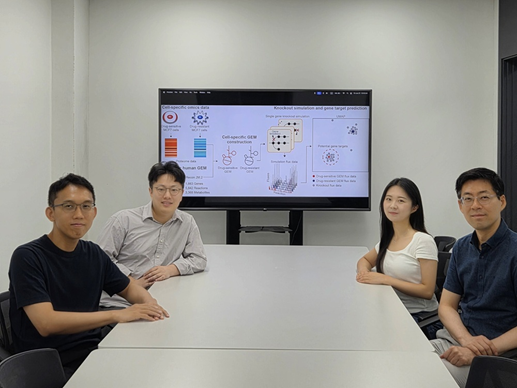
<(From the left) Prof. Hyun Uk Kim, Ph.D candiate Hae Deok Jung, Ph.D candidate Jina Lim, Prof.Yoosik Kim from the Department of Chemical and Biomolecular Engineering>
One of the biggest obstacles in cancer treatment is drug resistance in cancer cells. Conventional efforts have focused on identifying new drug targets to eliminate these resistant cells, but such approaches can often lead to even stronger resistance. Now, researchers at KAIST have developed a computational framework to predict key metabolic genes that can re-sensitize resistant cancer cells to treatment. This technique holds promise not only for a variety of cancer therapies but also for treating metabolic diseases such as diabetes.
On the 7th of July, KAIST (President Kwang Hyung Lee) announced that a research team led by Professors Hyun Uk Kim and Yoosik Kim from the Department of Chemical and Biomolecular Engineering had developed a computational framework that predicts metabolic gene targets to re-sensitize drug-resistant breast cancer cells. This was achieved using a metabolic network model capable of simulating human metabolism.
Focusing on metabolic alterations—key characteristics in the formation of drug resistance—the researchers developed a metabolism-based approach to identify gene targets that could enhance drug responsiveness by regulating the metabolism of drug-resistant breast cancer cells.
< Computational framework that can identify metabolic gene targets to revert the metabolic state of the drug-resistant cells to that of the drug-sensitive parental cells>
The team first constructed cell-specific metabolic network models by integrating proteomic data obtained from two different types of drug-resistant MCF7 breast cancer cell lines: one resistant to doxorubicin and the other to paclitaxel. They then performed gene knockout simulations* on all of the metabolic genes and analyzed the results.
*Gene knockout simulation: A computational method to predict changes in a biological network by virtually removing specific genes.
As a result, they discovered that suppressing certain genes could make previously resistant cancer cells responsive to anticancer drugs again. Specifically, they identified GOT1 as a target in doxorubicin-resistant cells, GPI in paclitaxel-resistant cells, and SLC1A5 as a common target for both drugs.
The predictions were experimentally validated by suppressing proteins encoded by these genes, which led to the re-sensitization of the drug-resistant cancer cells.
Furthermore, consistent re-sensitization effects were also observed when the same proteins were inhibited in other types of breast cancer cells that had developed resistance to the same drugs.
Professor Yoosik Kim remarked, “Cellular metabolism plays a crucial role in various intractable diseases including infectious and degenerative conditions. This new technology, which predicts metabolic regulation switches, can serve as a foundational tool not only for treating drug-resistant breast cancer but also for a wide range of diseases that currently lack effective therapies.”
Professor Hyun Uk Kim, who led the study, emphasized, “The significance of this research lies in our ability to accurately predict key metabolic genes that can make resistant cancer cells responsive to treatment again—using only computer simulations and minimal experimental data. This framework can be widely applied to discover new therapeutic targets in various cancers and metabolic diseases.”
The study, in which Ph.D. candidates JinA Lim and Hae Deok Jung from KAIST participated as co-first authors, was published online on June 25 in Proceedings of the National Academy of Sciences (PNAS), a leading multidisciplinary journal that covers top-tier research in life sciences, physics, engineering, and social sciences.
※ Title: Genome-scale knockout simulation and clustering analysis of drug-resistant breast cancer cells reveal drug sensitization targets ※ DOI: https://doi.org/10.1073/pnas.2425384122 ※ Authors: JinA Lim (KAIST, co-first author), Hae Deok Jung (KAIST, co-first author), Han Suk Ryu (Seoul National University Hospital, corresponding author), Yoosik Kim (KAIST, corresponding author), Hyun Uk Kim (KAIST, corresponding author), and five others.
This research was supported by the Ministry of Science and ICT through the National Research Foundation of Korea, and the Electronics and Telecommunications Research Institute (ETRI).
2025.07.08 View 122
KAIST Presents a Breakthrough in Overcoming Drug Resistance in Cancer – Hope for Treating Intractable Diseases like Diabetes
<(From the left) Prof. Hyun Uk Kim, Ph.D candiate Hae Deok Jung, Ph.D candidate Jina Lim, Prof.Yoosik Kim from the Department of Chemical and Biomolecular Engineering>
One of the biggest obstacles in cancer treatment is drug resistance in cancer cells. Conventional efforts have focused on identifying new drug targets to eliminate these resistant cells, but such approaches can often lead to even stronger resistance. Now, researchers at KAIST have developed a computational framework to predict key metabolic genes that can re-sensitize resistant cancer cells to treatment. This technique holds promise not only for a variety of cancer therapies but also for treating metabolic diseases such as diabetes.
On the 7th of July, KAIST (President Kwang Hyung Lee) announced that a research team led by Professors Hyun Uk Kim and Yoosik Kim from the Department of Chemical and Biomolecular Engineering had developed a computational framework that predicts metabolic gene targets to re-sensitize drug-resistant breast cancer cells. This was achieved using a metabolic network model capable of simulating human metabolism.
Focusing on metabolic alterations—key characteristics in the formation of drug resistance—the researchers developed a metabolism-based approach to identify gene targets that could enhance drug responsiveness by regulating the metabolism of drug-resistant breast cancer cells.
< Computational framework that can identify metabolic gene targets to revert the metabolic state of the drug-resistant cells to that of the drug-sensitive parental cells>
The team first constructed cell-specific metabolic network models by integrating proteomic data obtained from two different types of drug-resistant MCF7 breast cancer cell lines: one resistant to doxorubicin and the other to paclitaxel. They then performed gene knockout simulations* on all of the metabolic genes and analyzed the results.
*Gene knockout simulation: A computational method to predict changes in a biological network by virtually removing specific genes.
As a result, they discovered that suppressing certain genes could make previously resistant cancer cells responsive to anticancer drugs again. Specifically, they identified GOT1 as a target in doxorubicin-resistant cells, GPI in paclitaxel-resistant cells, and SLC1A5 as a common target for both drugs.
The predictions were experimentally validated by suppressing proteins encoded by these genes, which led to the re-sensitization of the drug-resistant cancer cells.
Furthermore, consistent re-sensitization effects were also observed when the same proteins were inhibited in other types of breast cancer cells that had developed resistance to the same drugs.
Professor Yoosik Kim remarked, “Cellular metabolism plays a crucial role in various intractable diseases including infectious and degenerative conditions. This new technology, which predicts metabolic regulation switches, can serve as a foundational tool not only for treating drug-resistant breast cancer but also for a wide range of diseases that currently lack effective therapies.”
Professor Hyun Uk Kim, who led the study, emphasized, “The significance of this research lies in our ability to accurately predict key metabolic genes that can make resistant cancer cells responsive to treatment again—using only computer simulations and minimal experimental data. This framework can be widely applied to discover new therapeutic targets in various cancers and metabolic diseases.”
The study, in which Ph.D. candidates JinA Lim and Hae Deok Jung from KAIST participated as co-first authors, was published online on June 25 in Proceedings of the National Academy of Sciences (PNAS), a leading multidisciplinary journal that covers top-tier research in life sciences, physics, engineering, and social sciences.
※ Title: Genome-scale knockout simulation and clustering analysis of drug-resistant breast cancer cells reveal drug sensitization targets ※ DOI: https://doi.org/10.1073/pnas.2425384122 ※ Authors: JinA Lim (KAIST, co-first author), Hae Deok Jung (KAIST, co-first author), Han Suk Ryu (Seoul National University Hospital, corresponding author), Yoosik Kim (KAIST, corresponding author), Hyun Uk Kim (KAIST, corresponding author), and five others.
This research was supported by the Ministry of Science and ICT through the National Research Foundation of Korea, and the Electronics and Telecommunications Research Institute (ETRI).
2025.07.08 View 122 -
 Professor Moon-Jeong Choi Appointed as an Advisor for the ITU's 'AI for Good Global Summit'
Professor Moon-Jeong Choi from KAIST’s Graduate School of Science and Technology Policy has been appointed as an advisor for "Innovate for Impact" at the AI for Good Global Summit, organized by the International Telecommunication Union (ITU), a specialized agency of the United Nations (UN).
The ITU is the UN's oldest specialized agency in the field of information and communication technology (ICT) and serves as a crucial body for coordinating global ICT policies and standards.
This advisory committee was formed to explore global cooperation strategies for realizing the social value of Artificial Intelligence (AI) and promoting sustainable development. Experts from around the world are participating as committee members, with Professor Choi being the sole Korean representative.
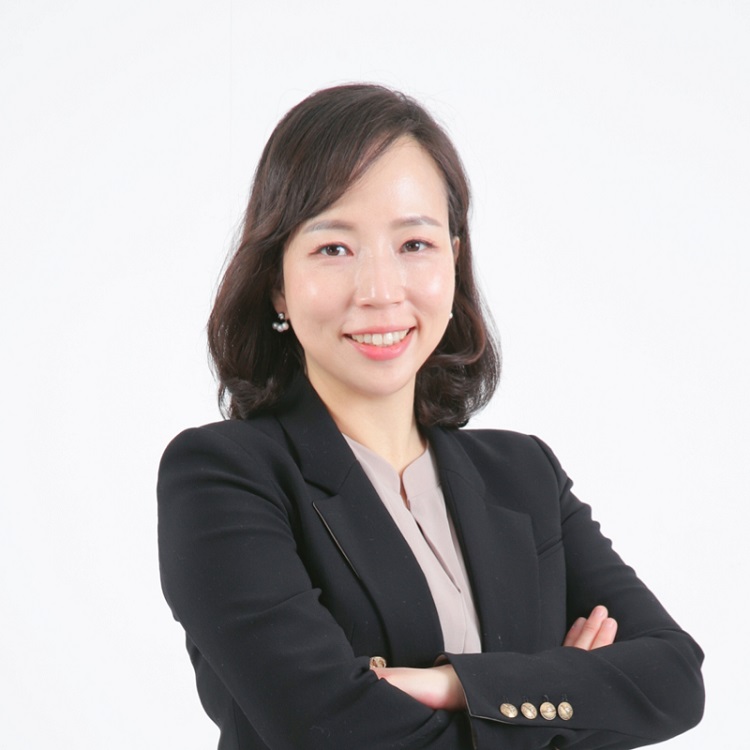
<Moon-Jeong Choi from KAIST’s Graduate School of Science and Technology Policy>
The AI for Good Global Summit is taking place in Geneva, Switzerland from July 8 to 11. It is organized by the ITU in collaboration with approximately 40 other UN-affiliated organizations. The summit aims to address global challenges facing humanity through the use of AI technology, focusing on key agenda items such as identifying AI application cases, discussing international policies and technical standards, and strengthening global partnerships.
As an "Innovate for Impact" advisor, Professor Choi will evaluate AI application cases from various countries, participating in case analyses primarily focused on public interest and social impact. The summit will move beyond discussions of technical performance to focus on how AI can contribute to the public good, with diverse case studies from around the world being debated. Notably, during a policy panel discussion at the summit, Professor Choi will discuss policy frameworks for AI transparency, inclusivity, and fairness under the theme of "Responsible AI Development."
Professor Choi commented, "I believe the social impact of technology mirrors the values and systems of each nation. As a society's core values permeate technology, the way AI is developed and used varies significantly from country to country. These differences lead to diverse manifestations of AI's impact on society." She further emphasized, "Korea's vision of becoming an AI powerhouse should not merely be about technological superiority, but rather about enhancing social capital through human-centered AI and realizing communal values that enable us to live together."
Professor Moon-Jeong Choi currently serves as the Dean of the Graduate School of Science and Technology Policy. She is also an external director for the National Information Society Agency (2023-present) and chair of the Korea-OECD Digital Society Initiative (2024-present).
For more information about the AI for Good Global Summit, please visit the official website: https://aiforgood.itu.int.
2025.07.08 View 28
Professor Moon-Jeong Choi Appointed as an Advisor for the ITU's 'AI for Good Global Summit'
Professor Moon-Jeong Choi from KAIST’s Graduate School of Science and Technology Policy has been appointed as an advisor for "Innovate for Impact" at the AI for Good Global Summit, organized by the International Telecommunication Union (ITU), a specialized agency of the United Nations (UN).
The ITU is the UN's oldest specialized agency in the field of information and communication technology (ICT) and serves as a crucial body for coordinating global ICT policies and standards.
This advisory committee was formed to explore global cooperation strategies for realizing the social value of Artificial Intelligence (AI) and promoting sustainable development. Experts from around the world are participating as committee members, with Professor Choi being the sole Korean representative.
<Moon-Jeong Choi from KAIST’s Graduate School of Science and Technology Policy>
The AI for Good Global Summit is taking place in Geneva, Switzerland from July 8 to 11. It is organized by the ITU in collaboration with approximately 40 other UN-affiliated organizations. The summit aims to address global challenges facing humanity through the use of AI technology, focusing on key agenda items such as identifying AI application cases, discussing international policies and technical standards, and strengthening global partnerships.
As an "Innovate for Impact" advisor, Professor Choi will evaluate AI application cases from various countries, participating in case analyses primarily focused on public interest and social impact. The summit will move beyond discussions of technical performance to focus on how AI can contribute to the public good, with diverse case studies from around the world being debated. Notably, during a policy panel discussion at the summit, Professor Choi will discuss policy frameworks for AI transparency, inclusivity, and fairness under the theme of "Responsible AI Development."
Professor Choi commented, "I believe the social impact of technology mirrors the values and systems of each nation. As a society's core values permeate technology, the way AI is developed and used varies significantly from country to country. These differences lead to diverse manifestations of AI's impact on society." She further emphasized, "Korea's vision of becoming an AI powerhouse should not merely be about technological superiority, but rather about enhancing social capital through human-centered AI and realizing communal values that enable us to live together."
Professor Moon-Jeong Choi currently serves as the Dean of the Graduate School of Science and Technology Policy. She is also an external director for the National Information Society Agency (2023-present) and chair of the Korea-OECD Digital Society Initiative (2024-present).
For more information about the AI for Good Global Summit, please visit the official website: https://aiforgood.itu.int.
2025.07.08 View 28 -
 Development of Core NPU Technology to Improve ChatGPT Inference Performance by Over 60%
Latest generative AI models such as OpenAI's ChatGPT-4 and Google's Gemini 2.5 require not only high memory bandwidth but also large memory capacity. This is why generative AI cloud operating companies like Microsoft and Google purchase hundreds of thousands of NVIDIA GPUs. As a solution to address the core challenges of building such high-performance AI infrastructure, Korean researchers have succeeded in developing an NPU (Neural Processing Unit)* core technology that improves the inference performance of generative AI models by an average of over 60% while consuming approximately 44% less power compared to the latest GPUs.
*NPU (Neural Processing Unit): An AI-specific semiconductor chip designed to rapidly process artificial neural networks.
On the 4th, Professor Jongse Park's research team from KAIST School of Computing, in collaboration with HyperAccel Inc. (a startup founded by Professor Joo-Young Kim from the School of Electrical Engineering), announced that they have developed a high-performance, low-power NPU (Neural Processing Unit) core technology specialized for generative AI clouds like ChatGPT.
The technology proposed by the research team has been accepted by the '2025 International Symposium on Computer Architecture (ISCA 2025)', a top-tier international conference in the field of computer architecture.
The key objective of this research is to improve the performance of large-scale generative AI services by lightweighting the inference process, while minimizing accuracy loss and solving memory bottleneck issues. This research is highly recognized for its integrated design of AI semiconductors and AI system software, which are key components of AI infrastructure.
While existing GPU-based AI infrastructure requires multiple GPU devices to meet high bandwidth and capacity demands, this technology enables the configuration of the same level of AI infrastructure using fewer NPU devices through KV cache quantization*. KV cache accounts for most of the memory usage, thereby its quantization significantly reduces the cost of building generative AI clouds.
*KV Cache (Key-Value Cache) Quantization: Refers to reducing the data size in a type of temporary storage space used to improve performance when operating generative AI models (e.g., converting a 16-bit number to a 4-bit number reduces data size by 1/4).
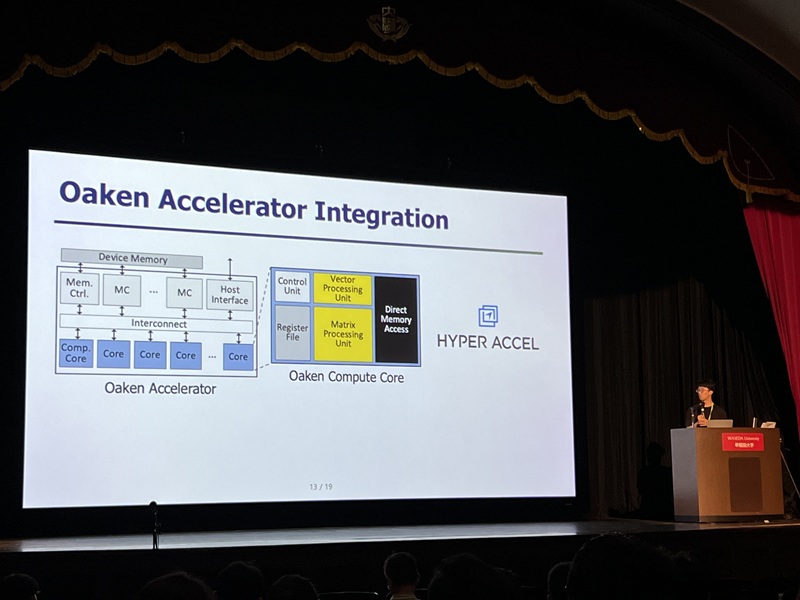
The research team designed it to be integrated with memory interfaces without changing the operational logic of existing NPU architectures. This hardware architecture not only implements the proposed quantization algorithm but also adopts page-level memory management techniques* for efficient utilization of limited memory bandwidth and capacity, and introduces new encoding technique optimized for quantized KV cache.
*Page-level memory management technique: Virtualizes memory addresses, as the CPU does, to allow consistent access within the NPU.
Furthermore, when building an NPU-based AI cloud with superior cost and power efficiency compared to the latest GPUs, the high-performance, low-power nature of NPUs is expected to significantly reduce operating costs.
Professor Jongse Park stated, "This research, through joint work with HyperAccel Inc., found a solution in generative AI inference lightweighting algorithms and succeeded in developing a core NPU technology that can solve the 'memory problem.' Through this technology, we implemented an NPU with over 60% improved performance compared to the latest GPUs by combining quantization techniques that reduce memory requirements while maintaining inference accuracy, and hardware designs optimized for this".
He further emphasized, "This technology has demonstrated the possibility of implementing high-performance, low-power infrastructure specialized for generative AI, and is expected to play a key role not only in AI cloud data centers but also in the AI transformation (AX) environment represented by dynamic, executable AI such as 'Agentic AI'."
This research was presented by Ph.D. student Minsu Kim and Dr. Seongmin Hong from HyperAccel Inc. as co-first authors at the '2025 International Symposium on Computer Architecture (ISCA)' held in Tokyo, Japan, from June 21 to June 25. ISCA, a globally renowned academic conference, received 570 paper submissions this year, with only 127 papers accepted (an acceptance rate of 22.7%).
※Paper Title: Oaken: Fast and Efficient LLM Serving with Online-Offline Hybrid KV Cache Quantization
※DOI: https://doi.org/10.1145/3695053.3731019
Meanwhile, this research was supported by the National Research Foundation of Korea's Excellent Young Researcher Program, the Institute for Information & Communications Technology Planning & Evaluation (IITP), and the AI Semiconductor Graduate School Support Project.
2025.07.07 View 168
Development of Core NPU Technology to Improve ChatGPT Inference Performance by Over 60%
Latest generative AI models such as OpenAI's ChatGPT-4 and Google's Gemini 2.5 require not only high memory bandwidth but also large memory capacity. This is why generative AI cloud operating companies like Microsoft and Google purchase hundreds of thousands of NVIDIA GPUs. As a solution to address the core challenges of building such high-performance AI infrastructure, Korean researchers have succeeded in developing an NPU (Neural Processing Unit)* core technology that improves the inference performance of generative AI models by an average of over 60% while consuming approximately 44% less power compared to the latest GPUs.
*NPU (Neural Processing Unit): An AI-specific semiconductor chip designed to rapidly process artificial neural networks.
On the 4th, Professor Jongse Park's research team from KAIST School of Computing, in collaboration with HyperAccel Inc. (a startup founded by Professor Joo-Young Kim from the School of Electrical Engineering), announced that they have developed a high-performance, low-power NPU (Neural Processing Unit) core technology specialized for generative AI clouds like ChatGPT.
The technology proposed by the research team has been accepted by the '2025 International Symposium on Computer Architecture (ISCA 2025)', a top-tier international conference in the field of computer architecture.
The key objective of this research is to improve the performance of large-scale generative AI services by lightweighting the inference process, while minimizing accuracy loss and solving memory bottleneck issues. This research is highly recognized for its integrated design of AI semiconductors and AI system software, which are key components of AI infrastructure.
While existing GPU-based AI infrastructure requires multiple GPU devices to meet high bandwidth and capacity demands, this technology enables the configuration of the same level of AI infrastructure using fewer NPU devices through KV cache quantization*. KV cache accounts for most of the memory usage, thereby its quantization significantly reduces the cost of building generative AI clouds.
*KV Cache (Key-Value Cache) Quantization: Refers to reducing the data size in a type of temporary storage space used to improve performance when operating generative AI models (e.g., converting a 16-bit number to a 4-bit number reduces data size by 1/4).
The research team designed it to be integrated with memory interfaces without changing the operational logic of existing NPU architectures. This hardware architecture not only implements the proposed quantization algorithm but also adopts page-level memory management techniques* for efficient utilization of limited memory bandwidth and capacity, and introduces new encoding technique optimized for quantized KV cache.
*Page-level memory management technique: Virtualizes memory addresses, as the CPU does, to allow consistent access within the NPU.
Furthermore, when building an NPU-based AI cloud with superior cost and power efficiency compared to the latest GPUs, the high-performance, low-power nature of NPUs is expected to significantly reduce operating costs.
Professor Jongse Park stated, "This research, through joint work with HyperAccel Inc., found a solution in generative AI inference lightweighting algorithms and succeeded in developing a core NPU technology that can solve the 'memory problem.' Through this technology, we implemented an NPU with over 60% improved performance compared to the latest GPUs by combining quantization techniques that reduce memory requirements while maintaining inference accuracy, and hardware designs optimized for this".
He further emphasized, "This technology has demonstrated the possibility of implementing high-performance, low-power infrastructure specialized for generative AI, and is expected to play a key role not only in AI cloud data centers but also in the AI transformation (AX) environment represented by dynamic, executable AI such as 'Agentic AI'."
This research was presented by Ph.D. student Minsu Kim and Dr. Seongmin Hong from HyperAccel Inc. as co-first authors at the '2025 International Symposium on Computer Architecture (ISCA)' held in Tokyo, Japan, from June 21 to June 25. ISCA, a globally renowned academic conference, received 570 paper submissions this year, with only 127 papers accepted (an acceptance rate of 22.7%).
※Paper Title: Oaken: Fast and Efficient LLM Serving with Online-Offline Hybrid KV Cache Quantization
※DOI: https://doi.org/10.1145/3695053.3731019
Meanwhile, this research was supported by the National Research Foundation of Korea's Excellent Young Researcher Program, the Institute for Information & Communications Technology Planning & Evaluation (IITP), and the AI Semiconductor Graduate School Support Project.
2025.07.07 View 168 -
 KAIST Presents Game-Changing Technology for Intractable Brain Disease Treatment Using Micro OLEDs
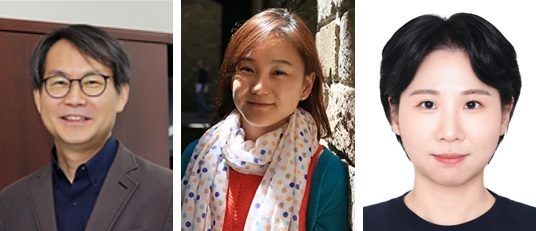
<(From left)Professor Kyung Cheol Choi, Hyunjoo J. Lee, Somin Lee from the School of Electrical Engineering>
Optogenetics is a technique that controls neural activity by stimulating neurons expressing light-sensitive proteins with specific wavelengths of light. It has opened new possibilities for identifying causes of brain disorders and developing treatments for intractable neurological diseases. Because this technology requires precise stimulation inside the human brain with minimal damage to soft brain tissue, it must be integrated into a neural probe—a medical device implanted in the brain. KAIST researchers have now proposed a new paradigm for neural probes by integrating micro OLEDs into thin, flexible, implantable medical devices.
KAIST (President Kwang Hyung Lee) announced on the 6th of July that Professor Kyung Cheol Choi and researcher Hyunjoo J. Lee from the School of Electrical Engineering have jointly succeeded in developing an optogenetic neural probe integrated with flexible micro OLEDs.
Optical fibers have been used for decades in optogenetic research to deliver light to deep brain regions from external light sources. Recently, research has focused on flexible optical fibers and ultra-miniaturized neural probes that integrate light sources for single-neuron stimulation.
The research team focused on micro OLEDs due to their high spatial resolution and flexibility, which allow for precise light delivery to small areas of neurons. This enables detailed brain circuit analysis while minimizing side effects and avoiding restrictions on animal movement. Moreover, micro OLEDs offer precise control of light wavelengths and support multi-site stimulation, making them suitable for studying complex brain functions.
However, the device's electrical properties degrade easily in the presence of moisture or water, which limited their use as implantable bioelectronics. Furthermore, optimizing the high-resolution integration process on thin, flexible probes remained a challenge.
To address this, the team enhanced the operational reliability of OLEDs in moist, oxygen-rich environments and minimized tissue damage during implantation. They patterned an ultrathin, flexible encapsulation layer* composed of aluminum oxide and parylene-C (Al₂O₃/parylene-C) at widths of 260–600 micrometers (μm) to maintain biocompatibility.
*Encapsulation layer: A barrier that completely blocks oxygen and water molecules from the external environment, ensuring the longevity and reliability of the device.
When integrating the high-resolution micro OLEDs, the researchers also used parylene-C, the same biocompatible material as the encapsulation layer, to maintain flexibility and safety. To eliminate electrical interference between adjacent OLED pixels and spatially separate them, they introduced a pixel define layer (PDL), enabling the independent operation of eight micro OLEDs.
Furthermore, they precisely controlled the residual stress and thickness in the multilayer film structure of the device, ensuring its flexibility even in biological environments. This optimization allowed for probe insertion without bending or external shuttles or needles, minimizing mechanical stress during implantation.
Advanced Functional Materials-Conceptual diagram of a flexible neural probe for integrated optogenetics (Micro-OLED)>
As a result, the team developed a flexible neural probe with integrated micro OLEDs capable of emitting more than one milliwatt per square millimeter (mW/mm²) at 470 nanometers (nm), the optimal wavelength for activating channelrhodopsin-2. This is a significantly high light output for optogenetics and biomedical stimulation applications.
The ultrathin flexible encapsulation layer exhibited a low water vapor transmission rate of 2.66×10⁻⁵ g/m²/day, allowing the device to maintain functionality for over 10 years. The parylene-C-based barrier also demonstrated excellent performance in biological environments, successfully enabling the independent operation of the integrated OLEDs without electrical interference or bending issues.
Dr. Somin Lee, the lead author from Professor Choi’s lab, stated, “We focused on fine-tuning the integration process of highly flexible, high-resolution micro OLEDs onto thin flexible probes, enhancing their biocompatibility and application potential. This is the first reported development of such flexible OLEDs in a probe format and presents a new paradigm for using flexible OLEDs as implantable medical devices for monitoring and therapy.”
This study, with Dr. Somin Lee as the first author, was published online on March 26 in Advanced Functional Materials (IF 18.5), a leading international journal in the field of nanotechnology, and was selected as the cover article for the upcoming July issue.
※ Title: Advanced Micro-OLED Integration on Thin and Flexible Polymer Neural Probes for Targeted Optogenetic Stimulation ※ DOI: https://doi.org/10.1002/adfm.202420758
The research was supported by the Ministry of Science and ICT and the National Research Foundation of Korea through the Electronic Medicine Technology Development Program (Project title: Development of Core Source Technologies and In Vivo Validation for Brain Cognition and Emotion-Enhancing Light-Stimulating Electronic Medicine).
2025.07.07 View 53
KAIST Presents Game-Changing Technology for Intractable Brain Disease Treatment Using Micro OLEDs
<(From left)Professor Kyung Cheol Choi, Hyunjoo J. Lee, Somin Lee from the School of Electrical Engineering>
Optogenetics is a technique that controls neural activity by stimulating neurons expressing light-sensitive proteins with specific wavelengths of light. It has opened new possibilities for identifying causes of brain disorders and developing treatments for intractable neurological diseases. Because this technology requires precise stimulation inside the human brain with minimal damage to soft brain tissue, it must be integrated into a neural probe—a medical device implanted in the brain. KAIST researchers have now proposed a new paradigm for neural probes by integrating micro OLEDs into thin, flexible, implantable medical devices.
KAIST (President Kwang Hyung Lee) announced on the 6th of July that Professor Kyung Cheol Choi and researcher Hyunjoo J. Lee from the School of Electrical Engineering have jointly succeeded in developing an optogenetic neural probe integrated with flexible micro OLEDs.
Optical fibers have been used for decades in optogenetic research to deliver light to deep brain regions from external light sources. Recently, research has focused on flexible optical fibers and ultra-miniaturized neural probes that integrate light sources for single-neuron stimulation.
The research team focused on micro OLEDs due to their high spatial resolution and flexibility, which allow for precise light delivery to small areas of neurons. This enables detailed brain circuit analysis while minimizing side effects and avoiding restrictions on animal movement. Moreover, micro OLEDs offer precise control of light wavelengths and support multi-site stimulation, making them suitable for studying complex brain functions.
However, the device's electrical properties degrade easily in the presence of moisture or water, which limited their use as implantable bioelectronics. Furthermore, optimizing the high-resolution integration process on thin, flexible probes remained a challenge.
To address this, the team enhanced the operational reliability of OLEDs in moist, oxygen-rich environments and minimized tissue damage during implantation. They patterned an ultrathin, flexible encapsulation layer* composed of aluminum oxide and parylene-C (Al₂O₃/parylene-C) at widths of 260–600 micrometers (μm) to maintain biocompatibility.
*Encapsulation layer: A barrier that completely blocks oxygen and water molecules from the external environment, ensuring the longevity and reliability of the device.
When integrating the high-resolution micro OLEDs, the researchers also used parylene-C, the same biocompatible material as the encapsulation layer, to maintain flexibility and safety. To eliminate electrical interference between adjacent OLED pixels and spatially separate them, they introduced a pixel define layer (PDL), enabling the independent operation of eight micro OLEDs.
Furthermore, they precisely controlled the residual stress and thickness in the multilayer film structure of the device, ensuring its flexibility even in biological environments. This optimization allowed for probe insertion without bending or external shuttles or needles, minimizing mechanical stress during implantation.
Advanced Functional Materials-Conceptual diagram of a flexible neural probe for integrated optogenetics (Micro-OLED)>
As a result, the team developed a flexible neural probe with integrated micro OLEDs capable of emitting more than one milliwatt per square millimeter (mW/mm²) at 470 nanometers (nm), the optimal wavelength for activating channelrhodopsin-2. This is a significantly high light output for optogenetics and biomedical stimulation applications.
The ultrathin flexible encapsulation layer exhibited a low water vapor transmission rate of 2.66×10⁻⁵ g/m²/day, allowing the device to maintain functionality for over 10 years. The parylene-C-based barrier also demonstrated excellent performance in biological environments, successfully enabling the independent operation of the integrated OLEDs without electrical interference or bending issues.
Dr. Somin Lee, the lead author from Professor Choi’s lab, stated, “We focused on fine-tuning the integration process of highly flexible, high-resolution micro OLEDs onto thin flexible probes, enhancing their biocompatibility and application potential. This is the first reported development of such flexible OLEDs in a probe format and presents a new paradigm for using flexible OLEDs as implantable medical devices for monitoring and therapy.”
This study, with Dr. Somin Lee as the first author, was published online on March 26 in Advanced Functional Materials (IF 18.5), a leading international journal in the field of nanotechnology, and was selected as the cover article for the upcoming July issue.
※ Title: Advanced Micro-OLED Integration on Thin and Flexible Polymer Neural Probes for Targeted Optogenetic Stimulation ※ DOI: https://doi.org/10.1002/adfm.202420758
The research was supported by the Ministry of Science and ICT and the National Research Foundation of Korea through the Electronic Medicine Technology Development Program (Project title: Development of Core Source Technologies and In Vivo Validation for Brain Cognition and Emotion-Enhancing Light-Stimulating Electronic Medicine).
2025.07.07 View 53 -
 KAIST researcher Se Jin Park develops 'SpeechSSM,' opening up possibilities for a 24-hour AI voice assistant.
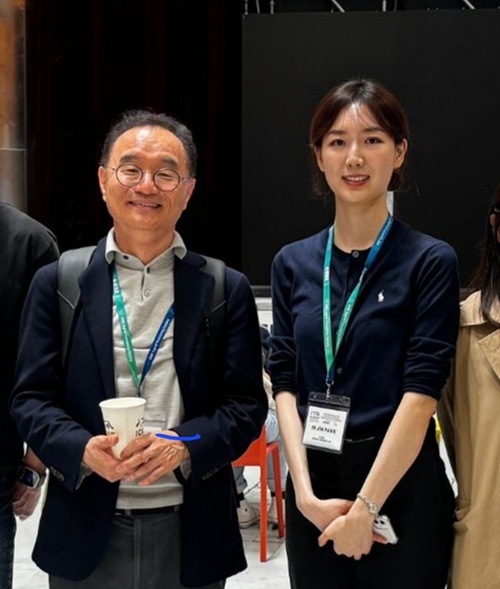
<(From Left)Prof. Yong Man Ro and Ph.D. candidate Sejin Park>
Se Jin Park, a researcher from Professor Yong Man Ro’s team at KAIST, has announced 'SpeechSSM', a spoken language model capable of generating long-duration speech that sounds natural and remains consistent.
An efficient processing technique based on linear sequence modeling overcomes the limitations of existing spoken language models, enabling high-quality speech generation without time constraints.
It is expected to be widely used in podcasts, audiobooks, and voice assistants due to its ability to generate natural, long-duration speech like humans.
Recently, Spoken Language Models (SLMs) have been spotlighted as next-generation technology that surpasses the limitations of text-based language models by learning human speech without text to understand and generate linguistic and non-linguistic information. However, existing models showed significant limitations in generating long-duration content required for podcasts, audiobooks, and voice assistants. Now, KAIST researcher has succeeded in overcoming these limitations by developing 'SpeechSSM,' which enables consistent and natural speech generation without time constraints.
KAIST(President Kwang Hyung Lee) announced on the 3rd of July that Ph.D. candidate Sejin Park from Professor Yong Man Ro's research team in the School of Electrical Engineering has developed 'SpeechSSM,' a spoken. a spoken language model capable of generating long-duration speech.
This research is set to be presented as an oral paper at ICML (International Conference on Machine Learning) 2025, one of the top machine learning conferences, selected among approximately 1% of all submitted papers. This not only proves outstanding research ability but also serves as an opportunity to once again demonstrate KAIST's world-leading AI research capabilities.
A major advantage of Spoken Language Models (SLMs) is their ability to directly process speech without intermediate text conversion, leveraging the unique acoustic characteristics of human speakers, allowing for the rapid generation of high-quality speech even in large-scale models.
However, existing models faced difficulties in maintaining semantic and speaker consistency for long-duration speech due to increased 'speech token resolution' and memory consumption when capturing very detailed information by breaking down speech into fine fragments.
To solve this problem, Se Jin Park developed 'SpeechSSM,' a spoken language model using a Hybrid State-Space Model, designed to efficiently process and generate long speech sequences.
This model employs a 'hybrid structure' that alternately places 'attention layers' focusing on recent information and 'recurrent layers' that remember the overall narrative flow (long-term context). This allows the story to flow smoothly without losing coherence even when generating speech for a long time. Furthermore, memory usage and computational load do not increase sharply with input length, enabling stable and efficient learning and the generation of long-duration speech.
SpeechSSM effectively processes unbounded speech sequences by dividing speech data into short, fixed units (windows), processing each unit independently, and then combining them to create long speech.
Additionally, in the speech generation phase, it uses a 'Non-Autoregressive' audio synthesis model (SoundStorm), which rapidly generates multiple parts at once instead of slowly creating one character or one word at a time, enabling the fast generation of high-quality speech.
While existing models typically evaluated short speech models of about 10 seconds, Se Jin Park created new evaluation tasks for speech generation based on their self-built benchmark dataset, 'LibriSpeech-Long,' capable of generating up to 16 minutes of speech.
Compared to PPL (Perplexity), an existing speech model evaluation metric that only indicates grammatical correctness, she proposed new evaluation metrics such as 'SC-L (semantic coherence over time)' to assess content coherence over time, and 'N-MOS-T (naturalness mean opinion score over time)' to evaluate naturalness over time, enabling more effective and precise evaluation.
Through these new evaluations, it was confirmed that speech generated by the SpeechSSM spoken language model consistently featured specific individuals mentioned in the initial prompt, and new characters and events unfolded naturally and contextually consistently, despite long-duration generation. This contrasts sharply with existing models, which tended to easily lose their topic and exhibit repetition during long-duration generation.
PhD candidate Sejin Park explained, "Existing spoken language models had limitations in long-duration generation, so our goal was to develop a spoken language model capable of generating long-duration speech for actual human use." She added, "This research achievement is expected to greatly contribute to various types of voice content creation and voice AI fields like voice assistants, by maintaining consistent content in long contexts and responding more efficiently and quickly in real time than existing methods."
This research, with Se Jin Park as the first author, was conducted in collaboration with Google DeepMind and is scheduled to be presented as an oral presentation at ICML (International Conference on Machine Learning) 2025 on July 16th.
Paper Title: Long-Form Speech Generation with Spoken Language Models
DOI: 10.48550/arXiv.2412.18603
Ph.D. candidate Se Jin Park has demonstrated outstanding research capabilities as a member of Professor Yong Man Ro's MLLM (multimodal large language model) research team, through her work integrating vision, speech, and language. Her achievements include a spotlight paper presentation at 2024 CVPR (Computer Vision and Pattern Recognition) and an Outstanding Paper Award at 2024 ACL (Association for Computational Linguistics).
For more information, you can refer to the publication and accompanying demo: SpeechSSM Publications.
2025.07.04 View 360
KAIST researcher Se Jin Park develops 'SpeechSSM,' opening up possibilities for a 24-hour AI voice assistant.
<(From Left)Prof. Yong Man Ro and Ph.D. candidate Sejin Park>
Se Jin Park, a researcher from Professor Yong Man Ro’s team at KAIST, has announced 'SpeechSSM', a spoken language model capable of generating long-duration speech that sounds natural and remains consistent.
An efficient processing technique based on linear sequence modeling overcomes the limitations of existing spoken language models, enabling high-quality speech generation without time constraints.
It is expected to be widely used in podcasts, audiobooks, and voice assistants due to its ability to generate natural, long-duration speech like humans.
Recently, Spoken Language Models (SLMs) have been spotlighted as next-generation technology that surpasses the limitations of text-based language models by learning human speech without text to understand and generate linguistic and non-linguistic information. However, existing models showed significant limitations in generating long-duration content required for podcasts, audiobooks, and voice assistants. Now, KAIST researcher has succeeded in overcoming these limitations by developing 'SpeechSSM,' which enables consistent and natural speech generation without time constraints.
KAIST(President Kwang Hyung Lee) announced on the 3rd of July that Ph.D. candidate Sejin Park from Professor Yong Man Ro's research team in the School of Electrical Engineering has developed 'SpeechSSM,' a spoken. a spoken language model capable of generating long-duration speech.
This research is set to be presented as an oral paper at ICML (International Conference on Machine Learning) 2025, one of the top machine learning conferences, selected among approximately 1% of all submitted papers. This not only proves outstanding research ability but also serves as an opportunity to once again demonstrate KAIST's world-leading AI research capabilities.
A major advantage of Spoken Language Models (SLMs) is their ability to directly process speech without intermediate text conversion, leveraging the unique acoustic characteristics of human speakers, allowing for the rapid generation of high-quality speech even in large-scale models.
However, existing models faced difficulties in maintaining semantic and speaker consistency for long-duration speech due to increased 'speech token resolution' and memory consumption when capturing very detailed information by breaking down speech into fine fragments.
To solve this problem, Se Jin Park developed 'SpeechSSM,' a spoken language model using a Hybrid State-Space Model, designed to efficiently process and generate long speech sequences.
This model employs a 'hybrid structure' that alternately places 'attention layers' focusing on recent information and 'recurrent layers' that remember the overall narrative flow (long-term context). This allows the story to flow smoothly without losing coherence even when generating speech for a long time. Furthermore, memory usage and computational load do not increase sharply with input length, enabling stable and efficient learning and the generation of long-duration speech.
SpeechSSM effectively processes unbounded speech sequences by dividing speech data into short, fixed units (windows), processing each unit independently, and then combining them to create long speech.
Additionally, in the speech generation phase, it uses a 'Non-Autoregressive' audio synthesis model (SoundStorm), which rapidly generates multiple parts at once instead of slowly creating one character or one word at a time, enabling the fast generation of high-quality speech.
While existing models typically evaluated short speech models of about 10 seconds, Se Jin Park created new evaluation tasks for speech generation based on their self-built benchmark dataset, 'LibriSpeech-Long,' capable of generating up to 16 minutes of speech.
Compared to PPL (Perplexity), an existing speech model evaluation metric that only indicates grammatical correctness, she proposed new evaluation metrics such as 'SC-L (semantic coherence over time)' to assess content coherence over time, and 'N-MOS-T (naturalness mean opinion score over time)' to evaluate naturalness over time, enabling more effective and precise evaluation.
Through these new evaluations, it was confirmed that speech generated by the SpeechSSM spoken language model consistently featured specific individuals mentioned in the initial prompt, and new characters and events unfolded naturally and contextually consistently, despite long-duration generation. This contrasts sharply with existing models, which tended to easily lose their topic and exhibit repetition during long-duration generation.
PhD candidate Sejin Park explained, "Existing spoken language models had limitations in long-duration generation, so our goal was to develop a spoken language model capable of generating long-duration speech for actual human use." She added, "This research achievement is expected to greatly contribute to various types of voice content creation and voice AI fields like voice assistants, by maintaining consistent content in long contexts and responding more efficiently and quickly in real time than existing methods."
This research, with Se Jin Park as the first author, was conducted in collaboration with Google DeepMind and is scheduled to be presented as an oral presentation at ICML (International Conference on Machine Learning) 2025 on July 16th.
Paper Title: Long-Form Speech Generation with Spoken Language Models
DOI: 10.48550/arXiv.2412.18603
Ph.D. candidate Se Jin Park has demonstrated outstanding research capabilities as a member of Professor Yong Man Ro's MLLM (multimodal large language model) research team, through her work integrating vision, speech, and language. Her achievements include a spotlight paper presentation at 2024 CVPR (Computer Vision and Pattern Recognition) and an Outstanding Paper Award at 2024 ACL (Association for Computational Linguistics).
For more information, you can refer to the publication and accompanying demo: SpeechSSM Publications.
2025.07.04 View 360 -
 King Saud University and KAIST discussed Strategic AI Partnership
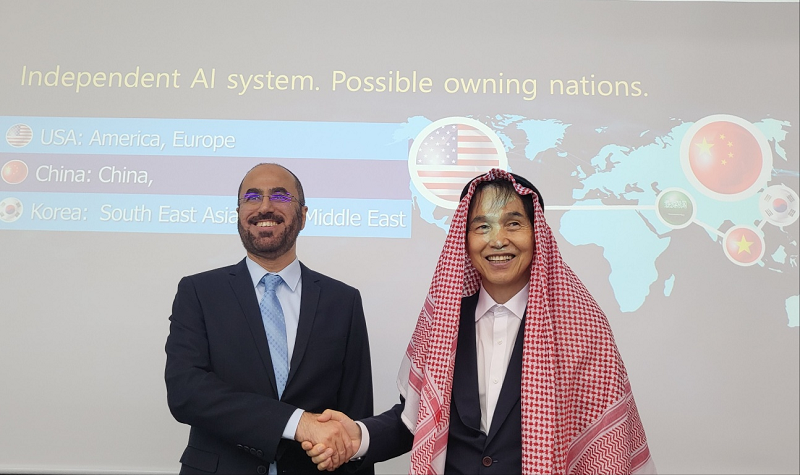
<From left> President Abdulla Al-Salman(King Saud University), President Kwang Hyung Lee(KAIST)
KAIST (President Kwang Hyung Lee) and King Saud University (President Abdulla Al-Salman) held a meeting on July 3 at the KAIST Campus in Seoul and agreed to pursue strategic cooperation in AI and digital platform development. The global AI landscape is increasingly polarized between closed models developed by the U.S. and China’s nationally focused technology ecosystems. In this context, many neutral countries have consistently called for an alternative third model that promotes both technological diversity and open access. President Lee has previously advocated for a "Tripartite Platform Strategy" (三分之計), proposing an international collaboration framework based on open-source principles to be free from binary digital power structures and foster cooperative coexistence.
This KAIST-KSU collaboration represents a step toward developing a new, inclusive AI model. The collaboration aims to establish an innovative multilateral framework, especially within the MENA, Japan, Korea, and Southeast Asia, by building an open-source-based AI alliance. Both institutions bring complementary strengths to the table. Saudi Arabia possesses large-scale capital and digital infrastructure, while Korea leads in core AI and semiconductor technologies, applied research, and talent cultivation.
Together, the two nations aim to establish a sustainable collaboration model that creates a virtuous cycle of investment, technology, and talent. This initiative is expected to contribute to the development of an open AI platform and promote diversity in the global AI ecosystem.
During the meeting, the two sides discussed key areas of future cooperation, including:
· Joint development of open-source AI technologies and digital platforms
· Launch of a KAIST-KSU dual graduate degree program
· Expansion of exchange programs for students, faculty, and researchers
· Collaborative research in basic science and STEM disciplines
In particular, the two institutions discussed to establish a joint AI research center to co-develop open AI models and explore practical industrial applications. The goal is to broaden access to AI technology and create an inclusive innovation environment for more countries and institutions.
President Abdulla Al-Salman stated, "Under Saudi Vision 2030, we are driving innovation in science and technology through new leadership, openness, and strategic investment. This partnership with KAIST will serve as a critical foundation for building a competitive AI ecosystem in the Middle East."
President Kwang Hyung Lee emphasized, "By combining Saudi Arabia's leadership, market, and investment capacity with KAIST's technological innovation and the rich talent pools from both countries, we will significantly contribute to diversifying the global AI ecosystem."
Both leaders further noted, "Through joint research leading to an independent AI model, our two institutions could establish a new axis beyond the existing US-China digital order—realizing a 'Tripartite AI Strategy' that will propel us into global markets extending far beyond the MENA and ASEAN regions."
KAIST and KSU plan to formalize this agreement by signing an MOU in the near future, followed by concrete actions such as launching the joint research institute and global talent development programs. This collaboration was initiated under the Korea Foundation’s Distinguished Guests Invitation Program, overseen by the Ministry of Foreign Affairs, and is expected to grow into a long-term strategic partnership with continued support from KF.
About King Saud University (KSU)
Founded in 1957, KSU is Saudi Arabia’s first and leading national university. As a top research-oriented institution in the Middle East, it has achieved international recognition in fields such as AI, energy, and biotechnology. It plays a central role in nurturing talent and driving innovation aligned with Saudi Arabia’s Vision 2030, and is expanding global partnerships to further strengthen its research capabilities.
About the Korea Foundation (KF)
Established in 1991 under the Ministry of Foreign Affairs, the Korea Foundation is a public diplomacy institution dedicated to strengthening international understanding and friendship with Korea. KF plays a key role in expanding Korea’s soft power through academic and cultural exchange, people-to-people networks, and global Korean studies programs. Its Distinguished Guests Invitation Program fosters strategic partnerships with global leaders in government, academia, and industry.
2025.07.04 View 271
King Saud University and KAIST discussed Strategic AI Partnership
<From left> President Abdulla Al-Salman(King Saud University), President Kwang Hyung Lee(KAIST)
KAIST (President Kwang Hyung Lee) and King Saud University (President Abdulla Al-Salman) held a meeting on July 3 at the KAIST Campus in Seoul and agreed to pursue strategic cooperation in AI and digital platform development. The global AI landscape is increasingly polarized between closed models developed by the U.S. and China’s nationally focused technology ecosystems. In this context, many neutral countries have consistently called for an alternative third model that promotes both technological diversity and open access. President Lee has previously advocated for a "Tripartite Platform Strategy" (三分之計), proposing an international collaboration framework based on open-source principles to be free from binary digital power structures and foster cooperative coexistence.
This KAIST-KSU collaboration represents a step toward developing a new, inclusive AI model. The collaboration aims to establish an innovative multilateral framework, especially within the MENA, Japan, Korea, and Southeast Asia, by building an open-source-based AI alliance. Both institutions bring complementary strengths to the table. Saudi Arabia possesses large-scale capital and digital infrastructure, while Korea leads in core AI and semiconductor technologies, applied research, and talent cultivation.
Together, the two nations aim to establish a sustainable collaboration model that creates a virtuous cycle of investment, technology, and talent. This initiative is expected to contribute to the development of an open AI platform and promote diversity in the global AI ecosystem.
During the meeting, the two sides discussed key areas of future cooperation, including:
· Joint development of open-source AI technologies and digital platforms
· Launch of a KAIST-KSU dual graduate degree program
· Expansion of exchange programs for students, faculty, and researchers
· Collaborative research in basic science and STEM disciplines
In particular, the two institutions discussed to establish a joint AI research center to co-develop open AI models and explore practical industrial applications. The goal is to broaden access to AI technology and create an inclusive innovation environment for more countries and institutions.
President Abdulla Al-Salman stated, "Under Saudi Vision 2030, we are driving innovation in science and technology through new leadership, openness, and strategic investment. This partnership with KAIST will serve as a critical foundation for building a competitive AI ecosystem in the Middle East."
President Kwang Hyung Lee emphasized, "By combining Saudi Arabia's leadership, market, and investment capacity with KAIST's technological innovation and the rich talent pools from both countries, we will significantly contribute to diversifying the global AI ecosystem."
Both leaders further noted, "Through joint research leading to an independent AI model, our two institutions could establish a new axis beyond the existing US-China digital order—realizing a 'Tripartite AI Strategy' that will propel us into global markets extending far beyond the MENA and ASEAN regions."
KAIST and KSU plan to formalize this agreement by signing an MOU in the near future, followed by concrete actions such as launching the joint research institute and global talent development programs. This collaboration was initiated under the Korea Foundation’s Distinguished Guests Invitation Program, overseen by the Ministry of Foreign Affairs, and is expected to grow into a long-term strategic partnership with continued support from KF.
About King Saud University (KSU)
Founded in 1957, KSU is Saudi Arabia’s first and leading national university. As a top research-oriented institution in the Middle East, it has achieved international recognition in fields such as AI, energy, and biotechnology. It plays a central role in nurturing talent and driving innovation aligned with Saudi Arabia’s Vision 2030, and is expanding global partnerships to further strengthen its research capabilities.
About the Korea Foundation (KF)
Established in 1991 under the Ministry of Foreign Affairs, the Korea Foundation is a public diplomacy institution dedicated to strengthening international understanding and friendship with Korea. KF plays a key role in expanding Korea’s soft power through academic and cultural exchange, people-to-people networks, and global Korean studies programs. Its Distinguished Guests Invitation Program fosters strategic partnerships with global leaders in government, academia, and industry.
2025.07.04 View 271 -
 KAIST Uses AI to Discover Optimal New Material for Removing Radioactive Iodine Contamination
<(From the Right) Professor Ho Jin Ryu, Department of Nuclear and Quantum Engineering, Dr. Sujeong Lee, a graduate of the KAIST Department of Materials Science and Engineering, and Dr. Juhwan Noh of KRICT’s Digital Chemistry Research Center>
Managing radioactive waste is one of the core challenges in the use of nuclear energy. In particular, radioactive iodine poses serious environmental and health risks due to its long half-life (15.7 million years in the case of I-129), high mobility, and toxicity to living organisms. A Korean research team has successfully used artificial intelligence to discover a new material that can remove iodine for nuclear environmental remediation. The team plans to push forward with commercialization through various industry-academia collaborations, from iodine-adsorbing powders to contaminated water treatment filters.
KAIST (President Kwang Hyung Lee) announced on the 2of July that Professor Ho Jin Ryu's research team from the Department of Nuclear and Quantum Engineering, in collaboration with Dr. Juhwan Noh of the Digital Chemistry Research Center at the Korea Research Institute of Chemical Technology (KRICT, President Young Kook Lee), which operates under the National Research Council of Science & Technology (NST, Chairman Youngsik Kim), developed a technique using AI to discover new materials that effectively remove radioactive iodine contaminants.
Recent studies show that radioactive iodine primarily exists in aqueous environments in the form of iodate (IO₃⁻). However, existing silver-based adsorbents have weak chemical adsorption strength for iodate, making them inefficient. Therefore, it is imperative to develop new adsorbent materials that can effectively remove iodate.
Professor Ho Jin Ryu’s team used a machine learning-based experimental strategy to identify optimal iodate adsorbents among compounds called Layered Double Hydroxides (LDHs), which contain various metal elements.
The multi-metal LDH developed in this study – Cu₃(CrFeAl), based on copper, chromium, iron, and aluminum—showed exceptional adsorption performance, removing over 90% of iodate. This achievement was made possible by efficiently exploring a vast compositional space using AI-driven active learning, which would be difficult to search through conventional trial-and-error experiments.
<Picture2. Concept of Developed AI-Based Technology for Exploring New Materials for Radioactive Contamination Removal>
The research team focused on the fact that LDHs, like high-entropy materials, can incorporate a wide range of metal compositions and possess structures favorable for anion adsorption. However, due to the overwhelming number of possible metal combinations in multi-metal LDHs, identifying the optimal composition through traditional experimental methods has been nearly impossible.
To overcome this, the team employed AI (machine learning). Starting with experimental data from 24 binary and 96 ternary LDH compositions, they expanded their search to include quaternary and quinary candidates. As a result, they were able to discover the optimal material for iodate removal by testing only 16% of the total candidate materials.
Professor Ho Jin Ryu stated, “This study shows the potential of using artificial intelligence to efficiently identify radioactive decontamination materials from a vast pool of new material candidates, which is expected to accelerate research for developing new materials for nuclear environmental cleanup.”
The research team has filed a domestic patent application for the developed powder technology and is currently proceeding with an international patent application. They plan to enhance the material’s performance under various conditions and pursue commercialization through industry-academia cooperation in the development of filters for treating contaminated water.
Dr. Sujeong Lee, a graduate of the KAIST Department of Materials Science and Engineering, and Dr. Juhwan Noh of KRICT’s Digital Chemistry Research Center, participated as the co-first authors of the study. The results were published online on May 26 in the internationally renowned environmental publication Journal of Hazardous Materials.
※ Paper title: Discovery of multi-metal-layered double hydroxides for decontamination of iodate by machine learning-assisted experiments ※ DOI: https://doi.org/10.1016/j.jhazmat.2025.138735
This research was supported by the Nuclear Energy Research Infrastructure Program and the Nano-Materials Technology Development Program funded by the Ministry of Science and ICT and the National Research Foundation of Korea.
2025.07.03 View 529
KAIST Uses AI to Discover Optimal New Material for Removing Radioactive Iodine Contamination
<(From the Right) Professor Ho Jin Ryu, Department of Nuclear and Quantum Engineering, Dr. Sujeong Lee, a graduate of the KAIST Department of Materials Science and Engineering, and Dr. Juhwan Noh of KRICT’s Digital Chemistry Research Center>
Managing radioactive waste is one of the core challenges in the use of nuclear energy. In particular, radioactive iodine poses serious environmental and health risks due to its long half-life (15.7 million years in the case of I-129), high mobility, and toxicity to living organisms. A Korean research team has successfully used artificial intelligence to discover a new material that can remove iodine for nuclear environmental remediation. The team plans to push forward with commercialization through various industry-academia collaborations, from iodine-adsorbing powders to contaminated water treatment filters.
KAIST (President Kwang Hyung Lee) announced on the 2of July that Professor Ho Jin Ryu's research team from the Department of Nuclear and Quantum Engineering, in collaboration with Dr. Juhwan Noh of the Digital Chemistry Research Center at the Korea Research Institute of Chemical Technology (KRICT, President Young Kook Lee), which operates under the National Research Council of Science & Technology (NST, Chairman Youngsik Kim), developed a technique using AI to discover new materials that effectively remove radioactive iodine contaminants.
Recent studies show that radioactive iodine primarily exists in aqueous environments in the form of iodate (IO₃⁻). However, existing silver-based adsorbents have weak chemical adsorption strength for iodate, making them inefficient. Therefore, it is imperative to develop new adsorbent materials that can effectively remove iodate.
Professor Ho Jin Ryu’s team used a machine learning-based experimental strategy to identify optimal iodate adsorbents among compounds called Layered Double Hydroxides (LDHs), which contain various metal elements.
The multi-metal LDH developed in this study – Cu₃(CrFeAl), based on copper, chromium, iron, and aluminum—showed exceptional adsorption performance, removing over 90% of iodate. This achievement was made possible by efficiently exploring a vast compositional space using AI-driven active learning, which would be difficult to search through conventional trial-and-error experiments.
<Picture2. Concept of Developed AI-Based Technology for Exploring New Materials for Radioactive Contamination Removal>
The research team focused on the fact that LDHs, like high-entropy materials, can incorporate a wide range of metal compositions and possess structures favorable for anion adsorption. However, due to the overwhelming number of possible metal combinations in multi-metal LDHs, identifying the optimal composition through traditional experimental methods has been nearly impossible.
To overcome this, the team employed AI (machine learning). Starting with experimental data from 24 binary and 96 ternary LDH compositions, they expanded their search to include quaternary and quinary candidates. As a result, they were able to discover the optimal material for iodate removal by testing only 16% of the total candidate materials.
Professor Ho Jin Ryu stated, “This study shows the potential of using artificial intelligence to efficiently identify radioactive decontamination materials from a vast pool of new material candidates, which is expected to accelerate research for developing new materials for nuclear environmental cleanup.”
The research team has filed a domestic patent application for the developed powder technology and is currently proceeding with an international patent application. They plan to enhance the material’s performance under various conditions and pursue commercialization through industry-academia cooperation in the development of filters for treating contaminated water.
Dr. Sujeong Lee, a graduate of the KAIST Department of Materials Science and Engineering, and Dr. Juhwan Noh of KRICT’s Digital Chemistry Research Center, participated as the co-first authors of the study. The results were published online on May 26 in the internationally renowned environmental publication Journal of Hazardous Materials.
※ Paper title: Discovery of multi-metal-layered double hydroxides for decontamination of iodate by machine learning-assisted experiments ※ DOI: https://doi.org/10.1016/j.jhazmat.2025.138735
This research was supported by the Nuclear Energy Research Infrastructure Program and the Nano-Materials Technology Development Program funded by the Ministry of Science and ICT and the National Research Foundation of Korea.
2025.07.03 View 529 -
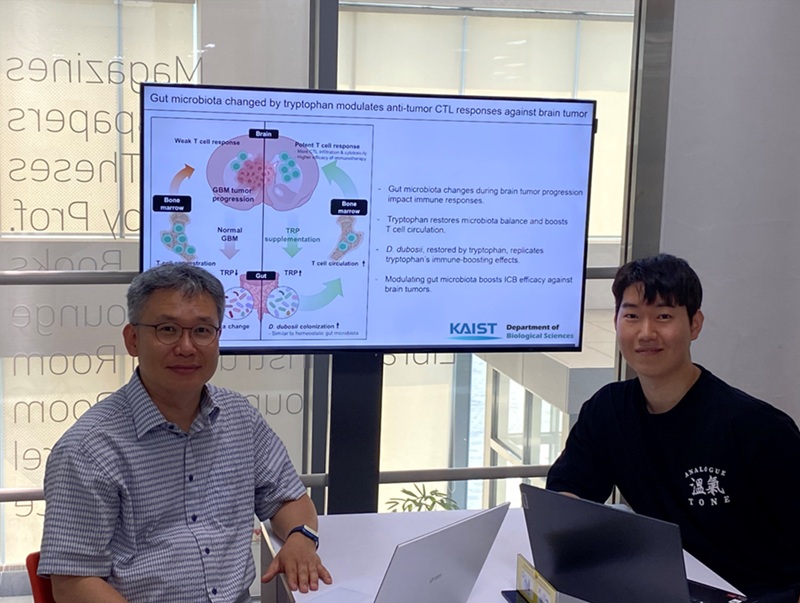 KAIST Enhances Immunotherapy for Difficult-to-Treat Brain Tumors with Gut Microbiota
< Photo 1.(From left) Prof. Heung Kyu Lee, Department of Biological Sciences,
and Dr. Hyeon Cheol Kim>
Advanced treatments, known as immunotherapies that activate T cells—our body's immune cells—to eliminate cancer cells, have shown limited efficacy as standalone therapies for glioblastoma, the most lethal form of brain tumor. This is due to their minimal response to glioblastoma and high resistance to treatment.
Now, a KAIST research team has now demonstrated a new therapeutic strategy that can enhance the efficacy of immunotherapy for brain tumors by utilizing gut microbes and their metabolites. This also opens up possibilities for developing microbiome-based immunotherapy supplements in the future.
KAIST (President Kwang Hyung Lee) announced on July 1 that a research team led by Professor Heung Kyu Lee of the Department of Biological Sciences discovered and demonstrated a method to significantly improve the efficiency of glioblastoma immunotherapy by focusing on changes in the gut microbial ecosystem.
The research team noted that as glioblastoma progresses, the concentration of ‘tryptophan’, an important amino acid in the gut, sharply decreases, leading to changes in the gut microbial ecosystem. They discovered that by supplementing tryptophan to restore microbial diversity, specific beneficial strains activate CD8 T cells (a type of immune cell) and induce their infiltration into tumor tissues. Through a mouse model of glioblastoma, the research team confirmed that tryptophan supplementation enhanced the response of cancer-attacking T cells (especially CD8 T cells), leading to their increased migration to tumor sites such as lymph nodes and the brain.
In this process, they also revealed that ‘Duncaniella dubosii’, a beneficial commensal bacterium present in the gut, plays a crucial role. This bacterium helped T cells effectively redistribute within the body, and survival rates significantly improved when used in combination with immunotherapy (anti-PD-1).
Furthermore, it was demonstrated that even when this commensal bacterium was administered alone to germ-free mice (mice without any commensal microbes), the survival rate for glioblastoma increased. This is because the bacterium utilizes tryptophan to regulate the gut environment, and the metabolites produced in this process strengthen the ability of CD8 T cells to attack cancer cells.
Professor Heung Kyu Lee explained, "This research is a meaningful achievement, showing that even in intractable brain tumors where immune checkpoint inhibitors had no effect, a combined strategy utilizing gut microbes can significantly enhance treatment response."
Dr. Hyeon Cheol Kim of KAIST (currently a postdoctoral researcher at the Institute for Biological Sciences) participated as the first author. The research findings were published online in Cell Reports, an international journal in the life sciences, on June 26.
This research was conducted as part of the Basic Research Program and Bio & Medical Technology Development Program supported by the Ministry of Science and ICT and the National Research Foundation of Korea.
※Paper Title: Gut microbiota dysbiosis induced by brain tumor modulates the efficacy of immunotherapy
※DOI: https://doi.org/10.1016/j.celrep.2025.115825
2025.07.02 View 482
KAIST Enhances Immunotherapy for Difficult-to-Treat Brain Tumors with Gut Microbiota
< Photo 1.(From left) Prof. Heung Kyu Lee, Department of Biological Sciences,
and Dr. Hyeon Cheol Kim>
Advanced treatments, known as immunotherapies that activate T cells—our body's immune cells—to eliminate cancer cells, have shown limited efficacy as standalone therapies for glioblastoma, the most lethal form of brain tumor. This is due to their minimal response to glioblastoma and high resistance to treatment.
Now, a KAIST research team has now demonstrated a new therapeutic strategy that can enhance the efficacy of immunotherapy for brain tumors by utilizing gut microbes and their metabolites. This also opens up possibilities for developing microbiome-based immunotherapy supplements in the future.
KAIST (President Kwang Hyung Lee) announced on July 1 that a research team led by Professor Heung Kyu Lee of the Department of Biological Sciences discovered and demonstrated a method to significantly improve the efficiency of glioblastoma immunotherapy by focusing on changes in the gut microbial ecosystem.
The research team noted that as glioblastoma progresses, the concentration of ‘tryptophan’, an important amino acid in the gut, sharply decreases, leading to changes in the gut microbial ecosystem. They discovered that by supplementing tryptophan to restore microbial diversity, specific beneficial strains activate CD8 T cells (a type of immune cell) and induce their infiltration into tumor tissues. Through a mouse model of glioblastoma, the research team confirmed that tryptophan supplementation enhanced the response of cancer-attacking T cells (especially CD8 T cells), leading to their increased migration to tumor sites such as lymph nodes and the brain.
In this process, they also revealed that ‘Duncaniella dubosii’, a beneficial commensal bacterium present in the gut, plays a crucial role. This bacterium helped T cells effectively redistribute within the body, and survival rates significantly improved when used in combination with immunotherapy (anti-PD-1).
Furthermore, it was demonstrated that even when this commensal bacterium was administered alone to germ-free mice (mice without any commensal microbes), the survival rate for glioblastoma increased. This is because the bacterium utilizes tryptophan to regulate the gut environment, and the metabolites produced in this process strengthen the ability of CD8 T cells to attack cancer cells.
Professor Heung Kyu Lee explained, "This research is a meaningful achievement, showing that even in intractable brain tumors where immune checkpoint inhibitors had no effect, a combined strategy utilizing gut microbes can significantly enhance treatment response."
Dr. Hyeon Cheol Kim of KAIST (currently a postdoctoral researcher at the Institute for Biological Sciences) participated as the first author. The research findings were published online in Cell Reports, an international journal in the life sciences, on June 26.
This research was conducted as part of the Basic Research Program and Bio & Medical Technology Development Program supported by the Ministry of Science and ICT and the National Research Foundation of Korea.
※Paper Title: Gut microbiota dysbiosis induced by brain tumor modulates the efficacy of immunotherapy
※DOI: https://doi.org/10.1016/j.celrep.2025.115825
2025.07.02 View 482 -
 2025 KAIST Global Entrepreneurship Summer School Concludes Successfully in Silicon Valley
< A group photo taken at the 2025 GESS Special Lecture.Vice President So Young Kim from the International Office, VC Jay Eum from GFT Ventures, Professor Byungchae Jin from the Impact MBA Program at the Business School, and Research Assistant Professor Sooa Lee from the Office of Global Initiative>
The “2025 KAIST Global Entrepreneurship Summer School (2025 KAIST GESS),” organized by the Office of Global Initiative of the KAIST International Office (Vice President So Young Kim), successfully concluded. Now in its fourth year, the program was designed to provide KAIST students with firsthand experience of the world’s leading startup ecosystem in Silicon Valley, USA, and to strengthen their practical capabilities to take on challenges on the global stage.
This year’s 2025 KAIST GESS welcomed approximately 40 participants, including 24 undergraduate and graduate students selected through document screening, interviews, team presentations, mentoring, and peer evaluations, as well as 16 Impact MBA students from the College of Business. The selected undergraduate and graduate participants underwent two months of pre-program training and received mentoring from experienced entrepreneurs to refine their business models and elevate their project ideas. Meanwhile, Impact MBA students joined the Silicon Valley program onsite, attending key lectures and networking sessions to broaden their understanding of the global startup ecosystem.
From June 22nd, participants spent seven days in Silicon Valley completing the global entrepreneurship curriculum. The program was operated in cooperation with major organizations including the KOTRA Silicon Valley IT Center, Korea-US AI Semiconductor Innovation Center (K-ASIC), and Plug and Play Tech Center. Local experts delivered lectures on topics such as “Startup Culture,” “Learning from Failures” and “Networks and Capital.”
Participants also had the opportunity to visit startups led by KAIST alumni and local entrepreneurs, gaining valuable insights from firsthand stories about global entrepreneurship. Companies visited included Medic Life Sciences (CEO Kyuho Han) and ImpriMed (CEO Sungwon Lim). Through these visits, participants received practical advice on market entry strategies and overcoming challenges in the global arena.
As part of their first onsite schedule, KAIST students attended an interactive fireside chat titled “Global Entrepreneurship and AI,” where they engaged in in-depth discussions on the future of AI-driven global startups. The session featured three distinguished speakers: Jay Kim, Head of US Business Development at Hyper Accel; Chandra Shekhar Dhir, AI/ML Director at JPMorgan Chase’s Machine Learning Center of Excellence; and Taesu Kim, co-founder of AI voice synthesis startup Neosapience and KAIST alumnus. Taesu Kim shared, “Facing serious health issues made me reflect on my life, and after recovering, I wanted to pursue something that could create a real impact on society, which led me to start my own company.” He also advised students to “take time at important turning points in life to deeply think about what you truly want to do and how you can contribute to society.
In line with the core value of ‘paying it forward’—a fundamental principle of global entrepreneurship learned in Silicon Valley—GESS participants engaged in a community service project titled “Let’s Play with AI+Tech,” organized in collaboration with the Sunnyvale community and Foothill College. Leveraging their strong foundation in AI, KAIST students designed and led a hands-on ‘Doodle AI’ educational program to make foundational AI concepts accessible and engaging for underrepresented local elementary school children and their parents, fostering meaningful community interaction.
On the final day of the 2025 KAIST GESS, a pitch competition was held with participation from Silicon Valley venture capitalists and accelerators. Participants presented their business models, developed over the two-month program, to a panel of judges. The winning team was eaureco, and Si Li Sara Aow (Civil and Environmental Engineering) shared, “GESS was a valuable opportunity to test and hone practical entrepreneurship skills beyond mere networking.” She added, “At first, I lacked confidence, but challenging myself to pitch in the final presentation gave me the courage to take one step closer to global entrepreneurship. Pitching in Silicon Valley, the heart of global startups, was an invaluable experience that will shape my path as a global entrepreneur.”
The program concluded with a special lecture by Jay Eum, a seasoned Silicon Valley venture capitalist and a judging panel member for GESS over the past three years. He shared key insights on startup success from an investor’s perspective, advising, “The journey of entrepreneurship is never easy, but the sooner you start, the better.” He further encouraged participants to “focus on solving problems in local markets, but do not fear challenging global markets,” inspiring them with courage and actionable advice.
So Young Kim, Director of the KAIST Office of Global Initiative, said, “We hope the 2025 KAIST GESS serves as a stepping stone for KAIST students to grow into influential entrepreneurs on the global stage,” adding, “This program is also expected to further enhance KAIST’s international reputation.”
Byungchae Jin, Faculty Chair of the KAIST Impact MBA, College of Business, highlighted the program's educational benefits, stating, “Engaging directly with local entrepreneurs and gaining practical experience in Silicon Valley's startup environment provide students with hands-on learning and significant inspiration.”
The 2025 KAIST GESS was jointly hosted by the KAIST Office of Global Initiative, Impact MBA, and Startup KAIST. Moving forward, KAIST plans to continue expanding its field-based global entrepreneurship education by linking with key global hubs like Silicon Valley, fostering next-generation global leaders who will lead innovation and challenge the status quo.
2025.07.01 View 603
2025 KAIST Global Entrepreneurship Summer School Concludes Successfully in Silicon Valley
< A group photo taken at the 2025 GESS Special Lecture.Vice President So Young Kim from the International Office, VC Jay Eum from GFT Ventures, Professor Byungchae Jin from the Impact MBA Program at the Business School, and Research Assistant Professor Sooa Lee from the Office of Global Initiative>
The “2025 KAIST Global Entrepreneurship Summer School (2025 KAIST GESS),” organized by the Office of Global Initiative of the KAIST International Office (Vice President So Young Kim), successfully concluded. Now in its fourth year, the program was designed to provide KAIST students with firsthand experience of the world’s leading startup ecosystem in Silicon Valley, USA, and to strengthen their practical capabilities to take on challenges on the global stage.
This year’s 2025 KAIST GESS welcomed approximately 40 participants, including 24 undergraduate and graduate students selected through document screening, interviews, team presentations, mentoring, and peer evaluations, as well as 16 Impact MBA students from the College of Business. The selected undergraduate and graduate participants underwent two months of pre-program training and received mentoring from experienced entrepreneurs to refine their business models and elevate their project ideas. Meanwhile, Impact MBA students joined the Silicon Valley program onsite, attending key lectures and networking sessions to broaden their understanding of the global startup ecosystem.
From June 22nd, participants spent seven days in Silicon Valley completing the global entrepreneurship curriculum. The program was operated in cooperation with major organizations including the KOTRA Silicon Valley IT Center, Korea-US AI Semiconductor Innovation Center (K-ASIC), and Plug and Play Tech Center. Local experts delivered lectures on topics such as “Startup Culture,” “Learning from Failures” and “Networks and Capital.”
Participants also had the opportunity to visit startups led by KAIST alumni and local entrepreneurs, gaining valuable insights from firsthand stories about global entrepreneurship. Companies visited included Medic Life Sciences (CEO Kyuho Han) and ImpriMed (CEO Sungwon Lim). Through these visits, participants received practical advice on market entry strategies and overcoming challenges in the global arena.
As part of their first onsite schedule, KAIST students attended an interactive fireside chat titled “Global Entrepreneurship and AI,” where they engaged in in-depth discussions on the future of AI-driven global startups. The session featured three distinguished speakers: Jay Kim, Head of US Business Development at Hyper Accel; Chandra Shekhar Dhir, AI/ML Director at JPMorgan Chase’s Machine Learning Center of Excellence; and Taesu Kim, co-founder of AI voice synthesis startup Neosapience and KAIST alumnus. Taesu Kim shared, “Facing serious health issues made me reflect on my life, and after recovering, I wanted to pursue something that could create a real impact on society, which led me to start my own company.” He also advised students to “take time at important turning points in life to deeply think about what you truly want to do and how you can contribute to society.
In line with the core value of ‘paying it forward’—a fundamental principle of global entrepreneurship learned in Silicon Valley—GESS participants engaged in a community service project titled “Let’s Play with AI+Tech,” organized in collaboration with the Sunnyvale community and Foothill College. Leveraging their strong foundation in AI, KAIST students designed and led a hands-on ‘Doodle AI’ educational program to make foundational AI concepts accessible and engaging for underrepresented local elementary school children and their parents, fostering meaningful community interaction.
On the final day of the 2025 KAIST GESS, a pitch competition was held with participation from Silicon Valley venture capitalists and accelerators. Participants presented their business models, developed over the two-month program, to a panel of judges. The winning team was eaureco, and Si Li Sara Aow (Civil and Environmental Engineering) shared, “GESS was a valuable opportunity to test and hone practical entrepreneurship skills beyond mere networking.” She added, “At first, I lacked confidence, but challenging myself to pitch in the final presentation gave me the courage to take one step closer to global entrepreneurship. Pitching in Silicon Valley, the heart of global startups, was an invaluable experience that will shape my path as a global entrepreneur.”
The program concluded with a special lecture by Jay Eum, a seasoned Silicon Valley venture capitalist and a judging panel member for GESS over the past three years. He shared key insights on startup success from an investor’s perspective, advising, “The journey of entrepreneurship is never easy, but the sooner you start, the better.” He further encouraged participants to “focus on solving problems in local markets, but do not fear challenging global markets,” inspiring them with courage and actionable advice.
So Young Kim, Director of the KAIST Office of Global Initiative, said, “We hope the 2025 KAIST GESS serves as a stepping stone for KAIST students to grow into influential entrepreneurs on the global stage,” adding, “This program is also expected to further enhance KAIST’s international reputation.”
Byungchae Jin, Faculty Chair of the KAIST Impact MBA, College of Business, highlighted the program's educational benefits, stating, “Engaging directly with local entrepreneurs and gaining practical experience in Silicon Valley's startup environment provide students with hands-on learning and significant inspiration.”
The 2025 KAIST GESS was jointly hosted by the KAIST Office of Global Initiative, Impact MBA, and Startup KAIST. Moving forward, KAIST plans to continue expanding its field-based global entrepreneurship education by linking with key global hubs like Silicon Valley, fostering next-generation global leaders who will lead innovation and challenge the status quo.
2025.07.01 View 603 -
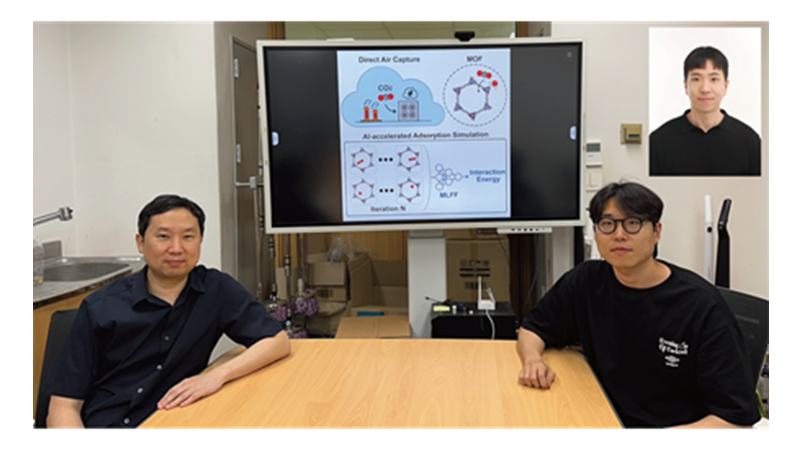 KAIST Develops AI to Easily Find Promising Materials That Capture Only CO₂
< Photo 1. (From left) Professor Jihan Kim, Ph.D. candidate Yunsung Lim and Dr. Hyunsoo Park of the Department of Chemical and Biomolecular Engineering >
In order to help prevent the climate crisis, actively reducing already-emitted CO₂ is essential. Accordingly, direct air capture (DAC) — a technology that directly extracts only CO₂ from the air — is gaining attention. However, effectively capturing pure CO₂ is not easy due to water vapor (H₂O) present in the air. KAIST researchers have successfully used AI-driven machine learning techniques to identify the most promising CO₂-capturing materials among metal-organic frameworks (MOFs), a key class of materials studied for this technology.
KAIST (President Kwang Hyung Lee) announced on the 29th of June that a research team led by Professor Jihan Kim from the Department of Chemical and Biomolecular Engineering, in collaboration with a team at Imperial College London, has developed a machine-learning-based simulation method that can quickly and accurately screen MOFs best suited for atmospheric CO₂ capture.
< Figure 1. Concept diagram of Direct Air Capture (DAC) technology and carbon capture using Metal-Organic Frameworks (MOFs). MOFs are promising porous materials capable of capturing carbon dioxide from the atmosphere, drawing attention as a core material for DAC technology. >
To overcome the difficulty of discovering high-performance materials due to the complexity of structures and the limitations of predicting intermolecular interactions, the research team developed a machine learning force field (MLFF) capable of precisely predicting the interactions between CO₂, water (H₂O), and MOFs. This new method enables calculations of MOF adsorption properties with quantum-mechanics-level accuracy at vastly faster speeds than before.
Using this system, the team screened over 8,000 experimentally synthesized MOF structures, identifying more than 100 promising candidates for CO₂ capture. Notably, this included new candidates that had not been uncovered by traditional force-field-based simulations. The team also analyzed the relationships between MOF chemical structure and adsorption performance, proposing seven key chemical features that will help in designing new materials for DAC.
< Figure 2. Concept diagram of adsorption simulation using Machine Learning Force Field (MLFF). The developed MLFF is applicable to various MOF structures and allows for precise calculation of adsorption properties by predicting interaction energies during repetitive Widom insertion simulations. It is characterized by simultaneously achieving high accuracy and low computational cost compared to conventional classical force fields. >
This research is recognized as a significant advance in the DAC field, greatly enhancing materials design and simulation by precisely predicting MOF-CO₂ and MOF-H₂O interactions.
The results of this research, with Ph.D. candidate Yunsung Lim and Dr. Hyunsoo Park of KAIST as co-first authors, were published in the international academic journal Matter on June 12.
※Paper Title: Accelerating CO₂ direct air capture screening for metal–organic frameworks with a transferable machine learning force field
※DOI: 10.1016/j.matt.2025.102203
This research was supported by the Saudi Aramco-KAIST CO₂ Management Center and the Ministry of Science and ICT's Global C.L.E.A.N. Project.
2025.06.29 View 722
KAIST Develops AI to Easily Find Promising Materials That Capture Only CO₂
< Photo 1. (From left) Professor Jihan Kim, Ph.D. candidate Yunsung Lim and Dr. Hyunsoo Park of the Department of Chemical and Biomolecular Engineering >
In order to help prevent the climate crisis, actively reducing already-emitted CO₂ is essential. Accordingly, direct air capture (DAC) — a technology that directly extracts only CO₂ from the air — is gaining attention. However, effectively capturing pure CO₂ is not easy due to water vapor (H₂O) present in the air. KAIST researchers have successfully used AI-driven machine learning techniques to identify the most promising CO₂-capturing materials among metal-organic frameworks (MOFs), a key class of materials studied for this technology.
KAIST (President Kwang Hyung Lee) announced on the 29th of June that a research team led by Professor Jihan Kim from the Department of Chemical and Biomolecular Engineering, in collaboration with a team at Imperial College London, has developed a machine-learning-based simulation method that can quickly and accurately screen MOFs best suited for atmospheric CO₂ capture.
< Figure 1. Concept diagram of Direct Air Capture (DAC) technology and carbon capture using Metal-Organic Frameworks (MOFs). MOFs are promising porous materials capable of capturing carbon dioxide from the atmosphere, drawing attention as a core material for DAC technology. >
To overcome the difficulty of discovering high-performance materials due to the complexity of structures and the limitations of predicting intermolecular interactions, the research team developed a machine learning force field (MLFF) capable of precisely predicting the interactions between CO₂, water (H₂O), and MOFs. This new method enables calculations of MOF adsorption properties with quantum-mechanics-level accuracy at vastly faster speeds than before.
Using this system, the team screened over 8,000 experimentally synthesized MOF structures, identifying more than 100 promising candidates for CO₂ capture. Notably, this included new candidates that had not been uncovered by traditional force-field-based simulations. The team also analyzed the relationships between MOF chemical structure and adsorption performance, proposing seven key chemical features that will help in designing new materials for DAC.
< Figure 2. Concept diagram of adsorption simulation using Machine Learning Force Field (MLFF). The developed MLFF is applicable to various MOF structures and allows for precise calculation of adsorption properties by predicting interaction energies during repetitive Widom insertion simulations. It is characterized by simultaneously achieving high accuracy and low computational cost compared to conventional classical force fields. >
This research is recognized as a significant advance in the DAC field, greatly enhancing materials design and simulation by precisely predicting MOF-CO₂ and MOF-H₂O interactions.
The results of this research, with Ph.D. candidate Yunsung Lim and Dr. Hyunsoo Park of KAIST as co-first authors, were published in the international academic journal Matter on June 12.
※Paper Title: Accelerating CO₂ direct air capture screening for metal–organic frameworks with a transferable machine learning force field
※DOI: 10.1016/j.matt.2025.102203
This research was supported by the Saudi Aramco-KAIST CO₂ Management Center and the Ministry of Science and ICT's Global C.L.E.A.N. Project.
2025.06.29 View 722