%4e%41%54%49%4f%4e
-
 Professor Jinsoo Kim Donates 3.4 Billion Won in Stocks to Pioneer Solutions for Climate and Food Crises through Gene Editing
< (From left) Daesoo Kim, Dean of College of Life Sciences and BioEngineering / Kyunmin Lee, Vice President for Academic Affairs/ Professor Jinsoo Kim/ Kwang Hyung Lee, President / Sang Yup Lee, Vice President for Research>
KAIST announced that Professor Jinsoo Kim of the Graduate School of Medical Science and Engineering has donated 85,000 shares of ToolGen Inc. stock to help overcome climate disasters and agricultural crises. The shares are valued at approximately 3.438 billion won as of September 15, and KAIST plans to use them to actively promote innovative research in the fields of agriculture and life sciences.
The donation will be used to establish the "Center for Plant-based Carbon Capture," which is scheduled to be founded in the second half of this year. Based on this, KAIST aims to contribute to a sustainable future by fully embarking on research to address climate change and global food security issues.
The research center will focus on developing technologies that maximize the photosynthetic efficiency of plants and microalgae. The goal is to contribute to carbon neutrality by increasing the absorption rate of atmospheric carbon dioxide, while also significantly improving food productivity to enhance food security.
The core technology is the "direct editing technology for organelle DNA (chloroplasts and mitochondria)," which Professor Kim developed for the first time in the world. Chloroplasts, which perform photosynthesis using sunlight, and mitochondria, which act as the cell's energy powerhouse, have their own DNA that could not be edited with existing CRISPR technology. This new technology can precisely edit even this DNA, and it can also be used in the future for research and treatment of intractable genetic diseases.
Furthermore, because the crops developed with this technology involve direct editing of the DNA already present in the plant rather than inserting foreign genes, they are not considered GMOs (Genetically Modified Organisms). They are recognized as "Non-GMOs" in countries like the United States and Japan. This lowers regulatory barriers and increases consumer acceptance, greatly expanding the potential for commercialization and market entry.
With the establishment of this research center, KAIST anticipates various achievements, including overcoming the food crisis amid climate change, a revolutionary increase in agricultural productivity, the presentation of sustainable carbon reduction methods, and the creation of a next-generation bioenergy industry.
Applying Professor Kim's core technology, high-efficiency crops that can absorb a large amount of carbon dioxide and be used as an energy source can be mass-produced. These crops can be used as a raw material for Sustainable Aviation Fuel (SAF), an eco-friendly aviation fuel, which is expected to be an important stepping stone for Korea to emerge as a powerhouse in future aviation fuels.
Professor Kim stated, "The climate change and food security crises facing humanity are no longer issues that we can turn a blind eye to. I decided to make this donation with the hope of contributing to a sustainable future through the advancement of gene editing science and technology, talent cultivation, and industry-academia-research collaboration."
KAIST President Kwang Hyung Lee emphasized, "Professor Jinsoo Kim's donation is a role model that shows a scientist's dedication and social responsibility. KAIST will lead innovative technologies and take the lead in solving the global climate and food crises through the Center for Plant-based Carbon Capture."
2025.09.16 View 2117
Professor Jinsoo Kim Donates 3.4 Billion Won in Stocks to Pioneer Solutions for Climate and Food Crises through Gene Editing
< (From left) Daesoo Kim, Dean of College of Life Sciences and BioEngineering / Kyunmin Lee, Vice President for Academic Affairs/ Professor Jinsoo Kim/ Kwang Hyung Lee, President / Sang Yup Lee, Vice President for Research>
KAIST announced that Professor Jinsoo Kim of the Graduate School of Medical Science and Engineering has donated 85,000 shares of ToolGen Inc. stock to help overcome climate disasters and agricultural crises. The shares are valued at approximately 3.438 billion won as of September 15, and KAIST plans to use them to actively promote innovative research in the fields of agriculture and life sciences.
The donation will be used to establish the "Center for Plant-based Carbon Capture," which is scheduled to be founded in the second half of this year. Based on this, KAIST aims to contribute to a sustainable future by fully embarking on research to address climate change and global food security issues.
The research center will focus on developing technologies that maximize the photosynthetic efficiency of plants and microalgae. The goal is to contribute to carbon neutrality by increasing the absorption rate of atmospheric carbon dioxide, while also significantly improving food productivity to enhance food security.
The core technology is the "direct editing technology for organelle DNA (chloroplasts and mitochondria)," which Professor Kim developed for the first time in the world. Chloroplasts, which perform photosynthesis using sunlight, and mitochondria, which act as the cell's energy powerhouse, have their own DNA that could not be edited with existing CRISPR technology. This new technology can precisely edit even this DNA, and it can also be used in the future for research and treatment of intractable genetic diseases.
Furthermore, because the crops developed with this technology involve direct editing of the DNA already present in the plant rather than inserting foreign genes, they are not considered GMOs (Genetically Modified Organisms). They are recognized as "Non-GMOs" in countries like the United States and Japan. This lowers regulatory barriers and increases consumer acceptance, greatly expanding the potential for commercialization and market entry.
With the establishment of this research center, KAIST anticipates various achievements, including overcoming the food crisis amid climate change, a revolutionary increase in agricultural productivity, the presentation of sustainable carbon reduction methods, and the creation of a next-generation bioenergy industry.
Applying Professor Kim's core technology, high-efficiency crops that can absorb a large amount of carbon dioxide and be used as an energy source can be mass-produced. These crops can be used as a raw material for Sustainable Aviation Fuel (SAF), an eco-friendly aviation fuel, which is expected to be an important stepping stone for Korea to emerge as a powerhouse in future aviation fuels.
Professor Kim stated, "The climate change and food security crises facing humanity are no longer issues that we can turn a blind eye to. I decided to make this donation with the hope of contributing to a sustainable future through the advancement of gene editing science and technology, talent cultivation, and industry-academia-research collaboration."
KAIST President Kwang Hyung Lee emphasized, "Professor Jinsoo Kim's donation is a role model that shows a scientist's dedication and social responsibility. KAIST will lead innovative technologies and take the lead in solving the global climate and food crises through the Center for Plant-based Carbon Capture."
2025.09.16 View 2117 -
 Startup Nation Korea International Forum to be Held at KAIST
On September 9, KAIST announced that it will be co-hosting the 4th "2025 Startup Nation Korea International Forum" with JoongAng Ilbo and Seoul National University. The two-day event will be held from September 10 to 11 at the KI Building on the main KAIST campus in Daejeon. The forum aims to bring together various members of the startup ecosystem—including government officials, universities, research institutions, investors, entrepreneurs, media, and students—to find practical solutions to the "R&D paradox," where research and development achievements in the Korean science and technology sector don't lead to successful startups. First held at Seoul National University in 2022, this year's forum will take place at KAIST.
<KI Building, where the Startup Nation International Forum will be held>
This year's theme is "The Path to an Innovative Startup Cluster." The goal is to properly foster a startup cluster in Korea through industry-academia-research cooperation, which can serve as a new growth engine, similar to global innovation clusters like Boston in the United States, a hub for the biotech industry, and Zhongguancun, China's top innovation hub.
Day 1: Startup Nation Korea International Forum
On the morning of the first day, a pre-event will feature presentations on the future of innovation clusters centered in Hongneung, Seoul, and Daedeok, Daejeon, by Professor Lee Ji-hoon of Kangwon National University, Director Im Moon-taek, Chairman Park Han-oh of Bioneer, and Director Kim Hyun-woo of the Seoul Bio Hub Project. Separately from the main event, a "Corporate-Early Career Researcher Networking Day," hosted by the Ministry of Trade, Industry and Energy, is also scheduled.
The opening ceremony on the first day will begin with opening remarks by Hong Seok-hyun, Chairman of JoongAng Holdings, welcome addresses by KAIST President Lee Kwang-hyung and Seoul National University President Yoo Hong-lim, a congratulatory speech from President Lee Jae-myung (read on his behalf by Ha Jung-woo, Chief of AI Future Planning), and congratulatory remarks from the Ministry of Science and ICT, the Ministry of Trade, Industry and Energy, the Ministry of SMEs and Startups, the Korea Chamber of Commerce and Industry, and the Federation of Korean Industries.
Following the opening ceremony, keynote speeches will be delivered by Oh Sang-rok, President of the Korea Institute of Science and Technology (KIST); Johannes Fruehauf, President of LabCentral; and Liu De-ying, President of the Peking University Innovation and Entrepreneurship College. A panel discussion on fostering startups with a focus on clusters will also be held. The discussion will be moderated by Hyun-min Bae, Director of the KAIST Center for Entrepreneurship, and will include panelists such as Johannes Fruehauf, Liu De-ying, Moon-taek Im, Director of the Daedeok Innopolis Cluster Headquarters, Jong-tak Han, Director of the Daejeon City Corporate Support Policy Division, and Hyun-woo Kim, Director of the Seoul Bio Hub Project.
Innovation Startup Competition Awards Ceremony
The Innovation Startup Competition awards ceremony will be held on the afternoon of the first day. This year, the number of awards has been significantly expanded to 13 across three categories: the Grand Prize (9 awards), the Innovation Startup Challenge Award (3 awards), and the Innovation Startup Ecosystem Contribution Award (1 award).
Nine startups were selected for the Grand Prize: Rebellion (Minister of Science and ICT Award), Cureverse (Minister of Trade, Industry and Energy Award), Cryptolab (Minister of SMEs and Startups Award), SEMIFIVE (Chairman of the Korea Chamber of Commerce and Industry Award), Solivis (Chairman of the Federation of Korean Industries Award), Medical IP (KAIST President's Award), Selectstar (Seoul National University President's Award), Bluetile Labs (Chairman of the National Research Council of Science & Technology Award), and Naeil Technology (Chairman of the Innopolis Foundation Award).
Three startups were selected for the newly established Innovation Startup Challenge Award (for startups less than 3 years old): Panacia (Minister of Science and ICT Award), HyperAccel (Minister of Trade, Industry and Energy Award), and WatertreeNeZ (Minister of SMEs and Startups Award). Additionally, Korea Technology Finance Corporation was chosen for the first-ever Innovation Startup Ecosystem Contribution Award (Chairman of JoongAng Holdings Award).
Kim Kyung-hwan, Dean of the Sungkyunkwan University Graduate School of Global Entrepreneurship and head of the judging committee, said, "This year's competition featured a large number of deep-tech startups at a global level in AI, biotech, and semiconductors. A notable feature was the high number of companies with intellectual property rights, such as patents."
<Startup Nation Korea International Forum Poster>
Day 2: Startup Nation Korea International Forum
On the second day (September 11), Part 1 will feature IR pitching from eight startups recommended by KAIST, Seoul National University, and the Korea Technology Finance Corporation. A subsequent discussion on revitalizing the innovation startup ecosystem will be moderated by Professor Ahn Tae-wook of the KAIST Center for Entrepreneurship. The discussion will include experts from industry, academia, research, and investment, such as Park Dae-hee, Chairman of the Creative Economy Innovation Center Council; Cho Young-soo, Director of Planning and Coordination at the Korea Institute of Startup & Entrepreneurship Development; startup CEOs Kyu-nam Kim, Ji-min Park, and Kyung-jin Jung; and Ji-young Jang, CEO of Rising S Ventures. They will engage in an in-depth discussion on the current status and future direction of the startup ecosystem.
In the afternoon, a special session will be dedicated to showcasing cases of student startups from KAIST. CLASSUM, Smoore Talk, Innersia, and OINS will present their entrepreneurial journeys and achievements. These presentations are expected to highlight the competitiveness of university-based startup ecosystems.
Additionally, the "PEN Global Investment Forum (Investor's Reverse Pitch)" will be held with the participation of global investors. Venture capital experts from the United States, China, Hong Kong, and other regions will take the stage to share their investment strategies and outlook on the global market.
Following this, at the Innopolis Campus Lab Startup Seminar hosted by the KAIST Center for Entrepreneurship, Myung-soo Song, CEO of PEN Ventures, will give a presentation on overseas expansion for deep-tech companies through collaboration with global Corporate Venture Capital (CVCs), providing practical insights for startups looking to expand internationally. A networking session will also be held for participants to discover new collaboration opportunities. On the same morning, the Innopolis Foundation will hold a concurrent seminar to celebrate its 20th anniversary, focusing on "The Dissemination of AI and Deep-Tech Achievements."
Seok-hyun Hong, Chairman of JoongAng Holdings, said, "For Korea to leap forward as a startup nation, universities, research institutions, and industry must join forces. I hope this forum will serve as a starting point for presenting a vision for the Korean startup ecosystem and creating a startup cluster model that can compete on the world stage."
Hong-lim Yoo, President of Seoul National University, stated, "Seoul National University has been striving to connect research achievements to social value. I hope that through this forum with KAIST, we can create a cooperative model necessary for Korea to move toward becoming a global innovation startup nation."
Kwang-hyung Lee, President of KAIST, said, "KAIST is taking the lead in creating a Korean-style innovation model by connecting research and development achievements to actual startups and industries. I hope this international forum will be an opportunity to establish a Korean-style startup cluster model and strengthen our global competitiveness."
Innovation Startup Exhibition
An exhibition of innovative startups will also be held on the first floor of the KAIST building where the international forum is taking place. In addition to booths for the 13 startups selected in the Innovation Startup Competition, visitors can also meet 23 other innovative startups chosen by participating institutions like Seoul National University and KAIST.
The forum is sponsored by the Ministry of Science and ICT, the Ministry of Trade, Industry and Energy, the Ministry of SMEs and Startups, the Korea Chamber of Commerce and Industry, the Federation of Korean Industries, the National Research Council of Science & Technology, the Innopolis Foundation, the Korea Technology Finance Corporation, Chungcheongbuk-do Provincial Government, PEN Ventures, Korea Technology Finance Corporation, and DaedeokNet. The forum will be live-streamed on YouTube and the official websites (www.snkforum.co.kr, www.joongang.co.kr), where anyone can watch.
2025.09.09 View 6455
Startup Nation Korea International Forum to be Held at KAIST
On September 9, KAIST announced that it will be co-hosting the 4th "2025 Startup Nation Korea International Forum" with JoongAng Ilbo and Seoul National University. The two-day event will be held from September 10 to 11 at the KI Building on the main KAIST campus in Daejeon. The forum aims to bring together various members of the startup ecosystem—including government officials, universities, research institutions, investors, entrepreneurs, media, and students—to find practical solutions to the "R&D paradox," where research and development achievements in the Korean science and technology sector don't lead to successful startups. First held at Seoul National University in 2022, this year's forum will take place at KAIST.
<KI Building, where the Startup Nation International Forum will be held>
This year's theme is "The Path to an Innovative Startup Cluster." The goal is to properly foster a startup cluster in Korea through industry-academia-research cooperation, which can serve as a new growth engine, similar to global innovation clusters like Boston in the United States, a hub for the biotech industry, and Zhongguancun, China's top innovation hub.
Day 1: Startup Nation Korea International Forum
On the morning of the first day, a pre-event will feature presentations on the future of innovation clusters centered in Hongneung, Seoul, and Daedeok, Daejeon, by Professor Lee Ji-hoon of Kangwon National University, Director Im Moon-taek, Chairman Park Han-oh of Bioneer, and Director Kim Hyun-woo of the Seoul Bio Hub Project. Separately from the main event, a "Corporate-Early Career Researcher Networking Day," hosted by the Ministry of Trade, Industry and Energy, is also scheduled.
The opening ceremony on the first day will begin with opening remarks by Hong Seok-hyun, Chairman of JoongAng Holdings, welcome addresses by KAIST President Lee Kwang-hyung and Seoul National University President Yoo Hong-lim, a congratulatory speech from President Lee Jae-myung (read on his behalf by Ha Jung-woo, Chief of AI Future Planning), and congratulatory remarks from the Ministry of Science and ICT, the Ministry of Trade, Industry and Energy, the Ministry of SMEs and Startups, the Korea Chamber of Commerce and Industry, and the Federation of Korean Industries.
Following the opening ceremony, keynote speeches will be delivered by Oh Sang-rok, President of the Korea Institute of Science and Technology (KIST); Johannes Fruehauf, President of LabCentral; and Liu De-ying, President of the Peking University Innovation and Entrepreneurship College. A panel discussion on fostering startups with a focus on clusters will also be held. The discussion will be moderated by Hyun-min Bae, Director of the KAIST Center for Entrepreneurship, and will include panelists such as Johannes Fruehauf, Liu De-ying, Moon-taek Im, Director of the Daedeok Innopolis Cluster Headquarters, Jong-tak Han, Director of the Daejeon City Corporate Support Policy Division, and Hyun-woo Kim, Director of the Seoul Bio Hub Project.
Innovation Startup Competition Awards Ceremony
The Innovation Startup Competition awards ceremony will be held on the afternoon of the first day. This year, the number of awards has been significantly expanded to 13 across three categories: the Grand Prize (9 awards), the Innovation Startup Challenge Award (3 awards), and the Innovation Startup Ecosystem Contribution Award (1 award).
Nine startups were selected for the Grand Prize: Rebellion (Minister of Science and ICT Award), Cureverse (Minister of Trade, Industry and Energy Award), Cryptolab (Minister of SMEs and Startups Award), SEMIFIVE (Chairman of the Korea Chamber of Commerce and Industry Award), Solivis (Chairman of the Federation of Korean Industries Award), Medical IP (KAIST President's Award), Selectstar (Seoul National University President's Award), Bluetile Labs (Chairman of the National Research Council of Science & Technology Award), and Naeil Technology (Chairman of the Innopolis Foundation Award).
Three startups were selected for the newly established Innovation Startup Challenge Award (for startups less than 3 years old): Panacia (Minister of Science and ICT Award), HyperAccel (Minister of Trade, Industry and Energy Award), and WatertreeNeZ (Minister of SMEs and Startups Award). Additionally, Korea Technology Finance Corporation was chosen for the first-ever Innovation Startup Ecosystem Contribution Award (Chairman of JoongAng Holdings Award).
Kim Kyung-hwan, Dean of the Sungkyunkwan University Graduate School of Global Entrepreneurship and head of the judging committee, said, "This year's competition featured a large number of deep-tech startups at a global level in AI, biotech, and semiconductors. A notable feature was the high number of companies with intellectual property rights, such as patents."
<Startup Nation Korea International Forum Poster>
Day 2: Startup Nation Korea International Forum
On the second day (September 11), Part 1 will feature IR pitching from eight startups recommended by KAIST, Seoul National University, and the Korea Technology Finance Corporation. A subsequent discussion on revitalizing the innovation startup ecosystem will be moderated by Professor Ahn Tae-wook of the KAIST Center for Entrepreneurship. The discussion will include experts from industry, academia, research, and investment, such as Park Dae-hee, Chairman of the Creative Economy Innovation Center Council; Cho Young-soo, Director of Planning and Coordination at the Korea Institute of Startup & Entrepreneurship Development; startup CEOs Kyu-nam Kim, Ji-min Park, and Kyung-jin Jung; and Ji-young Jang, CEO of Rising S Ventures. They will engage in an in-depth discussion on the current status and future direction of the startup ecosystem.
In the afternoon, a special session will be dedicated to showcasing cases of student startups from KAIST. CLASSUM, Smoore Talk, Innersia, and OINS will present their entrepreneurial journeys and achievements. These presentations are expected to highlight the competitiveness of university-based startup ecosystems.
Additionally, the "PEN Global Investment Forum (Investor's Reverse Pitch)" will be held with the participation of global investors. Venture capital experts from the United States, China, Hong Kong, and other regions will take the stage to share their investment strategies and outlook on the global market.
Following this, at the Innopolis Campus Lab Startup Seminar hosted by the KAIST Center for Entrepreneurship, Myung-soo Song, CEO of PEN Ventures, will give a presentation on overseas expansion for deep-tech companies through collaboration with global Corporate Venture Capital (CVCs), providing practical insights for startups looking to expand internationally. A networking session will also be held for participants to discover new collaboration opportunities. On the same morning, the Innopolis Foundation will hold a concurrent seminar to celebrate its 20th anniversary, focusing on "The Dissemination of AI and Deep-Tech Achievements."
Seok-hyun Hong, Chairman of JoongAng Holdings, said, "For Korea to leap forward as a startup nation, universities, research institutions, and industry must join forces. I hope this forum will serve as a starting point for presenting a vision for the Korean startup ecosystem and creating a startup cluster model that can compete on the world stage."
Hong-lim Yoo, President of Seoul National University, stated, "Seoul National University has been striving to connect research achievements to social value. I hope that through this forum with KAIST, we can create a cooperative model necessary for Korea to move toward becoming a global innovation startup nation."
Kwang-hyung Lee, President of KAIST, said, "KAIST is taking the lead in creating a Korean-style innovation model by connecting research and development achievements to actual startups and industries. I hope this international forum will be an opportunity to establish a Korean-style startup cluster model and strengthen our global competitiveness."
Innovation Startup Exhibition
An exhibition of innovative startups will also be held on the first floor of the KAIST building where the international forum is taking place. In addition to booths for the 13 startups selected in the Innovation Startup Competition, visitors can also meet 23 other innovative startups chosen by participating institutions like Seoul National University and KAIST.
The forum is sponsored by the Ministry of Science and ICT, the Ministry of Trade, Industry and Energy, the Ministry of SMEs and Startups, the Korea Chamber of Commerce and Industry, the Federation of Korean Industries, the National Research Council of Science & Technology, the Innopolis Foundation, the Korea Technology Finance Corporation, Chungcheongbuk-do Provincial Government, PEN Ventures, Korea Technology Finance Corporation, and DaedeokNet. The forum will be live-streamed on YouTube and the official websites (www.snkforum.co.kr, www.joongang.co.kr), where anyone can watch.
2025.09.09 View 6455 -
 KAIST–National Intelligence Service Successfully Hold the 4th University Research Security Education Council Workshop
KAIST (President Kwang Hyung Lee) announced on the 22nd of August that, together with the National Intelligence Service, it held the “4th University Research Security Education Council Workshop” at the Academic Cultural Complex on KAIST’s main campus in Daejeon on the 21st.
This 4th workshop was held under the theme of “Global Research Security,” based on the recognition that technology leakage can have serious impacts not only on the national economy and security but on international exchanges in science and technology. Accordingly, national policies and outstanding cases from institutions to enhance the level of university research security management were shared, and practical security enhancement measures applicable in the field were discussed.
In the presentation sessions, △ the Ministry of Science and ICT presented the government’s policy direction for strengthening research security, △ the National Institute for International Education and Training (KIRD) gave a presentation on settlement and career support programs for foreign researchers in science and engineering, △ the Korea Strategic Trade Institute (KOSTI) introduced the Authorized Economic Operator (AEO/CP) system for universities’ dual-use items and technology export control measures, and △ the Korea Institute of S&T Evaluation and Planning (KISTEP) conducted a special lecture on research security field manuals.
In the university case presentations, KAIST shared achievements in promoting global research security, while Yong In University introduced its newly launched program this year for fostering security professionals.
This event was attended by more than 130 participants from approximately 70 universities nationwide, including Seoul National University and Ewha Womans University, as well as officials from the Ministry of Science and ICT, the National Intelligence Service, KIRD, KISTEP, and KOSTI.
An NIS official stated, “With the rapid changes in the university research environment due to the expansion of international joint research and the increase in international students, the establishment of a research security culture has become more important than ever. Based on the excellent cases shared at the workshop, we will actively reflect the opinions of host institutions to spread security awareness and continue preparing effective countermeasures.”
Cheol Seong Jang, President of the National University Council of Research & Industry Cooperation and Research Directors (Professor at Kangwon National University), emphasized, “If the ideas and cases discussed at the workshop are applied in university settings, they will greatly contribute to Korea leading the establishment of a trusted global research ecosystem.”
Byung-Kwan Cho, Director of Research at KAIST, said, “KAIST will not hesitate to introduce and spread leading research security systems so that our efforts to strengthen research security become a benchmark for other universities. By applying the principle of open science — ‘as open as possible, as closed as necessary’ — we will ensure that research security and global exchanges achieve harmony.”
The University Research Security Education Council was launched in June 2022 with joint supervision by KAIST and the National Intelligence Service and cooperation from KIRD. This year’s workshop was co-hosted by KAIST, the National Intelligence Service, and Kangwon National University.
2025.08.22 View 2543
KAIST–National Intelligence Service Successfully Hold the 4th University Research Security Education Council Workshop
KAIST (President Kwang Hyung Lee) announced on the 22nd of August that, together with the National Intelligence Service, it held the “4th University Research Security Education Council Workshop” at the Academic Cultural Complex on KAIST’s main campus in Daejeon on the 21st.
This 4th workshop was held under the theme of “Global Research Security,” based on the recognition that technology leakage can have serious impacts not only on the national economy and security but on international exchanges in science and technology. Accordingly, national policies and outstanding cases from institutions to enhance the level of university research security management were shared, and practical security enhancement measures applicable in the field were discussed.
In the presentation sessions, △ the Ministry of Science and ICT presented the government’s policy direction for strengthening research security, △ the National Institute for International Education and Training (KIRD) gave a presentation on settlement and career support programs for foreign researchers in science and engineering, △ the Korea Strategic Trade Institute (KOSTI) introduced the Authorized Economic Operator (AEO/CP) system for universities’ dual-use items and technology export control measures, and △ the Korea Institute of S&T Evaluation and Planning (KISTEP) conducted a special lecture on research security field manuals.
In the university case presentations, KAIST shared achievements in promoting global research security, while Yong In University introduced its newly launched program this year for fostering security professionals.
This event was attended by more than 130 participants from approximately 70 universities nationwide, including Seoul National University and Ewha Womans University, as well as officials from the Ministry of Science and ICT, the National Intelligence Service, KIRD, KISTEP, and KOSTI.
An NIS official stated, “With the rapid changes in the university research environment due to the expansion of international joint research and the increase in international students, the establishment of a research security culture has become more important than ever. Based on the excellent cases shared at the workshop, we will actively reflect the opinions of host institutions to spread security awareness and continue preparing effective countermeasures.”
Cheol Seong Jang, President of the National University Council of Research & Industry Cooperation and Research Directors (Professor at Kangwon National University), emphasized, “If the ideas and cases discussed at the workshop are applied in university settings, they will greatly contribute to Korea leading the establishment of a trusted global research ecosystem.”
Byung-Kwan Cho, Director of Research at KAIST, said, “KAIST will not hesitate to introduce and spread leading research security systems so that our efforts to strengthen research security become a benchmark for other universities. By applying the principle of open science — ‘as open as possible, as closed as necessary’ — we will ensure that research security and global exchanges achieve harmony.”
The University Research Security Education Council was launched in June 2022 with joint supervision by KAIST and the National Intelligence Service and cooperation from KIRD. This year’s workshop was co-hosted by KAIST, the National Intelligence Service, and Kangwon National University.
2025.08.22 View 2543 -
 KAIST Identifies Key to Slowing Aging via RNA Regulation... Unlocks Mechanism for Longevity
As aging progresses, the quality of DNA and proteins inside cells declines, known to be the cause of various degenerative diseases. However, the connection between aging and RNA has remained largely unexplored. Now, a Korean research team has discovered that a ribosome-associated quality control factor—PELOTA, a protein essential for eliminating abnormal mRNA—plays a central role in slowing aging and promoting longevity. This breakthrough is expected to provide a new direction for future therapeutic strategies targeting human aging and neurodegenerative diseases.
KAIST (President Kwang Hyung Lee) announced that a joint research team—led by Professor Seung-Jae V. Lee of the Department of Biological Sciences at KAIST and the Research Center for RNA-mediated Healthy Longevity, Professor Jinsoo Seo of Yonsei University (President Dong-Sup Yoon), and Professor Kwang-Pyo Lee of the Korea Research Institute of Bioscience and Biotechnology (KRIBB, President Suk Yoon Kwon) under the National Research Council of Science & Technology (NST, Chairman Yeung-Shik Kim—has discovered that the protein ‘PELOTA*’, which plays a key role in ribosome-associated quality control, regulates the pace of aging.
*PELOTA: A key protein in maintaining cellular translational homeostasis, responsible for detecting and resolving errors during mRNA translation by ribosomes.
Until now, RNA—particularly mRNA—has generally been regarded as a transient intermediary in protein synthesis. Its instability made it difficult to study quantitatively or track over time, leaving its physiological and functional roles relatively understudied compared to DNA.
Using C. elegans (a nematode widely used in aging research due to its short lifespan), the researchers first discovered that the ribosome-associated quality control factor PELOTA is essential for longevity. In particular, when PELOTA was overexpressed in normal nematodes, their lifespan was extended, suggesting that ribosome-associated quality control mechanisms involved in removing abnormal mRNA are necessary for promoting longevity.
The study also revealed that the ribosome-associated quality control system simultaneously regulates both the mTOR signaling pathway—which senses nutrient status or growth signals to control cell growth, protein synthesis, and autophagy, and plays a key role in aging and energy metabolism—and the autophagy pathway, the cellular cleanup and recycling system through which cells break down and reuse unnecessary or damaged components.
When PELOTA was deficient, the mTOR pathway became abnormally activated, and autophagy was suppressed—accelerating aging. Conversely, activation of PELOTA inhibited mTOR and induced autophagy, thereby maintaining cellular homeostasis and extending lifespan.
Notably, this mechanism was found to be conserved in both mice and humans. The study also showed that the loss of PELOTA could contribute to muscle aging and Alzheimer’s disease, suggesting its relevance to age-related disorders.
These findings indicate that the study of PELOTA and ribosome-associated quality control could play an important role in developing therapeutic strategies for human aging and neurodegenerative diseases.
Professor Seung-Jae V. Lee of KAIST, who led the research, stated, “While the connection between quality control and aging has been well established at the DNA and protein levels, molecular evidence showing that RNA quality control also functionally contributes to lifespan regulation has been very limited.” He emphasized that the “study provides strong evidence that the removal of abnormal RNA is a central axis in the aging regulatory network.”
The study was published on August 5th in the prestigious journal PNAS (Proceedings of the National Academy of Sciences), with Dr. Jongsun Lee and Dr. Eun Ji Kim of KAIST, Dr. Bora Lee of KRIBB, and Dr. Hyein Lee of Yonsei University as co-first authors.
※ Title: Pelota-mediated ribosome-associated quality control counteracts aging and age-associated pathologies across species ※ DOI: https://doi.org/10.1073/pnas.2505217122
This research was supported by the Global Leader Research Project of the National Research Foundation of Korea.
2025.08.18 View 4632
KAIST Identifies Key to Slowing Aging via RNA Regulation... Unlocks Mechanism for Longevity
As aging progresses, the quality of DNA and proteins inside cells declines, known to be the cause of various degenerative diseases. However, the connection between aging and RNA has remained largely unexplored. Now, a Korean research team has discovered that a ribosome-associated quality control factor—PELOTA, a protein essential for eliminating abnormal mRNA—plays a central role in slowing aging and promoting longevity. This breakthrough is expected to provide a new direction for future therapeutic strategies targeting human aging and neurodegenerative diseases.
KAIST (President Kwang Hyung Lee) announced that a joint research team—led by Professor Seung-Jae V. Lee of the Department of Biological Sciences at KAIST and the Research Center for RNA-mediated Healthy Longevity, Professor Jinsoo Seo of Yonsei University (President Dong-Sup Yoon), and Professor Kwang-Pyo Lee of the Korea Research Institute of Bioscience and Biotechnology (KRIBB, President Suk Yoon Kwon) under the National Research Council of Science & Technology (NST, Chairman Yeung-Shik Kim—has discovered that the protein ‘PELOTA*’, which plays a key role in ribosome-associated quality control, regulates the pace of aging.
*PELOTA: A key protein in maintaining cellular translational homeostasis, responsible for detecting and resolving errors during mRNA translation by ribosomes.
Until now, RNA—particularly mRNA—has generally been regarded as a transient intermediary in protein synthesis. Its instability made it difficult to study quantitatively or track over time, leaving its physiological and functional roles relatively understudied compared to DNA.
Using C. elegans (a nematode widely used in aging research due to its short lifespan), the researchers first discovered that the ribosome-associated quality control factor PELOTA is essential for longevity. In particular, when PELOTA was overexpressed in normal nematodes, their lifespan was extended, suggesting that ribosome-associated quality control mechanisms involved in removing abnormal mRNA are necessary for promoting longevity.
The study also revealed that the ribosome-associated quality control system simultaneously regulates both the mTOR signaling pathway—which senses nutrient status or growth signals to control cell growth, protein synthesis, and autophagy, and plays a key role in aging and energy metabolism—and the autophagy pathway, the cellular cleanup and recycling system through which cells break down and reuse unnecessary or damaged components.
When PELOTA was deficient, the mTOR pathway became abnormally activated, and autophagy was suppressed—accelerating aging. Conversely, activation of PELOTA inhibited mTOR and induced autophagy, thereby maintaining cellular homeostasis and extending lifespan.
Notably, this mechanism was found to be conserved in both mice and humans. The study also showed that the loss of PELOTA could contribute to muscle aging and Alzheimer’s disease, suggesting its relevance to age-related disorders.
These findings indicate that the study of PELOTA and ribosome-associated quality control could play an important role in developing therapeutic strategies for human aging and neurodegenerative diseases.
Professor Seung-Jae V. Lee of KAIST, who led the research, stated, “While the connection between quality control and aging has been well established at the DNA and protein levels, molecular evidence showing that RNA quality control also functionally contributes to lifespan regulation has been very limited.” He emphasized that the “study provides strong evidence that the removal of abnormal RNA is a central axis in the aging regulatory network.”
The study was published on August 5th in the prestigious journal PNAS (Proceedings of the National Academy of Sciences), with Dr. Jongsun Lee and Dr. Eun Ji Kim of KAIST, Dr. Bora Lee of KRIBB, and Dr. Hyein Lee of Yonsei University as co-first authors.
※ Title: Pelota-mediated ribosome-associated quality control counteracts aging and age-associated pathologies across species ※ DOI: https://doi.org/10.1073/pnas.2505217122
This research was supported by the Global Leader Research Project of the National Research Foundation of Korea.
2025.08.18 View 4632 -
 KAIST Takes the Lead in Developing Core Technologies for Generative AI National R&D Project
KAIST announced on the 15th of August that Professor Sanghoo Park of the Department of Nuclear and Quantum Engineering has won two consecutive awards for early-career researchers at two of the world's most prestigious plasma academic conferences.
Professor Park was selected as a recipient of the Early Career Award (ECA) at the Gaseous Electronics Conference (GEC), hosted by the American Physical Society, on August 4. He was also honored with the Young Investigator Award, presented by the International Plasma Chemistry Society (IPCS), on June 19.
The American Physical Society's GEC Early Career Award is given to only one person worldwide every two years, based on a comprehensive evaluation of research excellence, academic influence, and contributions to the field of plasma. The award will be presented at GEC 2025, which will be held at COEX in Seoul from October 13 to 17.
Established in 1948, the GEC is a leading academic conference in the plasma field with a 77-year history of showcasing key research achievements in all areas of plasma, including physics, chemistry, diagnostics, and application technologies. Recently, advanced application research such as eco-friendly chemical processes, next-generation semiconductors, and atomic layer and ultra-low-temperature etching technology for HBM processes have been gaining attention.
To commemorate the award, Professor Park will give an invited lecture at GEC 2025 on the topic of "Deep-Learning-Based Spectroscopic Data Analysis for Advancing Plasma Spectroscopy." In his lecture, he will use case studies to demonstrate a method that allows even non-specialists to easily and quickly perform spectroscopic data analysis—which is essential for spectroscopy, a key analytical method in modern science including plasma diagnostics—by using deep learning technology.
Professor Park also won the Young Investigator Award from the IPCS at the 26th International Symposium on Plasma Chemistry (ISPC 26), which was held in Minneapolis, USA, from June 15 to 20.
First held in 1973, the ISPC (International Symposium on Plasma Chemistry) is a representative international conference in the field of plasma chemistry, held biennially. It covers a wide range of topics, from basic plasma chemical reaction principles to applications in semiconductor processes, green energy, environmental science, and biotechnology. Researchers from industry, academia, and research institutions worldwide share their latest findings at each event. The Young Investigator Award is given to a scientist who has obtained their doctorate within the last 10 years and has demonstrated outstanding achievements in the field.
Professor Park was recognized for his leading research achievements in using plasma-liquid interactions and real-time optical diagnostic technology to environmentally fix nitrogen from the air and precisely control the quantity and types of reactive chemical species that are beneficial to the human body and the environment.
Professor Sanghoo Park stated, "It is very meaningful to receive the Young Investigator Award representing Korea at the GEC event, which is being held in Korea for the first time in its history." He added, "I am happy that my consistent interest in and achievements in fundamental plasma science have been recognized, and it is even more significant that the efforts of the KAIST research team have been acknowledged by the world's top conferences."
2025.08.16 View 3960
KAIST Takes the Lead in Developing Core Technologies for Generative AI National R&D Project
KAIST announced on the 15th of August that Professor Sanghoo Park of the Department of Nuclear and Quantum Engineering has won two consecutive awards for early-career researchers at two of the world's most prestigious plasma academic conferences.
Professor Park was selected as a recipient of the Early Career Award (ECA) at the Gaseous Electronics Conference (GEC), hosted by the American Physical Society, on August 4. He was also honored with the Young Investigator Award, presented by the International Plasma Chemistry Society (IPCS), on June 19.
The American Physical Society's GEC Early Career Award is given to only one person worldwide every two years, based on a comprehensive evaluation of research excellence, academic influence, and contributions to the field of plasma. The award will be presented at GEC 2025, which will be held at COEX in Seoul from October 13 to 17.
Established in 1948, the GEC is a leading academic conference in the plasma field with a 77-year history of showcasing key research achievements in all areas of plasma, including physics, chemistry, diagnostics, and application technologies. Recently, advanced application research such as eco-friendly chemical processes, next-generation semiconductors, and atomic layer and ultra-low-temperature etching technology for HBM processes have been gaining attention.
To commemorate the award, Professor Park will give an invited lecture at GEC 2025 on the topic of "Deep-Learning-Based Spectroscopic Data Analysis for Advancing Plasma Spectroscopy." In his lecture, he will use case studies to demonstrate a method that allows even non-specialists to easily and quickly perform spectroscopic data analysis—which is essential for spectroscopy, a key analytical method in modern science including plasma diagnostics—by using deep learning technology.
Professor Park also won the Young Investigator Award from the IPCS at the 26th International Symposium on Plasma Chemistry (ISPC 26), which was held in Minneapolis, USA, from June 15 to 20.
First held in 1973, the ISPC (International Symposium on Plasma Chemistry) is a representative international conference in the field of plasma chemistry, held biennially. It covers a wide range of topics, from basic plasma chemical reaction principles to applications in semiconductor processes, green energy, environmental science, and biotechnology. Researchers from industry, academia, and research institutions worldwide share their latest findings at each event. The Young Investigator Award is given to a scientist who has obtained their doctorate within the last 10 years and has demonstrated outstanding achievements in the field.
Professor Park was recognized for his leading research achievements in using plasma-liquid interactions and real-time optical diagnostic technology to environmentally fix nitrogen from the air and precisely control the quantity and types of reactive chemical species that are beneficial to the human body and the environment.
Professor Sanghoo Park stated, "It is very meaningful to receive the Young Investigator Award representing Korea at the GEC event, which is being held in Korea for the first time in its history." He added, "I am happy that my consistent interest in and achievements in fundamental plasma science have been recognized, and it is even more significant that the efforts of the KAIST research team have been acknowledged by the world's top conferences."
2025.08.16 View 3960 -
 KAIST Takes the Lead in Developing Core Technologies for Generative AI National R&D Project
KAIST (President Kwang Hyung Lee) is leading the transition to AI Transformation (AX) by advancing research topics based on the practical technological demands of industries, fostering AI talent, and demonstrating research outcomes in industrial settings. In this context, KAIST announced on the 13th of August that it is at the forefront of strengthening the nation's AI technology competitiveness by developing core AI technologies via national R&D projects for generative AI led by the Ministry of Science and ICT.
In the 'Generative AI Leading Talent Cultivation Project,' KAIST was selected as a joint research institution for all three projects—two led by industry partners and one by a research institution—and will thus be tasked with the dual challenge of developing core generative AI technologies and cultivating practical, core talent through industry-academia collaborations.
Moreover, in the 'Development of a Proprietary AI Foundation Model' project, KAIST faculty members are participating as key researchers in four out of five consortia, establishing the university as a central hub for domestic generative AI research.
Each project in the Generative AI Leading Talent Cultivation Project will receive 6.7 billion won, while each consortium in the proprietary AI foundation model development project will receive a total of 200 billion won in government support, including GPU infrastructure.
As part of the 'Generative AI Leading Talent Cultivation Project,' which runs until the end of 2028, KAIST is collaborating with LG AI Research. Professor Noseong Park from the School of Computing will participate as the principal investigator for KAIST, conducting research in the field of physics-based generative AI (Physical AI). This project focuses on developing image and video generation technologies based on physical laws and developing a 'World Model.'
In particular, research being conducted by Professor Noseong Park's team and Professor Sung-Eui Yoon's team proposes a model structure designed to help AI learn the real-world rules of the physical world more precisely. This is considered a core technology for Physical AI.
Professors Noseong Park, Jae-gil Lee, Jiyoung Hwang, Sung-Eui Yoon, and Hyun-Woo Kim from the School of Computing, who have been globally recognized for their achievements in the AI field, are jointly participating in this project. This year, they have presented work at top AI conferences such as ICLR, ICRA, ICCV, and ICML, including: ▲ Research on physics-based Ollivier Ricci-flow (ICLR 2025, Prof. Noseong Park) ▲ Technology to improve the navigation efficiency of quadruped robots (ICRA 2025, Prof. Sung-Eui Yoon) ▲ A multimodal large language model for text-video retrieval (ICCV 2025, Prof. Hyun-Woo Kim) ▲ Structured representation learning for knowledge generation (ICML 2025, Prof. Jiyoung Whang).
In the collaboration with NC AI, Professor Tae-Kyun Kim from the School of Computing is participating as the principal investigator to develop multimodal AI agent technology. The research will explore technologies applicable to the entire gaming industry, such as 3D modeling, animation, avatar expression generation, and character AI. It is expected to contribute to training practical AI talents by giving them hands-on experience in the industrial field and making the game production pipeline more efficient.
As the principal investigator, Professor Tae-Kyun Kim, a renowned scholar in 3D computer vision and generative AI, is developing key technologies for creating immersive avatars in the virtual and gaming industries. He will apply a first-person full-body motion diffusion model, which he developed through a joint research project with Meta, to VR and AR environments.
Professor Tae-Kyun Kim, Minhyeok Seong, and Tae-Hyun Oh from the School of Computing, and Professors Sung-Hee Lee, Woon-Tack Woo, Jun-Yong Noh, and Kyung-Tae Lim from the Graduate School of Culture Technology, are participating in the NC AI project. They have presented globally recognized work at CVPR 2025 and ICLR 2025, including: ▲ A first-person full-body motion diffusion model (CVPR 2025, Prof. Tae-Kyun Kim) ▲ Stochastic diffusion synchronization technology for image generation (ICLR 2025, Prof. Minhyeok Seong) ▲ The creation of a large-scale 3D facial mesh video dataset (ICLR 2025, Prof. Tae-Hyun Oh) ▲ Object-adaptive agent motion generation technology, InterFaceRays (Eurographics 2025, Prof. Sung-Hee Lee) ▲ 3D neural face editing technology (CVPR 2025, Prof. Jun-Yong Noh) ▲ Research on selective search augmentation for multilingual vision-language models (COLING 2025, Prof. Kyung-Tae Lim).
In the project led by the Korea Electronics Technology Institute (KETI), Professor Seungryong Kim from the Kim Jae-chul Graduate School of AI is participating in generative AI technology development. His team recently developed new technology for extracting robust point-tracking information from video data in collaboration with Adobe Research and Google DeepMind, proposing a key technology for clearly understanding and generating videos.
Each industry partner will open joint courses with KAIST and provide their generative AI foundation models for education and research. Selected outstanding students will be dispatched to these companies to conduct practical research, and KAIST faculty will also serve as adjunct professors at the in-house AI graduate school established by LG AI Research.
Meanwhile, KAIST showed an unrivaled presence by participating in four consortia for the Ministry of Science and ICT's 'Proprietary AI Foundation Model Development' project.
In the NC AI Consortium, Professors Tae-Kyun Kim, Sung-Eui Yoon, Noseong Park, Jiyoung Hwang, and Minhyeok Seong from the School of Computing are participating, focusing on the development of multimodal foundation models (LMMs) and robot-based models. They are particularly concentrating on developing LMMs that learn common sense about space, physics, and time. They have formed a research team optimized for developing next-generation, multimodal AI models that can understand and interact with the physical world, equipped with an 'all-purpose AI brain' capable of simultaneously understanding and processing diverse information such as text, images, video, and sound.
In the Upstage Consortium, Professors Jae-gil Lee and Hyeon-eon Oh from the School of Computing, both renowned scholars in data AI and NLP (natural language processing), along with Professor Kyung-Tae Lim from the Graduate School of Culture Technology, an LLM expert, are responsible for developing vertical models for industries such as finance, law, and manufacturing. The KAIST researchers will concentrate on developing practical AI models that are directly applicable to industrial settings and tailored to each specific industry.
The Naver Consortium includes Professor Tae-Hyun Oh from the School of Computing, who has developed key technology for multimodal learning and compositional language-vision models, Professor Hyun-Woo Kim, who has proposed video reasoning and generation methods using language models, and faculty from the Kim Jae-chul Graduate School of AI and the Department of Electrical Engineering.
In the SKT Consortium, Professor Ki-min Lee from the Kim Jae-chul Graduate School of AI, who has achieved outstanding results in text-to-image generation, human preference modeling, and visual robotic manipulation technology development, is participating. This technology is expected to play a key role in developing personalized services and customized AI solutions for telecommunications companies.
This outcome is considered a successful culmination of KAIST's strategy for developing AI technology based on industry demand and centered on on-site demonstrations.
KAIST President Kwang Hyung Lee said, "For AI technology to go beyond academic achievements and be connected to and practical for industry, continuous government support, research, and education centered on industry-academia collaboration are essential. KAIST will continue to strive to solve problems in industrial settings and make a real contribution to enhancing the competitiveness of the AI ecosystem."
He added that while the project led by Professor Sung-Ju Hwang from the Kim Jae-chul Graduate School of AI, which had applied as a lead institution for the proprietary foundation model development project, was unfortunately not selected, it was a meaningful challenge that stood out for its original approach and bold attempts. President Lee further commented, "Regardless of whether it was selected or not, such attempts will accumulate and make the Korean AI ecosystem even richer."
2025.08.13 View 4908
KAIST Takes the Lead in Developing Core Technologies for Generative AI National R&D Project
KAIST (President Kwang Hyung Lee) is leading the transition to AI Transformation (AX) by advancing research topics based on the practical technological demands of industries, fostering AI talent, and demonstrating research outcomes in industrial settings. In this context, KAIST announced on the 13th of August that it is at the forefront of strengthening the nation's AI technology competitiveness by developing core AI technologies via national R&D projects for generative AI led by the Ministry of Science and ICT.
In the 'Generative AI Leading Talent Cultivation Project,' KAIST was selected as a joint research institution for all three projects—two led by industry partners and one by a research institution—and will thus be tasked with the dual challenge of developing core generative AI technologies and cultivating practical, core talent through industry-academia collaborations.
Moreover, in the 'Development of a Proprietary AI Foundation Model' project, KAIST faculty members are participating as key researchers in four out of five consortia, establishing the university as a central hub for domestic generative AI research.
Each project in the Generative AI Leading Talent Cultivation Project will receive 6.7 billion won, while each consortium in the proprietary AI foundation model development project will receive a total of 200 billion won in government support, including GPU infrastructure.
As part of the 'Generative AI Leading Talent Cultivation Project,' which runs until the end of 2028, KAIST is collaborating with LG AI Research. Professor Noseong Park from the School of Computing will participate as the principal investigator for KAIST, conducting research in the field of physics-based generative AI (Physical AI). This project focuses on developing image and video generation technologies based on physical laws and developing a 'World Model.'
In particular, research being conducted by Professor Noseong Park's team and Professor Sung-Eui Yoon's team proposes a model structure designed to help AI learn the real-world rules of the physical world more precisely. This is considered a core technology for Physical AI.
Professors Noseong Park, Jae-gil Lee, Jiyoung Hwang, Sung-Eui Yoon, and Hyun-Woo Kim from the School of Computing, who have been globally recognized for their achievements in the AI field, are jointly participating in this project. This year, they have presented work at top AI conferences such as ICLR, ICRA, ICCV, and ICML, including: ▲ Research on physics-based Ollivier Ricci-flow (ICLR 2025, Prof. Noseong Park) ▲ Technology to improve the navigation efficiency of quadruped robots (ICRA 2025, Prof. Sung-Eui Yoon) ▲ A multimodal large language model for text-video retrieval (ICCV 2025, Prof. Hyun-Woo Kim) ▲ Structured representation learning for knowledge generation (ICML 2025, Prof. Jiyoung Whang).
In the collaboration with NC AI, Professor Tae-Kyun Kim from the School of Computing is participating as the principal investigator to develop multimodal AI agent technology. The research will explore technologies applicable to the entire gaming industry, such as 3D modeling, animation, avatar expression generation, and character AI. It is expected to contribute to training practical AI talents by giving them hands-on experience in the industrial field and making the game production pipeline more efficient.
As the principal investigator, Professor Tae-Kyun Kim, a renowned scholar in 3D computer vision and generative AI, is developing key technologies for creating immersive avatars in the virtual and gaming industries. He will apply a first-person full-body motion diffusion model, which he developed through a joint research project with Meta, to VR and AR environments.
Professor Tae-Kyun Kim, Minhyeok Seong, and Tae-Hyun Oh from the School of Computing, and Professors Sung-Hee Lee, Woon-Tack Woo, Jun-Yong Noh, and Kyung-Tae Lim from the Graduate School of Culture Technology, are participating in the NC AI project. They have presented globally recognized work at CVPR 2025 and ICLR 2025, including: ▲ A first-person full-body motion diffusion model (CVPR 2025, Prof. Tae-Kyun Kim) ▲ Stochastic diffusion synchronization technology for image generation (ICLR 2025, Prof. Minhyeok Seong) ▲ The creation of a large-scale 3D facial mesh video dataset (ICLR 2025, Prof. Tae-Hyun Oh) ▲ Object-adaptive agent motion generation technology, InterFaceRays (Eurographics 2025, Prof. Sung-Hee Lee) ▲ 3D neural face editing technology (CVPR 2025, Prof. Jun-Yong Noh) ▲ Research on selective search augmentation for multilingual vision-language models (COLING 2025, Prof. Kyung-Tae Lim).
In the project led by the Korea Electronics Technology Institute (KETI), Professor Seungryong Kim from the Kim Jae-chul Graduate School of AI is participating in generative AI technology development. His team recently developed new technology for extracting robust point-tracking information from video data in collaboration with Adobe Research and Google DeepMind, proposing a key technology for clearly understanding and generating videos.
Each industry partner will open joint courses with KAIST and provide their generative AI foundation models for education and research. Selected outstanding students will be dispatched to these companies to conduct practical research, and KAIST faculty will also serve as adjunct professors at the in-house AI graduate school established by LG AI Research.
Meanwhile, KAIST showed an unrivaled presence by participating in four consortia for the Ministry of Science and ICT's 'Proprietary AI Foundation Model Development' project.
In the NC AI Consortium, Professors Tae-Kyun Kim, Sung-Eui Yoon, Noseong Park, Jiyoung Hwang, and Minhyeok Seong from the School of Computing are participating, focusing on the development of multimodal foundation models (LMMs) and robot-based models. They are particularly concentrating on developing LMMs that learn common sense about space, physics, and time. They have formed a research team optimized for developing next-generation, multimodal AI models that can understand and interact with the physical world, equipped with an 'all-purpose AI brain' capable of simultaneously understanding and processing diverse information such as text, images, video, and sound.
In the Upstage Consortium, Professors Jae-gil Lee and Hyeon-eon Oh from the School of Computing, both renowned scholars in data AI and NLP (natural language processing), along with Professor Kyung-Tae Lim from the Graduate School of Culture Technology, an LLM expert, are responsible for developing vertical models for industries such as finance, law, and manufacturing. The KAIST researchers will concentrate on developing practical AI models that are directly applicable to industrial settings and tailored to each specific industry.
The Naver Consortium includes Professor Tae-Hyun Oh from the School of Computing, who has developed key technology for multimodal learning and compositional language-vision models, Professor Hyun-Woo Kim, who has proposed video reasoning and generation methods using language models, and faculty from the Kim Jae-chul Graduate School of AI and the Department of Electrical Engineering.
In the SKT Consortium, Professor Ki-min Lee from the Kim Jae-chul Graduate School of AI, who has achieved outstanding results in text-to-image generation, human preference modeling, and visual robotic manipulation technology development, is participating. This technology is expected to play a key role in developing personalized services and customized AI solutions for telecommunications companies.
This outcome is considered a successful culmination of KAIST's strategy for developing AI technology based on industry demand and centered on on-site demonstrations.
KAIST President Kwang Hyung Lee said, "For AI technology to go beyond academic achievements and be connected to and practical for industry, continuous government support, research, and education centered on industry-academia collaboration are essential. KAIST will continue to strive to solve problems in industrial settings and make a real contribution to enhancing the competitiveness of the AI ecosystem."
He added that while the project led by Professor Sung-Ju Hwang from the Kim Jae-chul Graduate School of AI, which had applied as a lead institution for the proprietary foundation model development project, was unfortunately not selected, it was a meaningful challenge that stood out for its original approach and bold attempts. President Lee further commented, "Regardless of whether it was selected or not, such attempts will accumulate and make the Korean AI ecosystem even richer."
2025.08.13 View 4908 -
 Prof. Seungbum Koo’s Team Receives Clinical Biomechanics Award at the 30th International Society of Biomechanics Conference
<(From Left) Ph.D candidate Jeongseok Oh from KAIST, Dr. Seungwoo Yoon from KAIST, Prof.Joon-Ho Wang from Samsung Medical Center, Prof.Seungbum Koo from KAIST>
Professor Seungbum Koo’s research team received the Clinical Biomechanics Award at the 30th International Society of Biomechanics (ISB) Conference, held in July 2025 in Stockholm, Sweden. The Plenary Lecture was delivered by first author and Ph.D. candidate Jeongseok Oh. This research was conducted in collaboration with Professor Joon-Ho Wang’s team at Samsung Medical Center.
Residual Translational and Rotational Kinematics After Combined ACL and Anterolateral Ligament Reconstruction During Walking
Jeongseok Oh, Seungwoo Yoon, Joon-Ho Wang, Seungbum Koo
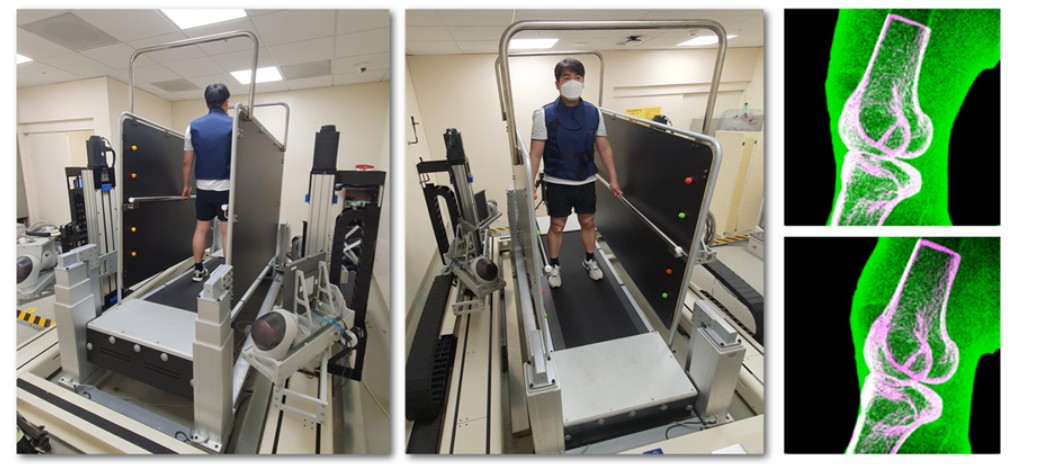
The study analyzed gait-related knee joint motion using high-speed biplane X-ray imaging and three-dimensional kinematic reconstruction in 10 healthy individuals and 10 patients who underwent ACL reconstruction with ALL augmentation. The patient group showed excessive anterior translation and internal rotation, suggesting incomplete restoration of normal joint kinematics post-surgery. These findings provide mechanistic insight into the early onset of knee osteoarthritis often reported in this population.'
The ISB conference, held biennially for over 60 years, is the largest international biomechanics meeting. This year, it hosted 1,600 researchers from 46 countries and featured over 1,400 presentations. The Clinical Biomechanics Award is given to one outstanding study selected from five top-rated abstracts invited for full manuscript review. The winning paper is published in Clinical Biomechanics, and the award includes a monetary prize and a Plenary Lecture opportunity.
From 2019 to 2023, Koo and Wang’s teams developed a system with support from the Samsung Future Technology Development Program to track knee motion in real time during treadmill walking, using high-speed biplane X-rays and custom three-dimensional reconstruction software. This system, along with proprietary software that precisely reconstructs the three-dimensional motion of joints, was approved for clinical trials by the Ministry of Food and Drug Safety and installed at Samsung Medical Center. It is being used to quantitatively analyze abnormal joint motion patterns in patients with knee ligament injuries and those who have undergone knee surgery.
Additionally, Jeongseok Oh was named one of five finalists for the David Winter Young Investigator Award, presenting his work during the award session. This award recognizes promising young researchers in biomechanics worldwide.
2025.08.10 View 3612
Prof. Seungbum Koo’s Team Receives Clinical Biomechanics Award at the 30th International Society of Biomechanics Conference
<(From Left) Ph.D candidate Jeongseok Oh from KAIST, Dr. Seungwoo Yoon from KAIST, Prof.Joon-Ho Wang from Samsung Medical Center, Prof.Seungbum Koo from KAIST>
Professor Seungbum Koo’s research team received the Clinical Biomechanics Award at the 30th International Society of Biomechanics (ISB) Conference, held in July 2025 in Stockholm, Sweden. The Plenary Lecture was delivered by first author and Ph.D. candidate Jeongseok Oh. This research was conducted in collaboration with Professor Joon-Ho Wang’s team at Samsung Medical Center.
Residual Translational and Rotational Kinematics After Combined ACL and Anterolateral Ligament Reconstruction During Walking
Jeongseok Oh, Seungwoo Yoon, Joon-Ho Wang, Seungbum Koo
The study analyzed gait-related knee joint motion using high-speed biplane X-ray imaging and three-dimensional kinematic reconstruction in 10 healthy individuals and 10 patients who underwent ACL reconstruction with ALL augmentation. The patient group showed excessive anterior translation and internal rotation, suggesting incomplete restoration of normal joint kinematics post-surgery. These findings provide mechanistic insight into the early onset of knee osteoarthritis often reported in this population.'
The ISB conference, held biennially for over 60 years, is the largest international biomechanics meeting. This year, it hosted 1,600 researchers from 46 countries and featured over 1,400 presentations. The Clinical Biomechanics Award is given to one outstanding study selected from five top-rated abstracts invited for full manuscript review. The winning paper is published in Clinical Biomechanics, and the award includes a monetary prize and a Plenary Lecture opportunity.
From 2019 to 2023, Koo and Wang’s teams developed a system with support from the Samsung Future Technology Development Program to track knee motion in real time during treadmill walking, using high-speed biplane X-rays and custom three-dimensional reconstruction software. This system, along with proprietary software that precisely reconstructs the three-dimensional motion of joints, was approved for clinical trials by the Ministry of Food and Drug Safety and installed at Samsung Medical Center. It is being used to quantitatively analyze abnormal joint motion patterns in patients with knee ligament injuries and those who have undergone knee surgery.
Additionally, Jeongseok Oh was named one of five finalists for the David Winter Young Investigator Award, presenting his work during the award session. This award recognizes promising young researchers in biomechanics worldwide.
2025.08.10 View 3612 -
 Key Figures in the Establishment of KAIST, Specially Invited to the Presidential Office’s National Appointment Ceremony
KAIST announced on August 6 that Professor Emeritus Jung-Woong Ra from the Department of Electrical Engineering and Won-ki Kwon, former Vice Minister of the Ministry of Science and Technology, who played pivotal roles in the establishment of KAIST, were selected as special guests for the 'National Appointment Ceremony' hosted by the Presidential Office on August 15th.
The Presidential Office selected special invitees across eight categories for the ceremony. These include individuals born in 1945 (referred to as 'Liberation Babies'), those involved in the founding of KAIST in 1971, independence activists and national patriots, overseas workers in Germany and the Middle East, AI industry professionals, residents from regions facing depopulation, leading figures in K-culture, military personnel, firefighters, police officers, families of fallen public servants and victims of social disasters, as well as promising talents in economics, science, culture, and the arts.
Considering the historical significance of its establishment and its symbolic meaning for the development of national science and technology, KAIST Professor Emeritus Jung-Woong Ra, who was a key figure in the establishment of the Department of Electrical Engineering after being appointed as a professor in 1971, and former Vice Minister Kwon Won-ki, who was the first practical leader of the establishment project. Both were officially included on the special invitation list.
Briefing from the Presidential Office regarding the 'National Appointment Ceremony' (2025.07.28) https://www.president.go.kr/newsroom/briefing/grehGMuP
2025.08.06 View 3831
Key Figures in the Establishment of KAIST, Specially Invited to the Presidential Office’s National Appointment Ceremony
KAIST announced on August 6 that Professor Emeritus Jung-Woong Ra from the Department of Electrical Engineering and Won-ki Kwon, former Vice Minister of the Ministry of Science and Technology, who played pivotal roles in the establishment of KAIST, were selected as special guests for the 'National Appointment Ceremony' hosted by the Presidential Office on August 15th.
The Presidential Office selected special invitees across eight categories for the ceremony. These include individuals born in 1945 (referred to as 'Liberation Babies'), those involved in the founding of KAIST in 1971, independence activists and national patriots, overseas workers in Germany and the Middle East, AI industry professionals, residents from regions facing depopulation, leading figures in K-culture, military personnel, firefighters, police officers, families of fallen public servants and victims of social disasters, as well as promising talents in economics, science, culture, and the arts.
Considering the historical significance of its establishment and its symbolic meaning for the development of national science and technology, KAIST Professor Emeritus Jung-Woong Ra, who was a key figure in the establishment of the Department of Electrical Engineering after being appointed as a professor in 1971, and former Vice Minister Kwon Won-ki, who was the first practical leader of the establishment project. Both were officially included on the special invitation list.
Briefing from the Presidential Office regarding the 'National Appointment Ceremony' (2025.07.28) https://www.president.go.kr/newsroom/briefing/grehGMuP
2025.08.06 View 3831 -
 KAIST Successfully Presents the Future of AI Transformation and Physical AI Strategy at the 1st National Strategic Technology Forum
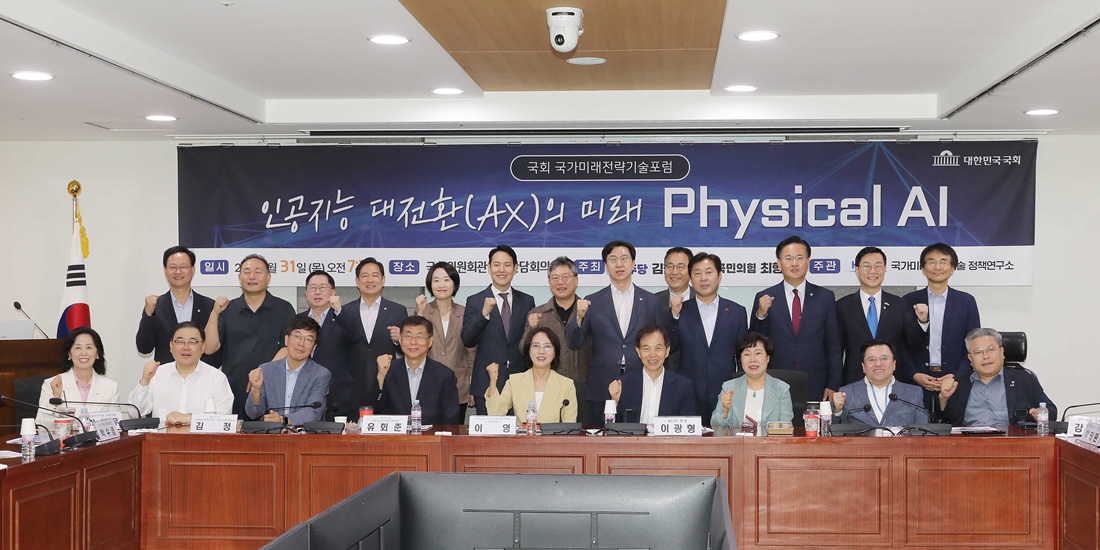
<(Front row, fourth from the right) President Kwang Hyung Lee of KAIST, (back row, fifth from the right) Forum co-host Representative Hyung-Doo Choi, (back row, sixth from the left) Forum co-host Representative Han-Kyu Kim, along with ruling and opposition party members of the Science, ICT, Broadcasting, and Communications Committee and the Trade, Industry, Energy, SMEs, and Startups Committee, as well as Professors Hoe-Jun Yoo and Jung Kim from KAIST)>
KAIST (President Kwang Hyung Lee) announced on July that it had successfully held the “1st National Strategic Technology Forum” at the National Assembly Members' Office Building that day under the theme “The Future of Artificial Intelligence Transformation (AX): Physical AI.” This bipartisan policy forum aimed to discuss strategies for technology hegemony by leveraging Korea’s strengths in AI semiconductors and manufacturing.
The forum was hosted by KAIST and co-organized by Representative Hyung-Du Choi (People Power Party), the secretary of the National Assembly's Science, ICT, Broadcasting, and Communications Committee, and Representative Han-Kyu Kim (Democratic Party), a member of the Trade, Industry, Energy, SMEs, and Startups Committee. It marks the beginning of a five-part forum series, scheduled monthly through the rest of the year except for October.
The overarching theme, “Artificial Intelligence Transformation (AX),” was designed to address the structural changes reshaping industry, the economy, and society due to the spread of generative AI.
< KAIST President Kwang Hyung Lee delivering his remarks >
The first session focused on “Physical AI,” reflecting how AI innovation—sparked by the proliferation of large language models (LLMs)—is rapidly expanding into the physical realm through ultra-low-power, ultra-lightweight semiconductors. This includes applications in robotics, sensors, and edge devices. Physical AI refers to technologies that interact directly with the real world through AI integration with robotics, autonomous driving, and smart factories. It is drawing attention as a promising next-generation field where Korea can secure a strategic edge, given its strengths in semiconductors and manufacturing.
<Hoi-Jun Yoo, Dean of the KAIST Graduate School of AI Semiconductor>
Hoi-Jun Yoo, Dean of the KAIST Graduate School of AI Semiconductor, gave a presentation titled “The Second AI Innovation Enabled by Ultra-Low-Power AI Semiconductors and Lightweight AI Models,” covering semiconductor trends for implementing Physical AI, academic and industrial strategies for robotics and semiconductors, and Korea’s development direction for “K-Physical AI.”
<Professor Jung Kim, the head of KAIST’s Department of Mechanical and Aerospace Engineering>
Following that, Professor Jung Kim, the head of KAIST’s Department of Mechanical and Aerospace Engineering gave a talk on “Trends in Physical AI and Humanoid Robots,” predicting a new industrial paradigm shaped by AI-robot convergence. He presented global trends, Korea’s development trajectory, and survival strategies for humanoid robots that can supplement or replace human intellectual and physical functions.
During the open discussion that followed, participating lawmakers and experts engaged in in-depth conversations about the need for bipartisan strategies and collaboration.
Representative Hyung-Du Choi (People Power Party) stated, “Through this forum as a platform for public discourse, I will work to ensure that legislation and policy align with the direction of the science and technology field, and that necessary measures are taken promptly to strengthen national competitiveness.”
Representative Han-Kyu Kim (Democratic Party) emphasized, “As strategic planning in science and technology accelerates, it becomes more difficult to coordinate policies involving multiple ministries. Forums like this, which enable ongoing communication among stakeholders, are instrumental in finding effective solutions.”
KAIST President Kwang Hyung Lee remarked, “Although Korea is a latecomer in the generative AI field, we have a unique opportunity to gain strategic superiority in Physical AI, thanks to our technological capabilities in manufacturing, semiconductors, and robotics.” He added, “I hope lawmakers from both the ruling and opposition parties, along with experts, will come together regularly to devise practical policies and contribute to the advancement of Korea’s science and technology.”
<Poster of National Strategic Technology Forum>
This forum series aims to explore policy and institutional solutions to help Korea gain technological leadership in a global context where strategic technologies—such as AI, semiconductors, biotechnology, and energy—directly influence national security and economic sovereignty. Lawmakers from both the Science, ICT, Broadcasting, and Communications Committee and the Trade, Industry, Energy, SMEs, and Startups Committee will continue to participate, fostering bipartisan dialogue. The forums are coordinated by the KAIST Policy Research Institute for National Strategic Technologies.
2025.07.31 View 3769
KAIST Successfully Presents the Future of AI Transformation and Physical AI Strategy at the 1st National Strategic Technology Forum
<(Front row, fourth from the right) President Kwang Hyung Lee of KAIST, (back row, fifth from the right) Forum co-host Representative Hyung-Doo Choi, (back row, sixth from the left) Forum co-host Representative Han-Kyu Kim, along with ruling and opposition party members of the Science, ICT, Broadcasting, and Communications Committee and the Trade, Industry, Energy, SMEs, and Startups Committee, as well as Professors Hoe-Jun Yoo and Jung Kim from KAIST)>
KAIST (President Kwang Hyung Lee) announced on July that it had successfully held the “1st National Strategic Technology Forum” at the National Assembly Members' Office Building that day under the theme “The Future of Artificial Intelligence Transformation (AX): Physical AI.” This bipartisan policy forum aimed to discuss strategies for technology hegemony by leveraging Korea’s strengths in AI semiconductors and manufacturing.
The forum was hosted by KAIST and co-organized by Representative Hyung-Du Choi (People Power Party), the secretary of the National Assembly's Science, ICT, Broadcasting, and Communications Committee, and Representative Han-Kyu Kim (Democratic Party), a member of the Trade, Industry, Energy, SMEs, and Startups Committee. It marks the beginning of a five-part forum series, scheduled monthly through the rest of the year except for October.
The overarching theme, “Artificial Intelligence Transformation (AX),” was designed to address the structural changes reshaping industry, the economy, and society due to the spread of generative AI.
< KAIST President Kwang Hyung Lee delivering his remarks >
The first session focused on “Physical AI,” reflecting how AI innovation—sparked by the proliferation of large language models (LLMs)—is rapidly expanding into the physical realm through ultra-low-power, ultra-lightweight semiconductors. This includes applications in robotics, sensors, and edge devices. Physical AI refers to technologies that interact directly with the real world through AI integration with robotics, autonomous driving, and smart factories. It is drawing attention as a promising next-generation field where Korea can secure a strategic edge, given its strengths in semiconductors and manufacturing.
<Hoi-Jun Yoo, Dean of the KAIST Graduate School of AI Semiconductor>
Hoi-Jun Yoo, Dean of the KAIST Graduate School of AI Semiconductor, gave a presentation titled “The Second AI Innovation Enabled by Ultra-Low-Power AI Semiconductors and Lightweight AI Models,” covering semiconductor trends for implementing Physical AI, academic and industrial strategies for robotics and semiconductors, and Korea’s development direction for “K-Physical AI.”
<Professor Jung Kim, the head of KAIST’s Department of Mechanical and Aerospace Engineering>
Following that, Professor Jung Kim, the head of KAIST’s Department of Mechanical and Aerospace Engineering gave a talk on “Trends in Physical AI and Humanoid Robots,” predicting a new industrial paradigm shaped by AI-robot convergence. He presented global trends, Korea’s development trajectory, and survival strategies for humanoid robots that can supplement or replace human intellectual and physical functions.
During the open discussion that followed, participating lawmakers and experts engaged in in-depth conversations about the need for bipartisan strategies and collaboration.
Representative Hyung-Du Choi (People Power Party) stated, “Through this forum as a platform for public discourse, I will work to ensure that legislation and policy align with the direction of the science and technology field, and that necessary measures are taken promptly to strengthen national competitiveness.”
Representative Han-Kyu Kim (Democratic Party) emphasized, “As strategic planning in science and technology accelerates, it becomes more difficult to coordinate policies involving multiple ministries. Forums like this, which enable ongoing communication among stakeholders, are instrumental in finding effective solutions.”
KAIST President Kwang Hyung Lee remarked, “Although Korea is a latecomer in the generative AI field, we have a unique opportunity to gain strategic superiority in Physical AI, thanks to our technological capabilities in manufacturing, semiconductors, and robotics.” He added, “I hope lawmakers from both the ruling and opposition parties, along with experts, will come together regularly to devise practical policies and contribute to the advancement of Korea’s science and technology.”
<Poster of National Strategic Technology Forum>
This forum series aims to explore policy and institutional solutions to help Korea gain technological leadership in a global context where strategic technologies—such as AI, semiconductors, biotechnology, and energy—directly influence national security and economic sovereignty. Lawmakers from both the Science, ICT, Broadcasting, and Communications Committee and the Trade, Industry, Energy, SMEs, and Startups Committee will continue to participate, fostering bipartisan dialogue. The forums are coordinated by the KAIST Policy Research Institute for National Strategic Technologies.
2025.07.31 View 3769 -
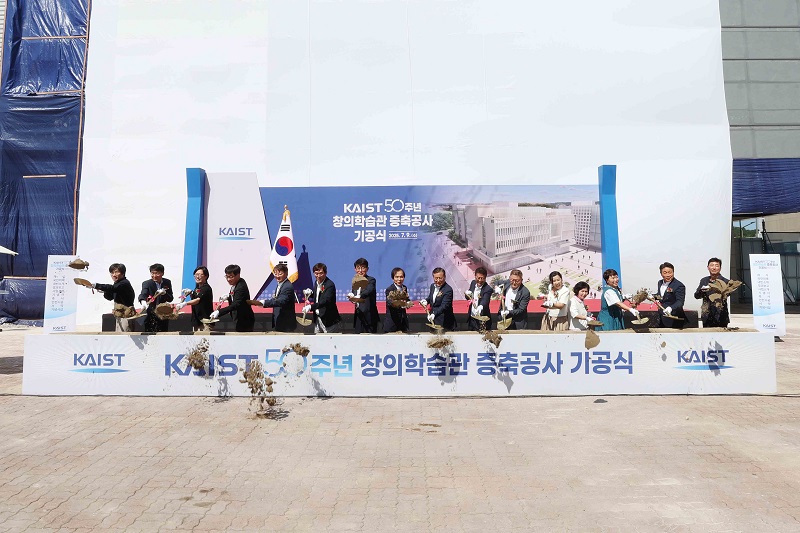 KAIST Kicks Off the Expansion of its Creative Learning Building, a 50th Anniversary Donation Landmark
KAIST announced on July 10th that it held a groundbreaking ceremony on July 9th for the expansion of its Creative Learning Building. This project, which celebrates the university's 50th anniversary, will become a significant donation-funded landmark and marks the official start of its construction.
<(From left) President Kwang Hyung Lee, Former President Sung-Chul Shin>
The groundbreaking ceremony was attended by key donors who graced the occasion, including KAIST President Kwang Hyung Lee, former President Sung-Chul Shin, Alumni Association President Yoon-Tae Lee, as well as parents and faculty member.
The Creative Learning Building serves as a primary space where KAIST undergraduate and graduate students attend lectures, functioning as a central hub for a variety of classes and talks. It also houses student support departments, including the Student Affairs Office, establishing itself as a student-centric complex that integrates educational, counseling, and welfare functions.
This expansion is more than just an increase in educational facilities; it's being developed as a "donation landmark" embodying KAIST's identity and future vision. Designed with a focus on creative convergence education, this project aims to create a new educational hub that organically combines education, exchange, and welfare functions
The campaign included over 230 participants, including KAIST alumni Byung-gyu Chang, Chairman of Krafton, former Alumni Association President Ki-chul Cha, Dr. Kun-mo Chung (former Minister of Science and Technology), as well as faculty members, parents, and current students. They collectively raised 6.5 billion KRW in donations. The total cost for this expansion project is 9 billion KRW, encompassing a gross floor area of 3,222.92㎡ across five above-ground floors, with completion targeted for September 2026.
2025.07.10 View 3887
KAIST Kicks Off the Expansion of its Creative Learning Building, a 50th Anniversary Donation Landmark
KAIST announced on July 10th that it held a groundbreaking ceremony on July 9th for the expansion of its Creative Learning Building. This project, which celebrates the university's 50th anniversary, will become a significant donation-funded landmark and marks the official start of its construction.
<(From left) President Kwang Hyung Lee, Former President Sung-Chul Shin>
The groundbreaking ceremony was attended by key donors who graced the occasion, including KAIST President Kwang Hyung Lee, former President Sung-Chul Shin, Alumni Association President Yoon-Tae Lee, as well as parents and faculty member.
The Creative Learning Building serves as a primary space where KAIST undergraduate and graduate students attend lectures, functioning as a central hub for a variety of classes and talks. It also houses student support departments, including the Student Affairs Office, establishing itself as a student-centric complex that integrates educational, counseling, and welfare functions.
This expansion is more than just an increase in educational facilities; it's being developed as a "donation landmark" embodying KAIST's identity and future vision. Designed with a focus on creative convergence education, this project aims to create a new educational hub that organically combines education, exchange, and welfare functions
The campaign included over 230 participants, including KAIST alumni Byung-gyu Chang, Chairman of Krafton, former Alumni Association President Ki-chul Cha, Dr. Kun-mo Chung (former Minister of Science and Technology), as well as faculty members, parents, and current students. They collectively raised 6.5 billion KRW in donations. The total cost for this expansion project is 9 billion KRW, encompassing a gross floor area of 3,222.92㎡ across five above-ground floors, with completion targeted for September 2026.
2025.07.10 View 3887 -
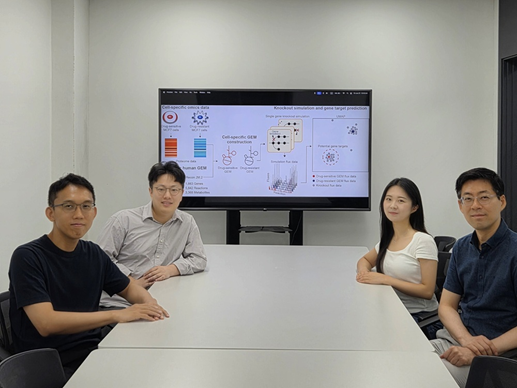 KAIST Presents a Breakthrough in Overcoming Drug Resistance in Cancer – Hope for Treating Intractable Diseases like Diabetes
<(From the left) Prof. Hyun Uk Kim, Ph.D candiate Hae Deok Jung, Ph.D candidate Jina Lim, Prof.Yoosik Kim from the Department of Chemical and Biomolecular Engineering>
One of the biggest obstacles in cancer treatment is drug resistance in cancer cells. Conventional efforts have focused on identifying new drug targets to eliminate these resistant cells, but such approaches can often lead to even stronger resistance. Now, researchers at KAIST have developed a computational framework to predict key metabolic genes that can re-sensitize resistant cancer cells to treatment. This technique holds promise not only for a variety of cancer therapies but also for treating metabolic diseases such as diabetes.
On the 7th of July, KAIST (President Kwang Hyung Lee) announced that a research team led by Professors Hyun Uk Kim and Yoosik Kim from the Department of Chemical and Biomolecular Engineering had developed a computational framework that predicts metabolic gene targets to re-sensitize drug-resistant breast cancer cells. This was achieved using a metabolic network model capable of simulating human metabolism.
Focusing on metabolic alterations—key characteristics in the formation of drug resistance—the researchers developed a metabolism-based approach to identify gene targets that could enhance drug responsiveness by regulating the metabolism of drug-resistant breast cancer cells.
< Computational framework that can identify metabolic gene targets to revert the metabolic state of the drug-resistant cells to that of the drug-sensitive parental cells>
The team first constructed cell-specific metabolic network models by integrating proteomic data obtained from two different types of drug-resistant MCF7 breast cancer cell lines: one resistant to doxorubicin and the other to paclitaxel. They then performed gene knockout simulations* on all of the metabolic genes and analyzed the results.
*Gene knockout simulation: A computational method to predict changes in a biological network by virtually removing specific genes.
As a result, they discovered that suppressing certain genes could make previously resistant cancer cells responsive to anticancer drugs again. Specifically, they identified GOT1 as a target in doxorubicin-resistant cells, GPI in paclitaxel-resistant cells, and SLC1A5 as a common target for both drugs.
The predictions were experimentally validated by suppressing proteins encoded by these genes, which led to the re-sensitization of the drug-resistant cancer cells.
Furthermore, consistent re-sensitization effects were also observed when the same proteins were inhibited in other types of breast cancer cells that had developed resistance to the same drugs.
Professor Yoosik Kim remarked, “Cellular metabolism plays a crucial role in various intractable diseases including infectious and degenerative conditions. This new technology, which predicts metabolic regulation switches, can serve as a foundational tool not only for treating drug-resistant breast cancer but also for a wide range of diseases that currently lack effective therapies.”
Professor Hyun Uk Kim, who led the study, emphasized, “The significance of this research lies in our ability to accurately predict key metabolic genes that can make resistant cancer cells responsive to treatment again—using only computer simulations and minimal experimental data. This framework can be widely applied to discover new therapeutic targets in various cancers and metabolic diseases.”
The study, in which Ph.D. candidates JinA Lim and Hae Deok Jung from KAIST participated as co-first authors, was published online on June 25 in Proceedings of the National Academy of Sciences (PNAS), a leading multidisciplinary journal that covers top-tier research in life sciences, physics, engineering, and social sciences.
※ Title: Genome-scale knockout simulation and clustering analysis of drug-resistant breast cancer cells reveal drug sensitization targets ※ DOI: https://doi.org/10.1073/pnas.2425384122 ※ Authors: JinA Lim (KAIST, co-first author), Hae Deok Jung (KAIST, co-first author), Han Suk Ryu (Seoul National University Hospital, corresponding author), Yoosik Kim (KAIST, corresponding author), Hyun Uk Kim (KAIST, corresponding author), and five others.
This research was supported by the Ministry of Science and ICT through the National Research Foundation of Korea, and the Electronics and Telecommunications Research Institute (ETRI).
2025.07.08 View 5944
KAIST Presents a Breakthrough in Overcoming Drug Resistance in Cancer – Hope for Treating Intractable Diseases like Diabetes
<(From the left) Prof. Hyun Uk Kim, Ph.D candiate Hae Deok Jung, Ph.D candidate Jina Lim, Prof.Yoosik Kim from the Department of Chemical and Biomolecular Engineering>
One of the biggest obstacles in cancer treatment is drug resistance in cancer cells. Conventional efforts have focused on identifying new drug targets to eliminate these resistant cells, but such approaches can often lead to even stronger resistance. Now, researchers at KAIST have developed a computational framework to predict key metabolic genes that can re-sensitize resistant cancer cells to treatment. This technique holds promise not only for a variety of cancer therapies but also for treating metabolic diseases such as diabetes.
On the 7th of July, KAIST (President Kwang Hyung Lee) announced that a research team led by Professors Hyun Uk Kim and Yoosik Kim from the Department of Chemical and Biomolecular Engineering had developed a computational framework that predicts metabolic gene targets to re-sensitize drug-resistant breast cancer cells. This was achieved using a metabolic network model capable of simulating human metabolism.
Focusing on metabolic alterations—key characteristics in the formation of drug resistance—the researchers developed a metabolism-based approach to identify gene targets that could enhance drug responsiveness by regulating the metabolism of drug-resistant breast cancer cells.
< Computational framework that can identify metabolic gene targets to revert the metabolic state of the drug-resistant cells to that of the drug-sensitive parental cells>
The team first constructed cell-specific metabolic network models by integrating proteomic data obtained from two different types of drug-resistant MCF7 breast cancer cell lines: one resistant to doxorubicin and the other to paclitaxel. They then performed gene knockout simulations* on all of the metabolic genes and analyzed the results.
*Gene knockout simulation: A computational method to predict changes in a biological network by virtually removing specific genes.
As a result, they discovered that suppressing certain genes could make previously resistant cancer cells responsive to anticancer drugs again. Specifically, they identified GOT1 as a target in doxorubicin-resistant cells, GPI in paclitaxel-resistant cells, and SLC1A5 as a common target for both drugs.
The predictions were experimentally validated by suppressing proteins encoded by these genes, which led to the re-sensitization of the drug-resistant cancer cells.
Furthermore, consistent re-sensitization effects were also observed when the same proteins were inhibited in other types of breast cancer cells that had developed resistance to the same drugs.
Professor Yoosik Kim remarked, “Cellular metabolism plays a crucial role in various intractable diseases including infectious and degenerative conditions. This new technology, which predicts metabolic regulation switches, can serve as a foundational tool not only for treating drug-resistant breast cancer but also for a wide range of diseases that currently lack effective therapies.”
Professor Hyun Uk Kim, who led the study, emphasized, “The significance of this research lies in our ability to accurately predict key metabolic genes that can make resistant cancer cells responsive to treatment again—using only computer simulations and minimal experimental data. This framework can be widely applied to discover new therapeutic targets in various cancers and metabolic diseases.”
The study, in which Ph.D. candidates JinA Lim and Hae Deok Jung from KAIST participated as co-first authors, was published online on June 25 in Proceedings of the National Academy of Sciences (PNAS), a leading multidisciplinary journal that covers top-tier research in life sciences, physics, engineering, and social sciences.
※ Title: Genome-scale knockout simulation and clustering analysis of drug-resistant breast cancer cells reveal drug sensitization targets ※ DOI: https://doi.org/10.1073/pnas.2425384122 ※ Authors: JinA Lim (KAIST, co-first author), Hae Deok Jung (KAIST, co-first author), Han Suk Ryu (Seoul National University Hospital, corresponding author), Yoosik Kim (KAIST, corresponding author), Hyun Uk Kim (KAIST, corresponding author), and five others.
This research was supported by the Ministry of Science and ICT through the National Research Foundation of Korea, and the Electronics and Telecommunications Research Institute (ETRI).
2025.07.08 View 5944 -
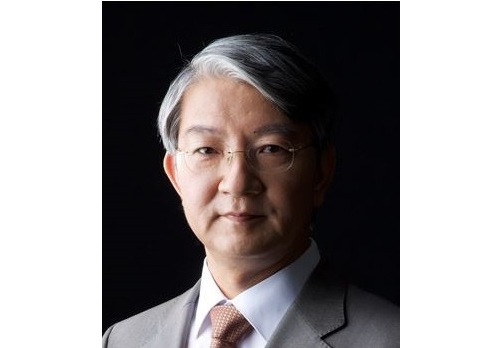 Distinguished Professor Sang Yup Lee Wins 2025 Global Metabolic Engineering Award
< Distinguished Professor Sang Yup Lee (Senior Vice President for Research) from the Department of Chemical & Biomolecular Engineering >
KAIST announced on the 20th that Professor Sang Yup Lee, who serves as the Vice President for Research and a Distinguished Professor at our university, has been awarded the '2025 Gregory N. Stephanopoulos Award for Metabolic Engineering' by the International Metabolic Engineering Society (IMES). Professor Lee delivered his award lecture at the 16th Metabolic Engineering Conference (ME16), held in Copenhagen, Denmark, from June 15th to 19th.
This award was established through contributions from the American Institute of Chemical Engineers (AIChE) Foundation, as well as fellow colleagues and acquaintances, to honor the achievements of Dr. Gregory Stephanopoulos, widely recognized as one of the pioneers of metabolic engineering. Presented biennially, the award recognizes scientists who have successfully commercialized fundamental research in metabolic engineering or have made outstanding contributions to the quantitative analysis, design, and modeling of metabolic pathways.
Professor Sang Yup Lee boasts an impressive record of over 770 journal papers and more than 860 patents. His groundbreaking research in metabolic engineering and biochemical engineering is highly acclaimed globally.
Throughout his 31 years as a professor at KAIST, Professor Lee has developed various metabolic engineering-based technologies and strategies. These advancements have been transferred to industries, facilitating the production of bulk chemicals, polymers, natural products, pharmaceuticals, and health functional foods. He has also founded companies and actively engages in advisory roles with various enterprises.
The International Metabolic Engineering Society (IMES) defines metabolic engineering as the manipulation of metabolic pathways in microorganisms or cells to produce useful substances (such as pharmaceuticals, biofuels, and chemical products). It utilizes tools like systems biology, synthetic biology, and computational modeling with the aim of enhancing the economic viability and sustainability of bio-based processes.
Furthermore, Professor Lee previously received the Merck Metabolic Engineering Award, a prominent international award in the field, in 2008. In 2018, he was honored with the Eni Award, often referred to as the Nobel Prize in energy, presented by the President of Italy.
Professor Sang Yup Lee remarked, "Metabolic engineering is a discipline that leads the current and future of biotechnology. It is a tremendous honor to receive this meaningful award at a time when the transition to a bio-based economy is accelerating. Together with my students and fellow researchers, we have generated numerous patents and transferred technologies to industry, and also established startups in the fields of biofuels, wound healing, and cosmetics. I will continue to pursue research that encompasses both fundamental research and technological commercialization."
The 'International Metabolic Engineering Society (IMES)' is a specialized society under the American Institute of Chemical Engineers. Its mission is to enable the production of various bio-based products, including pharmaceuticals, food additives, chemicals, and fuels, through metabolic engineering. The society hosts the Metabolic Engineering Conference biennially, offering researchers opportunities for knowledge exchange and collaboration.
2025.06.20 View 6890
Distinguished Professor Sang Yup Lee Wins 2025 Global Metabolic Engineering Award
< Distinguished Professor Sang Yup Lee (Senior Vice President for Research) from the Department of Chemical & Biomolecular Engineering >
KAIST announced on the 20th that Professor Sang Yup Lee, who serves as the Vice President for Research and a Distinguished Professor at our university, has been awarded the '2025 Gregory N. Stephanopoulos Award for Metabolic Engineering' by the International Metabolic Engineering Society (IMES). Professor Lee delivered his award lecture at the 16th Metabolic Engineering Conference (ME16), held in Copenhagen, Denmark, from June 15th to 19th.
This award was established through contributions from the American Institute of Chemical Engineers (AIChE) Foundation, as well as fellow colleagues and acquaintances, to honor the achievements of Dr. Gregory Stephanopoulos, widely recognized as one of the pioneers of metabolic engineering. Presented biennially, the award recognizes scientists who have successfully commercialized fundamental research in metabolic engineering or have made outstanding contributions to the quantitative analysis, design, and modeling of metabolic pathways.
Professor Sang Yup Lee boasts an impressive record of over 770 journal papers and more than 860 patents. His groundbreaking research in metabolic engineering and biochemical engineering is highly acclaimed globally.
Throughout his 31 years as a professor at KAIST, Professor Lee has developed various metabolic engineering-based technologies and strategies. These advancements have been transferred to industries, facilitating the production of bulk chemicals, polymers, natural products, pharmaceuticals, and health functional foods. He has also founded companies and actively engages in advisory roles with various enterprises.
The International Metabolic Engineering Society (IMES) defines metabolic engineering as the manipulation of metabolic pathways in microorganisms or cells to produce useful substances (such as pharmaceuticals, biofuels, and chemical products). It utilizes tools like systems biology, synthetic biology, and computational modeling with the aim of enhancing the economic viability and sustainability of bio-based processes.
Furthermore, Professor Lee previously received the Merck Metabolic Engineering Award, a prominent international award in the field, in 2008. In 2018, he was honored with the Eni Award, often referred to as the Nobel Prize in energy, presented by the President of Italy.
Professor Sang Yup Lee remarked, "Metabolic engineering is a discipline that leads the current and future of biotechnology. It is a tremendous honor to receive this meaningful award at a time when the transition to a bio-based economy is accelerating. Together with my students and fellow researchers, we have generated numerous patents and transferred technologies to industry, and also established startups in the fields of biofuels, wound healing, and cosmetics. I will continue to pursue research that encompasses both fundamental research and technological commercialization."
The 'International Metabolic Engineering Society (IMES)' is a specialized society under the American Institute of Chemical Engineers. Its mission is to enable the production of various bio-based products, including pharmaceuticals, food additives, chemicals, and fuels, through metabolic engineering. The society hosts the Metabolic Engineering Conference biennially, offering researchers opportunities for knowledge exchange and collaboration.
2025.06.20 View 6890