event
KAIST attended the World Economic Forum’s “Summer Davos Forum” held from September 13 to 15 in Tianjin, China. The Summer Davos Forum hosted various sessions and meetings with international dignitaries from governments, business and public organizations, and academia on the main theme of “Driving Growth through Sustainability.”
On September 14, four subjects including “Electric Vehicles,” “Humanoid Robotics,” “Next Generation of Biomaterials,” and “New Developments in Neuroengineering” were presented by KAIST, followed by discussions with forum participants.
Professor Jae-Seung Jeong of the Bio and Brain Engineering Department, Sang-Yup Lee of the Chemical and Biomolecular Engineering Department, Joon-Ho Oh of the Mechanical Engineering Department, and President Nam-Pyo Suh participated in the forum as presenters of the topic. Of these speakers, Professors Jae-Seung Jeong and Sang-Yup Lee were nominated by the World Economic Forum (WEF) as members of the “Young Global Leader” and “Global Agenda Council on Emerging Technologies,” respectively.
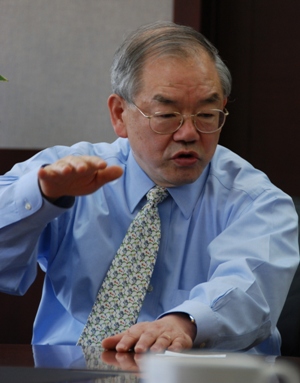
President Suh was also invited to the CEO Insight Group and delivered an opening speech on OLEV (Online Electric Vehicle) and the Mobile Harbor. President Suh plans to sign an MOU for research cooperation with Jong-Hoo Kim of Bell Lab and Shirley Jackson of the Rensselaer Polytechnic Institute in the near future, respectively.
Since 2007, the WEF, in charge of the world’s largest international conference called “Davos Forum” has hosted a “Summer Davos Forum,” also called as the “Annual Meeting of New Champions.” The Summer Davos Forum consists of nations, rising global companies, next generation of global leaders, and cities or nations that lead technological innovations. Unlike the annual Davos Forum held in January, the “Annual Meeting of New Champions” is held in September of each year in Tianjin and Dalian, China.
Since 2009, the WEF has added a special session called IdeasLab in the Davos and Summer Davos Forums. Through IdeasLab, prominent universities from all over the world, research organizations, venture businesses, NGOs, and NPOs are invited to exchange and discuss innovative and creative ideas that can contribute to the development of mankind. Until now, universities including INSEAD, EPFL-ETH, MIT, Oxford, Yale, Harvard, Rensselaer Polytechnic Institute, Tsinghua University, and Keio University have been invited to the IdeasLab. KAIST is the first Korean university to attend this session.
-
research Revolutionary 'scLENS' Unveiled to Decode Complex Single-Cell Genomic Data
Unlocking biological information from complex single-cell genomic data has just become easier and more precise, thanks to the innovative 'scLENS' tool developed by the Biomedical Mathematics Group within the IBS Center for Mathematical and Computational Sciences led by Chief Investigator Jae Kyoung Kim, who is also a professor at KAIST. This new finding represents a significant leap forward in the field of single-cell transcriptomics. Single-cell genomic analysis is an advanced technique that m
2024-05-09 -
research KAIST Develops Sodium Battery Capable of Rapid Charging in Just a Few Seconds
Sodium (Na), which is over 500 times more abundant than lithium (Li), has recently garnered significant attention for its potential in sodium-ion battery technologies. However, existing sodium-ion batteries face fundamental limitations, including lower power output, constrained storage properties, and longer charging times, necessitating the development of next-generation energy storage materials. On the 11th of April, KAIST (represented by President Kwang Hyung Lee) announced that a research t
2024-04-18 -
research KAIST introduces microbial food as a strategy food production of the future
The global food crisis is increasing due to rapid population growth and declining food productivity to climate change. Moreover, today's food production and supply system emit a huge amount of carbon dioxide, reaching 30% of the total amount emitted by humanity, aggravating climate change. Sustainable and nutritious microbial food is attracting attention as a key to overcoming this impasse. KAIST (President Kwang Hyung Lee) announced on April 12th that Research Professor Kyeong Rok Choi of th
2024-04-12 -
research KAIST researchers developed a novel ultra-low power memory for neuromorphic computing
A team of Korean researchers is making headlines by developing a new memory device that can be used to replace existing memory or used in implementing neuromorphic computing for next-generation artificial intelligence hardware for its low processing costs and its ultra-low power consumption. KAIST (President Kwang-Hyung Lee) announced on April 4th that Professor Shinhyun Choi's research team in the School of Electrical Engineering has developed a next-generation phase change memory* device fe
2024-04-04 -
research A KAIST-SNUH Team Devises a Way to Make Mathematical Predictions to find Metabolites Related to Somatic Mutations in Cancers
Cancer is characterized by abnormal metabolic processes different from those of normal cells. Therefore, cancer metabolism has been extensively studied to develop effective diagnosis and treatment strategies. Notable achievements of cancer metabolism studies include the discovery of oncometabolites* and the approval of anticancer drugs by the U.S. Food and Drug Administration (FDA) that target enzymes associated with oncometabolites. Approved anticancer drugs such as ‘Tibsovo (active ingre
2024-03-18