%54%48%45
-
 Mathematicians Solve Cellular Noise, a Long-standing Challenge in Biology
< (From left) Researcher Dongju Lim, Researcher Seokhwan Moon, Professor Jae Kyoung Kim (KAIST), Professor Jinsu Kim (POSTECH), Professor Byung-Kwan Cho (KAIST) >
Why does cancer sometimes recur even after successful treatment, or why do some bacteria survive despite the use of powerful antibiotics? One of the key culprits identified is "Biological Noise"—random fluctuations occurring inside cells. Even when cells share the same genes, the amount of protein varies in each, creating "outliers" that evade drug treatments and survive. Until now, scientists could only control the average values of cell populations; controlling the irregular variability of individual cells remained a long-standing challenge.
A joint research team—led by Professor Jae Kyoung Kim (Department of Mathematical Sciences, KAIST), Professor Jinsu Kim (Department of Mathematics, POSTECH), and Professor Byung-Kwan Cho (Graduate School of Engineering Biology, KAIST)—has theoretically established a "Noise Control Principle." Through mathematical modeling, they have found a way to eliminate biological noise and precisely govern cellular destiny. This achievement in securing precision control technology at the single-cell level is expected to be a new milestone in solving challenges in cancer treatment and synthetic biology.
While cells in our bodies strive to maintain homeostasis for survival, their internal environments are constantly changing. Existing genetic circuit technologies could regulate the average protein levels of a cell population but often ended up amplifying the "noise"—the variance between individual cells. The research team compared this to a "shower that fluctuates between boiling and freezing." Even if the average water temperature is set to 40°C, a normal shower is impossible if the water alternates between scalding and icy. Similarly, a small number of cells that escape control due to this "trap of the average" become the primary cause of cancer recurrence or antibiotic resistance. To solve this, the team devised a new mathematical model called the "Noise Controller (NC)."
The researchers first investigated whether they could control the variance of outputs—which differs from cell to cell—using a "dimerization reaction," where the final products of a system bind together to form pairs. In the process, they confirmed that the dimerization reaction could act as a sensor to detect fluctuations (noise) in the cellular state. However, initial attempts showed that this method alone had limits in reducing differences between cells. Consequently, they determined that a device was needed to immediately reduce substances if they were overproduced. They combined this with a "degradation-based actuation" principle, which promptly breaks down proteins when they become excessive. As a result, they theoretically implemented "Noise Robust Perfect Adaptation (Noise RPA)," which maintains a constant noise level despite external environmental changes. Through this, they succeeded in suppressing cell-to-cell deviation to a Fano factor of 1—the minimum level achievable by universal biological systems.
< Figure 1. Conceptual Diagram of Noise Controller (NC) Effects: When no control technology is used (top, gray), the average value of the cell population changes due to external stimuli. With existing control technology (middle, blue), the average value is maintained, but the deviation between individual cells (noise) remains large. In contrast, using the Noise Controller (bottom, green) maintains the average while also reducing the noise level of individual cells. >
The research team proved the model's performance by virtually applying it to the DNA repair system of E. coli. In the existing system, the amount of DNA-repairing proteins varied so greatly between cells that approximately 20% of the cells failed to repair and died. However, by applying the Noise Controller (NC) to unify protein levels across all cells, the mortality rate was slashed to 7%. The team significantly boosted cell survival rates through sophisticated mathematical principles alone. This is highly significant as it moves beyond the "average control" paradigm to realize "single-cell control," dealing with each cell with precision.
< Figure 2. Structure of the Noise Controller (NC).In the conventional control scheme (left), the final output (X2) produces one of the controller proteins (Z2), and this protein is degraded together with the other controller protein (Z1) that generates the system input (X1).In contrast, the noise controller (NC) established in this study (right) has a largely similar structure, but is characterized by the production of the controller protein (Z4) through a dimerization reaction of the final output. This protein directly degrades the system input (X1).Through this mechanism, mathematical expressions for the mean of the final output (lower left equation) and its noise (lower right equation) can be derived >
Professor Jae Kyoung Kim, who led the research, stated, "The significance lies in bringing cellular noise—which was previously dismissed as luck or coincidence in biological phenomena—into the realm of controllable factors through mathematical design." He added, "It will play a vital role in fields requiring precise cellular control, such as overcoming cancer treatment resistance and developing high-efficiency smart microorganisms." Co-corresponding author Professor Jinsu Kim of POSTECH emphasized, "This research demonstrates the power of mathematical modeling, starting from theoretical formulas of intracellular noise using reaction network theory and leading to the design of actual biological mechanisms."
< Figure 3. Actual Biological Circuit Structure of the Noise Controller (NC): A representation of the mathematical model established by the research team implemented as a genetic circuit, which is an actual biological system. The existing control technology (left) consists of a reaction where the final product produces an anti-sigma factor (RsiW), which then binds with the sigma factor (SigW) that generates the system’s input value. The Noise Controller (NC) (right) similarly utilizes the binding reaction between an anti-sigma factor (RseA) and a sigma factor (ECF); however, the primary differences are that the anti-sigma factor (RseA) is produced through the dimerization reaction of the final product , and that the anti-sigma factor (RseA) directly degrades the system’s input value >
The results of this study were published on December 24 in the international academic journal Nature Communications (IF=15.7).
2025.12.29 View 2042
Mathematicians Solve Cellular Noise, a Long-standing Challenge in Biology
< (From left) Researcher Dongju Lim, Researcher Seokhwan Moon, Professor Jae Kyoung Kim (KAIST), Professor Jinsu Kim (POSTECH), Professor Byung-Kwan Cho (KAIST) >
Why does cancer sometimes recur even after successful treatment, or why do some bacteria survive despite the use of powerful antibiotics? One of the key culprits identified is "Biological Noise"—random fluctuations occurring inside cells. Even when cells share the same genes, the amount of protein varies in each, creating "outliers" that evade drug treatments and survive. Until now, scientists could only control the average values of cell populations; controlling the irregular variability of individual cells remained a long-standing challenge.
A joint research team—led by Professor Jae Kyoung Kim (Department of Mathematical Sciences, KAIST), Professor Jinsu Kim (Department of Mathematics, POSTECH), and Professor Byung-Kwan Cho (Graduate School of Engineering Biology, KAIST)—has theoretically established a "Noise Control Principle." Through mathematical modeling, they have found a way to eliminate biological noise and precisely govern cellular destiny. This achievement in securing precision control technology at the single-cell level is expected to be a new milestone in solving challenges in cancer treatment and synthetic biology.
While cells in our bodies strive to maintain homeostasis for survival, their internal environments are constantly changing. Existing genetic circuit technologies could regulate the average protein levels of a cell population but often ended up amplifying the "noise"—the variance between individual cells. The research team compared this to a "shower that fluctuates between boiling and freezing." Even if the average water temperature is set to 40°C, a normal shower is impossible if the water alternates between scalding and icy. Similarly, a small number of cells that escape control due to this "trap of the average" become the primary cause of cancer recurrence or antibiotic resistance. To solve this, the team devised a new mathematical model called the "Noise Controller (NC)."
The researchers first investigated whether they could control the variance of outputs—which differs from cell to cell—using a "dimerization reaction," where the final products of a system bind together to form pairs. In the process, they confirmed that the dimerization reaction could act as a sensor to detect fluctuations (noise) in the cellular state. However, initial attempts showed that this method alone had limits in reducing differences between cells. Consequently, they determined that a device was needed to immediately reduce substances if they were overproduced. They combined this with a "degradation-based actuation" principle, which promptly breaks down proteins when they become excessive. As a result, they theoretically implemented "Noise Robust Perfect Adaptation (Noise RPA)," which maintains a constant noise level despite external environmental changes. Through this, they succeeded in suppressing cell-to-cell deviation to a Fano factor of 1—the minimum level achievable by universal biological systems.
< Figure 1. Conceptual Diagram of Noise Controller (NC) Effects: When no control technology is used (top, gray), the average value of the cell population changes due to external stimuli. With existing control technology (middle, blue), the average value is maintained, but the deviation between individual cells (noise) remains large. In contrast, using the Noise Controller (bottom, green) maintains the average while also reducing the noise level of individual cells. >
The research team proved the model's performance by virtually applying it to the DNA repair system of E. coli. In the existing system, the amount of DNA-repairing proteins varied so greatly between cells that approximately 20% of the cells failed to repair and died. However, by applying the Noise Controller (NC) to unify protein levels across all cells, the mortality rate was slashed to 7%. The team significantly boosted cell survival rates through sophisticated mathematical principles alone. This is highly significant as it moves beyond the "average control" paradigm to realize "single-cell control," dealing with each cell with precision.
< Figure 2. Structure of the Noise Controller (NC).In the conventional control scheme (left), the final output (X2) produces one of the controller proteins (Z2), and this protein is degraded together with the other controller protein (Z1) that generates the system input (X1).In contrast, the noise controller (NC) established in this study (right) has a largely similar structure, but is characterized by the production of the controller protein (Z4) through a dimerization reaction of the final output. This protein directly degrades the system input (X1).Through this mechanism, mathematical expressions for the mean of the final output (lower left equation) and its noise (lower right equation) can be derived >
Professor Jae Kyoung Kim, who led the research, stated, "The significance lies in bringing cellular noise—which was previously dismissed as luck or coincidence in biological phenomena—into the realm of controllable factors through mathematical design." He added, "It will play a vital role in fields requiring precise cellular control, such as overcoming cancer treatment resistance and developing high-efficiency smart microorganisms." Co-corresponding author Professor Jinsu Kim of POSTECH emphasized, "This research demonstrates the power of mathematical modeling, starting from theoretical formulas of intracellular noise using reaction network theory and leading to the design of actual biological mechanisms."
< Figure 3. Actual Biological Circuit Structure of the Noise Controller (NC): A representation of the mathematical model established by the research team implemented as a genetic circuit, which is an actual biological system. The existing control technology (left) consists of a reaction where the final product produces an anti-sigma factor (RsiW), which then binds with the sigma factor (SigW) that generates the system’s input value. The Noise Controller (NC) (right) similarly utilizes the binding reaction between an anti-sigma factor (RseA) and a sigma factor (ECF); however, the primary differences are that the anti-sigma factor (RseA) is produced through the dimerization reaction of the final product , and that the anti-sigma factor (RseA) directly degrades the system’s input value >
The results of this study were published on December 24 in the international academic journal Nature Communications (IF=15.7).
2025.12.29 View 2042 -
 KAIST develops world’s most sensitive light-powered photodetector—20 times more sensitive, operating without electricity
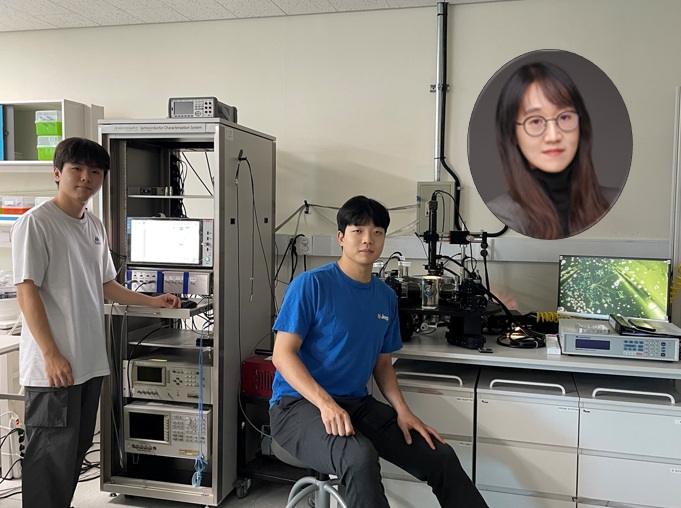
<(From left) Ph.D candidate Jaeha Hwang, Ph.D candidate Jungi Song ,Professor Kayoung Lee from Electrical Engineering>
Silicon semiconductors used in existing photodetectors have low light responsivity, and the two-dimensional semiconductor MoS₂ (molybdenum disulfide) is so thin that doping processes to control its electrical properties are difficult, limiting the realization of high-performance photodetectors. The KAIST research team has overcome this technical limitation and developed the world’s highest-performing self-powered photodetector, which operates without electricity in environments with a light source. This paves the way for an era where precise sensing is possible without batteries in wearable devices, biosignal monitoring, IoT devices, autonomous vehicles, and robots, as long as a light source is present.
KAIST (President Kwang Hyung Lee) announced on the 14th of August that Professor Kayoung Lee’s research team from the School of Electrical Engineering has developed a self-powered photodetector that operates without external power supply. This sensor demonstrated a sensitivity up to 20 times higher than existing products, marking the highest performance level among comparable technologies reported to date.
Professor Kayoung Lee’s team fabricated a “PN junction structure” photodetector capable of generating electrical signals on its own in environments with light, even without an electrical energy supply, by introducing a “van der Waals bottom electrode” that makes semiconductors extremely sensitive to electrical signals without doping.
First, a “PN junction” is a structure formed by joining p-type (hole-rich) and n-type (electron-rich) materials in a semiconductor. This structure causes current to flow in one direction when exposed to light, making it a key component in photodetectors and solar cells.
Normally, to create a proper PN junction, a process called “doping” is required, which involves deliberately introducing impurities into the semiconductor to alter its electrical properties. However, two-dimensional semiconductors such as MoS₂ are only a few atoms thick, so doping in the conventional way can damage the structure or reduce performance, making it difficult to create an ideal PN junction.
To overcome these limitations and maximize device performance, the research team designed a new device structure incorporating two key technologies: the “van der Waals electrode” and the “partial gate.”
The “partial gate” structure applies an electrical signal only to part of the two-dimensional semiconductor, controlling one side to behave like p-type and the other like n-type. This allows the device to function electrically like a PN junction without doping.
Furthermore, considering that conventional metal electrodes can chemically bond strongly to the semiconductor and damage its lattice structure, the “van der Waals bottom electrode” was attached gently using van der Waals forces. This preserved the original structure of the two-dimensional semiconductor while ensuring effective electrical signal transfer.
This innovative approach secured both structural stability and electrical performance, enabling the realization of a PN junction in thin two-dimensional semiconductors without damaging their structure.
Thanks to this innovation, the team succeeded in implementing a high-performance PN junction without doping. The device can generate electrical signals with extreme sensitivity as long as there is light, even without an external power source. Its light detection sensitivity (responsivity) exceeds 21 A/W, more than 20 times higher than powered conventional sensors, 10 times higher than silicon-based self-powered sensors, and over twice as high as existing MoS₂ sensors. This level of sensitivity means it can be applied immediately to high-precision sensors capable of detecting biosignals or operating in dark environments.
Professor Kayoung Lee stated that they “have achieved a level of sensitivity unimaginable in silicon sensors, and although two-dimensional semiconductors are too thin for conventional doping processes, [they] succeeded in implementing a PN junction that controls electrical flow without doping.” She added, “This technology can be used not only in sensors but also in key components that control electricity inside smartphones and electronic devices, providing a foundation for miniaturization and self-powered operation of next-generation electronics.”
Jaeha Hwang, Jungi Song, Experimnet in Porgress>
This research, with doctoral students Jaeha Hwang and Jungi Song as co-first authors, was published online on July 26 in Advanced Functional Materials (IF 19), a leading journal in materials science.
※ Paper title: Gated PN Junction in Ambipolar MoS₂ for Superior Self-Powered Photodetection
※ DOI: https://advanced.onlinelibrary.wiley.com/doi/10.1002/adfm.202510113
Meanwhile, this work was supported by the National Research Foundation of Korea, the Korea Basic Science Institute, Samsung Electronics, and the Korea Institute for Advancement of Technology.
2025.08.16 View 3868
KAIST develops world’s most sensitive light-powered photodetector—20 times more sensitive, operating without electricity
<(From left) Ph.D candidate Jaeha Hwang, Ph.D candidate Jungi Song ,Professor Kayoung Lee from Electrical Engineering>
Silicon semiconductors used in existing photodetectors have low light responsivity, and the two-dimensional semiconductor MoS₂ (molybdenum disulfide) is so thin that doping processes to control its electrical properties are difficult, limiting the realization of high-performance photodetectors. The KAIST research team has overcome this technical limitation and developed the world’s highest-performing self-powered photodetector, which operates without electricity in environments with a light source. This paves the way for an era where precise sensing is possible without batteries in wearable devices, biosignal monitoring, IoT devices, autonomous vehicles, and robots, as long as a light source is present.
KAIST (President Kwang Hyung Lee) announced on the 14th of August that Professor Kayoung Lee’s research team from the School of Electrical Engineering has developed a self-powered photodetector that operates without external power supply. This sensor demonstrated a sensitivity up to 20 times higher than existing products, marking the highest performance level among comparable technologies reported to date.
Professor Kayoung Lee’s team fabricated a “PN junction structure” photodetector capable of generating electrical signals on its own in environments with light, even without an electrical energy supply, by introducing a “van der Waals bottom electrode” that makes semiconductors extremely sensitive to electrical signals without doping.
First, a “PN junction” is a structure formed by joining p-type (hole-rich) and n-type (electron-rich) materials in a semiconductor. This structure causes current to flow in one direction when exposed to light, making it a key component in photodetectors and solar cells.
Normally, to create a proper PN junction, a process called “doping” is required, which involves deliberately introducing impurities into the semiconductor to alter its electrical properties. However, two-dimensional semiconductors such as MoS₂ are only a few atoms thick, so doping in the conventional way can damage the structure or reduce performance, making it difficult to create an ideal PN junction.
To overcome these limitations and maximize device performance, the research team designed a new device structure incorporating two key technologies: the “van der Waals electrode” and the “partial gate.”
The “partial gate” structure applies an electrical signal only to part of the two-dimensional semiconductor, controlling one side to behave like p-type and the other like n-type. This allows the device to function electrically like a PN junction without doping.
Furthermore, considering that conventional metal electrodes can chemically bond strongly to the semiconductor and damage its lattice structure, the “van der Waals bottom electrode” was attached gently using van der Waals forces. This preserved the original structure of the two-dimensional semiconductor while ensuring effective electrical signal transfer.
This innovative approach secured both structural stability and electrical performance, enabling the realization of a PN junction in thin two-dimensional semiconductors without damaging their structure.
Thanks to this innovation, the team succeeded in implementing a high-performance PN junction without doping. The device can generate electrical signals with extreme sensitivity as long as there is light, even without an external power source. Its light detection sensitivity (responsivity) exceeds 21 A/W, more than 20 times higher than powered conventional sensors, 10 times higher than silicon-based self-powered sensors, and over twice as high as existing MoS₂ sensors. This level of sensitivity means it can be applied immediately to high-precision sensors capable of detecting biosignals or operating in dark environments.
Professor Kayoung Lee stated that they “have achieved a level of sensitivity unimaginable in silicon sensors, and although two-dimensional semiconductors are too thin for conventional doping processes, [they] succeeded in implementing a PN junction that controls electrical flow without doping.” She added, “This technology can be used not only in sensors but also in key components that control electricity inside smartphones and electronic devices, providing a foundation for miniaturization and self-powered operation of next-generation electronics.”
Jaeha Hwang, Jungi Song, Experimnet in Porgress>
This research, with doctoral students Jaeha Hwang and Jungi Song as co-first authors, was published online on July 26 in Advanced Functional Materials (IF 19), a leading journal in materials science.
※ Paper title: Gated PN Junction in Ambipolar MoS₂ for Superior Self-Powered Photodetection
※ DOI: https://advanced.onlinelibrary.wiley.com/doi/10.1002/adfm.202510113
Meanwhile, this work was supported by the National Research Foundation of Korea, the Korea Basic Science Institute, Samsung Electronics, and the Korea Institute for Advancement of Technology.
2025.08.16 View 3868 -
 Professor Mikyoung Lim from Mathematical Sciences to Deliver Keynote at International Conference on Applied Inverse Problems
Professor Mikyoung Lim from KAIST Department of Mathematical Sciences gave a plenary talk on "Research on Inverse Problems based on Geometric Function Theory" at AIP 2025 (12th Applied Inverse Problems Conference). AIP is one of the leading international conferences in applied mathematics, organized biennially by the Inverse Problems International Association (IPIA). This year's conference was held from July 28 to August 1 in Rio de Janeiro, Brazil, and consisted of plenary talks, over 40 mini-symposia, and poster sessions. The IPIA began in 2007 and was re-established in 2022 as a non-profit international academic organization officially registered in Germany. At that time, Professor Lim served as an executive committee member for the re-establishment.
During the lecture, Professor Lim's research team introduced a new geometric solution and its applications to boundary value problems for electric/elastic equations, which they have been working on for the past 10 years. In particular, they presented a method for reconstructing partial differential equation boundary value problems into matrix equations and applying them to inverse problems using geometric function theory, a classical theory of complex analysis. A representative achievement was the formalization of the relationship between conformal mappings for simply connected domains in a plane and the measured values of solutions to equations of inhomogeneous conductors into a closed-form expression.
This research led to the plenary talk, as it was recognized for pioneering a new methodology for inverse problem research by connecting geometric function theory and layer potential theory.
2025.08.14 View 4018
Professor Mikyoung Lim from Mathematical Sciences to Deliver Keynote at International Conference on Applied Inverse Problems
Professor Mikyoung Lim from KAIST Department of Mathematical Sciences gave a plenary talk on "Research on Inverse Problems based on Geometric Function Theory" at AIP 2025 (12th Applied Inverse Problems Conference). AIP is one of the leading international conferences in applied mathematics, organized biennially by the Inverse Problems International Association (IPIA). This year's conference was held from July 28 to August 1 in Rio de Janeiro, Brazil, and consisted of plenary talks, over 40 mini-symposia, and poster sessions. The IPIA began in 2007 and was re-established in 2022 as a non-profit international academic organization officially registered in Germany. At that time, Professor Lim served as an executive committee member for the re-establishment.
During the lecture, Professor Lim's research team introduced a new geometric solution and its applications to boundary value problems for electric/elastic equations, which they have been working on for the past 10 years. In particular, they presented a method for reconstructing partial differential equation boundary value problems into matrix equations and applying them to inverse problems using geometric function theory, a classical theory of complex analysis. A representative achievement was the formalization of the relationship between conformal mappings for simply connected domains in a plane and the measured values of solutions to equations of inhomogeneous conductors into a closed-form expression.
This research led to the plenary talk, as it was recognized for pioneering a new methodology for inverse problem research by connecting geometric function theory and layer potential theory.
2025.08.14 View 4018 -
 Better Sleep, Better Life — KAIST’s Sleep Algorithm Comes to Samsung Galaxy Watches
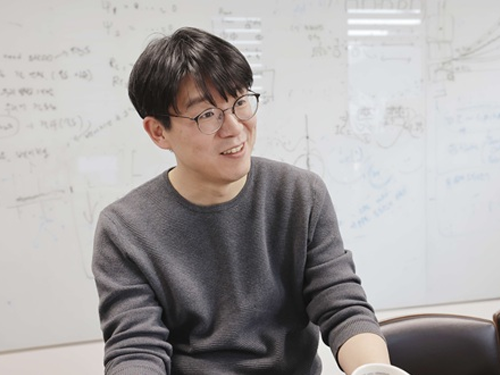
<Professor Jae Kyoung Kim of KAIST's Department of Mathematical Sciences>
Did you know that over 80% of people worldwide have irregular sleep habits? These sleep issues don’t just leave us feeling tired — they affect our health, focus, and quality of life. Now, a new sleep algorithm developed by a team of Korean researchers is aiming to change that. And it’s available on Samsung Galaxy smartwatches around the world, including the newly launched Galaxy Watch8 series.
The personalized sleep guide, created by Professor Jae Kyoung Kim’s research team at KAIST and the Institute for Basic Science (IBS), doesn’t just tell you how long you slept. It actually recommends the best time for you to go to bed — helping you build healthy sleep habits and feel more refreshed every day.
What makes it special? Unlike most sleep features that focus only on the past (“You slept six hours last night”), this algorithm looks ahead. Using mathematical models and your body’s circadian rhythm, it suggests a personalized “sleep window” — like “Going to bed between 11:10 PM and 11:40 PM is ideal for you tonight.”
“It’s kind of like a weather forecast,” said Professor Kim. “Instead of just telling you what happened yesterday, it helps you prepare for tomorrow — so you can sleep better and feel better.”
<Conceptual Diagram of a Smart Sleep Algorithm>
The algorithm was developed over three years by a small team of mathematicians, not professional app developers. “We faced a lot of challenges trying to turn our research into a real product,” Kim admitted. “People kept asking us when they could try the algorithm, and we always felt bad that we couldn’t release it properly. Now, thanks to the support of KAIST’s Technology Commercialization Center and our partnership with Samsung, our work will finally reach people around the world.”
The academic world is paying attention, too. Professor Kim’s presentation on the algorithm was selected for the Hot Topics session at SLEEP 2025, the world’s largest sleep conference held in the U.S., and will also be featured at World Sleep 2025 in Singapore this fall.
Professor Kim is also working with Professor Eun Yeon Joo’s team at Samsung Medical Center to develop even more advanced sleep recommendation technology. Together, they created “SLEEPS,” an algorithm that predicts sleep disorders (available at sleep-math.com). Meanwhile, development continues on their own sleep app — with the hope of bringing math-powered sleep science into more people’s everyday lives.
Professor Kim is a world-renowned expert in mathematical biology. In 2025, he became the first Korean scientist to give a keynote speech at the SIAM Annual Meeting, and the first Korean to join the editorial board of SIAM Review, one of the most prestigious journals in applied mathematics. His work shows how basic science and mathematics can lead to real solutions that help people live healthier, better lives.
2025.07.28 View 3213
Better Sleep, Better Life — KAIST’s Sleep Algorithm Comes to Samsung Galaxy Watches
<Professor Jae Kyoung Kim of KAIST's Department of Mathematical Sciences>
Did you know that over 80% of people worldwide have irregular sleep habits? These sleep issues don’t just leave us feeling tired — they affect our health, focus, and quality of life. Now, a new sleep algorithm developed by a team of Korean researchers is aiming to change that. And it’s available on Samsung Galaxy smartwatches around the world, including the newly launched Galaxy Watch8 series.
The personalized sleep guide, created by Professor Jae Kyoung Kim’s research team at KAIST and the Institute for Basic Science (IBS), doesn’t just tell you how long you slept. It actually recommends the best time for you to go to bed — helping you build healthy sleep habits and feel more refreshed every day.
What makes it special? Unlike most sleep features that focus only on the past (“You slept six hours last night”), this algorithm looks ahead. Using mathematical models and your body’s circadian rhythm, it suggests a personalized “sleep window” — like “Going to bed between 11:10 PM and 11:40 PM is ideal for you tonight.”
“It’s kind of like a weather forecast,” said Professor Kim. “Instead of just telling you what happened yesterday, it helps you prepare for tomorrow — so you can sleep better and feel better.”
<Conceptual Diagram of a Smart Sleep Algorithm>
The algorithm was developed over three years by a small team of mathematicians, not professional app developers. “We faced a lot of challenges trying to turn our research into a real product,” Kim admitted. “People kept asking us when they could try the algorithm, and we always felt bad that we couldn’t release it properly. Now, thanks to the support of KAIST’s Technology Commercialization Center and our partnership with Samsung, our work will finally reach people around the world.”
The academic world is paying attention, too. Professor Kim’s presentation on the algorithm was selected for the Hot Topics session at SLEEP 2025, the world’s largest sleep conference held in the U.S., and will also be featured at World Sleep 2025 in Singapore this fall.
Professor Kim is also working with Professor Eun Yeon Joo’s team at Samsung Medical Center to develop even more advanced sleep recommendation technology. Together, they created “SLEEPS,” an algorithm that predicts sleep disorders (available at sleep-math.com). Meanwhile, development continues on their own sleep app — with the hope of bringing math-powered sleep science into more people’s everyday lives.
Professor Kim is a world-renowned expert in mathematical biology. In 2025, he became the first Korean scientist to give a keynote speech at the SIAM Annual Meeting, and the first Korean to join the editorial board of SIAM Review, one of the most prestigious journals in applied mathematics. His work shows how basic science and mathematics can lead to real solutions that help people live healthier, better lives.
2025.07.28 View 3213 -
 2025 KAIST Global Entrepreneurship Summer School Concludes Successfully in Silicon Valley
< A group photo taken at the 2025 GESS Special Lecture.Vice President So Young Kim from the International Office, VC Jay Eum from GFT Ventures, Professor Byungchae Jin from the Impact MBA Program at the Business School, and Research Assistant Professor Sooa Lee from the Office of Global Initiative>
The “2025 KAIST Global Entrepreneurship Summer School (2025 KAIST GESS),” organized by the Office of Global Initiative of the KAIST International Office (Vice President So Young Kim), successfully concluded. Now in its fourth year, the program was designed to provide KAIST students with firsthand experience of the world’s leading startup ecosystem in Silicon Valley, USA, and to strengthen their practical capabilities to take on challenges on the global stage.
This year’s 2025 KAIST GESS welcomed approximately 40 participants, including 24 undergraduate and graduate students selected through document screening, interviews, team presentations, mentoring, and peer evaluations, as well as 16 Impact MBA students from the College of Business. The selected undergraduate and graduate participants underwent two months of pre-program training and received mentoring from experienced entrepreneurs to refine their business models and elevate their project ideas. Meanwhile, Impact MBA students joined the Silicon Valley program onsite, attending key lectures and networking sessions to broaden their understanding of the global startup ecosystem.
From June 22nd, participants spent seven days in Silicon Valley completing the global entrepreneurship curriculum. The program was operated in cooperation with major organizations including the KOTRA Silicon Valley IT Center, Korea-US AI Semiconductor Innovation Center (K-ASIC), and Plug and Play Tech Center. Local experts delivered lectures on topics such as “Startup Culture,” “Learning from Failures” and “Networks and Capital.”
Participants also had the opportunity to visit startups led by KAIST alumni and local entrepreneurs, gaining valuable insights from firsthand stories about global entrepreneurship. Companies visited included Medic Life Sciences (CEO Kyuho Han) and ImpriMed (CEO Sungwon Lim). Through these visits, participants received practical advice on market entry strategies and overcoming challenges in the global arena.
As part of their first onsite schedule, KAIST students attended an interactive fireside chat titled “Global Entrepreneurship and AI,” where they engaged in in-depth discussions on the future of AI-driven global startups. The session featured three distinguished speakers: Jay Kim, Head of US Business Development at Hyper Accel; Chandra Shekhar Dhir, AI/ML Director at JPMorgan Chase’s Machine Learning Center of Excellence; and Taesu Kim, co-founder of AI voice synthesis startup Neosapience and KAIST alumnus. Taesu Kim shared, “Facing serious health issues made me reflect on my life, and after recovering, I wanted to pursue something that could create a real impact on society, which led me to start my own company.” He also advised students to “take time at important turning points in life to deeply think about what you truly want to do and how you can contribute to society.
In line with the core value of ‘paying it forward’—a fundamental principle of global entrepreneurship learned in Silicon Valley—GESS participants engaged in a community service project titled “Let’s Play with AI+Tech,” organized in collaboration with the Sunnyvale community and Foothill College. Leveraging their strong foundation in AI, KAIST students designed and led a hands-on ‘Doodle AI’ educational program to make foundational AI concepts accessible and engaging for underrepresented local elementary school children and their parents, fostering meaningful community interaction.
On the final day of the 2025 KAIST GESS, a pitch competition was held with participation from Silicon Valley venture capitalists and accelerators. Participants presented their business models, developed over the two-month program, to a panel of judges. The winning team was eaureco, and Si Li Sara Aow (Civil and Environmental Engineering) shared, “GESS was a valuable opportunity to test and hone practical entrepreneurship skills beyond mere networking.” She added, “At first, I lacked confidence, but challenging myself to pitch in the final presentation gave me the courage to take one step closer to global entrepreneurship. Pitching in Silicon Valley, the heart of global startups, was an invaluable experience that will shape my path as a global entrepreneur.”
The program concluded with a special lecture by Jay Eum, a seasoned Silicon Valley venture capitalist and a judging panel member for GESS over the past three years. He shared key insights on startup success from an investor’s perspective, advising, “The journey of entrepreneurship is never easy, but the sooner you start, the better.” He further encouraged participants to “focus on solving problems in local markets, but do not fear challenging global markets,” inspiring them with courage and actionable advice.
So Young Kim, Director of the KAIST Office of Global Initiative, said, “We hope the 2025 KAIST GESS serves as a stepping stone for KAIST students to grow into influential entrepreneurs on the global stage,” adding, “This program is also expected to further enhance KAIST’s international reputation.”
Byungchae Jin, Faculty Chair of the KAIST Impact MBA, College of Business, highlighted the program's educational benefits, stating, “Engaging directly with local entrepreneurs and gaining practical experience in Silicon Valley's startup environment provide students with hands-on learning and significant inspiration.”
The 2025 KAIST GESS was jointly hosted by the KAIST Office of Global Initiative, Impact MBA, and Startup KAIST. Moving forward, KAIST plans to continue expanding its field-based global entrepreneurship education by linking with key global hubs like Silicon Valley, fostering next-generation global leaders who will lead innovation and challenge the status quo.
2025.07.01 View 6570
2025 KAIST Global Entrepreneurship Summer School Concludes Successfully in Silicon Valley
< A group photo taken at the 2025 GESS Special Lecture.Vice President So Young Kim from the International Office, VC Jay Eum from GFT Ventures, Professor Byungchae Jin from the Impact MBA Program at the Business School, and Research Assistant Professor Sooa Lee from the Office of Global Initiative>
The “2025 KAIST Global Entrepreneurship Summer School (2025 KAIST GESS),” organized by the Office of Global Initiative of the KAIST International Office (Vice President So Young Kim), successfully concluded. Now in its fourth year, the program was designed to provide KAIST students with firsthand experience of the world’s leading startup ecosystem in Silicon Valley, USA, and to strengthen their practical capabilities to take on challenges on the global stage.
This year’s 2025 KAIST GESS welcomed approximately 40 participants, including 24 undergraduate and graduate students selected through document screening, interviews, team presentations, mentoring, and peer evaluations, as well as 16 Impact MBA students from the College of Business. The selected undergraduate and graduate participants underwent two months of pre-program training and received mentoring from experienced entrepreneurs to refine their business models and elevate their project ideas. Meanwhile, Impact MBA students joined the Silicon Valley program onsite, attending key lectures and networking sessions to broaden their understanding of the global startup ecosystem.
From June 22nd, participants spent seven days in Silicon Valley completing the global entrepreneurship curriculum. The program was operated in cooperation with major organizations including the KOTRA Silicon Valley IT Center, Korea-US AI Semiconductor Innovation Center (K-ASIC), and Plug and Play Tech Center. Local experts delivered lectures on topics such as “Startup Culture,” “Learning from Failures” and “Networks and Capital.”
Participants also had the opportunity to visit startups led by KAIST alumni and local entrepreneurs, gaining valuable insights from firsthand stories about global entrepreneurship. Companies visited included Medic Life Sciences (CEO Kyuho Han) and ImpriMed (CEO Sungwon Lim). Through these visits, participants received practical advice on market entry strategies and overcoming challenges in the global arena.
As part of their first onsite schedule, KAIST students attended an interactive fireside chat titled “Global Entrepreneurship and AI,” where they engaged in in-depth discussions on the future of AI-driven global startups. The session featured three distinguished speakers: Jay Kim, Head of US Business Development at Hyper Accel; Chandra Shekhar Dhir, AI/ML Director at JPMorgan Chase’s Machine Learning Center of Excellence; and Taesu Kim, co-founder of AI voice synthesis startup Neosapience and KAIST alumnus. Taesu Kim shared, “Facing serious health issues made me reflect on my life, and after recovering, I wanted to pursue something that could create a real impact on society, which led me to start my own company.” He also advised students to “take time at important turning points in life to deeply think about what you truly want to do and how you can contribute to society.
In line with the core value of ‘paying it forward’—a fundamental principle of global entrepreneurship learned in Silicon Valley—GESS participants engaged in a community service project titled “Let’s Play with AI+Tech,” organized in collaboration with the Sunnyvale community and Foothill College. Leveraging their strong foundation in AI, KAIST students designed and led a hands-on ‘Doodle AI’ educational program to make foundational AI concepts accessible and engaging for underrepresented local elementary school children and their parents, fostering meaningful community interaction.
On the final day of the 2025 KAIST GESS, a pitch competition was held with participation from Silicon Valley venture capitalists and accelerators. Participants presented their business models, developed over the two-month program, to a panel of judges. The winning team was eaureco, and Si Li Sara Aow (Civil and Environmental Engineering) shared, “GESS was a valuable opportunity to test and hone practical entrepreneurship skills beyond mere networking.” She added, “At first, I lacked confidence, but challenging myself to pitch in the final presentation gave me the courage to take one step closer to global entrepreneurship. Pitching in Silicon Valley, the heart of global startups, was an invaluable experience that will shape my path as a global entrepreneur.”
The program concluded with a special lecture by Jay Eum, a seasoned Silicon Valley venture capitalist and a judging panel member for GESS over the past three years. He shared key insights on startup success from an investor’s perspective, advising, “The journey of entrepreneurship is never easy, but the sooner you start, the better.” He further encouraged participants to “focus on solving problems in local markets, but do not fear challenging global markets,” inspiring them with courage and actionable advice.
So Young Kim, Director of the KAIST Office of Global Initiative, said, “We hope the 2025 KAIST GESS serves as a stepping stone for KAIST students to grow into influential entrepreneurs on the global stage,” adding, “This program is also expected to further enhance KAIST’s international reputation.”
Byungchae Jin, Faculty Chair of the KAIST Impact MBA, College of Business, highlighted the program's educational benefits, stating, “Engaging directly with local entrepreneurs and gaining practical experience in Silicon Valley's startup environment provide students with hands-on learning and significant inspiration.”
The 2025 KAIST GESS was jointly hosted by the KAIST Office of Global Initiative, Impact MBA, and Startup KAIST. Moving forward, KAIST plans to continue expanding its field-based global entrepreneurship education by linking with key global hubs like Silicon Valley, fostering next-generation global leaders who will lead innovation and challenge the status quo.
2025.07.01 View 6570 -
 KPC4IR Publishes Global Standards Mapping Initiative 2.0
The report highlights South Korea as an early adopter of blockchain in policy and business
The KAIST Policy Center for the 4IR (KPC4IR), one of the nine working groups of the Global Blockchain Business Council (GBBC), published the Global Standards Mapping Initiative (GSMI) 2.0, highlighting Korea as an early adopter of blockchain. The report also offers an overview of how blockchain was adopted through an analysis of policy and business cases of South Korea.
In partnership with 131 institutions, GSMI 2.0 maps, catalogues, and analyzes data from 187 jurisdictions, 479 industry consortia, 38 technical standards, and 389 university courses and degree programs to provide a holistic view of the industry’s global activity.
Among the nine working groups, KAIST is the sole investigator for researching South Korea’s adoption of blockchain for policy and business. It says that in terms of policy and regulations for blockchain as a virtual asset, South Korea amended the Act on Reporting and Using Specific Financial Transaction Information to comply with the Financial Action Task Force’s recommendations.
The report also reviewed South Korea’s blockchain R&D. Seventeen ministries have funded 417 projects to cultivate blockchain inventions since 2015. Significantly, the Ministry of Science and ICT’s Blockchain Convergence Technology Development Program supported 50 projects between 2018 and 2021. Their R&D focused on virtual assets during the initial stage in 2015 and soon shifted its application to various domains, including identification and logistics.
The report noted that the Korea Customs Service was one of the first agencies in the world to introduce blockchain into customs clearance. Through collaborations with the private sector, the Korean government has also created the world’s first blockchain-based vaccination certification services and extended it to a globally integrated decentralized identity system.
Finally, the report states that these South Korean cases highlight three ambiguities in blockchain policies. First, blockchain involves both financial and industrial features. Thus, it needs a new regulatory framework that embraces the two features together.
Second, integrating services on a blockchain platform will bring forth seamless automation of industries across the manufacturing, financial, and public sectors. South Korea, which already has well-proven manufacturing capabilities, is in need of a comprehensive strategy to encompass multiple services on one platform.
Third, the two cases of the government’s adoption of blockchain suggest that innovations in blockchain can be facilitated through effective cooperation among government ministries and agencies regarding particular businesses in the private sector. Consequently, the government’s policy is not simply to invest in virtual assets but also to develop a virtual-physical world woven by blockchain. The new environment demands that South Korea transform its policy stances on blockchain, from specialization to comprehensiveness and cooperation.
Professor So Young Kim who heads the center said, “This report shows the main lessons from South Korea for other countries adopting blockchain. We will continue to work closely with our partners including the World Economic Forum to investigate many other global issues.”
2021.12.21 View 11673
KPC4IR Publishes Global Standards Mapping Initiative 2.0
The report highlights South Korea as an early adopter of blockchain in policy and business
The KAIST Policy Center for the 4IR (KPC4IR), one of the nine working groups of the Global Blockchain Business Council (GBBC), published the Global Standards Mapping Initiative (GSMI) 2.0, highlighting Korea as an early adopter of blockchain. The report also offers an overview of how blockchain was adopted through an analysis of policy and business cases of South Korea.
In partnership with 131 institutions, GSMI 2.0 maps, catalogues, and analyzes data from 187 jurisdictions, 479 industry consortia, 38 technical standards, and 389 university courses and degree programs to provide a holistic view of the industry’s global activity.
Among the nine working groups, KAIST is the sole investigator for researching South Korea’s adoption of blockchain for policy and business. It says that in terms of policy and regulations for blockchain as a virtual asset, South Korea amended the Act on Reporting and Using Specific Financial Transaction Information to comply with the Financial Action Task Force’s recommendations.
The report also reviewed South Korea’s blockchain R&D. Seventeen ministries have funded 417 projects to cultivate blockchain inventions since 2015. Significantly, the Ministry of Science and ICT’s Blockchain Convergence Technology Development Program supported 50 projects between 2018 and 2021. Their R&D focused on virtual assets during the initial stage in 2015 and soon shifted its application to various domains, including identification and logistics.
The report noted that the Korea Customs Service was one of the first agencies in the world to introduce blockchain into customs clearance. Through collaborations with the private sector, the Korean government has also created the world’s first blockchain-based vaccination certification services and extended it to a globally integrated decentralized identity system.
Finally, the report states that these South Korean cases highlight three ambiguities in blockchain policies. First, blockchain involves both financial and industrial features. Thus, it needs a new regulatory framework that embraces the two features together.
Second, integrating services on a blockchain platform will bring forth seamless automation of industries across the manufacturing, financial, and public sectors. South Korea, which already has well-proven manufacturing capabilities, is in need of a comprehensive strategy to encompass multiple services on one platform.
Third, the two cases of the government’s adoption of blockchain suggest that innovations in blockchain can be facilitated through effective cooperation among government ministries and agencies regarding particular businesses in the private sector. Consequently, the government’s policy is not simply to invest in virtual assets but also to develop a virtual-physical world woven by blockchain. The new environment demands that South Korea transform its policy stances on blockchain, from specialization to comprehensiveness and cooperation.
Professor So Young Kim who heads the center said, “This report shows the main lessons from South Korea for other countries adopting blockchain. We will continue to work closely with our partners including the World Economic Forum to investigate many other global issues.”
2021.12.21 View 11673 -
 Marien Buissonniere Awarded the 9th Grand Award for Future Strategy
Global healthcare and humanitarian activist honored by the Grand Award for Future Strategy
The Moon Soul Graduate School of Future Strategy awarded the 9th Grand Award for Future Strategy to Marine Buissonniere, an independent advisor and practitioner in the fields of global health and humanitarian action. She currently works as a senior advisor to the Prevent Epidemics team at Resolve to Save Lives. She also co-chairs Doctors Without Borders’ Transformational Investment Capacity.
Buissonniere was recognized for designing and implementing global response strategies in global strife and disaster stricken areas over the 25 years while serving as secretary general of Doctors Without Borders. She has been working with various government agencies around the world including Resolve to Save Lives to respond to the Covid-19 pandemic and preparing global future strategies for the post-pandemic era.
The Grand Award for Future Strategy recognizes individual and organization who have contributed to the nation and humanity through future research and strategies in the fields of science and technology, economy and industry, society and culture, politics and governance, and resources and environment.
The selection committee place particular emphasis on her humanitarian efforts toward North Korea. She was in charge of the task force for resuming the health project in North Korea and facilitated the North Korean program in 2002. She also played a significant role in raising awareness of North Korea’s humanitarian issues in the international community by lecturing at Columbia and Princeton.
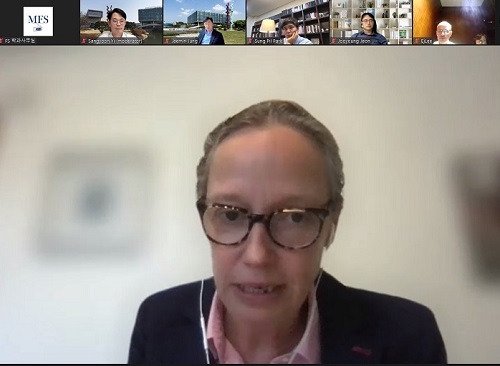
Buissonniere said during the awards ceremony held online on November 5, “I am very grateful to receive this award from KAIST, a world’s top-flight university as well as from South Korea related to the Korean Peninsula and North Korea, where I have spent most of my life. What makes this award even more special is it is about the international medical relief activities and system innovations that I’ve devoted my life to over the last 25 years. I am going to continue this journey to help many people in difficult situations. Eventually, I would like to make it possible for those people in need to make their own future by themselves.”
2021.11.11 View 10200
Marien Buissonniere Awarded the 9th Grand Award for Future Strategy
Global healthcare and humanitarian activist honored by the Grand Award for Future Strategy
The Moon Soul Graduate School of Future Strategy awarded the 9th Grand Award for Future Strategy to Marine Buissonniere, an independent advisor and practitioner in the fields of global health and humanitarian action. She currently works as a senior advisor to the Prevent Epidemics team at Resolve to Save Lives. She also co-chairs Doctors Without Borders’ Transformational Investment Capacity.
Buissonniere was recognized for designing and implementing global response strategies in global strife and disaster stricken areas over the 25 years while serving as secretary general of Doctors Without Borders. She has been working with various government agencies around the world including Resolve to Save Lives to respond to the Covid-19 pandemic and preparing global future strategies for the post-pandemic era.
The Grand Award for Future Strategy recognizes individual and organization who have contributed to the nation and humanity through future research and strategies in the fields of science and technology, economy and industry, society and culture, politics and governance, and resources and environment.
The selection committee place particular emphasis on her humanitarian efforts toward North Korea. She was in charge of the task force for resuming the health project in North Korea and facilitated the North Korean program in 2002. She also played a significant role in raising awareness of North Korea’s humanitarian issues in the international community by lecturing at Columbia and Princeton.
Buissonniere said during the awards ceremony held online on November 5, “I am very grateful to receive this award from KAIST, a world’s top-flight university as well as from South Korea related to the Korean Peninsula and North Korea, where I have spent most of my life. What makes this award even more special is it is about the international medical relief activities and system innovations that I’ve devoted my life to over the last 25 years. I am going to continue this journey to help many people in difficult situations. Eventually, I would like to make it possible for those people in need to make their own future by themselves.”
2021.11.11 View 10200 -
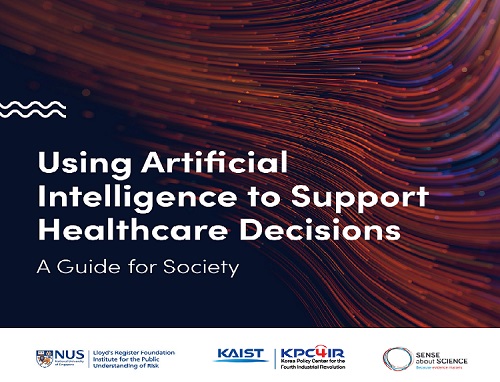 KAIST KPC4IR Presents the AI Global Guide for Healthcare
The benchmark for the responsible usage of AI technology in the healthcare sector will promote clarity and high standards for technological applications
The KAIST Korea Policy Center for the Fourth Industrial Revolution (KPC4IR) published 'Using AI to Support Healthcare Decisions: A Guide for Society.' This global guide is designed to serve as a benchmark for the responsible usage of AI technologies, and will promote clarity and high standards for technological applications in the healthcare sector. The guide details what should be considered when making clinical decisions to help reduce the chances of the AI giving false or misleading results.
The KPC4IR presented the guide in collaboration with the Lloyd’s Register Foundation Institute for the Public Understanding of Risk at the National University of Singapore (NUS IPUR) and Sense about Science, a non-profit organization in the UK specialized in science communication, during the 2021 SIG-KDD (Special Interest Group on Knowledge Discovery and Data Mining) Conference on August 15.
AI technology is being widely used in the healthcare sector and has already proved its accuracy and efficiency in diagnosing and predicting diseases. Despite its huge impact on our daily lives in every sector of society, AI technology has some drawbacks and comes with risks, especially due to biased algorithms.
“We focused on the ‘reliability’ of AI applications in the healthcare sector to make all data well represented, in good quality. The technology will eventually innovate to better serve the people’s new demand, especially critical demands for safety and precision in healthcare services. This global guide will help both developers and people’s understanding of the appropriate technology applications,” says Director So Young Kim at the KPC4IR.
The guide, for instance, says that to scrutinize quality and reliability, the source of the data must be clearly known; the data must have been collected or selected for the purpose it’s being used for; the limitations and assumptions for that purpose have been clearly stated; the biases have been addressed; and it has been properly tested in the real world. It also reflects the importance of the representativeness of data that will affect the accuracy of the AI applications.
“By being transparent and demonstrating the steps taken to check that the AI is reliable, researchers and developers can help give people confidence about providing their data,” the guide states.
For this guide, the KPC4IR and its collaborators collected data after working with numerous experts from the Graduate School of AI at KAIST, the Science and Technology Policy Institute in Korea, Asan Medical Center in Seoul, Seoul National University Bundang Hospital, and AI solution companies.
2021.08.17 View 14043
KAIST KPC4IR Presents the AI Global Guide for Healthcare
The benchmark for the responsible usage of AI technology in the healthcare sector will promote clarity and high standards for technological applications
The KAIST Korea Policy Center for the Fourth Industrial Revolution (KPC4IR) published 'Using AI to Support Healthcare Decisions: A Guide for Society.' This global guide is designed to serve as a benchmark for the responsible usage of AI technologies, and will promote clarity and high standards for technological applications in the healthcare sector. The guide details what should be considered when making clinical decisions to help reduce the chances of the AI giving false or misleading results.
The KPC4IR presented the guide in collaboration with the Lloyd’s Register Foundation Institute for the Public Understanding of Risk at the National University of Singapore (NUS IPUR) and Sense about Science, a non-profit organization in the UK specialized in science communication, during the 2021 SIG-KDD (Special Interest Group on Knowledge Discovery and Data Mining) Conference on August 15.
AI technology is being widely used in the healthcare sector and has already proved its accuracy and efficiency in diagnosing and predicting diseases. Despite its huge impact on our daily lives in every sector of society, AI technology has some drawbacks and comes with risks, especially due to biased algorithms.
“We focused on the ‘reliability’ of AI applications in the healthcare sector to make all data well represented, in good quality. The technology will eventually innovate to better serve the people’s new demand, especially critical demands for safety and precision in healthcare services. This global guide will help both developers and people’s understanding of the appropriate technology applications,” says Director So Young Kim at the KPC4IR.
The guide, for instance, says that to scrutinize quality and reliability, the source of the data must be clearly known; the data must have been collected or selected for the purpose it’s being used for; the limitations and assumptions for that purpose have been clearly stated; the biases have been addressed; and it has been properly tested in the real world. It also reflects the importance of the representativeness of data that will affect the accuracy of the AI applications.
“By being transparent and demonstrating the steps taken to check that the AI is reliable, researchers and developers can help give people confidence about providing their data,” the guide states.
For this guide, the KPC4IR and its collaborators collected data after working with numerous experts from the Graduate School of AI at KAIST, the Science and Technology Policy Institute in Korea, Asan Medical Center in Seoul, Seoul National University Bundang Hospital, and AI solution companies.
2021.08.17 View 14043 -
 KPC4IR Helping to Create Global Standards for Virtual Transactions
KPC4IR will join the task force for the Global Implementation of Travel Rule Standards
The KAIST Policy Center for the Fourth Industrial Revolution (KPC4IR) will participate in a global initiative to create global standards for virtual asset transactions. As a member of the GI-TRUST (Global Implementation of Travel Rule Standards) task force, the KPC4IR will develop technical standards and relevant policies that support the global implementation of the travel rule for virtual assets in compliance with the recommendations of the Financial Action Task Force’s (FATF).
The FATF is an intergovernmental organization founded in 1989 by the G7 to develop policies to combat money laundering. In June 2019, the FATF extended its Recommendation 16, commonly known as the “travel rule,” to virtual asset services providers (VASPs), requiring both financial institutions and VASPs to aggregate information on the senders and recipients of wire transfers and exchange this information between parties to create a suitable audit trail.
According to the FATF’s recommendation and the G20’s support, jurisdictions, especially G20 member countries, have now applied the travel rule to their respective local laws. Korea also amended the Act on Reporting and Using Specified Financial Transaction Information in March 2020 to include virtual assets in their regulatory scope by March 2022.
The GI-TRUST task force will collaborate with global and local organizations developing travel rule technologies and offer a neutral assessment of proposed solutions. Their activities are aimed at standardizing related authentication protocols and security technologies that help VASPs comply with the travel rule.
The task force will also aid in the pilot testing of travel rule solutions for certain VASPs in Korea. Afterwards, the task force will report on the performance and reliability of the tested travel rule solutions for actual virtual asset transactions, in compliance with the FATF’s guidance.
Besides the KPC4IR, the GI-TRUST task force includes the Global Blockchain Business Council (GBBC), International Digital Asset Exchange Association (IDAXA), and Korea Blockchain Association (KBCA).
Director of the KPC4IR Professor So Young Kim will co-chair the task force. Professor Kim said their approach should be prudential in dealing with the regulations that rely on secure real-name data on top of the opposing governance style of pseudonymization, distribution, and recombination.
She explained, “KAIST has designed the co-evolution of technologies and institutions in conjunction with the global leaders’ groups such as the World Economic Forum and the EC Joint Research Center.”
She expects KAIST’s interdisciplinary, global cooperation to untie the entangled problem between regulations and technologies that obstruct future pathways.
2021.07.30 View 14395
KPC4IR Helping to Create Global Standards for Virtual Transactions
KPC4IR will join the task force for the Global Implementation of Travel Rule Standards
The KAIST Policy Center for the Fourth Industrial Revolution (KPC4IR) will participate in a global initiative to create global standards for virtual asset transactions. As a member of the GI-TRUST (Global Implementation of Travel Rule Standards) task force, the KPC4IR will develop technical standards and relevant policies that support the global implementation of the travel rule for virtual assets in compliance with the recommendations of the Financial Action Task Force’s (FATF).
The FATF is an intergovernmental organization founded in 1989 by the G7 to develop policies to combat money laundering. In June 2019, the FATF extended its Recommendation 16, commonly known as the “travel rule,” to virtual asset services providers (VASPs), requiring both financial institutions and VASPs to aggregate information on the senders and recipients of wire transfers and exchange this information between parties to create a suitable audit trail.
According to the FATF’s recommendation and the G20’s support, jurisdictions, especially G20 member countries, have now applied the travel rule to their respective local laws. Korea also amended the Act on Reporting and Using Specified Financial Transaction Information in March 2020 to include virtual assets in their regulatory scope by March 2022.
The GI-TRUST task force will collaborate with global and local organizations developing travel rule technologies and offer a neutral assessment of proposed solutions. Their activities are aimed at standardizing related authentication protocols and security technologies that help VASPs comply with the travel rule.
The task force will also aid in the pilot testing of travel rule solutions for certain VASPs in Korea. Afterwards, the task force will report on the performance and reliability of the tested travel rule solutions for actual virtual asset transactions, in compliance with the FATF’s guidance.
Besides the KPC4IR, the GI-TRUST task force includes the Global Blockchain Business Council (GBBC), International Digital Asset Exchange Association (IDAXA), and Korea Blockchain Association (KBCA).
Director of the KPC4IR Professor So Young Kim will co-chair the task force. Professor Kim said their approach should be prudential in dealing with the regulations that rely on secure real-name data on top of the opposing governance style of pseudonymization, distribution, and recombination.
She explained, “KAIST has designed the co-evolution of technologies and institutions in conjunction with the global leaders’ groups such as the World Economic Forum and the EC Joint Research Center.”
She expects KAIST’s interdisciplinary, global cooperation to untie the entangled problem between regulations and technologies that obstruct future pathways.
2021.07.30 View 14395 -
 KAIST-SM Entertainment Joint Research for Metaverse
“Culture scientist will play a role in the future of the entertainment industry”
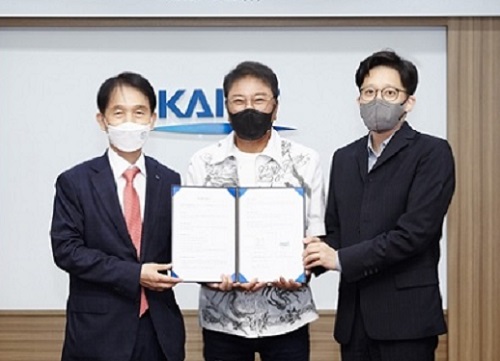
KAIST President Kwang Hyung Lee and SM Entertainment Founder and Chief Executive Producer Soo-Man Lee signed an MOU on joint research of the metaverse on June 23 at the Daejeon campus. SM Entertainment is the powerhouse of K-pop and Lee is a pioneering figure who helped Korean pop culture emerge into a global phenomenon.
The KAIST-SM metaverse partnership will bring out new culture technology that will lead the virtual entertainment industry by creating more dynamic and vivid digital technologies. KAIST will utilize its AI, robot, and network technologies, while SM will provide its content production expertise for this metaverse research.
President Lee said, “SM artists have mesmerized global audiences and opened new markets for K-Pop. Combining the creativity and cultural imagination of SM with technologies from KAIST, together we will make significant contributions to the advancement of virtual reality as well as the global entertainment industry.”
The Graduate School of Culture Technology has been engaging in a variety of creative projects incorporating science and technology for decades and will now actively participate in this metaverse project with SM.
CEP Lee explained, “The power of celebrities and avatars will rule the future entertainment industry. SM will make a leap forward to be a ‘first mover’ in the digital entertainment industry with this partnership with KAIST. This partnership will shape the new digital future of the entertainment industry boosted by cutting-edge technologies.”
CEP Lee also delivered a special lecture for the KAIST community via Zoom. Saying that producers in the future will be ‘culture scientists’, he stressed the importance of technology converging with culture.
“The key factor for K-pop’s success lies in the impressive technology of Korea. SM places a high priority on developing cultural technology and creating new artists and products combining this technology,” added Lee, citing the hologram contents of Beyond Live concerts and the new 4+4 girl group composed of four girls and four avatars called ‘Aespa.’
2021.06.25 View 12119
KAIST-SM Entertainment Joint Research for Metaverse
“Culture scientist will play a role in the future of the entertainment industry”
KAIST President Kwang Hyung Lee and SM Entertainment Founder and Chief Executive Producer Soo-Man Lee signed an MOU on joint research of the metaverse on June 23 at the Daejeon campus. SM Entertainment is the powerhouse of K-pop and Lee is a pioneering figure who helped Korean pop culture emerge into a global phenomenon.
The KAIST-SM metaverse partnership will bring out new culture technology that will lead the virtual entertainment industry by creating more dynamic and vivid digital technologies. KAIST will utilize its AI, robot, and network technologies, while SM will provide its content production expertise for this metaverse research.
President Lee said, “SM artists have mesmerized global audiences and opened new markets for K-Pop. Combining the creativity and cultural imagination of SM with technologies from KAIST, together we will make significant contributions to the advancement of virtual reality as well as the global entertainment industry.”
The Graduate School of Culture Technology has been engaging in a variety of creative projects incorporating science and technology for decades and will now actively participate in this metaverse project with SM.
CEP Lee explained, “The power of celebrities and avatars will rule the future entertainment industry. SM will make a leap forward to be a ‘first mover’ in the digital entertainment industry with this partnership with KAIST. This partnership will shape the new digital future of the entertainment industry boosted by cutting-edge technologies.”
CEP Lee also delivered a special lecture for the KAIST community via Zoom. Saying that producers in the future will be ‘culture scientists’, he stressed the importance of technology converging with culture.
“The key factor for K-pop’s success lies in the impressive technology of Korea. SM places a high priority on developing cultural technology and creating new artists and products combining this technology,” added Lee, citing the hologram contents of Beyond Live concerts and the new 4+4 girl group composed of four girls and four avatars called ‘Aespa.’
2021.06.25 View 12119 -
 Chairman Soo-Young Lee Named Among the Heroes of Philanthropy in Asia
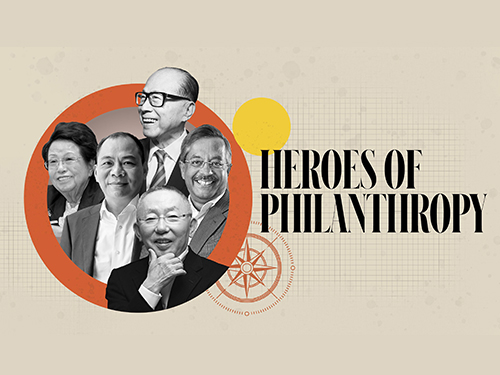
Chairman Soo-Young Lee from the KAIST Development Foundation was named one of 15 philanthropists who made the biggest donations in the Asia-Pacific region by Forbes Asia on November 11.
The annual Heroes of Philanthropy list features the 15 the most generous individual philanthropists who are donating from their personal fortunes, not through companies. This year, the biggest philanthropies donated to make a difference in wide arrays of sectors such as Covid-19 relief to education and the arts.
Chairman Lee donated totaling 68 billion KRW to KAIST in July. Her donation marked the largest donation KAIST has ever received. She is one of two Korean philanthropists that Forbes selected. Honorary Chairman of GS Caltex Dong-Soo Huh also made the list.
Her donation will establish the Soo-Young Lee Science Education Foundation to support ‘the Singularity Professor program’ that KAIST is launching. She expressed confidence that her donation will fund KAIST researchers to make breakthroughs that will lead to a Nobel Prize.
“Without the advancement of science and technology, Korea cannot be one of the top countries in the world. I believe KAIST can make it with our all supports,” she frequently said when asked why she selected KAIST for her donation.
Chairman Lee previously made generous donations in 2012 and 2016 and said she plans to make another gift to KAIST in the very near future.
2020.11.13 View 10597
Chairman Soo-Young Lee Named Among the Heroes of Philanthropy in Asia
Chairman Soo-Young Lee from the KAIST Development Foundation was named one of 15 philanthropists who made the biggest donations in the Asia-Pacific region by Forbes Asia on November 11.
The annual Heroes of Philanthropy list features the 15 the most generous individual philanthropists who are donating from their personal fortunes, not through companies. This year, the biggest philanthropies donated to make a difference in wide arrays of sectors such as Covid-19 relief to education and the arts.
Chairman Lee donated totaling 68 billion KRW to KAIST in July. Her donation marked the largest donation KAIST has ever received. She is one of two Korean philanthropists that Forbes selected. Honorary Chairman of GS Caltex Dong-Soo Huh also made the list.
Her donation will establish the Soo-Young Lee Science Education Foundation to support ‘the Singularity Professor program’ that KAIST is launching. She expressed confidence that her donation will fund KAIST researchers to make breakthroughs that will lead to a Nobel Prize.
“Without the advancement of science and technology, Korea cannot be one of the top countries in the world. I believe KAIST can make it with our all supports,” she frequently said when asked why she selected KAIST for her donation.
Chairman Lee previously made generous donations in 2012 and 2016 and said she plans to make another gift to KAIST in the very near future.
2020.11.13 View 10597 -
 Professor Kyu-Young Whang Donates Toward the 50th Anniversary Memorial Building
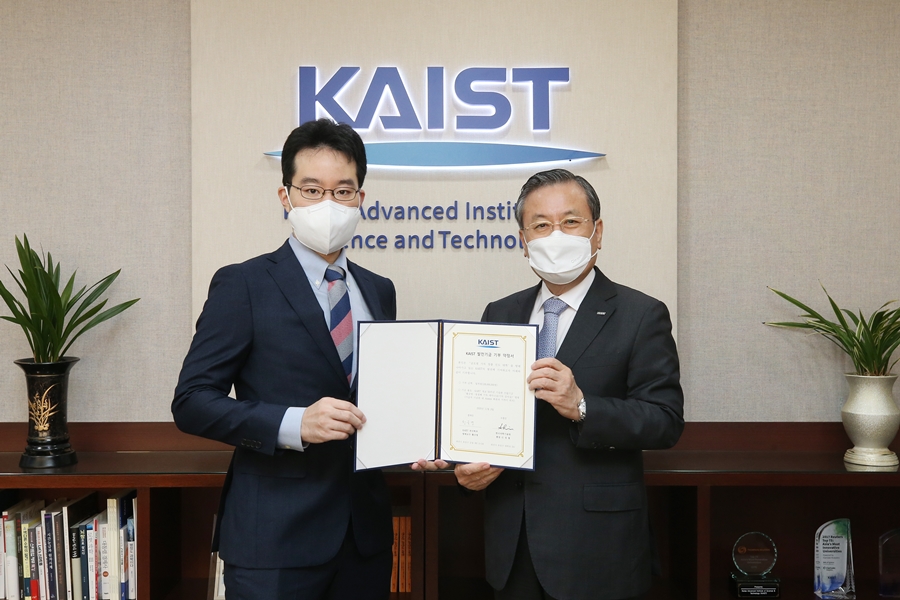
Distinguished Professor Kyu-Young Whang from the School of Computing made a gift of 100 million KRW toward the construction of the 50th Anniversary Memorial Building during a ceremony on November 3 at the Daejeon campus. "As a member of the first class of KAIST, I feel very delighted to play a part in the fundraising campaign for the 50th anniversary celebration. This is also a token of appreciation to my alma mater and I look forward to alumni and the KAIST community joining this campaign," said Professor Emeritus Whang. KAIST will name the Kyu-Young Whang and Jonghae Song Christian Seminar Room at the 50th Anniversary Memorial Building. The ground will be broken in 2022 for construction of the building.
2020.11.04 View 10370
Professor Kyu-Young Whang Donates Toward the 50th Anniversary Memorial Building
Distinguished Professor Kyu-Young Whang from the School of Computing made a gift of 100 million KRW toward the construction of the 50th Anniversary Memorial Building during a ceremony on November 3 at the Daejeon campus. "As a member of the first class of KAIST, I feel very delighted to play a part in the fundraising campaign for the 50th anniversary celebration. This is also a token of appreciation to my alma mater and I look forward to alumni and the KAIST community joining this campaign," said Professor Emeritus Whang. KAIST will name the Kyu-Young Whang and Jonghae Song Christian Seminar Room at the 50th Anniversary Memorial Building. The ground will be broken in 2022 for construction of the building.
2020.11.04 View 10370