%63%68%65%6d%69%63%61%6c
-
 KAIST, Making Pharmaceuticals with Light and Air… Solving a Long-Standing Challenge in Chemical Synthesis
<(From Left) Professor Sang Woo Han, Researcher Jin Wook Baek>
In chemical processes for producing pharmaceuticals, catalysts are the key to determine production speed and cost. However, until now, there has been a trade-off between “precise but disposable catalysts” and “reusable catalysts.” A KAIST research team has developed an eco-friendly catalytic technology that combines these two types, operating with light and air. This opens a pathway to producing pharmaceutical ingredients more cheaply and cleanly, with expected reductions in carbon emissions and environmental pollution.
KAIST (President Kwang Hyung Lee) announced on the 30th of March that a research team led by Professor Sang Woo Han of the Department of Chemistry has succeeded in combining two different types of catalysts into one system. One is a silver (Ag)-based catalyst that operates in a solid state, and the other is an organic photocatalyst, DDQ (a substance that triggers chemical reactions upon absorbing light), which operates in solution. By enabling these two catalysts to function together, the team made it possible to carry out previously difficult reactions more efficiently.
< Schematic diagram of the operation of a heterogeneous–homogeneous hybrid photocatalytic system >
Using this technology, the researchers successfully produced amines—key raw materials for pharmaceuticals—through an environmentally friendly process using light and air. This demonstrated that the desired substances can be synthesized without additional chemical reagents, proving the practicality of the technology.
Conventional organic photocatalysis required additional chemicals to reuse catalysts after reactions, or suffered from reduced efficiency due to slow reaction rates when using oxygen from air.
To address this, the research team proposed a method of reusing byproducts generated during the reaction. These byproducts restore the catalyst to a reusable state, while oxygen in the air helps sustain this cycle. In other words, instead of being used once and discarded, the catalyst regenerates itself and continues operating in a “cyclic system.”
As a result, they established a “cyclic catalytic system” that continues functioning without the need for additional chemical inputs. Notably, this system operates with light and air. Light activates the catalyst to initiate the reaction, while air restores the used catalyst to its active state. In essence, the catalyst continuously “recharges” and operates repeatedly. Since air leaves only water as a byproduct in this process, the environmental burden is significantly reduced.
In addition, to solve the issue of reduced performance when different catalysts interact, the team introduced lithium salt (LiClO₄). This substance helps regulate interactions between the two catalysts, significantly improving their stability and lifespan.
< A hybrid catalyst powered by light and air as energy sources >
Professor Sang Woo Han stated, “This research is the first to successfully integrate an inorganic photochemical loop system—where a metal-based catalyst reacts under light and returns to its original state—into the field of organic synthesis,” adding, “It represents an important advancement that combines the advantages of different catalytic systems to dramatically reduce the carbon footprint of the chemical industry.” He further noted, “It opens a new pathway for producing high-value compounds, such as pharmaceutical ingredients, in the most environmentally friendly way.”
This research was conducted with Jin Wook Baek of the KAIST Department of Chemistry as the first author, and the results were published on March 18 in the Journal of the American Chemical Society (JACS), a leading journal in chemistry.
※ Paper title: “Merger of heterogeneous and homogeneous photocatalysis for arene C–H Amination”
※ DOI: 10.1021/jacs.5c20824
This research was supported by the National Research Foundation of Korea’s Mid-career Researcher Program.
2026.03.30 View 834
KAIST, Making Pharmaceuticals with Light and Air… Solving a Long-Standing Challenge in Chemical Synthesis
<(From Left) Professor Sang Woo Han, Researcher Jin Wook Baek>
In chemical processes for producing pharmaceuticals, catalysts are the key to determine production speed and cost. However, until now, there has been a trade-off between “precise but disposable catalysts” and “reusable catalysts.” A KAIST research team has developed an eco-friendly catalytic technology that combines these two types, operating with light and air. This opens a pathway to producing pharmaceutical ingredients more cheaply and cleanly, with expected reductions in carbon emissions and environmental pollution.
KAIST (President Kwang Hyung Lee) announced on the 30th of March that a research team led by Professor Sang Woo Han of the Department of Chemistry has succeeded in combining two different types of catalysts into one system. One is a silver (Ag)-based catalyst that operates in a solid state, and the other is an organic photocatalyst, DDQ (a substance that triggers chemical reactions upon absorbing light), which operates in solution. By enabling these two catalysts to function together, the team made it possible to carry out previously difficult reactions more efficiently.
< Schematic diagram of the operation of a heterogeneous–homogeneous hybrid photocatalytic system >
Using this technology, the researchers successfully produced amines—key raw materials for pharmaceuticals—through an environmentally friendly process using light and air. This demonstrated that the desired substances can be synthesized without additional chemical reagents, proving the practicality of the technology.
Conventional organic photocatalysis required additional chemicals to reuse catalysts after reactions, or suffered from reduced efficiency due to slow reaction rates when using oxygen from air.
To address this, the research team proposed a method of reusing byproducts generated during the reaction. These byproducts restore the catalyst to a reusable state, while oxygen in the air helps sustain this cycle. In other words, instead of being used once and discarded, the catalyst regenerates itself and continues operating in a “cyclic system.”
As a result, they established a “cyclic catalytic system” that continues functioning without the need for additional chemical inputs. Notably, this system operates with light and air. Light activates the catalyst to initiate the reaction, while air restores the used catalyst to its active state. In essence, the catalyst continuously “recharges” and operates repeatedly. Since air leaves only water as a byproduct in this process, the environmental burden is significantly reduced.
In addition, to solve the issue of reduced performance when different catalysts interact, the team introduced lithium salt (LiClO₄). This substance helps regulate interactions between the two catalysts, significantly improving their stability and lifespan.
< A hybrid catalyst powered by light and air as energy sources >
Professor Sang Woo Han stated, “This research is the first to successfully integrate an inorganic photochemical loop system—where a metal-based catalyst reacts under light and returns to its original state—into the field of organic synthesis,” adding, “It represents an important advancement that combines the advantages of different catalytic systems to dramatically reduce the carbon footprint of the chemical industry.” He further noted, “It opens a new pathway for producing high-value compounds, such as pharmaceutical ingredients, in the most environmentally friendly way.”
This research was conducted with Jin Wook Baek of the KAIST Department of Chemistry as the first author, and the results were published on March 18 in the Journal of the American Chemical Society (JACS), a leading journal in chemistry.
※ Paper title: “Merger of heterogeneous and homogeneous photocatalysis for arene C–H Amination”
※ DOI: 10.1021/jacs.5c20824
This research was supported by the National Research Foundation of Korea’s Mid-career Researcher Program.
2026.03.30 View 834 -
 KAIST Develops Self-Regenerating Catalyst That Restores Its Own Performance, Opening a Breakthrough for CO₂ Conversion Technology
<(From Left) Professor Dong Young Chung, Ph.D Candidate Hongmin An, Hanjoo Kim>
Technologies that convert carbon dioxide (CO₂) emitted from factories and power plants into useful chemical feedstocks are considered key to achieving carbon neutrality. However, rapid degradation of catalyst performance has long hindered commercialization. KAIST researchers have now developed a “self-regenerating” catalyst that restores its activity during operation, offering a potential solution to this challenge.
KAIST (President Kwang Hyung Lee) announced on the 11th of March that a research team led by Professor Dong Young Chung from the Department of Chemical and Biomolecular Engineering has identified the fundamental cause of catalyst degradation in electrochemical reactions that convert CO₂ into useful materials and has developed a new design strategy that allows catalysts to maintain their active state during the reaction.
<Schematic Illustration of Copper Catalyst Reconstruction>
The research team focused particularly on copper (Cu) catalysts, which are widely used in CO₂ conversion reactions. Copper catalysts are known not to simply degrade during reactions but instead undergo a process called surface reconstruction, in which their surface structure continuously changes. The study revealed that the performance and lifetime of the catalyst vary significantly depending on how this reconstruction occurs.
The researchers discovered that copper catalyst reconstruction occurs mainly through two different mechanisms. The first involves formation and reduction of oxide layers on the catalyst surface. While this temporarily increases catalytic activity, it ultimately leads to long-term degradation of catalyst performance.
The second mechanism involves partial dissolution of the catalyst metal into the electrolyte followed by redeposition onto the catalyst surface. During this process, new reactive sites—known as active sites—are continuously created on the catalyst surface.
Based on this mechanism, the team proposed a method that allows the catalyst to maintain its active state during the reaction. By introducing a trace amount of copper ions into the electrolyte, dissolution and redeposition of copper occur in a balanced cycle on the catalyst surface. This continuous cycle generates new active sites, enabling the catalyst to maintain stable performance over extended periods.
Importantly, this technology can be implemented without complex additional processes or high-voltage conditions, significantly reducing energy consumption while enabling stable production of high-value C₂ compounds such as ethylene and ethanol. C₂ compounds are molecules containing two carbon atoms and are industrially important chemicals used as feedstocks for plastics, fuels, and other materials.
This research is significant because it proposes a new design concept in which catalysts are not merely optimized at the initial stage but are engineered to maintain their optimal state throughout the reaction process. The concept is expected to be applicable not only to CO₂ conversion technologies but also to a wide range of electrochemical energy conversion systems.
Professor Dong Young Chung stated, “This research approached catalyst degradation not as an inevitable phenomenon but as a controllable process,” adding, “We proposed a new strategy that allows catalysts to continuously maintain optimal activity during the reaction.”
The study was led by Hanjoo Kim, a doctoral student at KAIST, and Hongmin An, a combined master’s-doctoral student, as co-first authors. The research was published online on February 5 in the Journal of the American Chemical Society (JACS), one of the world’s most prestigious journals in chemistry.
※ Paper title: “Dynamic Interface Engineering via Mechanistic Understanding of Copper Reconstruction in Electrochemical CO₂ Reduction Reaction” DOI: 10.1021/jacs.5c16244
This research was supported by the Global Young Connect Program for Materials and the National Strategic Materials Technology Development Program funded through the National Research Foundation of Korea.
2026.03.11 View 1425
KAIST Develops Self-Regenerating Catalyst That Restores Its Own Performance, Opening a Breakthrough for CO₂ Conversion Technology
<(From Left) Professor Dong Young Chung, Ph.D Candidate Hongmin An, Hanjoo Kim>
Technologies that convert carbon dioxide (CO₂) emitted from factories and power plants into useful chemical feedstocks are considered key to achieving carbon neutrality. However, rapid degradation of catalyst performance has long hindered commercialization. KAIST researchers have now developed a “self-regenerating” catalyst that restores its activity during operation, offering a potential solution to this challenge.
KAIST (President Kwang Hyung Lee) announced on the 11th of March that a research team led by Professor Dong Young Chung from the Department of Chemical and Biomolecular Engineering has identified the fundamental cause of catalyst degradation in electrochemical reactions that convert CO₂ into useful materials and has developed a new design strategy that allows catalysts to maintain their active state during the reaction.
<Schematic Illustration of Copper Catalyst Reconstruction>
The research team focused particularly on copper (Cu) catalysts, which are widely used in CO₂ conversion reactions. Copper catalysts are known not to simply degrade during reactions but instead undergo a process called surface reconstruction, in which their surface structure continuously changes. The study revealed that the performance and lifetime of the catalyst vary significantly depending on how this reconstruction occurs.
The researchers discovered that copper catalyst reconstruction occurs mainly through two different mechanisms. The first involves formation and reduction of oxide layers on the catalyst surface. While this temporarily increases catalytic activity, it ultimately leads to long-term degradation of catalyst performance.
The second mechanism involves partial dissolution of the catalyst metal into the electrolyte followed by redeposition onto the catalyst surface. During this process, new reactive sites—known as active sites—are continuously created on the catalyst surface.
Based on this mechanism, the team proposed a method that allows the catalyst to maintain its active state during the reaction. By introducing a trace amount of copper ions into the electrolyte, dissolution and redeposition of copper occur in a balanced cycle on the catalyst surface. This continuous cycle generates new active sites, enabling the catalyst to maintain stable performance over extended periods.
Importantly, this technology can be implemented without complex additional processes or high-voltage conditions, significantly reducing energy consumption while enabling stable production of high-value C₂ compounds such as ethylene and ethanol. C₂ compounds are molecules containing two carbon atoms and are industrially important chemicals used as feedstocks for plastics, fuels, and other materials.
This research is significant because it proposes a new design concept in which catalysts are not merely optimized at the initial stage but are engineered to maintain their optimal state throughout the reaction process. The concept is expected to be applicable not only to CO₂ conversion technologies but also to a wide range of electrochemical energy conversion systems.
Professor Dong Young Chung stated, “This research approached catalyst degradation not as an inevitable phenomenon but as a controllable process,” adding, “We proposed a new strategy that allows catalysts to continuously maintain optimal activity during the reaction.”
The study was led by Hanjoo Kim, a doctoral student at KAIST, and Hongmin An, a combined master’s-doctoral student, as co-first authors. The research was published online on February 5 in the Journal of the American Chemical Society (JACS), one of the world’s most prestigious journals in chemistry.
※ Paper title: “Dynamic Interface Engineering via Mechanistic Understanding of Copper Reconstruction in Electrochemical CO₂ Reduction Reaction” DOI: 10.1021/jacs.5c16244
This research was supported by the Global Young Connect Program for Materials and the National Strategic Materials Technology Development Program funded through the National Research Foundation of Korea.
2026.03.11 View 1425 -
 AI that Understands Chemical Principles... Accelerating the Development of New Drugs and Materials
<(From top left) Professor Woo Youn Kim (KAIST), Dr. Jeheon Woo (KISTI), Dr. Seonghwan Kim (KAIST), and Jun Hyeong Kim (PhD candidate)>
Whether a smartphone battery lasts longer or a new drug can be developed to treat incurable diseases depends on how stably the atoms constituting the material are bonded. The core of 'molecular design' lies in finding how to arrange these countless atoms to form the most stable molecule. Until now, this process has been as difficult as finding the lowest valley in a massive mountain range, requiring immense time and costs. Researchers at KAIST have developed a new technology that uses artificial intelligence to solve this process quickly and accurately.
KAIST announced on February 10th that Professor Woo Youn Kim's research team in the Department of Chemistry has developed 'Riemannian DenoisingModel (R-DM),' an artificial intelligence model that understands the physical laws governing molecular stability to predict structures.
The most significant feature of this model is that it directly considers the 'energy' of the molecule. While existing AI models simply mimicked the shape of molecules, R-DM refines the structure by considering the forces acting within the molecule. The research team represented the molecular structure as a map where higher energy is depicted as hills and lower energy as valleys, designing the AI to move toward and find the valleys with the lowest energy.
R-DM completes the molecule by navigating this energy landscape, avoiding unstable structures to find the most stable state. This applies the mathematical theory of 'Riemannian geometry,' resulting in the AI learning the fundamental law of chemistry: 'matter prefers the state with the lowest energy.'
Experimental results showed that R-DM achieved up to 20 times higher accuracy than existing AI models, reducing prediction errors to a level nearly indistinguishable from precise quantum mechanical calculations. This represents the world's highest level of performance among AI-based molecular structure prediction technologies.
<Comparison of energy landscapes in Euclidean space and Riemannian space>
This technology can be utilized in various fields, including new drug development, next-generation battery materials, and high-performance catalyst design. It is expected to serve as an 'AI simulator' that will dramatically speed up research and development by significantly shortening the molecular design process, which previously took a long time. Furthermore, it has great potential in environmental and safety fields, as it can quickly predict chemical reaction paths in situations where experiments are difficult, such as chemical accidents or the spread of hazardous substances.
Professor Woo Youn Kim stated, "This is the first case where artificial intelligence has understood the basic principles of chemistry and judged molecular stability on its own. It is a technology that can fundamentally change the way new materials are developed."
<Image of Riemannian Diffusion Model application (AI-generated image)>
This study was led by Dr. Jeheon Woo from the KISTI Supercomputing Center and Dr. Seonghwan Kim from the KAIST Innovative Drug Discovery Research Group as co-first authors. The research results were published on January 2nd in the world-renowned academic journal Nature Computational Science.
※ Paper Title: Riemannian Denoising Model for Molecular Structure Optimization with Chemical Accuracy, DOI: 10.1038/s43588-025-00919-1
Meanwhile, this research was conducted with the support of the Chemical Accident Prediction-Prevention Advanced Technology Development Project of the Korea Environmental Industry & Technology Institute, the Science and Technology Institute InnoCore Project of the Ministry of Science and ICT, and the Data Science Convergence Talent Cultivation Project conducted by the National Research Foundation of Korea with support from the Ministry of Science and ICT.
2026.02.10 View 2382
AI that Understands Chemical Principles... Accelerating the Development of New Drugs and Materials
<(From top left) Professor Woo Youn Kim (KAIST), Dr. Jeheon Woo (KISTI), Dr. Seonghwan Kim (KAIST), and Jun Hyeong Kim (PhD candidate)>
Whether a smartphone battery lasts longer or a new drug can be developed to treat incurable diseases depends on how stably the atoms constituting the material are bonded. The core of 'molecular design' lies in finding how to arrange these countless atoms to form the most stable molecule. Until now, this process has been as difficult as finding the lowest valley in a massive mountain range, requiring immense time and costs. Researchers at KAIST have developed a new technology that uses artificial intelligence to solve this process quickly and accurately.
KAIST announced on February 10th that Professor Woo Youn Kim's research team in the Department of Chemistry has developed 'Riemannian DenoisingModel (R-DM),' an artificial intelligence model that understands the physical laws governing molecular stability to predict structures.
The most significant feature of this model is that it directly considers the 'energy' of the molecule. While existing AI models simply mimicked the shape of molecules, R-DM refines the structure by considering the forces acting within the molecule. The research team represented the molecular structure as a map where higher energy is depicted as hills and lower energy as valleys, designing the AI to move toward and find the valleys with the lowest energy.
R-DM completes the molecule by navigating this energy landscape, avoiding unstable structures to find the most stable state. This applies the mathematical theory of 'Riemannian geometry,' resulting in the AI learning the fundamental law of chemistry: 'matter prefers the state with the lowest energy.'
Experimental results showed that R-DM achieved up to 20 times higher accuracy than existing AI models, reducing prediction errors to a level nearly indistinguishable from precise quantum mechanical calculations. This represents the world's highest level of performance among AI-based molecular structure prediction technologies.
<Comparison of energy landscapes in Euclidean space and Riemannian space>
This technology can be utilized in various fields, including new drug development, next-generation battery materials, and high-performance catalyst design. It is expected to serve as an 'AI simulator' that will dramatically speed up research and development by significantly shortening the molecular design process, which previously took a long time. Furthermore, it has great potential in environmental and safety fields, as it can quickly predict chemical reaction paths in situations where experiments are difficult, such as chemical accidents or the spread of hazardous substances.
Professor Woo Youn Kim stated, "This is the first case where artificial intelligence has understood the basic principles of chemistry and judged molecular stability on its own. It is a technology that can fundamentally change the way new materials are developed."
<Image of Riemannian Diffusion Model application (AI-generated image)>
This study was led by Dr. Jeheon Woo from the KISTI Supercomputing Center and Dr. Seonghwan Kim from the KAIST Innovative Drug Discovery Research Group as co-first authors. The research results were published on January 2nd in the world-renowned academic journal Nature Computational Science.
※ Paper Title: Riemannian Denoising Model for Molecular Structure Optimization with Chemical Accuracy, DOI: 10.1038/s43588-025-00919-1
Meanwhile, this research was conducted with the support of the Chemical Accident Prediction-Prevention Advanced Technology Development Project of the Korea Environmental Industry & Technology Institute, the Science and Technology Institute InnoCore Project of the Ministry of Science and ICT, and the Data Science Convergence Talent Cultivation Project conducted by the National Research Foundation of Korea with support from the Ministry of Science and ICT.
2026.02.10 View 2382 -
 KAIST Proposes a New Dementia Treatment Strategy by Repositioning Molecules without Changing Their Chemical Composition
<(Back row, from left) Professor Mi Hee Lim, Professor Mingeun Kim, Student Jimin Lee, Student Chanju Na, (Upper Right) Dr. Chul-Ho Lee, Dr Kyoung-Shim Kim>
Conventional treatments of Alzheimer’s disease, one of the most common forms of dementia, have been largely focused on targeting individual pathological features. However, Alzheimer’s disease is a multifactorial disorder driven by multiple, tightly interconnected processes, rendering single-target therapeutic approaches inherently limited. Addressing this challenge, KAIST researchers propose a new strategy that enables the simultaneous regulation of multiple disease-inducing factors simply by rearranging the structural positions of drug candidate molecules without altering their chemical substituents.
KAIST (President Kwang Hyung Lee) announced on January 22 that a research team led by Professor Mi Hee Lim of the Department of Chemistry, in collaboration with Professor Mingeun Kim of Chonnam National University, Dr. Chul-Ho Lee of the Korea Research Institute of Bioscience and Biotechnology (KRIBB), and Dr. Kyoung-Shim Kim of the Laboratory Animal Resource Center, has elucidated at the molecular level how subtle differences in molecular arrangement, specifically positional isomerism, give rise to distinct modes of action against Alzheimer’s disease.
Using an Alzheimer’s disease mouse model (APP/PS1) harboring human dementia-associated genes, the research team demonstrated that these compounds also exert distinct therapeutic effects in vivo.
Alzheimer’s disease does not arise from a single cause. Rather, multiple pathological factors, including amyloid-b, metal ions, and reactive oxygen species, interact synergistically to exacerbate disease progression. In particular, metal ions bind to amyloid-b, modulating its aggregation and toxicity while promoting the generation of reactive oxygen species, which in turn accelerates neuronal damage. Effective control of Alzheimer’s disease therefore requires therapeutic strategies capable of simultaneously targeting multiple interrelated pathological processes.
< Alzheimer’s Disease – Chemical Approach Illustration (AI-generated image) >
The researchers focused on positional isomers, molecules composed of the same chemical elements but differing only in the positions at which those elements are connected. Remarkably, simple changes in molecular positioning resulted in pronounced differences in reactivity towards reactive oxygen species, as well as in interactions with amyloid-b and metal-bound amyloid-b.
To investigate these effects, the team compared the reactivities of three structurally similar molecules differing only in the positions of their functional groups. Their analyses revealed that even minimal structural rearrangements led to significant differences in antioxidant capacity and produced distinct modes of modulation of amyloid-b and metal-bound amyloid-b through different mechanisms, inducing peptide chemical modifications.
In other words, the study demonstrated that Alzheimer’s disease-related pathological factors can be regulated through mechanistically distinct pathways simply by altering molecular arrangement, without changing molecular composition.
Notably, a specific positional isomer capable of simultaneously modulating reactive oxygen species, amyloid-b, and metal-bound amyloid-b complexes also demonstrated therapeutic efficacy in an Alzheimer’s disease mouse model. In these experiments, the compound reduced oxidative stress in the hippocampus, the brain region critical for memory, and decreased amyloid plaque accumulation, resulting in significant improvements in memory deficits and cognitive impairment.
< In Vivo Efficacy Evaluation and Biological Outcomes According to Positional Isomers of Small-Molecule Compounds >
Professor Mi Hee Lim of KAIST stated, “This study demonstrates that multiple pathological factors associated with Alzheimer’s disease can be targeted simultaneously simply by adjusting molecular positioning, without altering the molecule’s core chemical framework.” She added, “These findings point to a new therapeutic strategy that may enable more precise control of complex, multifactorial diseases such as Alzheimer’s disease.”
This research was conducted with Chanju Na and Jimin Lee, integrated master’s-doctoral students in the Department of Chemistry at KAIST, who served as co-first authors. The results were published in the Journal of the American Chemical Society (Impact Factor: 15.7, top 5.0% in Chemistry) in Issue 1 dated January 14, 2026.
※ Paper title: “Positional Isomerism Tunes Molecular Reactivities and Mechanisms toward Pathological Targets in Dementia”
※ DOI: 10.1021/jacs.5c14323
This study was supported by the National Research Foundation (NRF) of Korea through the Basic Research Program (Creative Research Initiative and Global Science Research Center), the NRF Sejong Science Fellowship, the NRF Ph.D. Followship, and KRIBB Institutional Funding.
2026.01.26 View 1564
KAIST Proposes a New Dementia Treatment Strategy by Repositioning Molecules without Changing Their Chemical Composition
<(Back row, from left) Professor Mi Hee Lim, Professor Mingeun Kim, Student Jimin Lee, Student Chanju Na, (Upper Right) Dr. Chul-Ho Lee, Dr Kyoung-Shim Kim>
Conventional treatments of Alzheimer’s disease, one of the most common forms of dementia, have been largely focused on targeting individual pathological features. However, Alzheimer’s disease is a multifactorial disorder driven by multiple, tightly interconnected processes, rendering single-target therapeutic approaches inherently limited. Addressing this challenge, KAIST researchers propose a new strategy that enables the simultaneous regulation of multiple disease-inducing factors simply by rearranging the structural positions of drug candidate molecules without altering their chemical substituents.
KAIST (President Kwang Hyung Lee) announced on January 22 that a research team led by Professor Mi Hee Lim of the Department of Chemistry, in collaboration with Professor Mingeun Kim of Chonnam National University, Dr. Chul-Ho Lee of the Korea Research Institute of Bioscience and Biotechnology (KRIBB), and Dr. Kyoung-Shim Kim of the Laboratory Animal Resource Center, has elucidated at the molecular level how subtle differences in molecular arrangement, specifically positional isomerism, give rise to distinct modes of action against Alzheimer’s disease.
Using an Alzheimer’s disease mouse model (APP/PS1) harboring human dementia-associated genes, the research team demonstrated that these compounds also exert distinct therapeutic effects in vivo.
Alzheimer’s disease does not arise from a single cause. Rather, multiple pathological factors, including amyloid-b, metal ions, and reactive oxygen species, interact synergistically to exacerbate disease progression. In particular, metal ions bind to amyloid-b, modulating its aggregation and toxicity while promoting the generation of reactive oxygen species, which in turn accelerates neuronal damage. Effective control of Alzheimer’s disease therefore requires therapeutic strategies capable of simultaneously targeting multiple interrelated pathological processes.
< Alzheimer’s Disease – Chemical Approach Illustration (AI-generated image) >
The researchers focused on positional isomers, molecules composed of the same chemical elements but differing only in the positions at which those elements are connected. Remarkably, simple changes in molecular positioning resulted in pronounced differences in reactivity towards reactive oxygen species, as well as in interactions with amyloid-b and metal-bound amyloid-b.
To investigate these effects, the team compared the reactivities of three structurally similar molecules differing only in the positions of their functional groups. Their analyses revealed that even minimal structural rearrangements led to significant differences in antioxidant capacity and produced distinct modes of modulation of amyloid-b and metal-bound amyloid-b through different mechanisms, inducing peptide chemical modifications.
In other words, the study demonstrated that Alzheimer’s disease-related pathological factors can be regulated through mechanistically distinct pathways simply by altering molecular arrangement, without changing molecular composition.
Notably, a specific positional isomer capable of simultaneously modulating reactive oxygen species, amyloid-b, and metal-bound amyloid-b complexes also demonstrated therapeutic efficacy in an Alzheimer’s disease mouse model. In these experiments, the compound reduced oxidative stress in the hippocampus, the brain region critical for memory, and decreased amyloid plaque accumulation, resulting in significant improvements in memory deficits and cognitive impairment.
< In Vivo Efficacy Evaluation and Biological Outcomes According to Positional Isomers of Small-Molecule Compounds >
Professor Mi Hee Lim of KAIST stated, “This study demonstrates that multiple pathological factors associated with Alzheimer’s disease can be targeted simultaneously simply by adjusting molecular positioning, without altering the molecule’s core chemical framework.” She added, “These findings point to a new therapeutic strategy that may enable more precise control of complex, multifactorial diseases such as Alzheimer’s disease.”
This research was conducted with Chanju Na and Jimin Lee, integrated master’s-doctoral students in the Department of Chemistry at KAIST, who served as co-first authors. The results were published in the Journal of the American Chemical Society (Impact Factor: 15.7, top 5.0% in Chemistry) in Issue 1 dated January 14, 2026.
※ Paper title: “Positional Isomerism Tunes Molecular Reactivities and Mechanisms toward Pathological Targets in Dementia”
※ DOI: 10.1021/jacs.5c14323
This study was supported by the National Research Foundation (NRF) of Korea through the Basic Research Program (Creative Research Initiative and Global Science Research Center), the NRF Sejong Science Fellowship, the NRF Ph.D. Followship, and KRIBB Institutional Funding.
2026.01.26 View 1564 -
 KAIST Unveils Cause of Performance Degradation in Electric Vehicle High-Nickel Batteries: "Added with Good Intentions
<(From left in the front row) Professor Nam-Soon Choi, Professor Dong-Hwa Seo, (back row, from left) Ph.D candidate Gihoon Lee, Ph.D candidate Seung Hee Han, Ph.D candidate Jae-Seung Kim, (top) M.S candidate Junyoung Kim>
High-nickel batteries, which are high-energy lithium-ion batteries primarily used in electric vehicles, offer high energy density but suffer from rapid performance degradation. A research team from KAIST has, for the first time globally, identified the fundamental cause of the rapid deterioration (degradation) of high-nickel batteries and proposed a new approach to solve it.
KAIST announced on December 3rd that a research team led by Professor Nam-Soon Choi of the Department of Chemical and Biomolecular Engineering, in collaboration with a research team led by Professor Dong-Hwa Seo of the Department of Materials Science and Engineering, has revealed that the electrolyte additive 'succinonitrile (CN4), which has been used to improve battery stability and lifespan, is actually the key culprit causing performance degradation in high-nickel batteries.
In a battery, electricity is generated as lithium ions travel between the cathode and the anode. A small amount of CN4 is included in the electrolyte to facilitate the movement of lithium. The research team confirmed through computer calculations that CN4, which has two nitrile (-CN) structures, attaches excessively strongly to the nickel ions on the surface of the high-nickel cathode.
The nitrile structure is a 'hook-like' structure, where carbon and nitrogen are bound by a triple bond, making it adhere well to metal ions. This strong bonding destroys the protective electrical double layer (EDL) that should form on the cathode surface. During the charging and discharging process, the cathode structure is distorted (Jahn-Teller distortion), and even electrons from the cathode are drawn out to the CN4, leading to rapid damage of the cathode.
Nickel ions that leak out during this process migrate through the electrolyte to the anode surface, where they accumulate. This nickel acts as a 'bad catalyst' that accelerates electrolyte decomposition and wastes lithium, further speeding up battery degradation.
Various analyses confirmed that CN4 transforms the high-nickel cathode surface into an abnormal layer deficient in nickel, and changes the normally stable structure into an abnormal 'rock-salt structure'.
This proves the dual nature of CN4: while useful in LCO batteries (lithium cobalt oxide), it actually causes the structural collapse in high-nickel batteries with a high nickel ratio.
This research holds significant meaning as a precise analysis that goes beyond simple control of charging/discharging conditions, to even elucidating the actual electron transfer occurring between metal ions and electrolyte molecules. Based on this achievement, the research team plans to develop a new electrolyte additive optimized for high-nickel cathodes.
<Schematic diagram of the ligand coordination between CN₄ molecules and Ni³⁺ on the high-nickel cathode surface and the cathode structural degradation process>
Professor Nam-Soon Choi stated, "A precise, molecular-level understanding is essential to enhance battery lifespan and stability. This research will pave the way for the development of new additives that do not excessively bond with nickel, significantly contributing to the commercialization of next-generation high-capacity batteries."
This research, jointly led by Professor Nam-Soon Choi, Seung Hee Han, Junyoung Kim, and Gihoon Lee of the Department of Chemical and Biomolecular Engineering, and Professor Dong-Hwa Seo and Jae-Seung Kim of the Department of Materials Science and Engineering as co-first authors, was published online on November 14th in the prestigious international journal 'ACS Energy Letters' and was selected as the cover article.
※ Paper Title: Unveiling Bidentate Nitrile-Driven Structural Degradation in Ultra-High-Nickel Cathodes,
https://doi.org/10.1021/acsenergylett.5c02845
<Cover Page of International Journal(ACS Energy Letters)>
The research was supported by Samsung SDI.
2025.12.03 View 2877
KAIST Unveils Cause of Performance Degradation in Electric Vehicle High-Nickel Batteries: "Added with Good Intentions
<(From left in the front row) Professor Nam-Soon Choi, Professor Dong-Hwa Seo, (back row, from left) Ph.D candidate Gihoon Lee, Ph.D candidate Seung Hee Han, Ph.D candidate Jae-Seung Kim, (top) M.S candidate Junyoung Kim>
High-nickel batteries, which are high-energy lithium-ion batteries primarily used in electric vehicles, offer high energy density but suffer from rapid performance degradation. A research team from KAIST has, for the first time globally, identified the fundamental cause of the rapid deterioration (degradation) of high-nickel batteries and proposed a new approach to solve it.
KAIST announced on December 3rd that a research team led by Professor Nam-Soon Choi of the Department of Chemical and Biomolecular Engineering, in collaboration with a research team led by Professor Dong-Hwa Seo of the Department of Materials Science and Engineering, has revealed that the electrolyte additive 'succinonitrile (CN4), which has been used to improve battery stability and lifespan, is actually the key culprit causing performance degradation in high-nickel batteries.
In a battery, electricity is generated as lithium ions travel between the cathode and the anode. A small amount of CN4 is included in the electrolyte to facilitate the movement of lithium. The research team confirmed through computer calculations that CN4, which has two nitrile (-CN) structures, attaches excessively strongly to the nickel ions on the surface of the high-nickel cathode.
The nitrile structure is a 'hook-like' structure, where carbon and nitrogen are bound by a triple bond, making it adhere well to metal ions. This strong bonding destroys the protective electrical double layer (EDL) that should form on the cathode surface. During the charging and discharging process, the cathode structure is distorted (Jahn-Teller distortion), and even electrons from the cathode are drawn out to the CN4, leading to rapid damage of the cathode.
Nickel ions that leak out during this process migrate through the electrolyte to the anode surface, where they accumulate. This nickel acts as a 'bad catalyst' that accelerates electrolyte decomposition and wastes lithium, further speeding up battery degradation.
Various analyses confirmed that CN4 transforms the high-nickel cathode surface into an abnormal layer deficient in nickel, and changes the normally stable structure into an abnormal 'rock-salt structure'.
This proves the dual nature of CN4: while useful in LCO batteries (lithium cobalt oxide), it actually causes the structural collapse in high-nickel batteries with a high nickel ratio.
This research holds significant meaning as a precise analysis that goes beyond simple control of charging/discharging conditions, to even elucidating the actual electron transfer occurring between metal ions and electrolyte molecules. Based on this achievement, the research team plans to develop a new electrolyte additive optimized for high-nickel cathodes.
<Schematic diagram of the ligand coordination between CN₄ molecules and Ni³⁺ on the high-nickel cathode surface and the cathode structural degradation process>
Professor Nam-Soon Choi stated, "A precise, molecular-level understanding is essential to enhance battery lifespan and stability. This research will pave the way for the development of new additives that do not excessively bond with nickel, significantly contributing to the commercialization of next-generation high-capacity batteries."
This research, jointly led by Professor Nam-Soon Choi, Seung Hee Han, Junyoung Kim, and Gihoon Lee of the Department of Chemical and Biomolecular Engineering, and Professor Dong-Hwa Seo and Jae-Seung Kim of the Department of Materials Science and Engineering as co-first authors, was published online on November 14th in the prestigious international journal 'ACS Energy Letters' and was selected as the cover article.
※ Paper Title: Unveiling Bidentate Nitrile-Driven Structural Degradation in Ultra-High-Nickel Cathodes,
https://doi.org/10.1021/acsenergylett.5c02845
<Cover Page of International Journal(ACS Energy Letters)>
The research was supported by Samsung SDI.
2025.12.03 View 2877 -
 Chemobiological Platform Enables Renewable Conversion of Sugars into Core Aromatic Hydrocarbons of Petroleum
<(From Left) Professor Sun Kyu Han, Ph.D candidate Tae Wan Kim, Professor Kyeong Rok Choi, Professor Sang Yup Lee>
With growing concerns over fossil fuel depletion and the environmental impacts of petrochemical production, scientists are actively exploring renewable strategies to produce essential industrial chemicals. A collaborative research team—led by Distinguished Professor Sang Yup Lee, Senior Vice President for Research, from the Department of Chemical and Biomolecular Engineering, together with Professor Sunkyu Han from the Department of Chemistry at the Korea Advanced Institute of Science and Technology (KAIST)—has developed an integrated chemobiological platform that converts renewable carbon sources such as glucose and glycerol into oxygenated precursors, which are subsequently deoxygenated in the same solvent system to yield benzene, toluene, ethylbenzene, and p-xylene (BTEX), which are fundamental aromatic hydrocarbons used in fuels, polymers, and consumer products.
<Figure 1. Schematic representation of the chemobiological synthesis of BTEX from glucose or glycerol in Escherichia coli>
From Sugars to Aromatic Hydrocarbons of Petroleum
The researchers designed four metabolically engineered strains of Escherichia coli, each programmed to produce a specific oxygenated precursor—phenol, benzyl alcohol, 2-phenylethanol, or 2,5-xylenol. These intermediates are generated through tailored genetic modifications, such as deletion of feedback-regulated enzymes, overexpression of pathway-specific genes, and introduction of heterologous enzymes to expand metabolic capabilities.
During fermentation, the products were continuously extracted into the organic solvent isopropyl myristate (IPM). Acting as a dual-function solvent, IPM not only mitigated the toxic effects of aromatic compounds on cell growth but also served directly as the reaction medium for downstream chemical upgrading. By eliminating the need for intermediate purification, solvent exchange, or distillation, this solvent-integrated system streamlined the conversion of renewable feedstocks into valuable aromatics.
Overcoming Chemical Barriers in An Unconventional Solvent
A central innovation of this work lies in adapting chemical deoxygenation reactions to function efficiently within IPM—a solvent rarely used in organic synthesis. Traditional catalysts and reagents often proved ineffective under these conditions due to solubility limitations or incompatibility with biologically derived impurities.
Through systematic optimization, the team established mild and selective catalytic strategies compatible with IPM. For example, phenol was successfully deoxygenated to benzene in up to 85% yield using a palladium-based catalytic system, while benzyl alcohol was efficiently converted to toluene after activated charcoal pretreatment of the IPM extract. More challenging transformations, such as converting 2-phenylethanol to ethylbenzene, were achieved through a mesylation–reduction sequence adapted to the IPM phase. Likewise, 2,5-xylenol derived from glycerol was converted to p-xylene in 62% yield via a two-step reaction, completing the renewable synthesis of the full BTEX spectrum.
A Sustainable, Modular Framework
Beyond producing BTEX, the study establishes a generalizable framework for integrating microbial biosynthesis with chemical transformations in a continuous solvent environment. This modular approach reduces energy demand, minimizes solvent waste, and enables process intensification—key factors for scaling up renewable chemical production.
The high boiling point of IPM (>300 °C) simplifies product recovery, as BTEX compounds can be isolated by fractional distillation while the solvent is readily recycled. Such a design is consistent with the principles of green chemistry and the circular economy, providing a practical alternative to fossil-based petrochemical processes.
Toward A Carbon-Neutral Future
Dr. Xuan Zou, the first author of this paper, explaind, “By coupling the selectivity of microbial metabolism with the efficiency of chemical catalysis, this platform establishes a renewable pathway to some of the most widely used building blocks in the chemical industry. Future efforts will focus on optimizing metabolic fluxes, extending the platform to additional aromatic targets, and adopting greener catalytic systems.”
In addition, Distinguished Professor Sang Yup Lee noted “As the global demand for BTEX and related chemicals continues to grow, this innovation provides both a scientific and industrial foundation for reducing reliance on petroleum-based processes. It marks an important step toward lowering the carbon footprint of the fuel and chemical sectors while ensuring a sustainable supply of essential aromatic hydrocarbons.”
This research was supported by the Development of Platform Technologies of Microbial Cell Factories for the Next-Generation Biorefineries Project (2022M3J5A1056117) and the Development of Advanced Synthetic Biology Source Technologies for Leading the Biomanufacturing Industry Project (RS-2024-00399424), funded by the National Research Foundation supported by the Korean Ministry of Science and ICT. This study was published in the latest issue of the Proceedings of the National Academy of Sciences of the United States of America (PNAS).
2025.10.13 View 2978
Chemobiological Platform Enables Renewable Conversion of Sugars into Core Aromatic Hydrocarbons of Petroleum
<(From Left) Professor Sun Kyu Han, Ph.D candidate Tae Wan Kim, Professor Kyeong Rok Choi, Professor Sang Yup Lee>
With growing concerns over fossil fuel depletion and the environmental impacts of petrochemical production, scientists are actively exploring renewable strategies to produce essential industrial chemicals. A collaborative research team—led by Distinguished Professor Sang Yup Lee, Senior Vice President for Research, from the Department of Chemical and Biomolecular Engineering, together with Professor Sunkyu Han from the Department of Chemistry at the Korea Advanced Institute of Science and Technology (KAIST)—has developed an integrated chemobiological platform that converts renewable carbon sources such as glucose and glycerol into oxygenated precursors, which are subsequently deoxygenated in the same solvent system to yield benzene, toluene, ethylbenzene, and p-xylene (BTEX), which are fundamental aromatic hydrocarbons used in fuels, polymers, and consumer products.
<Figure 1. Schematic representation of the chemobiological synthesis of BTEX from glucose or glycerol in Escherichia coli>
From Sugars to Aromatic Hydrocarbons of Petroleum
The researchers designed four metabolically engineered strains of Escherichia coli, each programmed to produce a specific oxygenated precursor—phenol, benzyl alcohol, 2-phenylethanol, or 2,5-xylenol. These intermediates are generated through tailored genetic modifications, such as deletion of feedback-regulated enzymes, overexpression of pathway-specific genes, and introduction of heterologous enzymes to expand metabolic capabilities.
During fermentation, the products were continuously extracted into the organic solvent isopropyl myristate (IPM). Acting as a dual-function solvent, IPM not only mitigated the toxic effects of aromatic compounds on cell growth but also served directly as the reaction medium for downstream chemical upgrading. By eliminating the need for intermediate purification, solvent exchange, or distillation, this solvent-integrated system streamlined the conversion of renewable feedstocks into valuable aromatics.
Overcoming Chemical Barriers in An Unconventional Solvent
A central innovation of this work lies in adapting chemical deoxygenation reactions to function efficiently within IPM—a solvent rarely used in organic synthesis. Traditional catalysts and reagents often proved ineffective under these conditions due to solubility limitations or incompatibility with biologically derived impurities.
Through systematic optimization, the team established mild and selective catalytic strategies compatible with IPM. For example, phenol was successfully deoxygenated to benzene in up to 85% yield using a palladium-based catalytic system, while benzyl alcohol was efficiently converted to toluene after activated charcoal pretreatment of the IPM extract. More challenging transformations, such as converting 2-phenylethanol to ethylbenzene, were achieved through a mesylation–reduction sequence adapted to the IPM phase. Likewise, 2,5-xylenol derived from glycerol was converted to p-xylene in 62% yield via a two-step reaction, completing the renewable synthesis of the full BTEX spectrum.
A Sustainable, Modular Framework
Beyond producing BTEX, the study establishes a generalizable framework for integrating microbial biosynthesis with chemical transformations in a continuous solvent environment. This modular approach reduces energy demand, minimizes solvent waste, and enables process intensification—key factors for scaling up renewable chemical production.
The high boiling point of IPM (>300 °C) simplifies product recovery, as BTEX compounds can be isolated by fractional distillation while the solvent is readily recycled. Such a design is consistent with the principles of green chemistry and the circular economy, providing a practical alternative to fossil-based petrochemical processes.
Toward A Carbon-Neutral Future
Dr. Xuan Zou, the first author of this paper, explaind, “By coupling the selectivity of microbial metabolism with the efficiency of chemical catalysis, this platform establishes a renewable pathway to some of the most widely used building blocks in the chemical industry. Future efforts will focus on optimizing metabolic fluxes, extending the platform to additional aromatic targets, and adopting greener catalytic systems.”
In addition, Distinguished Professor Sang Yup Lee noted “As the global demand for BTEX and related chemicals continues to grow, this innovation provides both a scientific and industrial foundation for reducing reliance on petroleum-based processes. It marks an important step toward lowering the carbon footprint of the fuel and chemical sectors while ensuring a sustainable supply of essential aromatic hydrocarbons.”
This research was supported by the Development of Platform Technologies of Microbial Cell Factories for the Next-Generation Biorefineries Project (2022M3J5A1056117) and the Development of Advanced Synthetic Biology Source Technologies for Leading the Biomanufacturing Industry Project (RS-2024-00399424), funded by the National Research Foundation supported by the Korean Ministry of Science and ICT. This study was published in the latest issue of the Proceedings of the National Academy of Sciences of the United States of America (PNAS).
2025.10.13 View 2978 -
 World's First Quantum Computing for Lego-like Design of Porous Materials
<(From Left to Right)Professor Jihan Kim, Ph.D. candidate Sinyoung Kang, Ph.D. candidate Younghoon Kim from the Department of Chemical and Biomolecular Engineering>
Multivariate Porous Materials (MTV) are like a 'collection of Lego blocks,' allowing for customized design at a molecular level to freely create desired structures. Using these materials enables a wide range of applications, including energy storage and conversion, which can significantly contribute to solving environmental problems and advancing next-generation energy technologies. Our research team has, for the first time in the world, introduced quantum computing to solve the difficult problem of designing complex MTVs, opening an innovative path for the development of next-generation catalysts, separation membranes, and energy storage materials.
On September 9, Professor Jihan Kim's research team at our university's Department of Chemical and Biomolecular Engineering announced the development of a new framework that uses a quantum computer to efficiently explore the design space of millions of multivariate porous materials (hereafter, MTV).
MTV porous materials are structures formed by the combination of two or more organic ligands (linkers) and building block materials like metal clusters. They have great potential for use in the energy and environmental fields. Their diverse compositional combinations llow for the design and synthesis of new structures. Examples include gas adsorption, mixed gas separation, sensors, and catalysts.
However, as the number of components increases, the number of possible combinations grows exponentially. It has been impossible to design and predict the properties of complex MTV structures using the conventional method of checking every single structure with a classical computer.
The research team represented the complex porous structure as a 'network (graph) drawn on a map' and then converted each connection point and block type into qubits that a quantum computer can handle. They then asked the quantum computer to solve the problem: "Which blocks should be arranged at what ratio to create the most stable structure?"
<Figure1. Overall schematics of the quantum computing algorithm to generate feasible MTV porous materials. The algorithm consists of two mapping schemes (qubit mapping and topology mapping) to allocate building blocks in a given connectivity. Different configurations go through a predetermined Hamiltonian, which is comprised of a ratio term, occupancy term, and balance term, to capture the most feasible MTV porous material>
Because quantum computers can calculate multiple possibilities simultaneously, it's like spreading out millions of Lego houses at once and quickly picking out the sturdiest one. This allows them to explore a vast number of possibilities—which a classical computer would have to calculate one by one—with far fewer resources.
The research team also conducted experiments on four different MTV structures that have been previously reported. The results from the simulation and the IBM quantum computer were identical, demonstrating that the method "actually works well."
<Figure2. VQE sampling results for experimental structures and the structures that reproduce them, using IBM Qiskit's classical simulator. The experimental structure is predicted to be the most probable outcome of the VQE algorithm's calculation, meaning it will be generated as the most stable form of the structure.>
In the future, the team plans to combine this method with machine learning to expand it into a platform that considers not only simple structural design but also synthesis feasibility, gas adsorption performance, and electrochemical properties simultaneously.
Professor Jihan Kim said, "This research is the first case to solve the bottleneck of complex multivariate porous material design using quantum computing." He added, "This achievement is expected to be widely applied as a customized material design technology in fields where precise composition is key, such as carbon capture and separation, selective catalytic reactions, and ion-conducting electrolytes, and it can be flexibly expanded to even more complex systems in the future."
Ph.D. candidates Sinyoung Kang and Younghoon Kim of the Department of Chemical and Biomolecular Engineering participated as co-first authors in this study. The research results were published in the online edition of the international journal ACS Central Science on August 22.
Paper Title: Quantum Computing Based Design of Multivariate Porous Materials
DOI: https://doi.org/10.1021/acscentsci.5c00918
Meanwhile, this research was supported by the Ministry of Science and ICT's Mid-Career Researcher Support Program and the Heterogeneous Material Support Program.
2025.09.09 View 2700
World's First Quantum Computing for Lego-like Design of Porous Materials
<(From Left to Right)Professor Jihan Kim, Ph.D. candidate Sinyoung Kang, Ph.D. candidate Younghoon Kim from the Department of Chemical and Biomolecular Engineering>
Multivariate Porous Materials (MTV) are like a 'collection of Lego blocks,' allowing for customized design at a molecular level to freely create desired structures. Using these materials enables a wide range of applications, including energy storage and conversion, which can significantly contribute to solving environmental problems and advancing next-generation energy technologies. Our research team has, for the first time in the world, introduced quantum computing to solve the difficult problem of designing complex MTVs, opening an innovative path for the development of next-generation catalysts, separation membranes, and energy storage materials.
On September 9, Professor Jihan Kim's research team at our university's Department of Chemical and Biomolecular Engineering announced the development of a new framework that uses a quantum computer to efficiently explore the design space of millions of multivariate porous materials (hereafter, MTV).
MTV porous materials are structures formed by the combination of two or more organic ligands (linkers) and building block materials like metal clusters. They have great potential for use in the energy and environmental fields. Their diverse compositional combinations llow for the design and synthesis of new structures. Examples include gas adsorption, mixed gas separation, sensors, and catalysts.
However, as the number of components increases, the number of possible combinations grows exponentially. It has been impossible to design and predict the properties of complex MTV structures using the conventional method of checking every single structure with a classical computer.
The research team represented the complex porous structure as a 'network (graph) drawn on a map' and then converted each connection point and block type into qubits that a quantum computer can handle. They then asked the quantum computer to solve the problem: "Which blocks should be arranged at what ratio to create the most stable structure?"
<Figure1. Overall schematics of the quantum computing algorithm to generate feasible MTV porous materials. The algorithm consists of two mapping schemes (qubit mapping and topology mapping) to allocate building blocks in a given connectivity. Different configurations go through a predetermined Hamiltonian, which is comprised of a ratio term, occupancy term, and balance term, to capture the most feasible MTV porous material>
Because quantum computers can calculate multiple possibilities simultaneously, it's like spreading out millions of Lego houses at once and quickly picking out the sturdiest one. This allows them to explore a vast number of possibilities—which a classical computer would have to calculate one by one—with far fewer resources.
The research team also conducted experiments on four different MTV structures that have been previously reported. The results from the simulation and the IBM quantum computer were identical, demonstrating that the method "actually works well."
<Figure2. VQE sampling results for experimental structures and the structures that reproduce them, using IBM Qiskit's classical simulator. The experimental structure is predicted to be the most probable outcome of the VQE algorithm's calculation, meaning it will be generated as the most stable form of the structure.>
In the future, the team plans to combine this method with machine learning to expand it into a platform that considers not only simple structural design but also synthesis feasibility, gas adsorption performance, and electrochemical properties simultaneously.
Professor Jihan Kim said, "This research is the first case to solve the bottleneck of complex multivariate porous material design using quantum computing." He added, "This achievement is expected to be widely applied as a customized material design technology in fields where precise composition is key, such as carbon capture and separation, selective catalytic reactions, and ion-conducting electrolytes, and it can be flexibly expanded to even more complex systems in the future."
Ph.D. candidates Sinyoung Kang and Younghoon Kim of the Department of Chemical and Biomolecular Engineering participated as co-first authors in this study. The research results were published in the online edition of the international journal ACS Central Science on August 22.
Paper Title: Quantum Computing Based Design of Multivariate Porous Materials
DOI: https://doi.org/10.1021/acscentsci.5c00918
Meanwhile, this research was supported by the Ministry of Science and ICT's Mid-Career Researcher Support Program and the Heterogeneous Material Support Program.
2025.09.09 View 2700 -
 Batteries Make 12Minute Charge for 800km Drive a Reality
<Photo 1. (From left in the front row) Dr. Hyeokjin Kwon from Chemical and Biomolecular Engineering, Professor Hee Tak Kim, and Professor Seong Su Kim from Mechanical Engineering>
Korean researchers have ushered in a new era for electric vehicle (EV) battery technology by solving the long-standing dendrite problem in lithium-metal batteries. While conventional lithium-ion batteries are limited to a maximum range of 600 km, the new battery can achieve a range of 800 km on a single charge, a lifespan of over 300,000 km, and a super-fast charging time of just 12 minutes.
KAIST (President Kwang Hyung Lee) announced on the 4th of September that a research team from the Frontier Research Laboratory (FRL), a joint project between Professor Hee Tak Kim from the Department of Chemical and Biomolecular Engineering, and LG Energy Solution, has developed a "cohesion-inhibiting new liquid electrolyte" original technology that can dramatically increase the performance of lithium-metal batteries.
Lithium-metal batteries replace the graphite anode, a key component of lithium-ion batteries, with lithium metal. However, lithium metal has a technical challenge known as dendrite, which makes it difficult to secure the battery's lifespan and stability. Dendrites are tree-like lithium crystals that form on the anode surface during battery charging, negatively affecting battery performance and stability.
This dendrite phenomenon becomes more severe during rapid charging and can cause an internal short-circuit, making it very difficult to implement a lithium-metal battery that can be recharged under fast-charging conditions.
The FRL joint research team has identified that the fundamental cause of dendrite formation during rapid charging of lithium metal is due to non-uniform interfacial cohesion on the surface of the lithium metal. To solve this problem, they developed a "cohesion-inhibiting new liquid electrolyte."
The new liquid electrolyte utilizes an anion structure with a weak binding affinity to lithium ions (Li⁺), minimizing the non-uniformity of the lithium interface. This effectively suppresses dendrite growth even during rapid charging.
This technology overcomes the slow charging speed, which was a major limitation of existing lithium-metal batteries, while maintaining high energy density. It enables a long driving range and stable operation even with fast charging.
Je-Young Kim, CTO of LG Energy Solution, said, "The four years of collaboration between LG Energy Solution and KAIST through FRL are producing meaningful results. We will continue to strengthen our industry-academia collaboration to solve technical challenges and create the best results in the field of next-generation batteries."
<Figure 1. Infographic on the KAIST-LGES FRL Lithium-Metal Battery Technology>
Hee Tak Kim, Professor from Chemical and Biomolecular Engineering at KAIST, commented, "This research has become a key foundation for overcoming the technical challenges of lithium-metal batteries by understanding the interfacial structure. It has overcome the biggest barrier to the introduction of lithium-metal batteries for electric vehicles."
The study, with Dr. Hyeokjin Kwon from the KAIST Department of Chemical and Biomolecular Engineering as the first author, was published in the prestigious journal Nature Energy on September 3.
Nature Energy: According to the Journal Impact Factor announced by Clarivate Analytics in 2024, it ranks first among 182 energy journals and 23rd among more than 21,000 journals overall.
Article Title: Covariance of interphasic properties and fast chargeability of energy-dense lithium metal batteries
DOI: 10.1038/s41560-025-01838-1
The research was conducted through the Frontier Research Laboratory (FRL, Director Professor Hee Tak Kim), which was established in 2021 by KAIST and LG Energy Solution to develop next-generation lithium-metal battery technology.
2025.09.04 View 9049
Batteries Make 12Minute Charge for 800km Drive a Reality
<Photo 1. (From left in the front row) Dr. Hyeokjin Kwon from Chemical and Biomolecular Engineering, Professor Hee Tak Kim, and Professor Seong Su Kim from Mechanical Engineering>
Korean researchers have ushered in a new era for electric vehicle (EV) battery technology by solving the long-standing dendrite problem in lithium-metal batteries. While conventional lithium-ion batteries are limited to a maximum range of 600 km, the new battery can achieve a range of 800 km on a single charge, a lifespan of over 300,000 km, and a super-fast charging time of just 12 minutes.
KAIST (President Kwang Hyung Lee) announced on the 4th of September that a research team from the Frontier Research Laboratory (FRL), a joint project between Professor Hee Tak Kim from the Department of Chemical and Biomolecular Engineering, and LG Energy Solution, has developed a "cohesion-inhibiting new liquid electrolyte" original technology that can dramatically increase the performance of lithium-metal batteries.
Lithium-metal batteries replace the graphite anode, a key component of lithium-ion batteries, with lithium metal. However, lithium metal has a technical challenge known as dendrite, which makes it difficult to secure the battery's lifespan and stability. Dendrites are tree-like lithium crystals that form on the anode surface during battery charging, negatively affecting battery performance and stability.
This dendrite phenomenon becomes more severe during rapid charging and can cause an internal short-circuit, making it very difficult to implement a lithium-metal battery that can be recharged under fast-charging conditions.
The FRL joint research team has identified that the fundamental cause of dendrite formation during rapid charging of lithium metal is due to non-uniform interfacial cohesion on the surface of the lithium metal. To solve this problem, they developed a "cohesion-inhibiting new liquid electrolyte."
The new liquid electrolyte utilizes an anion structure with a weak binding affinity to lithium ions (Li⁺), minimizing the non-uniformity of the lithium interface. This effectively suppresses dendrite growth even during rapid charging.
This technology overcomes the slow charging speed, which was a major limitation of existing lithium-metal batteries, while maintaining high energy density. It enables a long driving range and stable operation even with fast charging.
Je-Young Kim, CTO of LG Energy Solution, said, "The four years of collaboration between LG Energy Solution and KAIST through FRL are producing meaningful results. We will continue to strengthen our industry-academia collaboration to solve technical challenges and create the best results in the field of next-generation batteries."
<Figure 1. Infographic on the KAIST-LGES FRL Lithium-Metal Battery Technology>
Hee Tak Kim, Professor from Chemical and Biomolecular Engineering at KAIST, commented, "This research has become a key foundation for overcoming the technical challenges of lithium-metal batteries by understanding the interfacial structure. It has overcome the biggest barrier to the introduction of lithium-metal batteries for electric vehicles."
The study, with Dr. Hyeokjin Kwon from the KAIST Department of Chemical and Biomolecular Engineering as the first author, was published in the prestigious journal Nature Energy on September 3.
Nature Energy: According to the Journal Impact Factor announced by Clarivate Analytics in 2024, it ranks first among 182 energy journals and 23rd among more than 21,000 journals overall.
Article Title: Covariance of interphasic properties and fast chargeability of energy-dense lithium metal batteries
DOI: 10.1038/s41560-025-01838-1
The research was conducted through the Frontier Research Laboratory (FRL, Director Professor Hee Tak Kim), which was established in 2021 by KAIST and LG Energy Solution to develop next-generation lithium-metal battery technology.
2025.09.04 View 9049 -
 KAIST-KBSI, ‘Communication’ Between Proteins Found to Mitigate Alzheimer’s Toxicity… Opening the Path to Treatment
50 million people worldwide are estimated to have dementia, with Alzheimer’s disease—accounting for over 70%—being the representative neurodegenerative brain disorder. A Korean research team has, for the first time in the world, identified at the molecular level that tau and amyloid-β, the two key pathological proteins of Alzheimer’s disease, directly communicate to regulate toxicity. This achievement is expected to provide new insights into the pathophysiology of Alzheimer’s disease, as well as important clues for discovering biomarkers for early diagnosis and developing therapeutics for neurodegenerative brain disorders.
KAIST (President Kwang Hyung Lee) announced on the 24th of August that Professor Mi Hee Lim’s research team in the Department of Chemistry (Director of the Research Center for Metal–Neuroprotein Interactions), in collaboration with Dr. Young-Ho Lee’s team from the Division of Advanced Biomedical Research at the Korea Basic Science Institute (KBSI, President Sung-kwang Yang) under the National Research Council of Science & Technology (NST, Chairperson Yeung-Shik Kim), together with Dr. Yun Kyung Kim and Dr. Sung Su Lim from the Brain Science Institute at the Korea Institute of Science and Technology (KIST, President Sang-Rok Oh), has elucidated at the molecular level that the microtubule-binding domain of tau—one of the major pathological proteins of Alzheimer’s disease—directly interacts with amyloid-β (tau–amyloid-β communication), alters its aggregation pathway, and alleviates cellular toxicity.
Pathologically, Alzheimer’s disease is characterized by the accumulation of“neurofibrillary tangles” formed by aggregates of tau, a protein responsible for transporting nutrients and signaling molecules within neurons, and “amyloid plaques (senile plaques)” formed by clusters of amyloid-β fragments—abnormally cleaved from amyloid precursor protein, which is involved in brain development, intercellular signaling, and neuronal recovery—that aggregate in and around neuronal membranes in the brain.
Although tau and amyloid-β form pathological structures in spatially separated locations, it has been suggested that they may coexist inside and outside of cells and potentially interact. However, the molecular-level understanding of how their direct interaction affects the onset and progression of the disease has not been clearly revealed until now.
The joint research team found that among the structural repeats of tau protein that bind to microtubules (the intracellular transport system) inside neurons—K18, R1–R4, PHF6*, and PHF6—specifically K18, R2, and R3 bind with amyloid-β to form ‘tau–amyloid-β heterocomplexes.’ This process is significant because amyloid-β normally assembles into highly toxic, rigid fibers (amyloid fibrils), but when certain tau regions bind, amyloid-β shifts to an aggregation pathway that produces less toxic, less rigid aggregates.
Notably, these repeat regions of tau delay the nucleation stage (the initial step of amyloid aggregation linked to disease onset) and simultaneously alter the aggregation speed and structural form of amyloid-β associated with disease progression. As a result, the toxicity caused by amyloid-β was markedly reduced in both the intracellular and extracellular environments of the brain.
In this study, the team combined precise analytical techniques—including spectroscopy, mass spectrometry, isothermal titration calorimetry, and nuclear magnetic resonance—with cell-based toxicity assays to comprehensively analyze the structural, thermodynamic, and functional properties of tau–amyloid interactions.
The findings revealed that specific regions of tau’s microtubule-binding repeats possess both hydrophilic (water-attracting) and hydrophobic (water-repelling) characteristics, and when the balance of these two properties is optimized, tau binds more effectively to amyloid-β. In other words, the intrinsic properties of tau determine its binding affinity with amyloid-β, its modulation of aggregation pathways, and its ability to regulate toxicity.
Dr. Young-Ho Lee of KBSI stated, “This research has uncovered a new molecular mechanism for the onset and progression of dementia, an intractable neurodegenerative disease. In particular, multidisciplinary convergent research focused on molecular interactions and protein aggregation is expected to play a pivotal role in clarifying not only the cross-talk between Alzheimer’s and Parkinson’s diseases but also the interconnections among various diseases such as dementia, diabetes, and cancer.”
Professor Mi Hee Lim of KAIST added, “Tau protein does not merely contribute to pathological formation, but rather, through specific microtubule-binding repeat structures, it exerts a molecular function that actively mitigates amyloid-β aggregation and toxicity. This provides a new turning point in the pathological understanding of Alzheimer’s disease. The significance of this study lies in identifying new molecular motifs that could serve as therapeutic targets not only for Alzheimer’s but also for a variety of protein aggregation-based neurodegenerative brain disorders.”
This research, with Dr. Min Geun Kim of KAIST’s Department of Chemistry as first author, was published on August 22 in the internationally renowned journal Nature Chemical Biology (Impact factor: 13.7, top 3.8% in the field of chemistry).
※ Paper Title: “Interactions with tau’s microtubule-binding repeats modulate amyloid-β aggregation and toxicity”
※ DOI: 10.1038/s41589-025-01987-0
This research was supported by the National Research Foundation of Korea’s Basic Research Program (Leader Research and Mid-career Researcher Program), the Sejong Science Fellowship, as well as KBSI and KIST.
2025.08.25 View 5139
KAIST-KBSI, ‘Communication’ Between Proteins Found to Mitigate Alzheimer’s Toxicity… Opening the Path to Treatment
50 million people worldwide are estimated to have dementia, with Alzheimer’s disease—accounting for over 70%—being the representative neurodegenerative brain disorder. A Korean research team has, for the first time in the world, identified at the molecular level that tau and amyloid-β, the two key pathological proteins of Alzheimer’s disease, directly communicate to regulate toxicity. This achievement is expected to provide new insights into the pathophysiology of Alzheimer’s disease, as well as important clues for discovering biomarkers for early diagnosis and developing therapeutics for neurodegenerative brain disorders.
KAIST (President Kwang Hyung Lee) announced on the 24th of August that Professor Mi Hee Lim’s research team in the Department of Chemistry (Director of the Research Center for Metal–Neuroprotein Interactions), in collaboration with Dr. Young-Ho Lee’s team from the Division of Advanced Biomedical Research at the Korea Basic Science Institute (KBSI, President Sung-kwang Yang) under the National Research Council of Science & Technology (NST, Chairperson Yeung-Shik Kim), together with Dr. Yun Kyung Kim and Dr. Sung Su Lim from the Brain Science Institute at the Korea Institute of Science and Technology (KIST, President Sang-Rok Oh), has elucidated at the molecular level that the microtubule-binding domain of tau—one of the major pathological proteins of Alzheimer’s disease—directly interacts with amyloid-β (tau–amyloid-β communication), alters its aggregation pathway, and alleviates cellular toxicity.
Pathologically, Alzheimer’s disease is characterized by the accumulation of“neurofibrillary tangles” formed by aggregates of tau, a protein responsible for transporting nutrients and signaling molecules within neurons, and “amyloid plaques (senile plaques)” formed by clusters of amyloid-β fragments—abnormally cleaved from amyloid precursor protein, which is involved in brain development, intercellular signaling, and neuronal recovery—that aggregate in and around neuronal membranes in the brain.
Although tau and amyloid-β form pathological structures in spatially separated locations, it has been suggested that they may coexist inside and outside of cells and potentially interact. However, the molecular-level understanding of how their direct interaction affects the onset and progression of the disease has not been clearly revealed until now.
The joint research team found that among the structural repeats of tau protein that bind to microtubules (the intracellular transport system) inside neurons—K18, R1–R4, PHF6*, and PHF6—specifically K18, R2, and R3 bind with amyloid-β to form ‘tau–amyloid-β heterocomplexes.’ This process is significant because amyloid-β normally assembles into highly toxic, rigid fibers (amyloid fibrils), but when certain tau regions bind, amyloid-β shifts to an aggregation pathway that produces less toxic, less rigid aggregates.
Notably, these repeat regions of tau delay the nucleation stage (the initial step of amyloid aggregation linked to disease onset) and simultaneously alter the aggregation speed and structural form of amyloid-β associated with disease progression. As a result, the toxicity caused by amyloid-β was markedly reduced in both the intracellular and extracellular environments of the brain.
In this study, the team combined precise analytical techniques—including spectroscopy, mass spectrometry, isothermal titration calorimetry, and nuclear magnetic resonance—with cell-based toxicity assays to comprehensively analyze the structural, thermodynamic, and functional properties of tau–amyloid interactions.
The findings revealed that specific regions of tau’s microtubule-binding repeats possess both hydrophilic (water-attracting) and hydrophobic (water-repelling) characteristics, and when the balance of these two properties is optimized, tau binds more effectively to amyloid-β. In other words, the intrinsic properties of tau determine its binding affinity with amyloid-β, its modulation of aggregation pathways, and its ability to regulate toxicity.
Dr. Young-Ho Lee of KBSI stated, “This research has uncovered a new molecular mechanism for the onset and progression of dementia, an intractable neurodegenerative disease. In particular, multidisciplinary convergent research focused on molecular interactions and protein aggregation is expected to play a pivotal role in clarifying not only the cross-talk between Alzheimer’s and Parkinson’s diseases but also the interconnections among various diseases such as dementia, diabetes, and cancer.”
Professor Mi Hee Lim of KAIST added, “Tau protein does not merely contribute to pathological formation, but rather, through specific microtubule-binding repeat structures, it exerts a molecular function that actively mitigates amyloid-β aggregation and toxicity. This provides a new turning point in the pathological understanding of Alzheimer’s disease. The significance of this study lies in identifying new molecular motifs that could serve as therapeutic targets not only for Alzheimer’s but also for a variety of protein aggregation-based neurodegenerative brain disorders.”
This research, with Dr. Min Geun Kim of KAIST’s Department of Chemistry as first author, was published on August 22 in the internationally renowned journal Nature Chemical Biology (Impact factor: 13.7, top 3.8% in the field of chemistry).
※ Paper Title: “Interactions with tau’s microtubule-binding repeats modulate amyloid-β aggregation and toxicity”
※ DOI: 10.1038/s41589-025-01987-0
This research was supported by the National Research Foundation of Korea’s Basic Research Program (Leader Research and Mid-career Researcher Program), the Sejong Science Fellowship, as well as KBSI and KIST.
2025.08.25 View 5139 -
 KAIST Develops Bioelectrosynthesis Platform for Switch-Like Precision Control of Cell Signaling
<(From left)Professor Jimin Park, Ph.D candidate Myeongeun Lee, Ph.D cadidate Jaewoong Lee,Professor Jihan Kim>
Cells use various signaling molecules to regulate the nervous, immune, and vascular systems. Among these, nitric oxide (NO) and ammonia (NH₃) play important roles, but their chemical instability and gaseous nature make them difficult to generate or control externally. A KAIST research team has developed a platform that generates specific signaling molecules in situ from a single precursor under an applied electrical signal, enabling switch-like, precise spatiotemporal control of cellular responses. This approach could provide a foundation for future medical technologies such as electroceuticals, electrogenetics, and personalized cell therapies.
KAIST (President Kwang Hyung Lee) announced on August 11 that a research team led by Professor Jimin Park from the Department of Chemical and Biomolecular Engineering, in collaboration with Professor Jihan Kim's group, has developed a 'Bioelectrosynthesis Platform' capable of producing either nitric oxide or ammonia on demand using only an electrical signal. The platform allows control over the timing, spatial range, and duration of cell responses.
Inspired by enzymes involved in nitrite reduction, the researchers implemented an electrochemical strategy that selectively produces nitric oxide or ammonia from a single precursor, nitrite (NO₂⁻). By changing the catalyst, the team generated ammonia or nitric oxide from nitrite using a copper-molybdenum-sulfur catalyst (Cu2MoS4) and an iron-incorporated catalyst (FeCuMS4), respectively.
Through electrochemical measurements and computer simulations, the team revealed that Fe sites in the FeCuMoS4 catalyst bind nitric oxide intermediates more strongly, shifting product selectivity toward nitric oxide. Under the same electrical conditions, the Fe-containing catalyst preferentially produces nitric oxide, whereas the Cu2MoS4 catalyst favors ammonia production.
<Figure 1. Schematic diagram of a bio-electrosynthesis platform that synthesizes a desired signaling substance with an electrical signal (left) and the results of precise cell control using it (right)>
The research team demonstrated biological functionality by using the platform to activate ion channels in human cells. Specifically, electrochemically produced nitric oxide activated TRPV1 channels (responsive to heat and chemical stimuli), while electrochemically produced ammonia induced intracellular alkalinization and activated OTOP1 proton channels. By tuning the applied voltage and electrolysis duration, the team modulated the onset time, spatial extent, and termination of cellular responses, which effectively turned cellular signaling on and off like a switch.
<Figure 2. Experimental results showing the change in the production ratio of nitric oxide and ammonia signaling substances according to the type of catalyst (left) and computational simulation results showing the strong bond between iron and nitric oxide (right)>
Professor Jimin Park said, "This work is significant because it enables precise cellular control by selectively producing signaling molecules with electricity. We believe it has strong potential for applications in electroceutical technologies targeting the nervous system or metabolic disorders."
Myeongeun Lee and Jaewoong Lee, Ph.D. students in the Department of Chemical and Biomolecular Engineering at KAIST, served as the co-first authors. Professor Jihan Kim is a co-author. The paper was published online in 'Angewandte Chemie International Edition' on July 8, 2025 (DOI: 10.1002/ange.202508192).
Reference: https://doi.org/10.1002/ange.202508192
Authors: Myeongeun Lee†, Jaewoong Lee†, Yongha Kim, Changho Lee, Sang Yeon Oh, Prof. Jihan Kim, Prof. Jimin Park*
†These authors contributed equally. *Corresponding author.
2025.08.12 View 4129
KAIST Develops Bioelectrosynthesis Platform for Switch-Like Precision Control of Cell Signaling
<(From left)Professor Jimin Park, Ph.D candidate Myeongeun Lee, Ph.D cadidate Jaewoong Lee,Professor Jihan Kim>
Cells use various signaling molecules to regulate the nervous, immune, and vascular systems. Among these, nitric oxide (NO) and ammonia (NH₃) play important roles, but their chemical instability and gaseous nature make them difficult to generate or control externally. A KAIST research team has developed a platform that generates specific signaling molecules in situ from a single precursor under an applied electrical signal, enabling switch-like, precise spatiotemporal control of cellular responses. This approach could provide a foundation for future medical technologies such as electroceuticals, electrogenetics, and personalized cell therapies.
KAIST (President Kwang Hyung Lee) announced on August 11 that a research team led by Professor Jimin Park from the Department of Chemical and Biomolecular Engineering, in collaboration with Professor Jihan Kim's group, has developed a 'Bioelectrosynthesis Platform' capable of producing either nitric oxide or ammonia on demand using only an electrical signal. The platform allows control over the timing, spatial range, and duration of cell responses.
Inspired by enzymes involved in nitrite reduction, the researchers implemented an electrochemical strategy that selectively produces nitric oxide or ammonia from a single precursor, nitrite (NO₂⁻). By changing the catalyst, the team generated ammonia or nitric oxide from nitrite using a copper-molybdenum-sulfur catalyst (Cu2MoS4) and an iron-incorporated catalyst (FeCuMS4), respectively.
Through electrochemical measurements and computer simulations, the team revealed that Fe sites in the FeCuMoS4 catalyst bind nitric oxide intermediates more strongly, shifting product selectivity toward nitric oxide. Under the same electrical conditions, the Fe-containing catalyst preferentially produces nitric oxide, whereas the Cu2MoS4 catalyst favors ammonia production.
<Figure 1. Schematic diagram of a bio-electrosynthesis platform that synthesizes a desired signaling substance with an electrical signal (left) and the results of precise cell control using it (right)>
The research team demonstrated biological functionality by using the platform to activate ion channels in human cells. Specifically, electrochemically produced nitric oxide activated TRPV1 channels (responsive to heat and chemical stimuli), while electrochemically produced ammonia induced intracellular alkalinization and activated OTOP1 proton channels. By tuning the applied voltage and electrolysis duration, the team modulated the onset time, spatial extent, and termination of cellular responses, which effectively turned cellular signaling on and off like a switch.
<Figure 2. Experimental results showing the change in the production ratio of nitric oxide and ammonia signaling substances according to the type of catalyst (left) and computational simulation results showing the strong bond between iron and nitric oxide (right)>
Professor Jimin Park said, "This work is significant because it enables precise cellular control by selectively producing signaling molecules with electricity. We believe it has strong potential for applications in electroceutical technologies targeting the nervous system or metabolic disorders."
Myeongeun Lee and Jaewoong Lee, Ph.D. students in the Department of Chemical and Biomolecular Engineering at KAIST, served as the co-first authors. Professor Jihan Kim is a co-author. The paper was published online in 'Angewandte Chemie International Edition' on July 8, 2025 (DOI: 10.1002/ange.202508192).
Reference: https://doi.org/10.1002/ange.202508192
Authors: Myeongeun Lee†, Jaewoong Lee†, Yongha Kim, Changho Lee, Sang Yeon Oh, Prof. Jihan Kim, Prof. Jimin Park*
†These authors contributed equally. *Corresponding author.
2025.08.12 View 4129 -
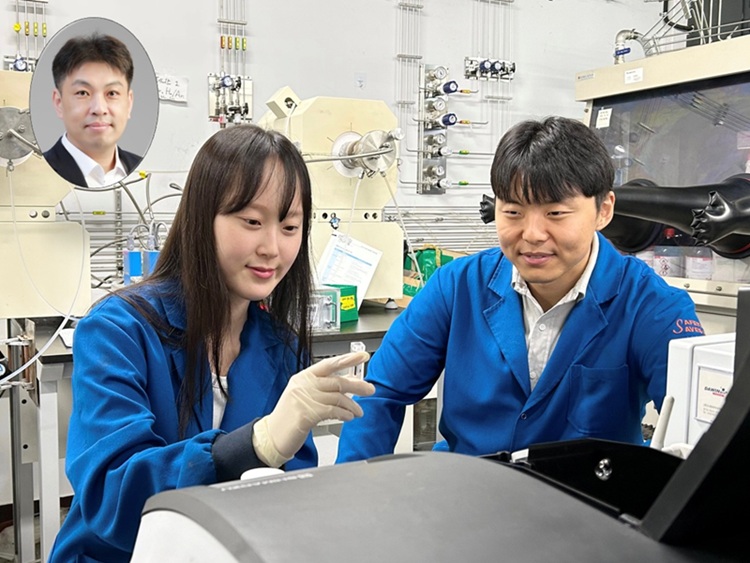 KAIST Enables On-Site Disease Diagnosis in Just 3 Minutes... Nanozyme Reaction Selectivity Improved 38-Fold
<(From Left) Professor Jinwoo Lee, Ph.D candidate Seonhye Park and Ph.D candidate Daeeun Choi from Chemical & Biomolecular Engineering>
To enable early diagnosis of acute illnesses and effective management of chronic conditions, point-of-care testing (POCT) technology—diagnostics conducted near the patient—is drawing global attention. The key to POCT lies in enzymes that recognize and react precisely with specific substances. However, traditional natural enzymes are expensive and unstable, and nanozymes (enzyme-mimicking catalysts) have suffered from low reaction selectivity. Now, a Korean research team has developed a high-sensitivity sensor platform that achieves 38 times higher selectivity than existing nanozymes and allows disease diagnostics visible to the naked eye within just 3 minutes.
On the 28th, KAIST (President Kwang Hyung Lee) announced that Professor Jinwoo Lee’s research team from the Department of Chemical & Biomolecular Engineering, in collaboration with teams led by Professor Jeong Woo Han at Seoul National University and Professor Moon Il Kim at Gachon University, has developed a new single-atom catalyst that selectively performs only peroxidase-like reactions while maintaining high reaction efficiency.
Using bodily fluids such as blood, urine, or saliva, this diagnostic platform enables test results to be read within minutes even outside hospital settings—greatly improving medical accessibility and ensuring timely treatment. The key lies in the visual detection of biomarkers (disease indicators) through color changes triggered by enzyme reactions. However, natural enzymes are expensive and easily degraded in diagnostic environments, limiting their storage and distribution.
To address this, inorganic nanozyme materials have been developed as substitutes. Yet, they typically lack selectivity—when hydrogen peroxide is used as a substrate, the same catalyst triggers both peroxidase-like reactions (which cause color change) and catalase-like reactions (which remove the substrate), reducing diagnostic signal accuracy.
To control catalyst selectivity at the atomic level, the researchers used an innovative structural design: attaching chlorine (Cl) ligands in a three-dimensional configuration to the central ruthenium (Ru) atom to fine-tune its chemical properties. This enabled them to isolate only the desired diagnostic signal.
<Figure1. The catalyst in this study (ruthenium single-atom catalyst) exhibits peroxidase-like activity with selectivity akin to natural enzymes through three-dimensional directional ligand coordination. Due to the absence of competing catalase activity, selective peroxidase-like reactions proceed under biomimetic conditions. In contrast, conventional single-atom catalysts with active sites arranged on planar surfaces exhibit dual functionality depending on pH. Under neutral conditions, their catalase activity leads to hydrogen peroxide depletion, hindering accurate detection. The catalyst in this study eliminates such interference, enabling direct detection of biomarkers through coupled reactions with oxidases without the need for cumbersome steps like buffer replacement. The ability to simultaneously detect multiple target substances under biomimetic conditions demonstrates the practicality of ruthenium single-atom catalysts for on-site diagnostics>
Experimental results showed that the new catalyst achieved over 38-fold improvement in selectivity compared to existing nanozymes, with significantly increased sensitivity and speed in detecting hydrogen peroxide. Even in near-physiological conditions (pH 6.0), the catalyst maintained its performance, proving its applicability in real-world diagnostics.
By incorporating the catalyst and oxidase into a paper-based sensor, the team created a system that could simultaneously detect four key biomarkers related to health: glucose, lactate, cholesterol, and choline—all with a simple color change.
This platform is broadly applicable across various disease diagnostics and can deliver results within 3 minutes without complex instruments or pH adjustments. The findings show that diagnostic performance can be dramatically improved without changing the platform itself, but rather by engineering the catalyst structure.
<Figure 2.(a) Schematic diagram of the paper sensor (Zone 1: glucose oxidase immobilized; Zone 2: lactate oxidase immobilized; Zone 3: choline oxidase immobilized; Zone 4: cholesterol oxidase immobilized; Zone 5: no oxidase enzyme). (b) Single biomarker (single disease indicator) detection using the ruthenium single‑atom catalyst–based paper sensor.(c) Multiple biomarker (multiple disease indicator) detection using the ruthenium single‑atom catalyst–based paper sensor>
Professor Jinwoo Lee of KAIST commented, “This study is significant in that it simultaneously achieves enzyme-level selectivity and reactivity by structurally designing single-atom catalysts.” He added that “the structure–function-based catalyst design strategy can be extended to the development of various metal-based catalysts and other reaction domains where selectivity is critical.”
Seonhye Park and Daeeun Choi, both Ph.D. candidates at KAIST, are co-first authors. The research was published on July 6, 2025, in the prestigious journal Advanced Materials
-Title: Breaking the Selectivity Barrier of Single-Atom Nanozymes Through Out-of-Plane Ligand Coordinatio
- Authors: Seonhye Park (KAIST, co–first author), Daeeun Choi (KAIST, co–first author), Kyu In Shim (SNU, co–first author), Phuong Thy Nguyen (Gachon Univ., co–first author), Seongbeen Kim (KAIST), Seung Yeop Yi (KAIST), Moon Il Kim (Gachon Univ., corresponding author), Jeong Woo Han (SNU, corresponding author), Jinwoo Lee (KAIST, corresponding author
-DOI: https://doi.org/10.1002/adma.202506480
This research was supported by the Ministry of Science and ICT and the National Research Foundation of Korea (NRF).
2025.07.29 View 3926
KAIST Enables On-Site Disease Diagnosis in Just 3 Minutes... Nanozyme Reaction Selectivity Improved 38-Fold
<(From Left) Professor Jinwoo Lee, Ph.D candidate Seonhye Park and Ph.D candidate Daeeun Choi from Chemical & Biomolecular Engineering>
To enable early diagnosis of acute illnesses and effective management of chronic conditions, point-of-care testing (POCT) technology—diagnostics conducted near the patient—is drawing global attention. The key to POCT lies in enzymes that recognize and react precisely with specific substances. However, traditional natural enzymes are expensive and unstable, and nanozymes (enzyme-mimicking catalysts) have suffered from low reaction selectivity. Now, a Korean research team has developed a high-sensitivity sensor platform that achieves 38 times higher selectivity than existing nanozymes and allows disease diagnostics visible to the naked eye within just 3 minutes.
On the 28th, KAIST (President Kwang Hyung Lee) announced that Professor Jinwoo Lee’s research team from the Department of Chemical & Biomolecular Engineering, in collaboration with teams led by Professor Jeong Woo Han at Seoul National University and Professor Moon Il Kim at Gachon University, has developed a new single-atom catalyst that selectively performs only peroxidase-like reactions while maintaining high reaction efficiency.
Using bodily fluids such as blood, urine, or saliva, this diagnostic platform enables test results to be read within minutes even outside hospital settings—greatly improving medical accessibility and ensuring timely treatment. The key lies in the visual detection of biomarkers (disease indicators) through color changes triggered by enzyme reactions. However, natural enzymes are expensive and easily degraded in diagnostic environments, limiting their storage and distribution.
To address this, inorganic nanozyme materials have been developed as substitutes. Yet, they typically lack selectivity—when hydrogen peroxide is used as a substrate, the same catalyst triggers both peroxidase-like reactions (which cause color change) and catalase-like reactions (which remove the substrate), reducing diagnostic signal accuracy.
To control catalyst selectivity at the atomic level, the researchers used an innovative structural design: attaching chlorine (Cl) ligands in a three-dimensional configuration to the central ruthenium (Ru) atom to fine-tune its chemical properties. This enabled them to isolate only the desired diagnostic signal.
<Figure1. The catalyst in this study (ruthenium single-atom catalyst) exhibits peroxidase-like activity with selectivity akin to natural enzymes through three-dimensional directional ligand coordination. Due to the absence of competing catalase activity, selective peroxidase-like reactions proceed under biomimetic conditions. In contrast, conventional single-atom catalysts with active sites arranged on planar surfaces exhibit dual functionality depending on pH. Under neutral conditions, their catalase activity leads to hydrogen peroxide depletion, hindering accurate detection. The catalyst in this study eliminates such interference, enabling direct detection of biomarkers through coupled reactions with oxidases without the need for cumbersome steps like buffer replacement. The ability to simultaneously detect multiple target substances under biomimetic conditions demonstrates the practicality of ruthenium single-atom catalysts for on-site diagnostics>
Experimental results showed that the new catalyst achieved over 38-fold improvement in selectivity compared to existing nanozymes, with significantly increased sensitivity and speed in detecting hydrogen peroxide. Even in near-physiological conditions (pH 6.0), the catalyst maintained its performance, proving its applicability in real-world diagnostics.
By incorporating the catalyst and oxidase into a paper-based sensor, the team created a system that could simultaneously detect four key biomarkers related to health: glucose, lactate, cholesterol, and choline—all with a simple color change.
This platform is broadly applicable across various disease diagnostics and can deliver results within 3 minutes without complex instruments or pH adjustments. The findings show that diagnostic performance can be dramatically improved without changing the platform itself, but rather by engineering the catalyst structure.
<Figure 2.(a) Schematic diagram of the paper sensor (Zone 1: glucose oxidase immobilized; Zone 2: lactate oxidase immobilized; Zone 3: choline oxidase immobilized; Zone 4: cholesterol oxidase immobilized; Zone 5: no oxidase enzyme). (b) Single biomarker (single disease indicator) detection using the ruthenium single‑atom catalyst–based paper sensor.(c) Multiple biomarker (multiple disease indicator) detection using the ruthenium single‑atom catalyst–based paper sensor>
Professor Jinwoo Lee of KAIST commented, “This study is significant in that it simultaneously achieves enzyme-level selectivity and reactivity by structurally designing single-atom catalysts.” He added that “the structure–function-based catalyst design strategy can be extended to the development of various metal-based catalysts and other reaction domains where selectivity is critical.”
Seonhye Park and Daeeun Choi, both Ph.D. candidates at KAIST, are co-first authors. The research was published on July 6, 2025, in the prestigious journal Advanced Materials
-Title: Breaking the Selectivity Barrier of Single-Atom Nanozymes Through Out-of-Plane Ligand Coordinatio
- Authors: Seonhye Park (KAIST, co–first author), Daeeun Choi (KAIST, co–first author), Kyu In Shim (SNU, co–first author), Phuong Thy Nguyen (Gachon Univ., co–first author), Seongbeen Kim (KAIST), Seung Yeop Yi (KAIST), Moon Il Kim (Gachon Univ., corresponding author), Jeong Woo Han (SNU, corresponding author), Jinwoo Lee (KAIST, corresponding author
-DOI: https://doi.org/10.1002/adma.202506480
This research was supported by the Ministry of Science and ICT and the National Research Foundation of Korea (NRF).
2025.07.29 View 3926 -
 A KAIST Team Engineers a Microbial Platform for Efficient Lutein Production
<(From Left) Ph.D. Candidate Hyunmin Eun, Distinguished Professor Sang Yup Lee, , Dr. Cindy Pricilia Surya Prabowo>
The application of systems metabolic engineering strategies, along with the construction of an electron channeling system, has enabled the first gram-per-liter scale production of lutein from Corynebacterium glutamicum, providing a viable alternative to plant-derived lutein production.
A research group at KAIST has successfully engineered a microbial strain capable of producing lutein at industrially relevant levels. The team, led by Distinguished Professor Sang Yup Lee from the Department of Chemical and Biomolecular Engineering, developed a novel C. glutamicum strain using systems metabolic engineering strategies to overcome the limitations of previous microbial lutein production efforts. This research is expected to be beneficial for the efficient production of other industrially important natural products used in food, pharmaceuticals, and cosmetics.
Lutein is a xanthophyll carotenoid found in egg yolk, fruits, and vegetables, known for its role in protecting our eyes from oxidative stress and reducing the risk of macular degeneration and cataracts. Currently, commercial lutein is predominantly extracted from marigold flowers; however, this approach has several drawbacks, including long cultivation times, high labor costs, and inefficient extraction yields, making it economically unfeasible for large-scale production. These challenges have driven the demand for alternative production methods.
To address these issues, KAIST researchers, including Ph.D. Candidate Hyunmin Eun, Dr. Cindy Pricilia Surya Prabowo, and Distinguished Professor Sang Yup Lee, applied systems metabolic engineering strategies to engineer C. glutamicum, a GRAS (Generally Recognized As Safe) microorganism widely used in industrial fermentation. Unlike Escherichia coli, which was previously explored for microbial lutein production, C. glutamicum lacks endotoxins, making it a safer and more viable option for food and pharmaceutical applications.
The team’s work, entitled “Gram-per-litre scale production of lutein by engineered Corynebacterium,” was published in Nature Synthesis on 04 July , 2025.
This research details the high-level production of lutein using glucose as a renewable carbon source via systems metabolic engineering. The team focused on eliminating metabolic bottlenecks that previously limited microbial lutein synthesis. By employing enzyme scaffold-based electron channeling strategies, the researchers improved metabolic flux towards lutein biosynthesis while minimizing unwanted byproducts.
<Lutein production metabolic pathway engineering>
To enhance productivity, bottleneck enzymes within the metabolic pathway were identified and optimized. It was determined that electron-requiring cytochrome P450 enzymes played a major role in limiting lutein biosynthesis. To overcome this limitation, an electron channeling strategy was implemented, where engineered cytochrome P450 enzymes and their reductase partners were spatially organized on synthetic scaffolds, allowing more efficient electron transfer and significantly increasing lutein production.
The engineered C. glutamicum strain was further optimized in fed-batch fermentation, achieving a record-breaking 1.78 g/L of lutein production within 54 hours, with a content of 19.51 mg/gDCW and a productivity of 32.88 mg/L/h—the highest lutein production performance in any host reported to date. This milestone demonstrates the feasibility of replacing plant-based lutein extraction with microbial fermentation technology.
“We can anticipate that this microbial cell factory-based mass production of lutein will be able to replace the current plant extraction-based process,” said Ph.D. Candidate Hyunmin Eun. He emphasized that the integrated metabolic engineering strategies developed in this study could be broadly applied for the efficient production of other valuable natural products used in pharmaceuticals and nutraceuticals.
<Schematic diagram of microbial-based lutein production platform>
“As maintaining good health in an aging society becomes increasingly important, we expect that the technology and strategies developed here will play pivotal roles in producing other medically and nutritionally significant natural products,” added Distinguished Professor Sang Yup Lee.
This work is supported by the Development of Next-generation Biorefinery Platform Technologies for Leading Bio-based Chemicals Industry project 2022M3J5A1056072 and the Development of Platform Technologies of Microbial Cell Factories for the Next-Generation Biorefineries project 2022M3J5A1056117 from the National Research Foundation supported by the Korean Ministry of Science and ICT.
Source:
Hyunmin Eun (1st), Cindy Pricilia Surya Prabowo (co-1st), and Sang Yup Lee (Corresponding). “Gram-per-litre scale production of lutein by engineered Corynebacterium”. Nature Synthesis (Online published)
For further information:
Sang Yup Lee, Distinguished Professor of Chemical and Biomolecular Engineering, KAIST (leesy@kaist.ac.kr, Tel: +82-42-350-3930)
2025.07.14 View 5767
A KAIST Team Engineers a Microbial Platform for Efficient Lutein Production
<(From Left) Ph.D. Candidate Hyunmin Eun, Distinguished Professor Sang Yup Lee, , Dr. Cindy Pricilia Surya Prabowo>
The application of systems metabolic engineering strategies, along with the construction of an electron channeling system, has enabled the first gram-per-liter scale production of lutein from Corynebacterium glutamicum, providing a viable alternative to plant-derived lutein production.
A research group at KAIST has successfully engineered a microbial strain capable of producing lutein at industrially relevant levels. The team, led by Distinguished Professor Sang Yup Lee from the Department of Chemical and Biomolecular Engineering, developed a novel C. glutamicum strain using systems metabolic engineering strategies to overcome the limitations of previous microbial lutein production efforts. This research is expected to be beneficial for the efficient production of other industrially important natural products used in food, pharmaceuticals, and cosmetics.
Lutein is a xanthophyll carotenoid found in egg yolk, fruits, and vegetables, known for its role in protecting our eyes from oxidative stress and reducing the risk of macular degeneration and cataracts. Currently, commercial lutein is predominantly extracted from marigold flowers; however, this approach has several drawbacks, including long cultivation times, high labor costs, and inefficient extraction yields, making it economically unfeasible for large-scale production. These challenges have driven the demand for alternative production methods.
To address these issues, KAIST researchers, including Ph.D. Candidate Hyunmin Eun, Dr. Cindy Pricilia Surya Prabowo, and Distinguished Professor Sang Yup Lee, applied systems metabolic engineering strategies to engineer C. glutamicum, a GRAS (Generally Recognized As Safe) microorganism widely used in industrial fermentation. Unlike Escherichia coli, which was previously explored for microbial lutein production, C. glutamicum lacks endotoxins, making it a safer and more viable option for food and pharmaceutical applications.
The team’s work, entitled “Gram-per-litre scale production of lutein by engineered Corynebacterium,” was published in Nature Synthesis on 04 July , 2025.
This research details the high-level production of lutein using glucose as a renewable carbon source via systems metabolic engineering. The team focused on eliminating metabolic bottlenecks that previously limited microbial lutein synthesis. By employing enzyme scaffold-based electron channeling strategies, the researchers improved metabolic flux towards lutein biosynthesis while minimizing unwanted byproducts.
<Lutein production metabolic pathway engineering>
To enhance productivity, bottleneck enzymes within the metabolic pathway were identified and optimized. It was determined that electron-requiring cytochrome P450 enzymes played a major role in limiting lutein biosynthesis. To overcome this limitation, an electron channeling strategy was implemented, where engineered cytochrome P450 enzymes and their reductase partners were spatially organized on synthetic scaffolds, allowing more efficient electron transfer and significantly increasing lutein production.
The engineered C. glutamicum strain was further optimized in fed-batch fermentation, achieving a record-breaking 1.78 g/L of lutein production within 54 hours, with a content of 19.51 mg/gDCW and a productivity of 32.88 mg/L/h—the highest lutein production performance in any host reported to date. This milestone demonstrates the feasibility of replacing plant-based lutein extraction with microbial fermentation technology.
“We can anticipate that this microbial cell factory-based mass production of lutein will be able to replace the current plant extraction-based process,” said Ph.D. Candidate Hyunmin Eun. He emphasized that the integrated metabolic engineering strategies developed in this study could be broadly applied for the efficient production of other valuable natural products used in pharmaceuticals and nutraceuticals.
<Schematic diagram of microbial-based lutein production platform>
“As maintaining good health in an aging society becomes increasingly important, we expect that the technology and strategies developed here will play pivotal roles in producing other medically and nutritionally significant natural products,” added Distinguished Professor Sang Yup Lee.
This work is supported by the Development of Next-generation Biorefinery Platform Technologies for Leading Bio-based Chemicals Industry project 2022M3J5A1056072 and the Development of Platform Technologies of Microbial Cell Factories for the Next-Generation Biorefineries project 2022M3J5A1056117 from the National Research Foundation supported by the Korean Ministry of Science and ICT.
Source:
Hyunmin Eun (1st), Cindy Pricilia Surya Prabowo (co-1st), and Sang Yup Lee (Corresponding). “Gram-per-litre scale production of lutein by engineered Corynebacterium”. Nature Synthesis (Online published)
For further information:
Sang Yup Lee, Distinguished Professor of Chemical and Biomolecular Engineering, KAIST (leesy@kaist.ac.kr, Tel: +82-42-350-3930)
2025.07.14 View 5767