%63%6f%6d%70%6f%73%69%74%69%6f%6e
-
 KAIST Solves the 500-Year-Old ‘Pain’ Behind Michelangelo’s painting of The Creation of Adam
<(From Left) Ph.D candidate Minwoo Choi, Ph.D candidate Hyejoon Jun, Professor Hyoungsoo Kim>
More than 500 years ago, Michelangelo spent four years painting The Creation of Adam on the ceiling of the Sistine Chapel, struggling with paint dripping onto his face. He described the process as “closer to torture than painting.” Now, researchers at KAIST have developed a technology that can effectively “hold up falling paint.” Beyond ceiling paintings, this principle could help solve the problem of liquid films collapsing on inclined surfaces, with potential applications in precision coating, electronic circuit printing, 3D printing, and fluid control in space environments.
KAIST (President Kwang Hyung Lee) announced on the 12th of March that a research team led by Professor Hyoungsoo Kim of the Department of Mechanical Engineering has reinterpreted the fundamental cause of downward flow under gravity—known as gravitational instability—from the perspective of interfacial fluid mechanics* and proposed a method to control it by mixing a small amount of volatile liquid into a suspended liquid film.*Interfacial fluid mechanics: the study of the balance of microscopic forces acting at the surface of liquids.
Why was it so difficult for Michelangelo to paint on the ceiling? When paint is applied to a ceiling, a thin liquid film forms. However, this film gradually becomes unstable due to gravity and eventually drips down. This phenomenon is common in everyday life.
For example, when steam condenses on a bathroom ceiling, it first forms a thin layer of water that eventually gathers into droplets and falls. Similarly, droplets that appear on the ceiling of a refrigerator initially form a thin layer but gradually grow and begin to drip downward. This type of instability, where liquid accumulated on an upper surface collapses under gravity, is known as Rayleigh–Taylor instability. Until now, it has generally been considered unavoidable in the presence of gravity.
The research team proposed mixing a small amount of volatile liquid into the suspended liquid film. As the volatile component evaporates, it changes the concentration distribution along the liquid surface, creating differences in surface tension. Surface tension is the force that pulls a liquid surface inward, which is why water droplets maintain a rounded shape.
When differences in surface tension arise, the region with stronger tension pulls liquid toward itself from regions with weaker tension. This creates a surface flow known as the Marangoni effect. Through experiments and theoretical analysis, the researchers demonstrated that this surface flow can effectively hold the liquid in place and suppress the gravitational instability that would otherwise cause it to fall.
A familiar example can illustrate this effect. If pepper powder is sprinkled evenly on the surface of water, it remains floating. However, if a drop of detergent is placed in the center, the pepper suddenly moves outward toward the edges. This happens because the detergent reduces the surface tension where it touches the water, allowing the surrounding regions with stronger surface tension to pull the liquid outward. As the surface flow develops, the pepper particles move along with it.
In this study, evaporation of the volatile liquid created a similar surface tension difference. But instead of pushing particles outward like in the pepper example, the flow pulled the liquid upward, counteracting the force that would otherwise cause it to drip downward.
As a result, under certain conditions the liquid film remained intact despite gravity. In some cases, the researchers even observed a new behavior in which droplets did not fall but the liquid film oscillated periodically. This demonstrates that gravitational instability can be actively controlled using only natural processes—such as liquid composition and evaporation—without any external energy input.
This principle could enable thinner and more uniform liquid films in precision coating, printing, and layer-by-layer manufacturing processes, allowing stable coating even on tilted surfaces. It may also extend to technologies such as 3D printing and fluid control in specialized environments like space. In essence, the physical limitation that Michelangelo struggled with 500 years ago may now inspire future industrial technologies.
The Creation of Adam (AI-generated image)>
Professor Hyoungsoo Kim stated, “Rayleigh–Taylor instability has long been considered unavoidable as long as gravity exists. This research is meaningful because it shows that gravitational instability can be actively controlled without external energy by utilizing natural processes such as liquid composition and evaporation.” He added, “This principle could extend beyond coating, printing, and layering processes to fluid control technologies in space environments.”
This study was led by Minwoo Choi, an integrated master’s–PhD student in Mechanical Engineering, as the first author. The discovery, recognized as a new finding in the control of hydrodynamic instability, was published online on January 29 in the international journal Advanced Science (Wiley) and was selected as a Frontispiece article.
※ Paper title: “Evaporation-Driven Solutal Marangoni Control of Rayleigh–Taylor Instability in Inverted Films,” Authors: First author Minwoo Choi (KAIST), co-author Hyejoon Jun (KAIST), corresponding author Hyoungsoo Kim (KAIST), DOI: https://doi.org/10.1002/advs.202520343
This research was supported by the Mid-Career Researcher Program of the National Research Foundation of Korea (MSIT: 2021R1A2C2007835)
2026.03.12 View 1386
KAIST Solves the 500-Year-Old ‘Pain’ Behind Michelangelo’s painting of The Creation of Adam
<(From Left) Ph.D candidate Minwoo Choi, Ph.D candidate Hyejoon Jun, Professor Hyoungsoo Kim>
More than 500 years ago, Michelangelo spent four years painting The Creation of Adam on the ceiling of the Sistine Chapel, struggling with paint dripping onto his face. He described the process as “closer to torture than painting.” Now, researchers at KAIST have developed a technology that can effectively “hold up falling paint.” Beyond ceiling paintings, this principle could help solve the problem of liquid films collapsing on inclined surfaces, with potential applications in precision coating, electronic circuit printing, 3D printing, and fluid control in space environments.
KAIST (President Kwang Hyung Lee) announced on the 12th of March that a research team led by Professor Hyoungsoo Kim of the Department of Mechanical Engineering has reinterpreted the fundamental cause of downward flow under gravity—known as gravitational instability—from the perspective of interfacial fluid mechanics* and proposed a method to control it by mixing a small amount of volatile liquid into a suspended liquid film.*Interfacial fluid mechanics: the study of the balance of microscopic forces acting at the surface of liquids.
Why was it so difficult for Michelangelo to paint on the ceiling? When paint is applied to a ceiling, a thin liquid film forms. However, this film gradually becomes unstable due to gravity and eventually drips down. This phenomenon is common in everyday life.
For example, when steam condenses on a bathroom ceiling, it first forms a thin layer of water that eventually gathers into droplets and falls. Similarly, droplets that appear on the ceiling of a refrigerator initially form a thin layer but gradually grow and begin to drip downward. This type of instability, where liquid accumulated on an upper surface collapses under gravity, is known as Rayleigh–Taylor instability. Until now, it has generally been considered unavoidable in the presence of gravity.
The research team proposed mixing a small amount of volatile liquid into the suspended liquid film. As the volatile component evaporates, it changes the concentration distribution along the liquid surface, creating differences in surface tension. Surface tension is the force that pulls a liquid surface inward, which is why water droplets maintain a rounded shape.
When differences in surface tension arise, the region with stronger tension pulls liquid toward itself from regions with weaker tension. This creates a surface flow known as the Marangoni effect. Through experiments and theoretical analysis, the researchers demonstrated that this surface flow can effectively hold the liquid in place and suppress the gravitational instability that would otherwise cause it to fall.
A familiar example can illustrate this effect. If pepper powder is sprinkled evenly on the surface of water, it remains floating. However, if a drop of detergent is placed in the center, the pepper suddenly moves outward toward the edges. This happens because the detergent reduces the surface tension where it touches the water, allowing the surrounding regions with stronger surface tension to pull the liquid outward. As the surface flow develops, the pepper particles move along with it.
In this study, evaporation of the volatile liquid created a similar surface tension difference. But instead of pushing particles outward like in the pepper example, the flow pulled the liquid upward, counteracting the force that would otherwise cause it to drip downward.
As a result, under certain conditions the liquid film remained intact despite gravity. In some cases, the researchers even observed a new behavior in which droplets did not fall but the liquid film oscillated periodically. This demonstrates that gravitational instability can be actively controlled using only natural processes—such as liquid composition and evaporation—without any external energy input.
This principle could enable thinner and more uniform liquid films in precision coating, printing, and layer-by-layer manufacturing processes, allowing stable coating even on tilted surfaces. It may also extend to technologies such as 3D printing and fluid control in specialized environments like space. In essence, the physical limitation that Michelangelo struggled with 500 years ago may now inspire future industrial technologies.
The Creation of Adam (AI-generated image)>
Professor Hyoungsoo Kim stated, “Rayleigh–Taylor instability has long been considered unavoidable as long as gravity exists. This research is meaningful because it shows that gravitational instability can be actively controlled without external energy by utilizing natural processes such as liquid composition and evaporation.” He added, “This principle could extend beyond coating, printing, and layering processes to fluid control technologies in space environments.”
This study was led by Minwoo Choi, an integrated master’s–PhD student in Mechanical Engineering, as the first author. The discovery, recognized as a new finding in the control of hydrodynamic instability, was published online on January 29 in the international journal Advanced Science (Wiley) and was selected as a Frontispiece article.
※ Paper title: “Evaporation-Driven Solutal Marangoni Control of Rayleigh–Taylor Instability in Inverted Films,” Authors: First author Minwoo Choi (KAIST), co-author Hyejoon Jun (KAIST), corresponding author Hyoungsoo Kim (KAIST), DOI: https://doi.org/10.1002/advs.202520343
This research was supported by the Mid-Career Researcher Program of the National Research Foundation of Korea (MSIT: 2021R1A2C2007835)
2026.03.12 View 1386 -
 KAIST Proposes a New Dementia Treatment Strategy by Repositioning Molecules without Changing Their Chemical Composition
<(Back row, from left) Professor Mi Hee Lim, Professor Mingeun Kim, Student Jimin Lee, Student Chanju Na, (Upper Right) Dr. Chul-Ho Lee, Dr Kyoung-Shim Kim>
Conventional treatments of Alzheimer’s disease, one of the most common forms of dementia, have been largely focused on targeting individual pathological features. However, Alzheimer’s disease is a multifactorial disorder driven by multiple, tightly interconnected processes, rendering single-target therapeutic approaches inherently limited. Addressing this challenge, KAIST researchers propose a new strategy that enables the simultaneous regulation of multiple disease-inducing factors simply by rearranging the structural positions of drug candidate molecules without altering their chemical substituents.
KAIST (President Kwang Hyung Lee) announced on January 22 that a research team led by Professor Mi Hee Lim of the Department of Chemistry, in collaboration with Professor Mingeun Kim of Chonnam National University, Dr. Chul-Ho Lee of the Korea Research Institute of Bioscience and Biotechnology (KRIBB), and Dr. Kyoung-Shim Kim of the Laboratory Animal Resource Center, has elucidated at the molecular level how subtle differences in molecular arrangement, specifically positional isomerism, give rise to distinct modes of action against Alzheimer’s disease.
Using an Alzheimer’s disease mouse model (APP/PS1) harboring human dementia-associated genes, the research team demonstrated that these compounds also exert distinct therapeutic effects in vivo.
Alzheimer’s disease does not arise from a single cause. Rather, multiple pathological factors, including amyloid-b, metal ions, and reactive oxygen species, interact synergistically to exacerbate disease progression. In particular, metal ions bind to amyloid-b, modulating its aggregation and toxicity while promoting the generation of reactive oxygen species, which in turn accelerates neuronal damage. Effective control of Alzheimer’s disease therefore requires therapeutic strategies capable of simultaneously targeting multiple interrelated pathological processes.
< Alzheimer’s Disease – Chemical Approach Illustration (AI-generated image) >
The researchers focused on positional isomers, molecules composed of the same chemical elements but differing only in the positions at which those elements are connected. Remarkably, simple changes in molecular positioning resulted in pronounced differences in reactivity towards reactive oxygen species, as well as in interactions with amyloid-b and metal-bound amyloid-b.
To investigate these effects, the team compared the reactivities of three structurally similar molecules differing only in the positions of their functional groups. Their analyses revealed that even minimal structural rearrangements led to significant differences in antioxidant capacity and produced distinct modes of modulation of amyloid-b and metal-bound amyloid-b through different mechanisms, inducing peptide chemical modifications.
In other words, the study demonstrated that Alzheimer’s disease-related pathological factors can be regulated through mechanistically distinct pathways simply by altering molecular arrangement, without changing molecular composition.
Notably, a specific positional isomer capable of simultaneously modulating reactive oxygen species, amyloid-b, and metal-bound amyloid-b complexes also demonstrated therapeutic efficacy in an Alzheimer’s disease mouse model. In these experiments, the compound reduced oxidative stress in the hippocampus, the brain region critical for memory, and decreased amyloid plaque accumulation, resulting in significant improvements in memory deficits and cognitive impairment.
< In Vivo Efficacy Evaluation and Biological Outcomes According to Positional Isomers of Small-Molecule Compounds >
Professor Mi Hee Lim of KAIST stated, “This study demonstrates that multiple pathological factors associated with Alzheimer’s disease can be targeted simultaneously simply by adjusting molecular positioning, without altering the molecule’s core chemical framework.” She added, “These findings point to a new therapeutic strategy that may enable more precise control of complex, multifactorial diseases such as Alzheimer’s disease.”
This research was conducted with Chanju Na and Jimin Lee, integrated master’s-doctoral students in the Department of Chemistry at KAIST, who served as co-first authors. The results were published in the Journal of the American Chemical Society (Impact Factor: 15.7, top 5.0% in Chemistry) in Issue 1 dated January 14, 2026.
※ Paper title: “Positional Isomerism Tunes Molecular Reactivities and Mechanisms toward Pathological Targets in Dementia”
※ DOI: 10.1021/jacs.5c14323
This study was supported by the National Research Foundation (NRF) of Korea through the Basic Research Program (Creative Research Initiative and Global Science Research Center), the NRF Sejong Science Fellowship, the NRF Ph.D. Followship, and KRIBB Institutional Funding.
2026.01.26 View 2033
KAIST Proposes a New Dementia Treatment Strategy by Repositioning Molecules without Changing Their Chemical Composition
<(Back row, from left) Professor Mi Hee Lim, Professor Mingeun Kim, Student Jimin Lee, Student Chanju Na, (Upper Right) Dr. Chul-Ho Lee, Dr Kyoung-Shim Kim>
Conventional treatments of Alzheimer’s disease, one of the most common forms of dementia, have been largely focused on targeting individual pathological features. However, Alzheimer’s disease is a multifactorial disorder driven by multiple, tightly interconnected processes, rendering single-target therapeutic approaches inherently limited. Addressing this challenge, KAIST researchers propose a new strategy that enables the simultaneous regulation of multiple disease-inducing factors simply by rearranging the structural positions of drug candidate molecules without altering their chemical substituents.
KAIST (President Kwang Hyung Lee) announced on January 22 that a research team led by Professor Mi Hee Lim of the Department of Chemistry, in collaboration with Professor Mingeun Kim of Chonnam National University, Dr. Chul-Ho Lee of the Korea Research Institute of Bioscience and Biotechnology (KRIBB), and Dr. Kyoung-Shim Kim of the Laboratory Animal Resource Center, has elucidated at the molecular level how subtle differences in molecular arrangement, specifically positional isomerism, give rise to distinct modes of action against Alzheimer’s disease.
Using an Alzheimer’s disease mouse model (APP/PS1) harboring human dementia-associated genes, the research team demonstrated that these compounds also exert distinct therapeutic effects in vivo.
Alzheimer’s disease does not arise from a single cause. Rather, multiple pathological factors, including amyloid-b, metal ions, and reactive oxygen species, interact synergistically to exacerbate disease progression. In particular, metal ions bind to amyloid-b, modulating its aggregation and toxicity while promoting the generation of reactive oxygen species, which in turn accelerates neuronal damage. Effective control of Alzheimer’s disease therefore requires therapeutic strategies capable of simultaneously targeting multiple interrelated pathological processes.
< Alzheimer’s Disease – Chemical Approach Illustration (AI-generated image) >
The researchers focused on positional isomers, molecules composed of the same chemical elements but differing only in the positions at which those elements are connected. Remarkably, simple changes in molecular positioning resulted in pronounced differences in reactivity towards reactive oxygen species, as well as in interactions with amyloid-b and metal-bound amyloid-b.
To investigate these effects, the team compared the reactivities of three structurally similar molecules differing only in the positions of their functional groups. Their analyses revealed that even minimal structural rearrangements led to significant differences in antioxidant capacity and produced distinct modes of modulation of amyloid-b and metal-bound amyloid-b through different mechanisms, inducing peptide chemical modifications.
In other words, the study demonstrated that Alzheimer’s disease-related pathological factors can be regulated through mechanistically distinct pathways simply by altering molecular arrangement, without changing molecular composition.
Notably, a specific positional isomer capable of simultaneously modulating reactive oxygen species, amyloid-b, and metal-bound amyloid-b complexes also demonstrated therapeutic efficacy in an Alzheimer’s disease mouse model. In these experiments, the compound reduced oxidative stress in the hippocampus, the brain region critical for memory, and decreased amyloid plaque accumulation, resulting in significant improvements in memory deficits and cognitive impairment.
< In Vivo Efficacy Evaluation and Biological Outcomes According to Positional Isomers of Small-Molecule Compounds >
Professor Mi Hee Lim of KAIST stated, “This study demonstrates that multiple pathological factors associated with Alzheimer’s disease can be targeted simultaneously simply by adjusting molecular positioning, without altering the molecule’s core chemical framework.” She added, “These findings point to a new therapeutic strategy that may enable more precise control of complex, multifactorial diseases such as Alzheimer’s disease.”
This research was conducted with Chanju Na and Jimin Lee, integrated master’s-doctoral students in the Department of Chemistry at KAIST, who served as co-first authors. The results were published in the Journal of the American Chemical Society (Impact Factor: 15.7, top 5.0% in Chemistry) in Issue 1 dated January 14, 2026.
※ Paper title: “Positional Isomerism Tunes Molecular Reactivities and Mechanisms toward Pathological Targets in Dementia”
※ DOI: 10.1021/jacs.5c14323
This study was supported by the National Research Foundation (NRF) of Korea through the Basic Research Program (Creative Research Initiative and Global Science Research Center), the NRF Sejong Science Fellowship, the NRF Ph.D. Followship, and KRIBB Institutional Funding.
2026.01.26 View 2033 -
 KAIST Extends Lithium Metal Battery Lifespan by 750% Using Water
Lithium metal, a next-generation anode material, has been highlighted for overcoming the performance limitations of commercial batteries. However, issues inherent to lithium metal have caused shortened battery lifespans and increased fire risks. KAIST researchers have achieved a world-class breakthrough by extending the lifespan of lithium metal anodes by approximately 750% only using water.
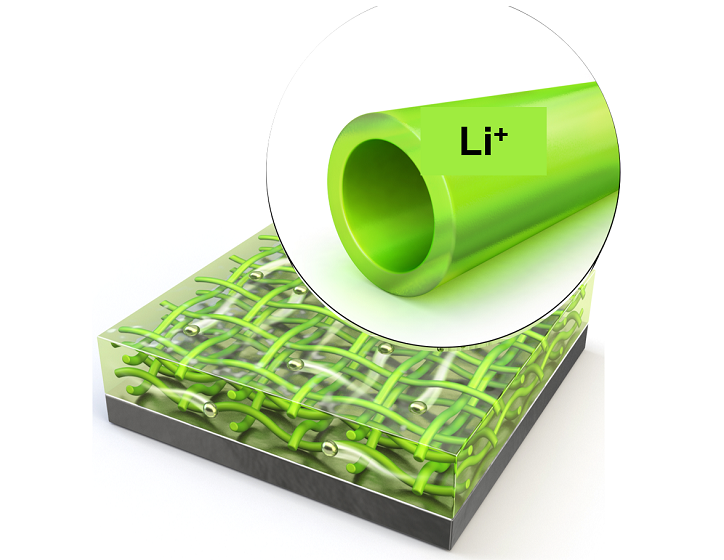
KAIST (represented by President Kwang Hyung Lee) announced on the 2nd of December that Professor Il-Doo Kim from the Department of Materials Science and Engineering, in collaboration with Professor Jiyoung Lee from Ajou University, successfully stabilized lithium growth and significantly enhanced the lifespan of next-generation lithium metal batteries using eco-friendly hollow nanofibers as protective layers.
Conventional protective layer technologies, which involve applying a surface coating onto lithium metal in order to create an artificial interface with the electrolyte, have relied on toxic processes and expensive materials, with limited improvements in the lifespan of lithium metal anodes.
< Figure 1. Schematic illustration of the fabrication process of the newly developed protective membrane by eco-friendly electrospinning process using water >
To address these limitations, Professor Kim’s team proposed a hollow nanofiber protective layer capable of controlling lithium-ion growth through both physical and chemical means. This protective layer was manufactured through an environmentally friendly electrospinning process* using guar gum** extracted from plants as the primary material and utilizing water as the sole solvent.
*Electrospinning process: A method where polymer solutions are subjected to an electric field, producing continuous fibers with diameters ranging from tens of nanometers to several micrometers.
**Guar gum: A natural polymer extracted from guar beans, composed mainly of monosaccharides. Its oxidized functional groups regulate interactions with lithium ions.
< Figure 2. Physical and chemical control of Lithium dendrite by the newly developed protective membrane >
The nanofiber protective layer effectively controlled reversible chemical reactions between the electrolyte and lithium ions. The hollow spaces within the fibers suppressed the random accumulation of lithium ions on the metal surface, stabilizing the interface between the lithium metal surface and the electrolyte.
< Figure 3. Performance of Lithium metal battery full cells with the newly developed protective membrane >
As a result, the lithium metal anodes with this protective layer demonstrated approximately a 750% increase in lifespan compared to conventional lithium metal anodes. The battery retained 93.3% of its capacity even after 300 charge-discharge cycles, achieving world-class performance.
The researchers also verified that this natural protective layer decomposes entirely within about a month in soil, proving its eco-friendly nature throughout the manufacturing and disposal process.
< Figure 4. Excellent decomposition rate of the newly developed protective membrane >
Professor Il-Doo Kim explained, “By leveraging both physical and chemical protective functions, we were able to guide reversible reactions between lithium metal and the electrolyte more effectively and suppress dendrite growth, resulting in lithium metal anodes with unprecedented lifespan characteristics.”
He added, “As the environmental burden caused by battery production and disposal becomes a pressing issue due to surging battery demand, this water-based manufacturing method with biodegradable properties will significantly contribute to the commercialization of next-generation eco-friendly batteries.”
This study was led by Dr. Jiyoung Lee (now a professor in the Department of Chemical Engineering at Ajou University) and Dr. Hyunsub Song (currently at Samsung Electronics), both graduates of KAIST’s Department of Materials Science and Engineering. The findings were published as a front cover article in Advanced Materials, Volume 36, Issue 47, on November 21.
(Paper title: “Overcoming Chemical and Mechanical Instabilities in Lithium Metal Anodes with Sustainable and Eco-Friendly Artificial SEI Layer”)
The research was supported by the KAIST-LG Energy Solution Frontier Research Lab (FRL), the Alchemist Project funded by the Ministry of Trade, Industry and Energy, and the Top-Tier Research Support Program from the Ministry of Science and ICT.
2024.12.12 View 13873
KAIST Extends Lithium Metal Battery Lifespan by 750% Using Water
Lithium metal, a next-generation anode material, has been highlighted for overcoming the performance limitations of commercial batteries. However, issues inherent to lithium metal have caused shortened battery lifespans and increased fire risks. KAIST researchers have achieved a world-class breakthrough by extending the lifespan of lithium metal anodes by approximately 750% only using water.
KAIST (represented by President Kwang Hyung Lee) announced on the 2nd of December that Professor Il-Doo Kim from the Department of Materials Science and Engineering, in collaboration with Professor Jiyoung Lee from Ajou University, successfully stabilized lithium growth and significantly enhanced the lifespan of next-generation lithium metal batteries using eco-friendly hollow nanofibers as protective layers.
Conventional protective layer technologies, which involve applying a surface coating onto lithium metal in order to create an artificial interface with the electrolyte, have relied on toxic processes and expensive materials, with limited improvements in the lifespan of lithium metal anodes.
< Figure 1. Schematic illustration of the fabrication process of the newly developed protective membrane by eco-friendly electrospinning process using water >
To address these limitations, Professor Kim’s team proposed a hollow nanofiber protective layer capable of controlling lithium-ion growth through both physical and chemical means. This protective layer was manufactured through an environmentally friendly electrospinning process* using guar gum** extracted from plants as the primary material and utilizing water as the sole solvent.
*Electrospinning process: A method where polymer solutions are subjected to an electric field, producing continuous fibers with diameters ranging from tens of nanometers to several micrometers.
**Guar gum: A natural polymer extracted from guar beans, composed mainly of monosaccharides. Its oxidized functional groups regulate interactions with lithium ions.
< Figure 2. Physical and chemical control of Lithium dendrite by the newly developed protective membrane >
The nanofiber protective layer effectively controlled reversible chemical reactions between the electrolyte and lithium ions. The hollow spaces within the fibers suppressed the random accumulation of lithium ions on the metal surface, stabilizing the interface between the lithium metal surface and the electrolyte.
< Figure 3. Performance of Lithium metal battery full cells with the newly developed protective membrane >
As a result, the lithium metal anodes with this protective layer demonstrated approximately a 750% increase in lifespan compared to conventional lithium metal anodes. The battery retained 93.3% of its capacity even after 300 charge-discharge cycles, achieving world-class performance.
The researchers also verified that this natural protective layer decomposes entirely within about a month in soil, proving its eco-friendly nature throughout the manufacturing and disposal process.
< Figure 4. Excellent decomposition rate of the newly developed protective membrane >
Professor Il-Doo Kim explained, “By leveraging both physical and chemical protective functions, we were able to guide reversible reactions between lithium metal and the electrolyte more effectively and suppress dendrite growth, resulting in lithium metal anodes with unprecedented lifespan characteristics.”
He added, “As the environmental burden caused by battery production and disposal becomes a pressing issue due to surging battery demand, this water-based manufacturing method with biodegradable properties will significantly contribute to the commercialization of next-generation eco-friendly batteries.”
This study was led by Dr. Jiyoung Lee (now a professor in the Department of Chemical Engineering at Ajou University) and Dr. Hyunsub Song (currently at Samsung Electronics), both graduates of KAIST’s Department of Materials Science and Engineering. The findings were published as a front cover article in Advanced Materials, Volume 36, Issue 47, on November 21.
(Paper title: “Overcoming Chemical and Mechanical Instabilities in Lithium Metal Anodes with Sustainable and Eco-Friendly Artificial SEI Layer”)
The research was supported by the KAIST-LG Energy Solution Frontier Research Lab (FRL), the Alchemist Project funded by the Ministry of Trade, Industry and Energy, and the Top-Tier Research Support Program from the Ministry of Science and ICT.
2024.12.12 View 13873