%6d%65%65%74%69%6e%67
-
 KAIST to Foster a 'Robot Valley' in Daejeon with $10 Million Initiative
<Group Photo of Kick-off Meeting>
On September 3, KAIST announced the official launch of the "2025 Deep Tech Scale-up Valley Nurturing Project" with a kick-off meeting at the KAIST Department of Mechanical Engineering.
KAIST was selected for this project by the Ministry of Science and ICT and the Research and Development Special District Foundation. With this selection, the university plans to create a "Robot Valley".
Over the next three and a half years, KAIST will receive a total of 13.65 billion won (approximately $10 million) in funding. The university's goal is to intensively nurture globally competitive, innovative robotics companies based on foundational technologies and to develop Daejeon into a global hub for the robotics industry.
The initiative will leverage Daejeon's exceptional research talent and its startup and investment ecosystem to create a model for regional revitalization and to cultivate the robotics industry as a next-generation strategic sector.
KAIST's vision for this project is to develop "Human-Friendly Robots (HFR)" that are more than just automated machines; they are collaborative partners that share space, roles, and emotions with people.
The project will implement a multi-stage strategy that includes promoting the commercialization of robotics technology, supporting the startup ecosystem, securing global technological competitiveness, and developing robot commercialization platforms. This will establish a virtuous cycle of technology development, startup and investment growth, and reinvestment.
Unlike traditional startup support and scale-up programs, this project aims for the simultaneous growth of the entire robotics industry, not just individual companies. A key element is an open innovation model where leading robotics firms like Angel Robotics Inc. and EuRoBotics Inc. (led by Professor Byung-ho Yu and Professor Hyun Myung) will share common core technologies related to actuators, circuits, AI, and standardized data. This will allow startups to focus on developing robot products that directly meet customer needs.
The project team includes key KAIST robotics researchers. The project leader is Professor Jung Kim (President of the Korea Robotics Society) from the Department of Mechanical Engineering. Other participating professors include Geon-Jae Lee from the Department of Materials Science and Engineering (human augmentation sensors), Hyun Myung from the School of Electrical Engineering (winner of the QRC 2023 quadruped robot autonomous walking competition at IEEE ICRA), Kyung-Chul Kong from the Department of Mechanical Engineering (two-time champion of the Cybathlon International Competition and founder of Angel Robotics), and Suk-Hyung Bae from the Department of Industrial Design (winner of the ACM SIGGRAPH robot sketching competition).
In addition, the KAIST Technology Commercialization Office, KAIST Holdings, Global Techno Valley Lab (GTLAB), and the Daejeon Center for Creative Economy and Innovation will manage technology commercialization and valley construction. The Daejeon Technopark will also participate to provide comprehensive commercialization support.
"The strategic cooperation between Daejeon City's robotics industry nurturing plan and KAIST was the driving force behind the selection for this project," said Geon-Jae Lee, Director of the KAIST Technology Commercialization Office. "We will create a robotics innovation ecosystem based in Daejeon and systematically foster global companies to rival the likes of ABB in Switzerland and KUKA in Germany, which are considered among the top three robotics companies in the world."
< Kick-off Meeting Scene>
Project leader Jung Kim stated, "We will spearhead efforts to discover and nurture over 15 future unicorn companies by promoting the commercialization of deep-tech robotics developed at KAIST. The entire KAIST robotics research team will dedicate its full efforts to ensure that our research and development achievements lead to real-world industries and startups."
KAIST President Kwang-Hyung Lee emphasized, "As Korea's leading research-oriented university, KAIST will actively support Daejeon's growth into a global robotics hub. This project is more than just research and development; it will be a turning point for KAIST to stand at the center of the global robotics ecosystem and create a new growth engine for the region and the nation."
In collaboration with Daejeon City, KAIST plans to form an "HFR Valley Innovation Council" to share and review project outcomes, ultimately building a self-sustaining ecosystem. This initiative aims to establish Daejeon as a world-class robotics industry hub.
2025.09.03 View 8516
-
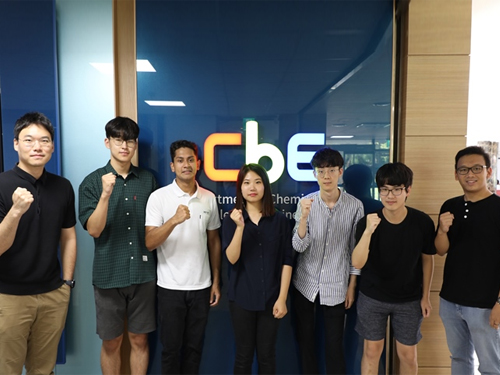 Chem-E-Car Team to Vie for World Title
Team KAItalyst, composed of KAIST undergraduate students, celebrated victory in the regional qualifying rounds of the 2019 International Chem-E-Car Competition held at KAIST’s Main Campus in Daejeon on July 20. The high finish in the national rankings qualified the team for a trip to the world finals to be held in Orlando, Florida, USA, in November.
The Chem-E-Car Competition involves designing and building a shoebox-sized model car that is powered and controlled by chemical reactions. University students from all over the world have been actively participating in this competition since the competition was introduced by the American Institute of Chemical Engineers (AIChE) in 1999.
KAIST first entered the competition in 2014, won the world finals in 2016, and then received the Most Consistent Award in 2017 and 2018. In recognition of KAIST’s consistently outstanding performance in the competition, AIChE asked KAIST to host this year’s regional competition for the first time in Korea.
Although a number of Korean university student teams have shown great interest in participating in this regional competition, most were not able to successfully implement their technology, and only two teams each from KAIST and Seoul National University (SNU) joined the competition.
Each team collaborated to fabricate a chemically powered model car that could carry a payload, and travel any distance between 15 and 30 meters. The weight of the payload and the travelling distance were randomly set an hour before the competition started, to require the participating teams adapt and perform calculations in a short period of time. The goal was to stop travelling exactly at the randomly chosen distance. The car closest to the finish line at the end of the race earned the highest amount of points. Precise control over chemical reactions was key to landing directly on the mark.
Team KAItalyst, consisting of six KAIST undergraduate students majoring in chemical and biomolecular engineering and mechanical engineering, beat their SNU rivals by stopping their car 1.5 meters closer to the goal at the end of the 22.5 meter-long race. Team KAItalyst loaded vanadium redox flow batteries onto their car to stabilize its output, and further increased the accuracy and velocity of chemical reactions through iodine clock reactions. 200 USD was awarded to Team KAItalyst, and 100 USD in prize money went to the SNU team.
KAItalyst team leader Jee-Hyun Hong said, “This was the first time for us to develop and drive our own chemically-powered model car, and we learned a lot from the challenges we faced,” Hong continued, “We will step up our efforts to perform better in the upcoming international competition.” The world finals will be held during the AIChE Fall Meeting in Orlando, Florida in November. Students from over 50 universities worldwide including the Georgia Institute of Technology and Carnegie Mellon University will compete against each other. The first, second, and third prizes at the finals will be 2,000, 1,000, and 500 USD respectively.
Professor Dong-Yeun Koh of the KAIST Chemical and Biomolecular Engineering Department who advised Team KAItalyst remarked, “I hope this year’s regional competition that KAIST held for the first time as a Korean university will be a possible starting point for more Korean universities to participate and compete in the future.”
(END)
2019.08.05 View 13003
-
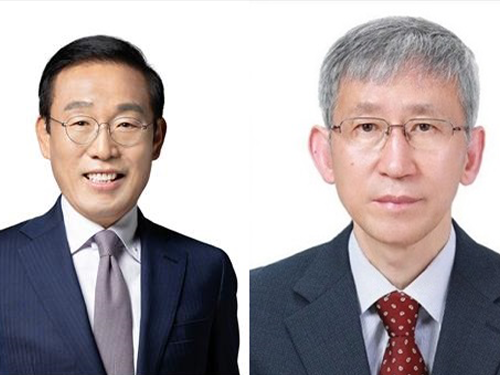 Two Alumni Win the Korea Best Scientist and Technologist Awards
Vice Chairman Ki-Nam Kim (Left) and Distinguished Professor Sukbok Chang (Right)
<ⓒ Photo by MSIT and KOFST>
Distinguished KAIST Professor Sukbok Chang from the Department of Chemistry and Vice Chairman Ki-Nam Kim of Samsung Electronics were selected as the winners of the “2019 Korea Best Scientist and Technologist Awards” by the Ministry of Science and ICT (MSIT) and the Korean Federation of Science and Technology Societies (KOFST). The awards, which were first handed out in 2003, are the highest honor bestowed to the two most outstanding scientists in Korea every year, and this year’s awardees are of greater significance as they are both KAIST alumni.
Professor Chang was recognized for his pioneering achievements and lifetime contributions to the development of carbon-hydrogen activation strategies, especially for carbon-carbon, carbon-nitrogen, and carbon-oxygen formations. His research group has also been actively involved in the development of highly selective catalytic systems allowing the controlled defunctionalization of bio-derived platform substrates under mild conditions, and opening a new avenue for the utilization of biomass-derived platform chemicals. The results of his study have been introduced worldwide through many prestigious journals including Science, Nature Chemistry, and Nature Catalysis, making him one of the world's top 1% researchers by the number of references made to his papers by his peers over four consecutive years from 2015 to 2018.
Vice Chairman Kim, who received his M.E. degree from KAIST’s School of Electrical Engineering in 1983, has been credited with playing a leading role in the development of system semiconductors.
The awards were conferred on July 4 at the opening ceremony of the 2019 Korea Science and Technology Annual Meeting.
(END)
2019.07.09 View 22543
-
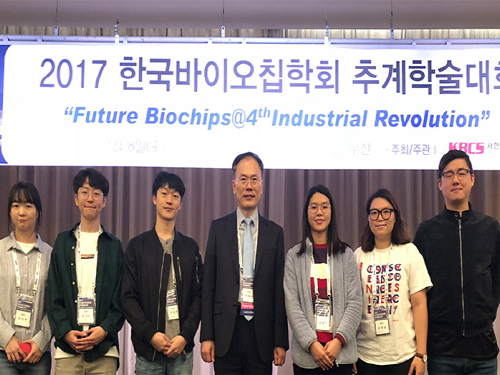 Professor Je-Kyun Park, Awarded by The Korean BioChip Society
On November 9, Je-Kyun Park from the Department of Bio and Brain Engineering at KAIST received an award from the 2017 Fall Meeting of The Korean BioChip Society held in Paradise Hotel Busan, Korea. This year’s meeting recognized Professor Park for developing lab-on-a-chip and microfluidic analytical technologies.
The Korean BioChip Society is a corporation of biochip professional established in 2006 for the development of biochip technology. Every year, the Society selects a recipient based on the nominees’ academic achievements and contributions to bio-fusion industry.
Professor Park served on the international editorial boards of renowned international journals in related fields, including Biosensors and Bioelectronics and Lab on a Chip. He was also the Committee Chairman of MicroTas in 2015.
2017.11.22 View 15353
-
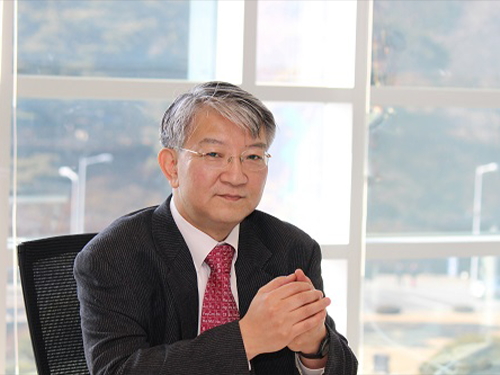 Professor Lee Co-chairs the Global Future Councils on Biotechnology of the WEF
The World Economic Forum (WEF) established a new global network of the world’s leading experts, “The Annual Meeting of the Global Future Councils,” to explore innovative solutions for the most pressing global challenges. The Councils’ first meeting took place on November 13-14, 2016, in Dubai, the United Arab Emirates (UAE). Some 25 nations joined as member states. The Councils have 35 committees.
Over 700 global leaders in business, government, civil society and academia gathered at the inaugural meeting to “develop ideas and strategies to prepare the world for the Fourth Industrial Revolution, with topics including smart cities, robotics, and the future of mobility,” according to a statement issued by the WEF.
Distinguished Professor Sang Yup Lee of Chemical and Biomolecular Engineering at KAIST was appointed to co-chair one of the Councils' committees, The Annual Meeting of the Global Future Councils on Biotechnology, for two years. The other chairperson is Dr. Feng Zhang, a professor of Biomedical Engineering at the Massachusetts Institute of Technology (MIT), who played a critical role in the development of optogenetics and CRISPR technologies.
The Biotechnology Committee consists of 24 globally recognized professionals in life sciences, law, ethics and policy including Thomas Connelly, the executive director of the American Chemical Society, Tina Fano, the executive vice president of Novozymes, and Mostafa Ronaghi, the chief technology officer of Illumina.
Professor Lee also serves as a committee member of The Annual Meeting of the Global Future Councils on the Fourth Industrial Revolution.
“Life sciences and engineering will receive more attention as a key element of the Fourth Industrial Revolution that the global society as a whole has been experiencing now. Together with thought leaders gathered worldwide, I will join the international community’s concerted efforts to address issues of importance that impact greatly on the future of humanity,” Professor Lee said.
In addition, Professor Lee received the James E. Bailey Award 2016 from The Society for Biological Engineering on November 15, 2016. He is the first Asian researcher to be recognized for his contributions to the field of biotechnology.
2016.11.15 View 15680
-
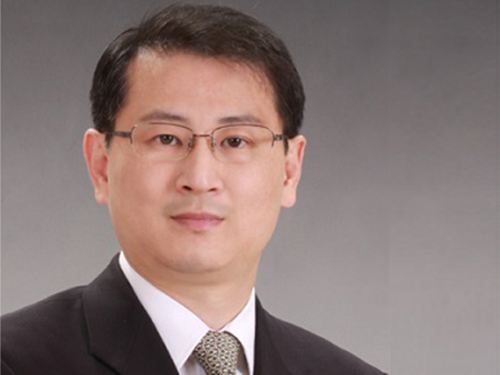 Professor Keon-Jae Lee Lectures at IEDM and ISSCC Forums
Professor Keon-Jae Lee of KAIST’s Materials Science and Engineering Department delivered a speech at the 2015 Institute of Electrical and Electronics Engineers (IEEE) International Electron Devices Meeting (IEDM) held on December 7-9, 2015 in Washington, D.C.
He will also present a speech at the 2016 International Solid-State Circuits Conference scheduled on January 31-February 4, 2016 in San Francisco, California.
Both professional gatherings are considered the world’s most renowned forums in electronic devices and semiconductor technology. It is rare for a Korean researcher to be invited to speak at these global conferences.
Professor Lee was recognized for his research on flexible NAND chips. The Korea Times, an English language daily newspaper in Korea, reported on his participation in the forums and his recent work. An excerpt of the article follows below:
“KAIST Professor to Lecture at Renowned Tech Forums”
By Lee Min-hyung, The Korea Times, November 26, 2015
Recently he has focused on delivering technologies for producing flexible materials that can be applied to everyday life. The flexible NAND flash memory chips are expected to be widely used for developing flexible handsets. His latest research also includes flexible light-emitting diodes (LED) for implantable biomedical applications.
Lee is currently running a special laboratory focused on developing new flexible nano-materials. The research group is working to develop what it calls “self-powered flexible electronic systems” using nanomaterials and electronic technology.
Lee’s achievement with flexible NAND chips was published in the October edition of Nano Letters, the renowned U.S.-based scientific journal.
He said that flexible memory chips will be used to develop wearable computers that can be installed anywhere.
2015.11.26 View 22404
-
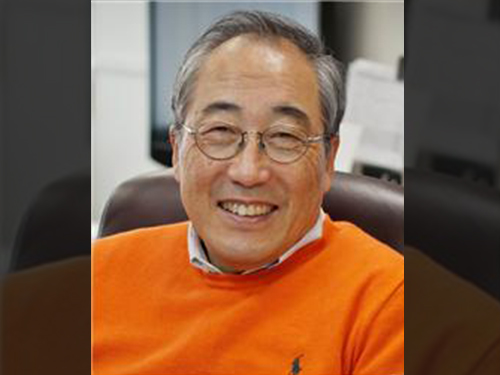 Yang-Hann Kim named recipient of the Rossing Prize in Acoustics Education by the Acoustical Society of America
Courtesy of the Acoustical Society of America (ASA)
Press release issued by ASA on October 8, 2015:
Yang-Hann Kim named recipient of the Rossing Prize in Acoustics Education by the Acoustical Society of America
Melville (NY), 8 October 2015—Yang-Hann Kim, Professor at KAIST (Korea Advanced Institute of Science and Technology), Daejeon, has been named recipient of the Acoustical Society of America (ASA) Rossing Prize in Acoustics Education. The Rossing Prize is awarded to an individual who has made significant contributions toward furthering acoustics education through distinguished teaching, creation of educational materials, textbook writing and other activities. The Prize will be presented at the 170th meeting of the ASA on 4 November 2015 in Jacksonville, Florida.
“It is my great honor to receive the Rossing Prize, which has been given to outstanding scholar members of ASA since 2003. I never dreamed to be one of them.” said Kim. “I must express my deep respect and love to my friend Thomas Rossing: I have known him more than 20 years, always respect what he has done for teaching, writing books, and pioneering work in musical acoustics.”
Yang-Hann Kim is a Fellow of the Acoustical Society of America. He received a Ph.D. from the Massachusetts Institute of Technology. His main research interests in acoustics began with “sound visualization” resulted in the development of the “sound camera” which makes any sound visible instantly. Then he moved to “sound manipulation.” Using his manipulation technology, one can move any sound in space and time, positioning sound, and can create a private sound zone. Sound Visualization and Manipulation, (Wiley, 2013), summarizes these two fields. Dr. Kim’s textbook, Sound Propagation: An Impedance Based Approach (John Wiley and Sons, 2010), is well acknowledged by the associated professional communities as one of best acoustics textbooks. Using his teaching experience at KAIST, he created a YouTube lecture on acoustics and vibration which is also available in MOOC (Massive Open Online Course). He has also presented lectures to over 500 engineers and technicians for the past 30 years.
###
The Acoustical Society of America (ASA) is the premier international scientific society in acoustics devoted to the science and technology of sound. Its 7000 members worldwide represent a broad spectrum of the study of acoustics. ASA publications include the Journal of the Acoustical Society of America—the world’s leading journal on acoustics, Acoustics Today magazine, books, and standards on acoustics. The Society also holds two major scientific meetings per year. For more information about the Society visit our website, www.acousticalsociety.org.
2015.10.06 View 17383
-
 Professor Sung Yong Kim Presents a Keynote Speech at the International Ocean Color Science Meeting (IOCS) 2015
Professor Sung Yong Kim of the Mechanical Engineering Department at KAIST delivered a keynote speech at the International Ocean Color Science Meeting (IOCS) 2015 held in San Francisco on June 15-18, 2015. His speech was entitled “Research and Applications Using Sub-mesoscale GOCI (Geostationary Ocean Color Imager) Data.”
The IOCS, organized by the International Ocean Color Coordinating Group (IOCCG), is a community consultation meeting providing communication and collaboration between space agencies and the ocean color community, building strong ties among international representatives of the ocean color communities, and providing a forum for discussion and the evolution of community thinking on a range of issues.
Professor Kim was recognized for his contribution towards the development of remote exploration of sub-mesoscale processes including eddies, fronts, and environmental fluid dynamics.
He also attended the 26th General Assembly of the International Union of Geodesy and Geophysics (IUGG) in Prague, the Czech Republic, on June 22, 2015 and gave a presentation on the sub-mesoscale eddies circulation research.
2015.06.12 View 17506
-
 The Acoustical Society of America Names Yang Hann Kim of KAIST the Recipient of the 2015 Rossing Prize in Acoustics Education
The award, given to Dr. Kim in recognition of his contributions to the advancement of acoustics education, will be presented during the 170th Meeting of the Acoustical Society of America on November 2-6, 2015 in Jacksonville, Florida.
The Acoustical Society of America (ASA) announced today that Professor Yang Hann Kim of the Mechanical Engineering Department at the Korea Advanced Institute of Science and Technology (KAIST) was the 12th recipient of the Rossing Prize in Acoustics Education. Dr. Kim is the first recipient selected from a non-English-speaking nation.
The Rossing Prize in Acoustics Education was established in 2003 from a generous gift made to the ASA Foundation by Thomas D. Rossing to recognize an individual who has made significant contributions to the advancement of acoustics education through distinguished teaching, creation of educational materials, textbook writing, and other activities.
During 25 years of teaching and conducting research in acoustics, noise, and vibration at KAIST, Dr. Kim has advised 26 doctorates and published over 200 research papers in journals such as Journal of Acoustical Society of America, Journal of Sound and Vibration, and Journal of Mechanical Systems and Signal Processing. He also wrote two acoustics textbooks for university education, which has been widely read worldwide. The textbook titles are: Sound Propagation: An Impedance Based Approach (Wiley, July 2010) and with the co-author, Dr. Jung-Woo Choi, Sound Visualization and Manipulation (Wiley, September 2013).
Since 2009, Professor Kim has lectured an online course entitled “Introduction to Acoustics,” offering students and the general public throughout the world guidance to study acoustics through the basic concept of impedance, for example, on vibrations and waves.
Dr. Kim will receive the award during ASA’s 170th conference to be held on November 2-6, 2015 at the Hyatt Regency Jacksonville Riverfront Hotel in Jacksonville, Florida, USA.
For the list of previous recipients of the Rossing Prize in Acoustics Education,
see:http://acousticalsociety.org/funding_resources/prizes#rossing
2015.06.04 View 16386
-
 The 4th Meeting of Korea and Denmark Alliance for Green Growth
President Steve Kang attended the “Fourth Meeting of Korea and Denmark Alliance for Green Growth” which took place on March 6, 2014 at the Shilla Hotel in Seoul. President Kang was a keynote speaker at the meeting and gave a lecture on sustainable energy.
KAIST and the Technical University of Denmark (DTU) signed a memorandum of understanding (MOU) on the “Cooperation for Innovation and Entrepreneurship” at the meeting.
In the MOU, KAIST and DTU agreed to post the information on their websites regarding the patents acquired through the implementation of joint research programs. In addition, KAIST students will attend conferences and idea competitions organized by DTU, e.g., the Green Challenges. DTU students will participate in KAIST’s conferences and competitions including “Startup KAIST Global Idea Competition.”
2014.03.07 View 12118
-
 The President of the KAIST Board of Trustees Newly Appointed
President Jang-Moo Lee of the KAIST Board of Trustees
The Board of Trustees, KAIST, met on November 20th at the Marriott Hotel in Seoul. Issues discussed at the board were the appointment of ombudspersons, recruitment of new faculty, and establishment of mid- and long-term development plans for KAIST.
The board also selected its new president, Dr. Jang-Moo Lee, the 24th president of Seoul National University (SNU) from 2006 to 2010 and a professor emeritus of mechanical engineering at SNU. Dr. Lee will serve the board for three years, beginning his duties on November 29th, 2013.
2013.12.10 View 9754
-
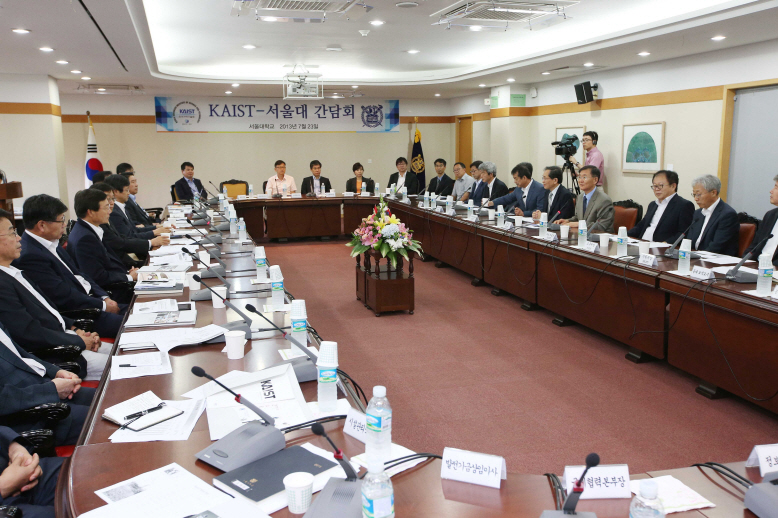 KAIST and Seoul National University Agree to Expand Cooperation in Education and Research
The presidents of two top-notch universities in Korea, KAIST and Seoul National University (SNU), met on July 23rd at the SNU campus and agreed to expand their academic cooperation to promote the univresities" mutual development.
To start, President Yeon-Cheon Oh of SNU proposed a student exchange program through which SNU students can take courses at KAIST for six months.
In return, President Steve Kang suggested that KAIST establish a liaison office on the SNU campus to facilitate better communication between two universities, thereby developing more exchange programs for research and education.Additionally, the two public universities will set up a task force to implement the agreement, conduct joint research programs, and hold regular meetings between their faculty members.President Kang said, “SNU has superb academic and research programs not only in the fields of science and technology but also in the humanities, arts, and social sciences. KAIST will surely benefit from SNU’s excellence in a broad range of academic disciplines, and SNU will have an opportunity to capitalize on KAIST’s expertise in science, engineering, and technology to enhance its growth.”At the conclusion of their consultation, the presidents expressed the hope that the agreement will strengthen the two institutions" capacity for competitiveness and globalization, preparing them to compete with leading universities in the world.
2013.07.25 View 11527