%73%79%73%74%65%6d
-
 KAIST Finds a Way to Redirect Cell Fate with Just a Single Stimulus
Which genes need to be controlled to guide a stem cell toward a desired cell type, or to modulate an immune cell's inflammatory response? A Korean research team has developed a general-purpose computational framework that identifies the key targets needed to steer a cell toward a desired state with a single temporary intervention, without permanently altering its genes.
KAIST (President Choongsik Bae) announced on September 23 that a research team led by Professor Kwang-Hyun Cho from the Department of Bio and Brain Engineering has developed NUDGE, a foundational technology that redirects cell fate in a desired direction through a minimal, temporary intervention by harnessing the gene regulatory dynamics already present within cells.
Technologies that redirect cell fate have drawn attention as key tools for treating intractable diseases and advancing regenerative medicine, since they can be used to differentiate stem cells into cells with specific functions or to return diseased or aged cells to a near-normal state. Differentiation, for example, refers to the process by which a stem cell becomes a specific cell type with a distinct function, such as a cardiomyocyte or a neuron.
However, existing methods for controlling cell fate have relied mainly on permanent intervention like keeping specific genes locked in an "on" or "off" state. While this approach can produce the desired cell state, it has a limitation. It can reduce plasticity, the flexibility that allows cells to adapt to future changes in their environment, and it can also give rise to abnormal cell states that do not exist in nature.
Rather than forcing a cell into a fixed state, the research team devised a new strategy that lets the cell reach the desired state on its own through a single temporary stimulus. The approach nudges the gene regulatory dynamics already present inside the cell toward the target direction, much like briefly clearing a blocked channel and letting the water find its own course.
NUDGE (natural dynamics control of gene regulatory networks), the technology the team developed, uses a computational logic model to examine how key genes inside a cell influence one another and to determine which state the cell ultimately reaches as a result. It then mathematically decomposes the logical functions that describe these gene interactions to identify the minimal combination of control factors needed to convert a cell from its current state to the desired one.
For example, if the goal is to differentiate a stem cell into a cardiomyocyte, NUDGE functions as a "blueprint for minimal intervention" that identifies which molecular targets need to be temporarily activated or inhibited.
A key strength of the framework is that its exact method is mathematically guaranteed to identify all minimal control combinations that lead to the desired phenotype within the model. The team also presented an efficient approximation method that extends the framework to large-scale molecular networks.
NUDGE does more than identify which factors to stimulate. It can also analyze which pathways a stimulated cell follows to reach the target state and how stably that state is maintained once reached, making it possible to anticipate whether unexpected states might emerge during the transition.
The researchers assessed permanent control in 63 published biological network models where fixing a single node was sufficient to achieve the target phenotype; 55 showed reduced plasticity or attractors absent from the uncontrolled network. Separately, NUDGE's approximation achieved an average intervention error below 0.01 in more than 90 percent of 552 control problems across 69 large biological networks. Error measured the fraction of simulated converged states with the undesired phenotype. Of the minimum-sized, error-free interventions pooled from the three methods for each problem, NUDGE found an average of 83 percent, compared with 59 percent for IBMFA and 53 percent for LDOI.
To assess how well NUDGE explains real biological phenomena, the researchers applied it to three distinct processes: cardiomyocyte differentiation, fate determination in mast cells involved in allergic responses, and the conversion of macrophages, a type of immune cell, into an anti-inflammatory state.
In cardiomyocyte differentiation, the framework reproduced the known pattern in which MESP1, a gene important for heart development and regeneration, is briefly active early in differentiation but inactive in mature cardiomyocytes. The model shows how a single temporary intervention involving MESP1 and another regulatory target can guide differentiation without keeping MESP1 continuously active.
The team also identified GATA2 and GATA1 as key regulators of cell fate during mast cell formation. In the macrophage model, the team derived optimal strategies for a single temporary intervention, including one using IL-4, to induce anti-inflammatory M2 states while preserving the capacity to transition between inflammatory and anti-inflammatory phenotypes and among M2 subtypes.
The significance of this technology lies in providing a general-purpose framework that identifies where a single temporary intervention can guide a cell to a desired state, provided that a stable state with the desired phenotype exists in the network's uncontrolled dynamics. It is expected to find broad application, from guiding normal stem cells to differentiate into specific cell types such as cardiomyocytes, to normalizing diseased or aged cells, regenerating damaged tissue, modulating immune responses, and designing cancer reversion therapies that return cancer cells to a near-normal state.
Professor Cho said, "NUDGE is not a technology limited to returning a specific cell to a healthy state, but a general-purpose cell-control technology that guides a cell from its current state to a desired state through a single minimal stimulus." He added that the technology is expected to serve as a foundational tool for designing new control strategies across stem cell differentiation, aging, autoimmune disease, regenerative medicine, and cancer reversion therapy.
The study was conducted by Ferio Brahmana, who holds a master's degree, and Corbin Hopper, a PhD student, both in KAIST's Department of Bio and Brain Engineering, who contributed equally as co-first authors, with PhD student Woojeong Lee as a co-author. The findings were published online on September 14 in the Proceedings of the National Academy of Sciences of the United States of America (PNAS).
Paper Title: Uncovering minimal control of cell fate by natural dynamics,
DOI: 10.1073/pnas.2604777123
This work was supported by National Research Foundation of Korea grants funded by the Korea Government, the Ministry of Science and Information and Communication Technology (ICT) (RS-2023-NR077224, RS-2024-00405360, RS-2025-17652976, and 2021M3A9I4024447 [Bio & Medical Technology Development Program]). It was also supported by a grant of the Korea Dementia Research Project through the Korea Dementia Research Center, funded by the Ministry of Health & Welfare and the Ministry of Science and ICT, Republic of Korea (RS-2025-02264017) and by the Korea Advanced Institute of Science and Technology (KAIST) Quantum+X Convergence R&D Project and KAIST Grand Challenge 30 Project.
2026.09.23 View 2970
-
 KAIST Controls the Rotation Direction of Light Without Complex New Materials
A new pathway has opened for controlling the rotation direction of light simply by changing how molecules are arranged, without having to synthesize complex new materials. Circularly polarized light is a special form of light that travels while rotating like a pinwheel either to the left or to the right. Because different rotation directions can carry different information, it is drawing attention as a key light source for next-generation displays, optical communications, and security technologies. KAIST researchers have developed a platform technology that arranges symmetric molecules into “microscopic pinwheels,” enabling circularly polarized light with a desired rotation direction.
KAIST (President Choongsik Bae) announced on August 14 that a research team led by Professor Dong Ki Yoon from the Department of Chemistry, in collaboration with researchers from Chungnam National University, Ajou University, Yonsei University, and Japan’s RIKEN, has developed a technology that spatially confines symmetric non-chiral liquid crystal molecules and applies an electric field to form micrometer-scale chiral pinwheel structures, then permanently replicates them onto polymer nanofibers.
Chirality refers to the property of an object whose mirror image cannot be perfectly superimposed on the original, like a person’s left and right hands. Chirality is a key property not only of biological molecules such as proteins and DNA, but also of optical materials used in next-generation displays, optical sensors, and optical communications.
Until now, producing chiral optical materials has generally required the complex synthesis of molecules with asymmetric structures or the addition of large amounts of chiral substances. This has made fabrication complicated, limited the range of usable materials, and made it difficult to realize chiral structures with the same handedness over a large area.
To address this challenge, the research team proposed a new approach based on the idea that “structure creates function.”
The team applied to molecules the same principle by which the same sheet of paper can form either a clockwise or counterclockwise pinwheel depending on how it is folded. They focused on the fact that even symmetric molecules can form structures with different handedness depending on how they assemble.
The researchers first induced rod-shaped molecules to self-assemble into microscopic pinwheel-like structures. They then added an extremely small amount of chiral additive, less than 1% of the total material, to guide all of the pinwheels to face the same direction. The team then successfully replicated this structure onto polymer nanofibers.
When a conventional luminescent material was coated onto this structure, circularly polarized light rotating in opposite directions was emitted depending not on the luminescent material itself, but on the direction of the pinwheel structure. Circularly polarized light is a special form of light that rotates to the left or right as it travels, and because each rotation direction can carry different information, it can be used in next-generation displays, optical communications, and anti-counterfeiting technologies.
In other words, the study showed that the properties of light can be controlled simply by changing the structure on which a light-emitting material is placed, rather than by changing the light-emitting material itself. Put simply, just as the same LEGO blocks can form completely different shapes depending on how they are assembled, the same molecules can produce different optical properties depending only on how they are arranged.
Professor Dong Ki Yoon said, “The key point of this study is that we controlled the rotation direction of light not through the complex chemical structure of chiral molecules, but only through the way molecules are arranged,” adding, “This work presents a new optical material design principle that can be applied to next-generation displays, AR and VR optical devices, polarization sensors, and optical communications without the need to develop complex new materials.”
Jeong Yeon Han, the first author and a Ph.D. candidate, explained, “In conventional approaches, left-handed and right-handed structures tended to form together, canceling out chiral properties. In this study, however, we succeeded in aligning the structures in a single direction over a large area by designing an extremely small amount of additive to select only one rotation direction.”
This study was led by Ph.D. candidate Jeong Yeon Han as the first author, and the research results were published in the international journal Nature Communications on August 05.
Paper title: Microchiral pinwheel arrays based on achiral molecules,
DOI: 10.1038/s41467-026-76089-z
Authors: Jeong Yeon Han (first author), Won Kyung Park, Byeongil Noh, Fumito Araoka, Sungwook Jung, Byeong Hak Jhun, Youngmin You, Yoonsu Park, Kyung Jin Lee*, Jung-Moo Heo*, and Dong Ki Yoon* (*corresponding authors)
This research was supported by the Technology Innovation Program of the Ministry of Trade, Industry and Energy, the InnoCORE Program of the Ministry of Science and ICT, and the National Research Foundation of Korea.
2026.08.14 View 3506
-
 KAIST Uncovers the Mechanism Behind Overactive Immune Cells
<(From Right) Professor Eui-Cheol Shin, Ph.D candidate So-Young Kim, Professor Su-Hyung Park, Professor Hyuk Soo Eun, Dr. Hoyoung Lee>
“Why do immune cells that are supposed to eliminate viruses suddenly turn against our own body?”
There are instances where killer T cells—which are meant to precisely remove virus-infected cells—malfunction like overheated engines, attacking even healthy cells and damaging tissues. A KAIST research team has now identified the key mechanism that regulates this excessive activation of killer T cells, offering new insights into controlling immune overreactions and developing therapies for immune-related diseases.
KAIST (President Kwang Hyung Lee) announced on November 5 that a research team led by Professors Eui-Cheol Shin and Su-Hyung Park from the Graduate School of Medical Science and Engineering, in collaboration with Professor Hyuk Soo Eun from Chungnam National University College of Medicine, has uncovered the molecular basis of nonspecific activation in killer T cells and proposed a new therapeutic strategy to control it.
Killer T cells (CD8⁺ T cells) selectively eliminate infected cells to prevent viral spread. However, when excessively activated, they can attack uninfected cells, causing inflammation and tissue damage. Such overactive immune responses can lead to severe viral infections and autoimmune diseases.
In 2018, Professor Shin’s team was the first in the world to discover that killer T cells can be nonspecifically activated by cytokines and randomly attack host cells—a phenomenon they termed “bystander activation of T cells”. The current study builds on that discovery by revealing the molecular mechanism driving this abnormal process.
The team focused on a cytokine called interleukin-15 (IL-15). Experiments showed that IL-15 can abnormally excite killer T cells by a bystander activation mechanism, causing them to attack uninfected host cells. However, when there is a concurrent antigen-specific stimulation, IL-15-induced bystander activation is suppressed.
The researchers further identified that this suppression occurs through an intracellular signaling process. When the concentration of calcium ions (Ca²⁺) changes, a protein called calcineurin activates, which in turn triggers a regulatory protein known as NFAT, suppressing IL-15-induced bystander activation of killer T cells. In other words, the calcineurin–NFAT pathway activated by antigen stimulation acts as a brake on overactivation by a bystander mechanism.
The team also discovered that some immunosuppressants, which are known to block the calcineurin pathway, may not always suppress immune responses—in certain contexts, they can instead promote IL-15-induced bystander activation of killer T cells. This finding underscores that not all immunosuppressants work the same way and that treatments must be carefully tailored to each patient’s immune response.
Through gene expression analysis, the researchers identified a gene set that increase only in abnormally activated killer T cells induced by IL-15 as markers. They further confirmed that these same markers were elevated in bystander killer T cells from patients with acute hepatitis A, suggesting that the markers could be used for disease diagnosis.
<In a normal immune response, killer T cells are activated by antigen stimulation and selectively eliminate only virus-infected cells, thereby controlling viral replication and promoting the patient’s rapid recovery. However, when killer T cells are nonspecifically overactivated by interleukin-15, they may randomly attack normal cells as well, causing excessive tissue damage and leading to severe disease. Future research may identify diseases in which such nonspecific hyperimmune responses occur, making it possible to develop new drugs to control them>
This study provides crucial clues for understanding the pathogenesis of various immune-related diseases, including severe viral infections, chronic inflammatory disorders, autoimmune diseases, and organ transplant rejection. It also paves the way for developing novel immunoregulatory therapies targeting IL-15 signaling.
Professor Eui-Cheol Shin explained that, “this study shows that killer T cells are not merely defenders—they can transform into ‘nonspecific attackers’ depending on the inflammatory environment. By precisely regulating this abnormal activation, we may be able to develop new treatments for intractable immune diseases.”
This research was published in the journal Immunity on October 31, with Dr. Hoyoung Lee and Ph.D. candidate So-Young Kim as co–first authors.
Title: “TCR signaling via NFATc1 constrains IL-15-induced bystander activation of human memory CD8⁺ T cells”, DOI: doi.org/10.1016/j.immuni.2025.10.002
The study was supported by the National Research Foundation of Korea (NRF), the Korea Health Industry Development Institute (KHIDI), and the Institute for Basic Science (IBS).
2025.11.06 View 6159
-
 KAIST Develops an AI Semiconductor Brain Combining Transformer's Intelligence and Mamba's Efficiency
<(From Left) Ph.D candidate Seongryong Oh, Ph.D candidate Yoonsung Kim, Ph.D candidate Wonung Kim, Ph.D candidate Yubin Lee, M.S candidate Jiyong Jung, Professor Jongse Park, Professor Divya Mahajan, Professor Chang Hyun Park>
As recent Artificial Intelligence (AI) models’ capacity to understand and process long, complex sentences grows, the necessity for new semiconductor technologies that can simultaneously boost computation speed and memory efficiency is increasing. Amidst this, a joint research team featuring KAIST researchers and international collaborators has successfully developed a core AI semiconductor 'brain' technology based on a hybrid Transformer and Mamba structure, which was implemented for the first time in the world in a form capable of direct computation inside the memory, resulting in a four-fold increase in the inference speed of Large Language Models (LLMs) and a 2.2-fold reduction in power consumption.
KAIST (President Kwang Hyung Lee) announced on the 17th of October that the research team led by Professor Jongse Park from KAIST School of Computing, in collaboration with Georgia Institute of Technology in the United States and Uppsala University in Sweden, developed 'PIMBA,' a core technology based on 'AI Memory Semiconductor (PIM, Processing-in-Memory),' which acts as the brain for next-generation AI models.
Currently, LLMs such as ChatGPT, GPT-4, Claude, Gemini, and Llama operate based on the 'Transformer' brain structure, which sees all of the words simultaneously. Consequently, as the AI model grows and the processed sentences become longer, the computational load and memory requirements surge, leading to speed reductions and high energy consumption as major issues.
To overcome these problems with Transformer, the recently proposed sequential memory-based 'Mamba' structure introduced a method for processing information over time, increasing efficiency. However, memory bottlenecks and power consumption limits still remained.
Professor Park Jongse's research team designed 'PIMBA,' a new semiconductor structure that directly performs computations inside the memory in order to maximize the performance of the 'Transformer–Mamba Hybrid Model,' which combines the advantages of both Transformer and Mamba.
While existing GPU-based systems move data out of the memory to perform computations, PIMBA performs calculations directly within the storage device without moving the data. This minimizes data movement time and significantly reduces power consumption.
<Analysis of Post-Transformer Models and Proposal of a Problem-Solving Acceleration System>
As a result, PIMBA showed up to a 4.1-fold improvement in processing performance and an average 2.2-fold decrease in energy consumption compared to existing GPU systems.
The research outcome is scheduled to be presented on October 20th at the '58th International Symposium on Microarchitecture (MICRO 2025),' a globally renowned computer architecture conference that will be held in Seoul. It was previously recognized for its excellence by winning the Gold Prize at the '31st Samsung Humantech Paper Award.' ※Paper Title: Pimba: A Processing-in-Memory Acceleration for Post-Transformer Large Language Model Serving, DOI: 10.1145/3725843.3756121
This research was supported by the Institute for Information & Communications Technology Planning & Evaluation (IITP), the AI Semiconductor Graduate School Support Project, and the ICT R&D Program of the Ministry of Science and ICT and the IITP, with assistance from the Electronics and Telecommunications Research Institute (ETRI). The EDA tools were supported by IDEC (the IC Design Education Center).
2025.10.17 View 6092
-
 The 4th Korea AI System Forum Breakfast Lecture Successfully Concluded
A special event was held to explore the trend of "Physical AI," where artificial intelligence directly connects with the physical world and rapidly permeates industrial sites. On the morning of Monday, September 8, KAIST's Graduate School of AI Semiconductor held the "4th Korea AI System Forum (KAISF)" breakfast lecture at the Onoma Hotel in Daejeon.
At the lecture, Yoon-seok Pyu, a director at ROBOTIS, Inc., gave a special presentation on the topic, "Physical AI Research Trends and the Development History of Task-Oriented Humanoid AI Workers." Director Pyu introduced the current state of global Physical AI research and specifically explained ROBOTIS's strategy for developing humanoid robots tailored to industrial sites.
<Group photo of attendees at the 4th Korea AI System Forum>
In particular, the participants were shown the potential of a robot platform that can be applied in real industrial settings, thanks to technical advances in core components like the robot's ability to learn tasks through imitation learning, and the company's small, high-power actuators and self-developed reducers. He shared examples of the company's "AI Worker" development, which is specialized for the manufacturing, logistics, and service sectors, based on ROBOTIS's vision of "Freedom from Work."
Beyond simple technological concepts, attendees actively exchanged opinions and deeply agreed on the need for Physical AI robots that can be used stably and efficiently in the field.
Hoe-jun Yoo, chairman of the Korea AI System Forum (a KAIST professor), stated, "Physical AI is a field where countries around the world are fiercely competing to secure a leading position. KAISF will support our
companies to lead in the global market by building a Korean-style industrial ecosystem."
Going forward, KAISF plans to focus on ensuring that Korean Physical AI technology gains a competitive edge on the global stage by closely connecting industry, academia, and research institutions. Through this effort, it will promote the creation of a differentiated industrial ecosystem that encompasses AI semiconductors, robotics, and system integration.
2025.09.09 View 6101
-
 Semiconductor Leadership Spotlighted in Nature Sister Journal
<(From Left) Prof. Shinhyun Choi, Prof. Young Gyu Yoon, Prof.Seunghyub Yoo from the School of Electrical Engineering, Prof. Kyung Min Kim from Materials Science and Engineering>
KAIST (President Kwang Hyung Lee) announced on the 5th of September that its semiconductor research and education achievements were highlighted on August 18 in Nature Reviews Electrical Engineering, a sister journal of the world-renowned scientific journal Nature.
Title: Semiconductor-related research and education at KAIST DOI: 10.1038/s44287-025-00204-3
This special "Focus" article provides a detailed look at KAIST's leadership in next-generation semiconductor research, talent development, and global industry-academia collaboration, presenting a future blueprint for Korea's semiconductor industry. Editor Silvia Conti personally conducted the interviews, with KAIST professors including Kyung Min Kim from the Department of Materials Science and Engineering, and Young Gyu Yoon, Shinhyun Choi, Sung-Yool Choi, and Seunghyub Yoo from the School of Electrical Engineering, participating.
KAIST operates educational programs such as the School of Electrical Engineering, the Department of Semiconductor Systems Engineering, and the Graduate School of Semiconductor Engineering. It is leading next-generation semiconductor research in areas like neuromorphic computing, in-memory computing, and 2D new material-based devices. Building on this foundation, researchers are developing new architectures and devices that transcend the limitations of existing silicon, driving innovation in various application fields such as artificial intelligence, robotics, and medicine.
Notably, research on implementing biological functions like synapses and neurons into hardware platforms using new types of memory such as RRAM and PRAM is gaining international attention. This work opens up possibilities for applications in robots, edge computing, and on-sensor AI systems.
Furthermore, KAIST has operated EPSS (Samsung Advanced Human Resources Training Program) and KEPSI (SK Hynix Semiconductor Advanced Human Resources Training Program) based on long-standing partnerships with Samsung Electronics and SK Hynix. Graduate students in these programs receive full scholarships and are guaranteed employment after graduation. The Department of Semiconductor Systems Engineering, newly established in 2022, selects 100 undergraduate students each year to provide systematic education. Additionally, the KAIST–Samsung Electronics Industry-Academia Cooperation Center, which involves more than 70 labs annually, serves as a long-term hub for joint industry-academia research, contributing to solving critical issues within the industry.
The article emphasizes KAIST's growth beyond a simple research institution into an international research hub. KAIST is enhancing diversity and inclusivity by expanding the hiring of female faculty and establishing a Global Talent Visa Center to support foreign professors and students, attracting outstanding talent from around the world. As a core university within the Daedeok Research Complex (Daedeok Innopolis), it serves as the heart of "Korea's Silicon Valley."
KAIST researchers predict that the future of semiconductor technology is not in simple device miniaturization but in a convergent approach involving neuromorphic technology, 3D packaging technology, and AI applications. This article shows that KAIST's strategic research direction and leadership are gaining attention from both the global academic and industrial communities.
Professor Kyung Min Kim stated, "I am very pleased that KAIST's next-generation semiconductor research and talent development strategy has been widely publicized to domestic and international academia and industry through this article, and we will continue to contribute to the development of future semiconductor technology with innovative convergence research."
KAIST President Kwang Hyung Lee remarked, "Being highlighted for our semiconductor research and education achievements in a world-renowned science journal is a testament to the dedication and pioneering spirit of our university members. I am delighted that KAIST's growth as a global research hub is gaining recognition, and we will continue to expand industry-academia collaboration to lead next-generation semiconductor innovation and play a key role in helping Korea become a future semiconductor powerhouse."
2025.09.05 View 9517
-
 KAIST succeeds in controlling complex altered gene networks to restore them to normal
Previously, research on controlling gene networks has been carried out based on a single stimulus-response of cells. More recently, studies have been proposed to precisely analyze complex gene networks to identify control targets. A KAIST research team has succeeded in developing a universal technology that identifies gene control targets in altered cellular gene networks and restores them. This achievement is expected to be widely applied to new anticancer therapies such as cancer reversibility, drug development, precision medicine, and reprogramming for cell therapy.
KAIST (President Kwang Hyung Lee) announced on the 28th of August that Professor Kwang-Hyun Cho’s research team from the Department of Bio and Brain Engineering has developed a technology to systematically identify gene control targets that can restore the altered stimulus-response patterns of cells to normal by using an algebraic approach. The algebraic approach expresses gene networks as mathematical equations and identifies control targets through algebraic computations.
The research team represented the complex interactions among genes within a cell as a "logic circuit diagram" (Boolean network). Based on this, they visualized how a cell responds to external stimuli as a "landscape map" (phenotype landscape).
By applying a mathematical method called the "semi-tensor product,*" they developed a way to quickly and accurately calculate how the overall cellular response would change if a specific gene were controlled.
*Semi-tensor product: a method that calculates all possible gene combinations and control effects in a single algebraic formula
However, because the key genes that determine actual cellular responses number in the thousands, the calculations are extremely complex. To address this, the research team applied a numerical approximation method (Taylor approximation) to simplify the calculations. In simple terms, they transformed a complex problem into a simpler formula while still yielding nearly identical results.
Through this, the team was able to calculate which stable state (attractor) a cell would reach and predict how the cell’s state would change when a particular gene was controlled. As a result, they were able to identify core gene control targets that could restore abnormal cellular responses to states most similar to normal.
Professor Cho’s team applied the developed control technology to various gene networks and verified that it can accurately predict gene control targets that restore altered stimulus-response patterns of cells back to normal.
In particular, by applying it to bladder cancer cell networks, they identified gene control targets capable of restoring altered responses to normal. They also discovered gene control targets in large-scale distorted gene networks during immune cell differentiation that are capable of restoring normal stimulus-response patterns. This enabled them to solve problems that previously required only approximate searches through lengthy computer simulations in a fast and systematic way.
Professor Cho said, “This study is evaluated as a core original technology for the development of the Digital Cell Twin model*, which analyzes and controls the phenotype landscape of gene networks that determine cell fate. In the future, it is expected to be widely applicable across the life sciences and medicine, including new anticancer therapies through cancer reversibility, drug development, precision medicine, and reprogramming for cell therapy.”
*Digital Cell Twin model: a technology that digitally models the complex reactions occurring within cells, enabling virtual simulations of cellular responses instead of actual experiments
KAIST master’s student Insoo Jung, PhD student Corbin Hopper, PhD student Seong-Hoon Jang, and PhD student Hyunsoo Yeo participated in this study. The results were published online on August 22 in Science Advances, an international journal published by the American Association for the Advancement of Science (AAAS).
※ Paper title: “Reverse Control of Biological Networks to Restore Phenotype Landscapes”
※ DOI: https://www.science.org/doi/10.1126/sciadv.adw3995
This research was supported by the Mid-Career Researcher Program and the Basic Research Laboratory Program of the National Research Foundation of Korea, funded by the Ministry of Science and ICT.
2025.08.29 View 8710
-
 KAIST Takes the Lead in Developing Core Technologies for Generative AI National R&D Project
KAIST (President Kwang Hyung Lee) is leading the transition to AI Transformation (AX) by advancing research topics based on the practical technological demands of industries, fostering AI talent, and demonstrating research outcomes in industrial settings. In this context, KAIST announced on the 13th of August that it is at the forefront of strengthening the nation's AI technology competitiveness by developing core AI technologies via national R&D projects for generative AI led by the Ministry of Science and ICT.
In the 'Generative AI Leading Talent Cultivation Project,' KAIST was selected as a joint research institution for all three projects—two led by industry partners and one by a research institution—and will thus be tasked with the dual challenge of developing core generative AI technologies and cultivating practical, core talent through industry-academia collaborations.
Moreover, in the 'Development of a Proprietary AI Foundation Model' project, KAIST faculty members are participating as key researchers in four out of five consortia, establishing the university as a central hub for domestic generative AI research.
Each project in the Generative AI Leading Talent Cultivation Project will receive 6.7 billion won, while each consortium in the proprietary AI foundation model development project will receive a total of 200 billion won in government support, including GPU infrastructure.
As part of the 'Generative AI Leading Talent Cultivation Project,' which runs until the end of 2028, KAIST is collaborating with LG AI Research. Professor Noseong Park from the School of Computing will participate as the principal investigator for KAIST, conducting research in the field of physics-based generative AI (Physical AI). This project focuses on developing image and video generation technologies based on physical laws and developing a 'World Model.'
In particular, research being conducted by Professor Noseong Park's team and Professor Sung-Eui Yoon's team proposes a model structure designed to help AI learn the real-world rules of the physical world more precisely. This is considered a core technology for Physical AI.
Professors Noseong Park, Jae-gil Lee, Jiyoung Hwang, Sung-Eui Yoon, and Hyun-Woo Kim from the School of Computing, who have been globally recognized for their achievements in the AI field, are jointly participating in this project. This year, they have presented work at top AI conferences such as ICLR, ICRA, ICCV, and ICML, including: ▲ Research on physics-based Ollivier Ricci-flow (ICLR 2025, Prof. Noseong Park) ▲ Technology to improve the navigation efficiency of quadruped robots (ICRA 2025, Prof. Sung-Eui Yoon) ▲ A multimodal large language model for text-video retrieval (ICCV 2025, Prof. Hyun-Woo Kim) ▲ Structured representation learning for knowledge generation (ICML 2025, Prof. Jiyoung Whang).
In the collaboration with NC AI, Professor Tae-Kyun Kim from the School of Computing is participating as the principal investigator to develop multimodal AI agent technology. The research will explore technologies applicable to the entire gaming industry, such as 3D modeling, animation, avatar expression generation, and character AI. It is expected to contribute to training practical AI talents by giving them hands-on experience in the industrial field and making the game production pipeline more efficient.
As the principal investigator, Professor Tae-Kyun Kim, a renowned scholar in 3D computer vision and generative AI, is developing key technologies for creating immersive avatars in the virtual and gaming industries. He will apply a first-person full-body motion diffusion model, which he developed through a joint research project with Meta, to VR and AR environments.
Professor Tae-Kyun Kim, Minhyeok Seong, and Tae-Hyun Oh from the School of Computing, and Professors Sung-Hee Lee, Woon-Tack Woo, Jun-Yong Noh, and Kyung-Tae Lim from the Graduate School of Culture Technology, are participating in the NC AI project. They have presented globally recognized work at CVPR 2025 and ICLR 2025, including: ▲ A first-person full-body motion diffusion model (CVPR 2025, Prof. Tae-Kyun Kim) ▲ Stochastic diffusion synchronization technology for image generation (ICLR 2025, Prof. Minhyeok Seong) ▲ The creation of a large-scale 3D facial mesh video dataset (ICLR 2025, Prof. Tae-Hyun Oh) ▲ Object-adaptive agent motion generation technology, InterFaceRays (Eurographics 2025, Prof. Sung-Hee Lee) ▲ 3D neural face editing technology (CVPR 2025, Prof. Jun-Yong Noh) ▲ Research on selective search augmentation for multilingual vision-language models (COLING 2025, Prof. Kyung-Tae Lim).
In the project led by the Korea Electronics Technology Institute (KETI), Professor Seungryong Kim from the Kim Jae-chul Graduate School of AI is participating in generative AI technology development. His team recently developed new technology for extracting robust point-tracking information from video data in collaboration with Adobe Research and Google DeepMind, proposing a key technology for clearly understanding and generating videos.
Each industry partner will open joint courses with KAIST and provide their generative AI foundation models for education and research. Selected outstanding students will be dispatched to these companies to conduct practical research, and KAIST faculty will also serve as adjunct professors at the in-house AI graduate school established by LG AI Research.
Meanwhile, KAIST showed an unrivaled presence by participating in four consortia for the Ministry of Science and ICT's 'Proprietary AI Foundation Model Development' project.
In the NC AI Consortium, Professors Tae-Kyun Kim, Sung-Eui Yoon, Noseong Park, Jiyoung Hwang, and Minhyeok Seong from the School of Computing are participating, focusing on the development of multimodal foundation models (LMMs) and robot-based models. They are particularly concentrating on developing LMMs that learn common sense about space, physics, and time. They have formed a research team optimized for developing next-generation, multimodal AI models that can understand and interact with the physical world, equipped with an 'all-purpose AI brain' capable of simultaneously understanding and processing diverse information such as text, images, video, and sound.
In the Upstage Consortium, Professors Jae-gil Lee and Hyeon-eon Oh from the School of Computing, both renowned scholars in data AI and NLP (natural language processing), along with Professor Kyung-Tae Lim from the Graduate School of Culture Technology, an LLM expert, are responsible for developing vertical models for industries such as finance, law, and manufacturing. The KAIST researchers will concentrate on developing practical AI models that are directly applicable to industrial settings and tailored to each specific industry.
The Naver Consortium includes Professor Tae-Hyun Oh from the School of Computing, who has developed key technology for multimodal learning and compositional language-vision models, Professor Hyun-Woo Kim, who has proposed video reasoning and generation methods using language models, and faculty from the Kim Jae-chul Graduate School of AI and the Department of Electrical Engineering.
In the SKT Consortium, Professor Ki-min Lee from the Kim Jae-chul Graduate School of AI, who has achieved outstanding results in text-to-image generation, human preference modeling, and visual robotic manipulation technology development, is participating. This technology is expected to play a key role in developing personalized services and customized AI solutions for telecommunications companies.
This outcome is considered a successful culmination of KAIST's strategy for developing AI technology based on industry demand and centered on on-site demonstrations.
KAIST President Kwang Hyung Lee said, "For AI technology to go beyond academic achievements and be connected to and practical for industry, continuous government support, research, and education centered on industry-academia collaboration are essential. KAIST will continue to strive to solve problems in industrial settings and make a real contribution to enhancing the competitiveness of the AI ecosystem."
He added that while the project led by Professor Sung-Ju Hwang from the Kim Jae-chul Graduate School of AI, which had applied as a lead institution for the proprietary foundation model development project, was unfortunately not selected, it was a meaningful challenge that stood out for its original approach and bold attempts. President Lee further commented, "Regardless of whether it was selected or not, such attempts will accumulate and make the Korean AI ecosystem even richer."
2025.08.13 View 8324
-
 Material Innovation Realized with Robotic Arms and AI, Without Human Researchers
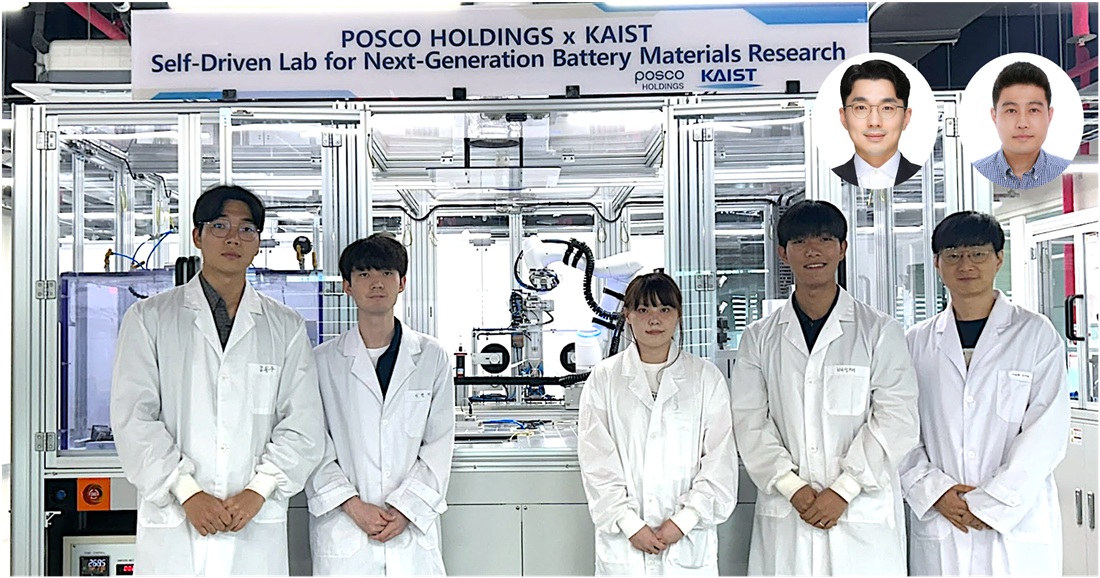
<(From Left) M.S candidate Dongwoo Kim from KAIST, Ph.D candidate Hyun-Gi Lee from KAIST, Intern Yeham Kang from KAIST, M.S candidate Seongjae Bae from KAIST, Professor Dong-Hwa Seo from KAIST, (From top right, from left) Senior Researcher Inchul Park from POSCO Holdings, Senior Researcher Jung Woo Park, senior researcher from POSCO Holdings>
A joint research team from industry and academia in Korea has successfully developed an autonomous lab that uses AI and automation to create new cathode materials for secondary batteries. This system operates without human intervention, drastically reducing researcher labor and cutting the material discovery period by 93%.
* Autonomous Lab: A platform that autonomously designs, conducts, and analyzes experiments to find the optimal material.
KAIST (President Kwang Hyung Lee) announced on the 3rd of August that the research team led by Professor Dong-Hwa Seo of the Department of Materials Science and Engineering, in collaboration with the team of LIB Materials Research Center in Energy Materials R&D Laboratories at POSCO Holdings' POSCO N.EX.T Hub (Director Ki Soo Kim), built the lab to explore cathode materials using AI and automation technology.
Developing secondary battery cathode materials is a labor-intensive and time-consuming process for skilled researchers. It involves extensive exploration of various compositions and experimental variables through weighing, transporting, mixing, sintering*, and analyzing samples.
* Sintering: A process in which powder particles are heated to form a single solid mass through thermal activation.
The research team's autonomous lab combines an automated system with an AI model. The system handles all experimental steps—weighing, mixing, pelletizing, sintering, and analysis—without human interference. The AI model then interprets the data, learns from it, and selects the best candidates for the next experiment.
<Figure 1. Outline of the Anode Material Autonomous Exploration Laboratory>
To increase efficiency, the team designed the automation system with separate modules for each process, which are managed by a central robotic arm. This modular approach reduces the system's reliance on the robotic arm.
The team also significantly improved the synthesis speed by using a new high-speed sintering method, which is 50 times faster than the conventional low-speed method. This allows the autonomous lab to acquire 12 times more material data compared to traditional, researcher-led experiments.
<Figure 2. Synthesis of Cathode Material Using a High-Speed Sintering Device>
The vast amount of data collected is automatically interpreted by the AI model to extract information such as synthesized phases and impurity ratios. This data is systematically stored to create a high-quality database, which then serves as training data for an optimization AI model. This creates a closed-loop experimental system that recommends the next cathode composition and synthesis conditions for the automated system.
* Closed-loop experimental system: A system that independently performs all experimental processes without researcher intervention.
Operating this intelligent automation system 24 hours a day can secure more than 12 times the experimental data and shorten material discovery time by 93%. For a project requiring 500 experiments, the system can complete the work in about 6 days, whereas a traditional researcher-led approach would take 84 days.
During development, POSCO Holdings team managed the overall project planning, reviewed the platform design, and co-developed the partial module design and AI-based experimental model. The KAIST team, led by Professor Dong-hwa Seo, was responsible for the actual system implementation and operation, including platform design, module fabrication, algorithm creation, and system verification and improvement.
Professor Dong-Hwa Seo of KAIST stated that this system is a solution to the decrease in research personnel due to the low birth rate in Korea. He expects it will enhance global competitiveness by accelerating secondary battery material development through the acquisition of high-quality data.
<Figure 3. Exterior View (Side) of the Cathode Material Autonomous Exploration Laboratory>
POSCO N.EX.T Hub plans to apply an upgraded version of this autonomous lab to its own research facilities after 2026 to dramatically speed up next-generation secondary battery material development. They are planning further developments to enhance the system's stability and scalability, and hope this industry-academia collaboration will serve as a model for using innovative technology in real-world R&D.
<Figure 4. Exterior View (Front) of the Cathode Material Autonomous Exploration Laboratory>
The research was spearheaded by Ph.D. student Hyun-Gi Lee, along with master's students Seongjae Bae and Dongwoo Kim from Professor Dong-Hwa Seo’s lab at KAIST. Senior researchers Jung Woo Park and Inchul Park from LIB Materials Research Center of POSCO N.EX.T Hub's Energy Materials R&D Laboratories (Director Jeongjin Hong) also participated.
2025.08.06 View 10100
-
 Why Do Plants Attack Themselves? The Secret of Genetic Conflict Revealed
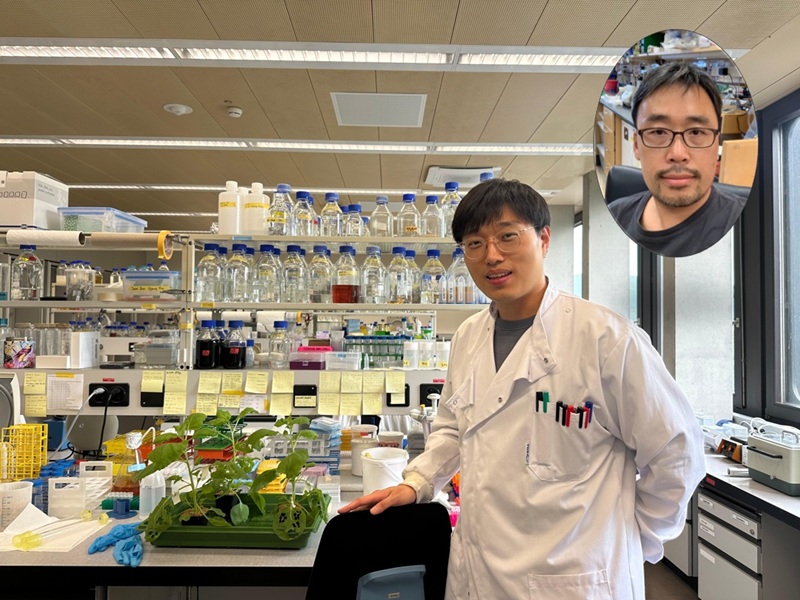
<Professor Ji-Joon Song of the KAIST Department of Biological Sciences>
Plants, with their unique immune systems, sometimes launch 'autoimmune responses' by mistakenly identifying their own protein structures as pathogens. In particular, 'hybrid necrosis,' a phenomenon where descendant plants fail to grow healthily and perish after cross-breeding different varieties, has long been a difficult challenge for botanists and agricultural researchers. In response, an international research team has successfully elucidated the mechanism inducing plant autoimmune responses and proposed a novel strategy for cultivar improvement that can predict and avoid these reactions.
Professor Ji-Joon Song's research team at KAIST, in collaboration with teams from the National University of Singapore (NUS) and the University of Oxford, announced on the 21st of July that they have elucidated the structure and function of the 'DM3' protein complex, which triggers plant autoimmune responses, using cryo-electron microscopy (Cryo-EM) technology.
This research is drawing attention because it identifies defects in protein structure as the cause of hybrid necrosis, which occurs due to an abnormal reaction of immune receptors during cross-breeding between plant hybrids.
This protein (DM3) is originally an enzyme involved in the plant's immune response, but problems arise when the structure of the DM3 protein is damaged in a specific protein combination called 'DANGEROUS MIX (DM)'.
Notably, one variant of DM3, the 'DM3Col-0' variant, forms a stable complex with six proteins and is recognized as normal, thus not triggering an immune response. In contrast, another 'DM3Hh-0' variant has improper binding between its six proteins, causing the plant to recognize it as an 'abnormal state' and trigger an immune alarm, leading to autoimmunity.
The research team visualized this structure using atomic-resolution cryo-electron microscopy (Cryo-EM) and revealed that the immune-inducing ability is not due to the enzymatic function of the DM3 protein, but rather to 'differences in protein binding affinity.'
<Figure 1. Mechanism of Plant Autoimmunity Triggered by the Collapse of the DM3 Protein Complex>
This demonstrates that plants can initiate an immune response by recognizing not only 'external pathogens' but also 'internal protein structures' when they undergo abnormal changes, treating them as if they were pathogens.
The study shows how sensitively the plant immune system changes and triggers autoimmune responses when genes are mixed and protein structures change during the cross-breeding of different plant varieties. It significantly advanced the understanding of genetic incompatibility that can occur during natural cross-breeding and cultivar improvement processes.
Dr. Gijeong Kim, the co-first author, stated, "Through international research collaboration, we presented a new perspective on understanding the plant immune system by leveraging the autoimmune phenomenon, completing a high-quality study that encompasses structural biochemistry, genetics, and cell biological experiments."
Professor Ji-Joon Song of the KAIST Department of Biological Sciences, who led the research, said, "The fact that the immune system can detect not only external pathogens but also structural abnormalities in its own proteins will set a new standard for plant biotechnology and crop breeding strategies. Cryo-electron microscopy-based structural analysis will be an important tool for understanding the essence of gene interactions."
This research, with Professor Ji-Joon Song and Professor Eunyoung Chae of the University of Oxford as co-corresponding authors, Dr. Gijeong Kim (currently a postdoctoral researcher at the University of Zurich) and Dr. Wei-Lin Wan of the National University of Singapore as co-first authors, and Ph.D candidate Nayun Kim, as the second author, was published on July 17th in Molecular Cell, a sister journal of the international academic journal Cell.
This research was supported by the KAIST Grand Challenge 30 project.
Article Title: Structural determinants of DANGEROUS MIX 3, an alpha/beta hydrolase that triggers NLR-mediated genetic incompatibility in plants DOI: https://doi.org/10.1016/j.molcel.2025.06.021
2025.07.21 View 7330
-
 KAIST Develops Robots That React to Danger Like Humans
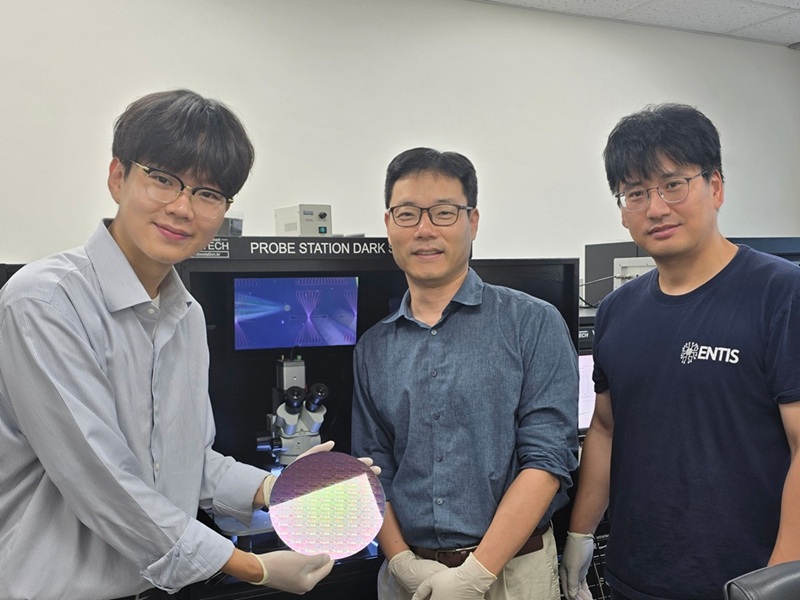
<(From left) Ph.D candidate See-On Park, Professor Jongwon Lee, and Professor Shinhyun Choi>
In the midst of the co-development of artificial intelligence and robotic advancements, developing technologies that enable robots to efficiently perceive and respond to their surroundings like humans has become a crucial task. In this context, Korean researchers are gaining attention for newly implementing an artificial sensory nervous system that mimics the sensory nervous system of living organisms without the need for separate complex software or circuitry. This breakthrough technology is expected to be applied in fields such as in ultra-small robots and robotic prosthetics, where intelligent and energy-efficient responses to external stimuli are essential.
KAIST (President Kwang Hyung Lee) announced on July15th that a joint research team led by Endowed Chair Professor Shinhyun Choi of the School of Electrical Engineering at KAIST and Professor Jongwon Lee of the Department of Semiconductor Convergence at Chungnam National University (President Jung Kyum Kim) developed a next-generation neuromorphic semiconductor-based artificial sensory nervous system. This system mimics the functions of a living organism's sensory nervous system, and enables a new type of robotic system that can efficiently responds to external stimuli.
In nature, animals — including humans — ignore safe or familiar stimuli and selectively react sensitively to important or dangerous ones. This selective response helps prevent unnecessary energy consumption while maintaining rapid awareness of critical signals. For instance, the sound of an air conditioner or the feel of clothing against the skin soon become familiar and are disregarded. However, if someone calls your name or a sharp object touches your skin, a rapid focus and response occur. These behaviors are regulated by the 'habituation' and 'sensitization' functions in the sensory nervous system. Attempts have been consistently made to apply these sensory nervous system functions of living organisms in order to create robots that efficiently respond to external environments like humans.
However, implementing complex neural characteristics such as habituation and sensitization in robots has faced difficulties in miniaturization and energy efficiency due to the need for separate software or complex circuitry. In particular, there have been attempts to utilize memristors, a neuromorphic semiconductor. A memristor is a next-generation electrical device, which has been widely utilized as an artificial synapse due to its ability to store analog value in the form of device resistance. However, existing memristors had limitations in mimicking the complex characteristics of the nervous system because they only allowed simple monotonic changes in conductivity.
To overcome these limitations, the research team developed a new memristor capable of reproducing complex neural response patterns such as habituation and sensitization within a single device. By introducing additional layer inside the memristor that alter conductivity in opposite directions, the device can more realistically emulate the dynamic synaptic behaviors of a real nervous system — for example, decreasing its response to repeated safe stimuli but quickly regaining sensitivity when a danger signal is detected.
<New memristor mimicking functions of sensory nervous system such as habituation/sensitization>
Using this new memristor, the research team built an artificial sensory nervous system capable of recognizing touch and pain, an applied it to a robotic hand to test its performance. When safe tactile stimuli were repeatedly applied, the robot hand, which initially reacted sensitively to unfamiliar tactile stimuli, gradually showed habituation characteristics by ignoring the stimuli. Later, when stimuli were applied along with an electric shock, it recognized this as a danger signal and showed sensitization characteristics by reacting sensitively again. Through this, it was experimentally proven that robots can efficiently respond to stimuli like humans without separate complex software or processors, verifying the possibility of developing energy-efficient neuro-inspired robots.
<Robot arm with memristor-based artificial sensory nervous system>
See-On Park, researcher at KAIST, stated, "By mimicking the human sensory nervous system with next-generation semiconductors, we have opened up the possibility of implementing a new concept of robots that are smarter and more energy-efficient in responding to external environments." He added, "This technology is expected to be utilized in various fusion fields of next-generation semiconductors and robotics, such as ultra-small robots, military robots, and medical robots like robotic prosthetics".
This research was published online on July 1st in the international journal 'Nature Communications,' with Ph.D candidate See-On Park as the first author.
Paper Title: Experimental demonstration of third-order memristor-based artificial sensory nervous system for neuro-inspired robotics
DOI: https://doi.org/10.1038/s41467-025-60818-x
This research was supported by the Korea National Research Foundation's Next-Generation Intelligent Semiconductor Technology Development Project, the Mid-Career Researcher Program, the PIM Artificial Intelligence Semiconductor Core Technology Development Project, the Excellent New Researcher Program, and the Nano Convergence Technology Division, National Nanofab Center's (NNFC) Nano-Medical Device Project.
2025.07.16 View 7668
-
 KAIST-UIUC researchers develop a treatment platform to disable the ‘biofilm’ shield of superbugs
< (From left) Ph.D. Candidate Joo Hun Lee (co-author), Professor Hyunjoon Kong (co-corresponding author) and Postdoctoral Researcher Yujin Ahn (co-first author) from the Department of Chemical and Biomolecular Engineering of the University of Illinois at Urbana-Champaign and Ju Yeon Chung (co-first author) from the Integrated Master's and Doctoral Program, and Professor Hyun Jung Chung (co-corresponding author) from the Department of Biological Sciences of KAIST >
A major cause of hospital-acquired infections, the super bacteria Methicillin-resistant Staphylococcus aureus (MRSA), not only exhibits strong resistance to existing antibiotics but also forms a dense biofilm that blocks the effects of external treatments. To meet this challenge, KAIST researchers, in collaboration with an international team, successfully developed a platform that utilizes microbubbles to deliver gene-targeted nanoparticles capable of break ing down the biofilms, offering an innovative solution for treating infections resistant to conventional antibiotics.
KAIST (represented by President Kwang Hyung Lee) announced on May 29 that a research team led by Professor Hyun Jung Chung from the Department of Biological Sciences, in collaboration with Professor Hyunjoon Kong's team at the University of Illinois, has developed a microbubble-based nano-gene delivery platform (BTN MB) that precisely delivers gene suppressors into bacteria to effectively remove biofilms formed by MRSA.
The research team first designed short DNA oligonucleotides that simultaneously suppress three major MRSA genes, related to—biofilm formation (icaA), cell division (ftsZ), and antibiotic resistance (mecA)—and engineered nanoparticles (BTN) to effectively deliver them into the bacteria.
< Figure 1. Effective biofilm treatment using biofilm-targeting nanoparticles controlled by microbubbler system. Schematic illustration of BTN delivery with microbubbles (MB), enabling effective permeation of ASOs targeting bacterial genes within biofilms infecting skin wounds. Gene silencing of targets involved in biofilm formation, bacterial proliferation, and antibiotic resistance leads to effective biofilm removal and antibacterial efficacy in vivo. >
In addition, microbubbles (MB) were used to increase the permeability of the microbial membrane, specifically the biofilm formed by MRSA. By combining these two technologies, the team implemented a dual-strike strategy that fundamentally blocks bacterial growth and prevents resistance acquisition.
This treatment system operates in two stages. First, the MBs induce pressure changes within the bacterial biofilm, allowing the BTNs to penetrate. Then, the BTNs slip through the gaps in the biofilm and enter the bacteria, delivering the gene suppressors precisely. This leads to gene regulation within MRSA, simultaneously blocking biofilm regeneration, cell proliferation, and antibiotic resistance expression.
In experiments conducted in a porcine skin model and a mouse wound model infected with MRSA biofilm, the BTN MB treatment group showed a significant reduction in biofilm thickness, as well as remarkable decreases in bacterial count and inflammatory responses.
< Figure 2. (a) Schematic illustration on the evaluation of treatment efficacy of BTN-MB gene therapy. (b) Reduction in MRSA biofilm mass via simultaneous inhibition of multiple genes. (c, d) Antibacterial efficacy of BTN-MB over time in a porcine skin infection biofilm model. (e) Schematic of the experimental setup to verify antibacterial efficacy in a mouse skin wound infection model. (f) Wound healing effects in mice. (g) Antibacterial effects at the wound site. (h) Histological analysis results. >
These results are difficult to achieve with conventional antibiotic monotherapy and demonstrate the potential for treating a wide range of resistant bacterial infections.
Professor Hyun Jung Chung of KAIST, who led the research, stated, “This study presents a new therapeutic solution that combines nanotechnology, gene suppression, and physical delivery strategies to address superbug infections that existing antibiotics cannot resolve. We will continue our research with the aim of expanding its application to systemic infections and various other infectious diseases.”
< (From left) Ju Yeon Chung from the Integrated Master's and Doctoral Program, and Professor Hyun Jung Chung from the Department of Biological Sciences >
The study was co-first authored by Ju Yeon Chung, a graduate student in the Department of Biological Sciences at KAIST, and Dr. Yujin Ahn from the University of Illinois. The study was published online on May 19 in the journal, Advanced Functional Materials.
※ Paper Title: Microbubble-Controlled Delivery of Biofilm-Targeting Nanoparticles to Treat MRSA Infection ※ DOI: https://doi.org/10.1002/adfm.202508291
This study was supported by the National Research Foundation and the Ministry of Health and Welfare, Republic of Korea; and the National Science Foundation and National Institutes of Health, USA.
2025.05.29 View 14520