%53%61%6e%67%20%57%61%6e%20%4c%65%65
-
 KAIST Develops AI That Can Sense “That’s Not What I Meant” Without Being Told
A future in which AI can recognize a person’s unspoken “that’s not what I meant” response from brain signals and adjust its behavior on its own is coming closer. KAIST researchers have developed a technology that detects cognitive mismatch between humans and AI through brainwaves, enabling AI systems to revise their actions in real time according to human goals. The achievement is expected to accelerate the shift from AI that follows explicit commands to AI that can infer human intent.
KAIST (President Choongsik Bae) announced on September 11 that a research team led by Endowed Chair Professor Sang Wan Lee of the Department of Brain and Cognitive Sciences (Director of the Center for Neuroscience-Inspired Artificial Intelligence), in collaboration with Microsoft Research Asia (MSRA), has developed Neural Value Alignment (NVA), a next-generation brain–computer interface (BCI) technology that uses human brainwaves to align AI behavior with human intentin real time.
For AI to collaborate naturally with people, it must accurately understand what a person actually wants. Until now, however, AI systems have largely inferred human intent from externally observable information such as speech, actions, or gestures.
The challenge is that the same action can reflect different goals, and the same goal can also be achieved through different actions. For example, when a person picks up a cup, it may be unclear whether they intend to drink from it or hand it to someone else. Conversely, if the person's goal is simply to quench their thirst, that same goal could be pursued through several different actions — reaching for the cup, picking up a water bottle, or asking someone else to bring a drink. Because of this two-sided “goal–action ambiguity,” when AI misunderstands human intent, users often have to correct it through additional commands or actions.
To address this problem, the research team focused on the “prediction error” signals that arise unconsciously in the brain when a person encounters an unexpected situation. In simple terms, the team used the brain’s instant “that’s not what I meant” response when AI performs the wrong action or pursues the wrong goal.
The researchers distinguished between two types of brain responses. The first is reward prediction error (RPE), which appears when AI misunderstands the person’s ultimate goal. The second is state prediction error (SPE), which appears when the goal is correct but the process or method of action differs from what the person expected.
The team measured real-time electroencephalography (EEG) signals from people as they observed AI performing tasks. They found that the brain produced different signals depending on whether the AI misunderstood the goal itself or chose the wrong method while pursuing the correct goal. The researchers also identified distinctive brainwave patterns that appeared when both types of errors occurred simultaneously.
By applying deep learning to these brain signals, the team developed a technology that can determine, from EEG alone, how a person is interpreting the AI’s behavior. In other words, even without a person saying “that’s wrong,” the AI can recognize whether the human brain is signaling that “the goal is wrong” or “the method is wrong.”
The team then proposed a Neural Value Alignment-based human–AI synergy algorithm, which feeds these decoded brain signals back to the AI in real time so that it can correct its own behavior.
When the AI detects an SPE signal, it interprets the situation as “the desired goal is correct, but the method is wrong” and adjusts its action strategy. When it detects an RPE signal, it understands that “the goal itself was misunderstood” and searches again for what the person truly intended.
Simulation results showed that the proposed method adapted more quickly than existing approaches even in uncertain situations, such as when a person’s goal suddenly changed or some human neural feedbacks were missing.
The key significance of this research is that it demonstrates the possibility of AI systems correcting themselves by reading a person’s unconscious “that’s not what I meant” brain response, without requiring the user to repeatedly say “do it this way” or “that’s not right.”
As the technology advances, it could be applied to physical AI robots in homes and industrial settings, allowing them to understand user intent more naturally and adjust their actions accordingly. It could also be extended to autonomous vehicles that quickly reflect driver judgment, medical and rehabilitation robots for patients who have difficulty speaking or moving, and educational AI systems that adapt to a student’s cognitive state.
Ultimately, the study presents a new model of human–AI collaboration, moving beyond AI that acts only when explicitly instructed toward AI that can sense human responses and adjust itself accordingly.
Professor Sang Wan Lee, who led the international collaboration, said, “This research is meaningful because it shows that AI can move beyond inferring human intent only from visible behavioral outcomes and instead directly use cognitive signals generated in the brain during collaboration with AI.” He added, “The technology can be expanded to a wide range of fields where human judgment and AI behavior must be closely connected, including physical AI, BCI, autonomous driving, precision personalized education, medical robotics, and human–computer interaction.”
Miran Lee, Director, Microsoft Research Accelerator at Microsoft Research, said, “This achievement is the result of the ongoing international collaboration between KAIST and Microsoft Research Asia. We look forward to continuing this partnership to develop world-class BCI technologies that enable humans and AI to communicate and collaborate more naturally.”
The study’s first author is Xin Xu, a Ph.D. student in KAIST’s Department of Brain and Cognitive Sciences. Researchers from Microsoft Research Asia, including Yansen Wang, Dongqi Han, and Dongsheng Li, also participated in the study. The research was published online in August 2026 in IEEE Transactions on Cybernetics, an international journal in the field of cybernetics.
Paper title: Neural Value Alignment: Human–AI Collaboration Under Goal–Action Ambiguity
DOI: 10.1109/TCYB.2026.3722605
Another KAIST–Microsoft Research Asia collaborative study on helping AI rapidly adapt to continuously changing environments was presented in June at ICML 2026, one of the leading international conferences in artificial intelligence. The study was led by Niklas Koeppe, a Ph.D. student in KAIST’s Program of Brain and Cognitive Engineering, as first author.
Paper title: Mitigating Plasticity Loss through Architectural Design in Continual Learning
Original paper: https://icml.cc/virtual/2026/poster/61534
This research was supported by the Institute of Information & Communications Technology Planning & Evaluation (IITP), funded by the Ministry of Science and ICT.
2026.09.10 View 3522
KAIST Develops AI That Can Sense “That’s Not What I Meant” Without Being Told
A future in which AI can recognize a person’s unspoken “that’s not what I meant” response from brain signals and adjust its behavior on its own is coming closer. KAIST researchers have developed a technology that detects cognitive mismatch between humans and AI through brainwaves, enabling AI systems to revise their actions in real time according to human goals. The achievement is expected to accelerate the shift from AI that follows explicit commands to AI that can infer human intent.
KAIST (President Choongsik Bae) announced on September 11 that a research team led by Endowed Chair Professor Sang Wan Lee of the Department of Brain and Cognitive Sciences (Director of the Center for Neuroscience-Inspired Artificial Intelligence), in collaboration with Microsoft Research Asia (MSRA), has developed Neural Value Alignment (NVA), a next-generation brain–computer interface (BCI) technology that uses human brainwaves to align AI behavior with human intentin real time.
For AI to collaborate naturally with people, it must accurately understand what a person actually wants. Until now, however, AI systems have largely inferred human intent from externally observable information such as speech, actions, or gestures.
The challenge is that the same action can reflect different goals, and the same goal can also be achieved through different actions. For example, when a person picks up a cup, it may be unclear whether they intend to drink from it or hand it to someone else. Conversely, if the person's goal is simply to quench their thirst, that same goal could be pursued through several different actions — reaching for the cup, picking up a water bottle, or asking someone else to bring a drink. Because of this two-sided “goal–action ambiguity,” when AI misunderstands human intent, users often have to correct it through additional commands or actions.
To address this problem, the research team focused on the “prediction error” signals that arise unconsciously in the brain when a person encounters an unexpected situation. In simple terms, the team used the brain’s instant “that’s not what I meant” response when AI performs the wrong action or pursues the wrong goal.
The researchers distinguished between two types of brain responses. The first is reward prediction error (RPE), which appears when AI misunderstands the person’s ultimate goal. The second is state prediction error (SPE), which appears when the goal is correct but the process or method of action differs from what the person expected.
The team measured real-time electroencephalography (EEG) signals from people as they observed AI performing tasks. They found that the brain produced different signals depending on whether the AI misunderstood the goal itself or chose the wrong method while pursuing the correct goal. The researchers also identified distinctive brainwave patterns that appeared when both types of errors occurred simultaneously.
By applying deep learning to these brain signals, the team developed a technology that can determine, from EEG alone, how a person is interpreting the AI’s behavior. In other words, even without a person saying “that’s wrong,” the AI can recognize whether the human brain is signaling that “the goal is wrong” or “the method is wrong.”
The team then proposed a Neural Value Alignment-based human–AI synergy algorithm, which feeds these decoded brain signals back to the AI in real time so that it can correct its own behavior.
When the AI detects an SPE signal, it interprets the situation as “the desired goal is correct, but the method is wrong” and adjusts its action strategy. When it detects an RPE signal, it understands that “the goal itself was misunderstood” and searches again for what the person truly intended.
Simulation results showed that the proposed method adapted more quickly than existing approaches even in uncertain situations, such as when a person’s goal suddenly changed or some human neural feedbacks were missing.
The key significance of this research is that it demonstrates the possibility of AI systems correcting themselves by reading a person’s unconscious “that’s not what I meant” brain response, without requiring the user to repeatedly say “do it this way” or “that’s not right.”
As the technology advances, it could be applied to physical AI robots in homes and industrial settings, allowing them to understand user intent more naturally and adjust their actions accordingly. It could also be extended to autonomous vehicles that quickly reflect driver judgment, medical and rehabilitation robots for patients who have difficulty speaking or moving, and educational AI systems that adapt to a student’s cognitive state.
Ultimately, the study presents a new model of human–AI collaboration, moving beyond AI that acts only when explicitly instructed toward AI that can sense human responses and adjust itself accordingly.
Professor Sang Wan Lee, who led the international collaboration, said, “This research is meaningful because it shows that AI can move beyond inferring human intent only from visible behavioral outcomes and instead directly use cognitive signals generated in the brain during collaboration with AI.” He added, “The technology can be expanded to a wide range of fields where human judgment and AI behavior must be closely connected, including physical AI, BCI, autonomous driving, precision personalized education, medical robotics, and human–computer interaction.”
Miran Lee, Director, Microsoft Research Accelerator at Microsoft Research, said, “This achievement is the result of the ongoing international collaboration between KAIST and Microsoft Research Asia. We look forward to continuing this partnership to develop world-class BCI technologies that enable humans and AI to communicate and collaborate more naturally.”
The study’s first author is Xin Xu, a Ph.D. student in KAIST’s Department of Brain and Cognitive Sciences. Researchers from Microsoft Research Asia, including Yansen Wang, Dongqi Han, and Dongsheng Li, also participated in the study. The research was published online in August 2026 in IEEE Transactions on Cybernetics, an international journal in the field of cybernetics.
Paper title: Neural Value Alignment: Human–AI Collaboration Under Goal–Action Ambiguity
DOI: 10.1109/TCYB.2026.3722605
Another KAIST–Microsoft Research Asia collaborative study on helping AI rapidly adapt to continuously changing environments was presented in June at ICML 2026, one of the leading international conferences in artificial intelligence. The study was led by Niklas Koeppe, a Ph.D. student in KAIST’s Program of Brain and Cognitive Engineering, as first author.
Paper title: Mitigating Plasticity Loss through Architectural Design in Continual Learning
Original paper: https://icml.cc/virtual/2026/poster/61534
This research was supported by the Institute of Information & Communications Technology Planning & Evaluation (IITP), funded by the Ministry of Science and ICT.
2026.09.10 View 3522 -
 KAIST Develops Brain-Like AI… Thinks One More Time Even When Predictions Are Wrong
<(From left) Professor Sang Wan Lee, Myoung Hoon Ha, and Dr. Yoondo Sung>
Artificial intelligence now plays Go, paints pictures, and even converses like a human. However, there remains a decisive difference: AI requires far more electricity than the human brain to operate. Scientists have long asked the question, “How can the brain learn so intelligently using so little energy?” KAIST researchers have moved one step closer to the answer.
KAIST (President Kwang Hyung Lee) announced on the 29th that a research team led by Distinguished Professor Sang Wan Lee of the Department of Brain and Cognitive Sciences has developed a new technology that applies the learning principles of the human brain to deep learning, enabling stable training even in deep artificial intelligence models.
Our brain does not passively receive the world. Instead of merely perceiving what is happening in the present, it first predicts what will happen next and, when reality differs from that prediction, adjusts itself to reduce the difference (i.e., prediction error). This is similar to anticipating an opponent’s next move in Go and changing strategy if the prediction turns out to be wrong. This mode of information processing is known as “Predictive Coding.”
< Predictive Coding (PC) Module >
Scientists have attempted to apply this principle to AI, but encountered difficulties. As neural networks become deeper, errors tend to concentrate in specific layers or vanish altogether, repeatedly leading to performance degradation.
The research team mathematically identified the cause of this problem and proposed a new solution. The key idea is simple: instead of predicting only the final outcome, the AI is designed to also predict how its prediction errors will change in the future. The team refers to this as “Meta Prediction.” In simple terms, it is an AI that “thinks once more about its mistakes.” When this method was applied, learning proceeded stably in deep neural networks without halting.
<Analysis of Instability in Predictive Coding Model Errors>
The experimental results were also impressive. In 29 out of 30 experiments, the proposed method achieved higher accuracy than the current standard AI training method, backpropagation. Backpropagation is the representative learning method in which AI “goes backward by the amount of error and corrects it.”
Conventional AI training methods (backpropagation) require tightly interconnected layers, meaning the entire network must be computed and updated simultaneously. In contrast, this new approach demonstrates that, like the brain, large AI models can be effectively trained even when learning occurs in a distributed and partially independent manner.
<Performance Comparison of Predictive Coding Models>
This technology is expected to expand into various fields where power efficiency is critical, including neuromorphic computing, robot AI that must adapt to changing environments, and edge AI operating within devices.
Distinguished Professor Sang Wan Lee stated, “The key to this research is not simply imitating the structure of the brain, but enabling AI to follow the brain’s learning principles themselves,” adding, “We have opened the possibility of artificial intelligence that learns efficiently like the brain.”
This study was conducted with Dr. Myoung Hoon Ha as the first author and Professor Sang Wan Lee as the corresponding author. The paper was accepted to the International Conference on Learning Representations (ICLR 2026) and was published online on January 26.
※ Paper title: “Stable and Scalable Deep Predictive Coding Networks with Meta Prediction Errors”Original paper: https://openreview.net/forum?id=kE5jJUHl9i¬eId=e6T5T9cYqO
This research was supported by the Ministry of Science and ICT and the Institute of Information & Communications Technology Planning & Evaluation (IITP) through the Digital Global Research Support Program (joint research with Microsoft Research), the Samsung Electronics SAIT NPRC Program, and the SW Star Lab Program.
2026.03.06 View 5710
KAIST Develops Brain-Like AI… Thinks One More Time Even When Predictions Are Wrong
<(From left) Professor Sang Wan Lee, Myoung Hoon Ha, and Dr. Yoondo Sung>
Artificial intelligence now plays Go, paints pictures, and even converses like a human. However, there remains a decisive difference: AI requires far more electricity than the human brain to operate. Scientists have long asked the question, “How can the brain learn so intelligently using so little energy?” KAIST researchers have moved one step closer to the answer.
KAIST (President Kwang Hyung Lee) announced on the 29th that a research team led by Distinguished Professor Sang Wan Lee of the Department of Brain and Cognitive Sciences has developed a new technology that applies the learning principles of the human brain to deep learning, enabling stable training even in deep artificial intelligence models.
Our brain does not passively receive the world. Instead of merely perceiving what is happening in the present, it first predicts what will happen next and, when reality differs from that prediction, adjusts itself to reduce the difference (i.e., prediction error). This is similar to anticipating an opponent’s next move in Go and changing strategy if the prediction turns out to be wrong. This mode of information processing is known as “Predictive Coding.”
< Predictive Coding (PC) Module >
Scientists have attempted to apply this principle to AI, but encountered difficulties. As neural networks become deeper, errors tend to concentrate in specific layers or vanish altogether, repeatedly leading to performance degradation.
The research team mathematically identified the cause of this problem and proposed a new solution. The key idea is simple: instead of predicting only the final outcome, the AI is designed to also predict how its prediction errors will change in the future. The team refers to this as “Meta Prediction.” In simple terms, it is an AI that “thinks once more about its mistakes.” When this method was applied, learning proceeded stably in deep neural networks without halting.
<Analysis of Instability in Predictive Coding Model Errors>
The experimental results were also impressive. In 29 out of 30 experiments, the proposed method achieved higher accuracy than the current standard AI training method, backpropagation. Backpropagation is the representative learning method in which AI “goes backward by the amount of error and corrects it.”
Conventional AI training methods (backpropagation) require tightly interconnected layers, meaning the entire network must be computed and updated simultaneously. In contrast, this new approach demonstrates that, like the brain, large AI models can be effectively trained even when learning occurs in a distributed and partially independent manner.
<Performance Comparison of Predictive Coding Models>
This technology is expected to expand into various fields where power efficiency is critical, including neuromorphic computing, robot AI that must adapt to changing environments, and edge AI operating within devices.
Distinguished Professor Sang Wan Lee stated, “The key to this research is not simply imitating the structure of the brain, but enabling AI to follow the brain’s learning principles themselves,” adding, “We have opened the possibility of artificial intelligence that learns efficiently like the brain.”
This study was conducted with Dr. Myoung Hoon Ha as the first author and Professor Sang Wan Lee as the corresponding author. The paper was accepted to the International Conference on Learning Representations (ICLR 2026) and was published online on January 26.
※ Paper title: “Stable and Scalable Deep Predictive Coding Networks with Meta Prediction Errors”Original paper: https://openreview.net/forum?id=kE5jJUHl9i¬eId=e6T5T9cYqO
This research was supported by the Ministry of Science and ICT and the Institute of Information & Communications Technology Planning & Evaluation (IITP) through the Digital Global Research Support Program (joint research with Microsoft Research), the Samsung Electronics SAIT NPRC Program, and the SW Star Lab Program.
2026.03.06 View 5710 -
 Uncovering brain’s secret to stable yet flexible learning – paving the way for human-like AI
<(From Left) Professor Sang Wan Lee, Ph.D candidate Yoondo Sung, (Upper Left) Dr. Mattia Rigotti>
Humans possess a remarkable balance between stability and flexibility, enabling them to quickly establish new plans and adjust goals even in the face of sudden changes. However, "Model-Free reinforcement learning," which is widely used in robotics and exemplified by AlphaGo’s famous match against Lee Sedol, struggle to achieve these two capabilities simultaneously. KAIST's research team has discovered that the secret lies in the unique information processing method within the prefrontal cortex, a principle that could serve as the foundation for developing "Brain-like AI” that is both flexible and stable.
KAIST announced on December 14th that a research team led by Professor Sang Wan Lee from the Department of Brain and Cognitive Sciences, in collaboration with IBM AI Research, has deciphered how the human brain manages goal changes in uncertain situations, suggesting a new direction for next-generation reinforcement learning.
The research team highlighted a critical limitation of current reinforcement learning models: they lose the balance between flexibility for goals pursuit and stability in uncertain environments. Humans, however, achieve both simultaneously. The team hypothesized that this difference arises from how the prefrontal cortex represents information.
Using functional MRI (fMRI) experiments, reinforcement learning models, and advanced AI analyses, the team revealed that the human prefrontal cortex has a unique embedding structure that represents "goal information" and "uncertainty information" separately to prevent interference. Individuals with more distinct separation between these channels were able to adapt strategies when goals shifted, while maintaining stable judgment despite environmental uncertainty. The team likened this mechanism to "multiplexing" in communication technology, where multiple signals are transmitted simultaneously without interference.
In this way, the human prefrontal cortex operates through two "channels": one that sensitively tracks goal changes to ensure flexibility in decision-making, and another that isolate environmental uncertainty to maintain stable judgment.
An interesting point is that the prefrontal cortex goes beyond simple executing control guided by the first channel; it uses the second channel to actually choose which learning strategy to use depending on the situation.
This demonstrates the brain’s "meta-learning capabilities," meaning it learns not only what to learn but also how to learn – by choosing which learning strategy to use. This is why humans remain resilient in constantly changing situations.
The implication of this research extend across various fields, including the analysis of individual reinforcement and meta-learning abilities, personalized education design, cognitive diagnosis, and human-computer interaction (HCI). Moreover, embedding brain-inspired representation structures into AI could lead to "brain-like thinking AI", allowing AI to better understand human intentions and values, reducing dangerous judgments, and enabling safer cooperation with humans.
<Figure 1. Balance between Flexibility and Stability in Humans and AI>
<Figure 2. Topological Structure of Goal Representation in the Prefrontal Cortex and Environmental Uncertainty Information>
Lead researcher Professor Sang Wan Lee emphasized the significance of the findings: "This study clarifies the brain's fundamental operating principles—from flexibly following changing goals to stably establishing plans—from an AI perspective. These principles will serve as a core foundation for next-generation AI, allowing it to adapt like a human and learn more safely and intelligently."
This study featured PhD candidate Yoondo Sung as the first author and Dr. Mattia Rigotti of IBM AI Research as the second author, with Professor Sang Wan Lee serving as the corresponding author. The research results were published on November 26 in the international academic journal Nature Communications.
(Paper Title: Factorized embedding of goal and uncertainty in the lateral prefrontal cortex guides stably flexible learning / DOI: 10.1038/s41467-025-66677-w)
Notably, this research was conducted with support from the "Frontier R&D Project" of the Ministry of Science and ICT.
2025.12.15 View 2152
Uncovering brain’s secret to stable yet flexible learning – paving the way for human-like AI
<(From Left) Professor Sang Wan Lee, Ph.D candidate Yoondo Sung, (Upper Left) Dr. Mattia Rigotti>
Humans possess a remarkable balance between stability and flexibility, enabling them to quickly establish new plans and adjust goals even in the face of sudden changes. However, "Model-Free reinforcement learning," which is widely used in robotics and exemplified by AlphaGo’s famous match against Lee Sedol, struggle to achieve these two capabilities simultaneously. KAIST's research team has discovered that the secret lies in the unique information processing method within the prefrontal cortex, a principle that could serve as the foundation for developing "Brain-like AI” that is both flexible and stable.
KAIST announced on December 14th that a research team led by Professor Sang Wan Lee from the Department of Brain and Cognitive Sciences, in collaboration with IBM AI Research, has deciphered how the human brain manages goal changes in uncertain situations, suggesting a new direction for next-generation reinforcement learning.
The research team highlighted a critical limitation of current reinforcement learning models: they lose the balance between flexibility for goals pursuit and stability in uncertain environments. Humans, however, achieve both simultaneously. The team hypothesized that this difference arises from how the prefrontal cortex represents information.
Using functional MRI (fMRI) experiments, reinforcement learning models, and advanced AI analyses, the team revealed that the human prefrontal cortex has a unique embedding structure that represents "goal information" and "uncertainty information" separately to prevent interference. Individuals with more distinct separation between these channels were able to adapt strategies when goals shifted, while maintaining stable judgment despite environmental uncertainty. The team likened this mechanism to "multiplexing" in communication technology, where multiple signals are transmitted simultaneously without interference.
In this way, the human prefrontal cortex operates through two "channels": one that sensitively tracks goal changes to ensure flexibility in decision-making, and another that isolate environmental uncertainty to maintain stable judgment.
An interesting point is that the prefrontal cortex goes beyond simple executing control guided by the first channel; it uses the second channel to actually choose which learning strategy to use depending on the situation.
This demonstrates the brain’s "meta-learning capabilities," meaning it learns not only what to learn but also how to learn – by choosing which learning strategy to use. This is why humans remain resilient in constantly changing situations.
The implication of this research extend across various fields, including the analysis of individual reinforcement and meta-learning abilities, personalized education design, cognitive diagnosis, and human-computer interaction (HCI). Moreover, embedding brain-inspired representation structures into AI could lead to "brain-like thinking AI", allowing AI to better understand human intentions and values, reducing dangerous judgments, and enabling safer cooperation with humans.
<Figure 1. Balance between Flexibility and Stability in Humans and AI>
<Figure 2. Topological Structure of Goal Representation in the Prefrontal Cortex and Environmental Uncertainty Information>
Lead researcher Professor Sang Wan Lee emphasized the significance of the findings: "This study clarifies the brain's fundamental operating principles—from flexibly following changing goals to stably establishing plans—from an AI perspective. These principles will serve as a core foundation for next-generation AI, allowing it to adapt like a human and learn more safely and intelligently."
This study featured PhD candidate Yoondo Sung as the first author and Dr. Mattia Rigotti of IBM AI Research as the second author, with Professor Sang Wan Lee serving as the corresponding author. The research results were published on November 26 in the international academic journal Nature Communications.
(Paper Title: Factorized embedding of goal and uncertainty in the lateral prefrontal cortex guides stably flexible learning / DOI: 10.1038/s41467-025-66677-w)
Notably, this research was conducted with support from the "Frontier R&D Project" of the Ministry of Science and ICT.
2025.12.15 View 2152 -
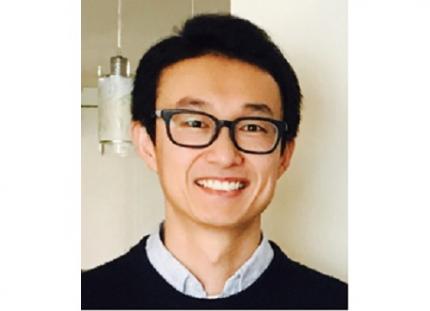 Prof. Sang Wan Lee Selected for 2021 IBM Academic Award
Professor Sang Wan Lee from the Department of Bio and Brain Engineering was selected as the recipient of the 2021 IBM Global University Program Academic Award. The award recognizes individual faculty members whose emerging science and technology contains significant interest for universities and IBM.
Professor Lee, whose research focuses on artificial intelligence and computational neuroscience, won the award for his research proposal titled A Neuroscience-Inspired Approach for Metacognitive Reinforcement Learning. IBM provides a gift of $40,000 to the recipient’s institution in recognition of the selection of the project but not as a contract for services.
Professor Lee’s project aims to exploit the unique characteristics of human reinforcement learning. Specifically, he plans to examines the hypothesis that metacognition, a human’s ability to estimate their uncertainty level, serves to guide sample-efficient and near-optimal exploration, making it possible to achieve an optimal balance between model-based and model-free reinforcement learning.
He was also selected as the winner of the Google Research Award in 2016 and has been working with DeepMind and University College London to conduct basic research on decision-making brain science to establish a theory on frontal lobe meta-enhance learning.
"We plan to conduct joint research for utilizing brain-based artificial intelligence technology and frontal lobe meta-enhanced learning technology modeling in collaboration with an international research team including IBM, DeepMind, MIT, and Oxford,” Professor Lee said.
2021.06.25 View 25309
Prof. Sang Wan Lee Selected for 2021 IBM Academic Award
Professor Sang Wan Lee from the Department of Bio and Brain Engineering was selected as the recipient of the 2021 IBM Global University Program Academic Award. The award recognizes individual faculty members whose emerging science and technology contains significant interest for universities and IBM.
Professor Lee, whose research focuses on artificial intelligence and computational neuroscience, won the award for his research proposal titled A Neuroscience-Inspired Approach for Metacognitive Reinforcement Learning. IBM provides a gift of $40,000 to the recipient’s institution in recognition of the selection of the project but not as a contract for services.
Professor Lee’s project aims to exploit the unique characteristics of human reinforcement learning. Specifically, he plans to examines the hypothesis that metacognition, a human’s ability to estimate their uncertainty level, serves to guide sample-efficient and near-optimal exploration, making it possible to achieve an optimal balance between model-based and model-free reinforcement learning.
He was also selected as the winner of the Google Research Award in 2016 and has been working with DeepMind and University College London to conduct basic research on decision-making brain science to establish a theory on frontal lobe meta-enhance learning.
"We plan to conduct joint research for utilizing brain-based artificial intelligence technology and frontal lobe meta-enhanced learning technology modeling in collaboration with an international research team including IBM, DeepMind, MIT, and Oxford,” Professor Lee said.
2021.06.25 View 25309 -
 Deep Learning Helps Explore the Structural and Strategic Bases of Autism
Psychiatrists typically diagnose autism spectrum disorders (ASD) by observing a person’s behavior and by leaning on the Diagnostic and Statistical Manual of Mental Disorders (DSM-5), widely considered the “bible” of mental health diagnosis.
However, there are substantial differences amongst individuals on the spectrum and a great deal remains unknown by science about the causes of autism, or even what autism is. As a result, an accurate diagnosis of ASD and a prognosis prediction for patients can be extremely difficult.
But what if artificial intelligence (AI) could help? Deep learning, a type of AI, deploys artificial neural networks based on the human brain to recognize patterns in a way that is akin to, and in some cases can surpass, human ability. The technique, or rather suite of techniques, has enjoyed remarkable success in recent years in fields as diverse as voice recognition, translation, autonomous vehicles, and drug discovery.
A group of researchers from KAIST in collaboration with the Yonsei University College of Medicine has applied these deep learning techniques to autism diagnosis. Their findings were published on August 14 in the journal IEEE Access.
Magnetic resonance imaging (MRI) scans of brains of people known to have autism have been used by researchers and clinicians to try to identify structures of the brain they believed were associated with ASD. These researchers have achieved considerable success in identifying abnormal grey and white matter volume and irregularities in cerebral cortex activation and connections as being associated with the condition.
These findings have subsequently been deployed in studies attempting more consistent diagnoses of patients than has been achieved via psychiatrist observations during counseling sessions. While such studies have reported high levels of diagnostic accuracy, the number of participants in these studies has been small, often under 50, and diagnostic performance drops markedly when applied to large sample sizes or on datasets that include people from a wide variety of populations and locations.
“There was something as to what defines autism that human researchers and clinicians must have been overlooking,” said Keun-Ah Cheon, one of the two corresponding authors and a professor in Department of Child and Adolescent Psychiatry at Severance Hospital of the Yonsei University College of Medicine.
“And humans poring over thousands of MRI scans won’t be able to pick up on what we’ve been missing,” she continued. “But we thought AI might be able to.”
So the team applied five different categories of deep learning models to an open-source dataset of more than 1,000 MRI scans from the Autism Brain Imaging Data Exchange (ABIDE) initiative, which has collected brain imaging data from laboratories around the world, and to a smaller, but higher-resolution MRI image dataset (84 images) taken from the Child Psychiatric Clinic at Severance Hospital, Yonsei University College of Medicine. In both cases, the researchers used both structural MRIs (examining the anatomy of the brain) and functional MRIs (examining brain activity in different regions).
The models allowed the team to explore the structural bases of ASD brain region by brain region, focusing in particular on many structures below the cerebral cortex, including the basal ganglia, which are involved in motor function (movement) as well as learning and memory.
Crucially, these specific types of deep learning models also offered up possible explanations of how the AI had come up with its rationale for these findings.
“Understanding the way that the AI has classified these brain structures and dynamics is extremely important,” said Sang Wan Lee, the other corresponding author and an associate professor at KAIST. “It’s no good if a doctor can tell a patient that the computer says they have autism, but not be able to say why the computer knows that.”
The deep learning models were also able to describe how much a particular aspect contributed to ASD, an analysis tool that can assist psychiatric physicians during the diagnosis process to identify the severity of the autism.
“Doctors should be able to use this to offer a personalized diagnosis for patients, including a prognosis of how the condition could develop,” Lee said.
“Artificial intelligence is not going to put psychiatrists out of a job,” he explained. “But using AI as a tool should enable doctors to better understand and diagnose complex disorders than they could do on their own.”
-ProfileProfessor Sang Wan LeeDepartment of Bio and Brain EngineeringLaboratory for Brain and Machine Intelligence https://aibrain.kaist.ac.kr/
KAIST
2020.09.23 View 19402
Deep Learning Helps Explore the Structural and Strategic Bases of Autism
Psychiatrists typically diagnose autism spectrum disorders (ASD) by observing a person’s behavior and by leaning on the Diagnostic and Statistical Manual of Mental Disorders (DSM-5), widely considered the “bible” of mental health diagnosis.
However, there are substantial differences amongst individuals on the spectrum and a great deal remains unknown by science about the causes of autism, or even what autism is. As a result, an accurate diagnosis of ASD and a prognosis prediction for patients can be extremely difficult.
But what if artificial intelligence (AI) could help? Deep learning, a type of AI, deploys artificial neural networks based on the human brain to recognize patterns in a way that is akin to, and in some cases can surpass, human ability. The technique, or rather suite of techniques, has enjoyed remarkable success in recent years in fields as diverse as voice recognition, translation, autonomous vehicles, and drug discovery.
A group of researchers from KAIST in collaboration with the Yonsei University College of Medicine has applied these deep learning techniques to autism diagnosis. Their findings were published on August 14 in the journal IEEE Access.
Magnetic resonance imaging (MRI) scans of brains of people known to have autism have been used by researchers and clinicians to try to identify structures of the brain they believed were associated with ASD. These researchers have achieved considerable success in identifying abnormal grey and white matter volume and irregularities in cerebral cortex activation and connections as being associated with the condition.
These findings have subsequently been deployed in studies attempting more consistent diagnoses of patients than has been achieved via psychiatrist observations during counseling sessions. While such studies have reported high levels of diagnostic accuracy, the number of participants in these studies has been small, often under 50, and diagnostic performance drops markedly when applied to large sample sizes or on datasets that include people from a wide variety of populations and locations.
“There was something as to what defines autism that human researchers and clinicians must have been overlooking,” said Keun-Ah Cheon, one of the two corresponding authors and a professor in Department of Child and Adolescent Psychiatry at Severance Hospital of the Yonsei University College of Medicine.
“And humans poring over thousands of MRI scans won’t be able to pick up on what we’ve been missing,” she continued. “But we thought AI might be able to.”
So the team applied five different categories of deep learning models to an open-source dataset of more than 1,000 MRI scans from the Autism Brain Imaging Data Exchange (ABIDE) initiative, which has collected brain imaging data from laboratories around the world, and to a smaller, but higher-resolution MRI image dataset (84 images) taken from the Child Psychiatric Clinic at Severance Hospital, Yonsei University College of Medicine. In both cases, the researchers used both structural MRIs (examining the anatomy of the brain) and functional MRIs (examining brain activity in different regions).
The models allowed the team to explore the structural bases of ASD brain region by brain region, focusing in particular on many structures below the cerebral cortex, including the basal ganglia, which are involved in motor function (movement) as well as learning and memory.
Crucially, these specific types of deep learning models also offered up possible explanations of how the AI had come up with its rationale for these findings.
“Understanding the way that the AI has classified these brain structures and dynamics is extremely important,” said Sang Wan Lee, the other corresponding author and an associate professor at KAIST. “It’s no good if a doctor can tell a patient that the computer says they have autism, but not be able to say why the computer knows that.”
The deep learning models were also able to describe how much a particular aspect contributed to ASD, an analysis tool that can assist psychiatric physicians during the diagnosis process to identify the severity of the autism.
“Doctors should be able to use this to offer a personalized diagnosis for patients, including a prognosis of how the condition could develop,” Lee said.
“Artificial intelligence is not going to put psychiatrists out of a job,” he explained. “But using AI as a tool should enable doctors to better understand and diagnose complex disorders than they could do on their own.”
-ProfileProfessor Sang Wan LeeDepartment of Bio and Brain EngineeringLaboratory for Brain and Machine Intelligence https://aibrain.kaist.ac.kr/
KAIST
2020.09.23 View 19402 -
 New Insights into How the Human Brain Solves Complex Decision-Making Problems
A new study on meta reinforcement learning algorithms helps us understand how the human brain learns to adapt to complexity and uncertainty when learning and making decisions. A research team, led by Professor Sang Wan Lee at KAIST jointly with John O’Doherty at Caltech, succeeded in discovering both a computational and neural mechanism for human meta reinforcement learning, opening up the possibility of porting key elements of human intelligence into artificial intelligence algorithms. This study provides a glimpse into how it might ultimately use computational models to reverse engineer human reinforcement learning.
This work was published on Dec 16, 2019 in the journal Nature Communications. The title of the paper is “Task complexity interacts with state-space uncertainty in the arbitration between model-based and model-free learning.”
Human reinforcement learning is an inherently complex and dynamic process, involving goal setting, strategy choice, action selection, strategy modification, cognitive resource allocation etc. This a very challenging problem for humans to solve owing to the rapidly changing and multifaced environment in which humans have to operate. To make matters worse, humans often need to often rapidly make important decisions even before getting the opportunity to collect a lot of information, unlike the case when using deep learning methods to model learning and decision-making in artificial intelligence applications.
In order to solve this problem, the research team used a technique called 'reinforcement learning theory-based experiment design' to optimize the three variables of the two-stage Markov decision task - goal, task complexity, and task uncertainty. This experimental design technique allowed the team not only to control confounding factors, but also to create a situation similar to that which occurs in actual human problem solving.
Secondly, the team used a technique called ‘model-based neuroimaging analysis.’ Based on the acquired behavior and fMRI data, more than 100 different types of meta reinforcement learning algorithms were pitted against each other to find a computational model that can explain both behavioral and neural data. Thirdly, for the sake of a more rigorous verification, the team applied an analytical method called ‘parameter recovery analysis,’ which involves high-precision behavioral profiling of both human subjects and computational models.
In this way, the team was able to accurately identify a computational model of meta reinforcement learning, ensuring not only that the model’s apparent behavior is similar to that of humans, but also that the model solves the problem in the same way as humans do.
The team found that people tended to increase planning-based reinforcement learning (called model-based control), in response to increasing task complexity. However, they resorted to a simpler, more resource efficient strategy called model-free control, when both uncertainty and task complexity were high. This suggests that both the task uncertainty and the task complexity interact during the meta control of reinforcement learning. Computational fMRI analyses revealed that task complexity interacts with neural representations of the reliability of the learning strategies in the inferior prefrontal cortex.
These findings significantly advance understanding of the nature of the computations being implemented in the inferior prefrontal cortex during meta reinforcement learning as well as providing insight into the more general question of how the brain resolves uncertainty and complexity in a dynamically changing environment. Identifying the key computational variables that drive prefrontal meta reinforcement learning, can also inform understanding of how this process might be vulnerable to break down in certain psychiatric disorders such as depression and OCD. Furthermore, gaining a computational understanding of how this process can sometimes lead to increased model-free control, can provide insights into how under some situations task performance might break down under conditions of high cognitive load.
Professor Lee said, “This study will be of enormous interest to researchers in both the artificial intelligence and human/computer interaction fields since this holds significant potential for applying core insights gleaned into how human intelligence works with AI algorithms.”
This work was funded by the National Institute on Drug Abuse, the National Research Foundation of Korea, the Ministry of Science and ICT, Samsung Research Funding Center of Samsung Electronics.
Figure 1 (modified from the figures of the original paper doi:10.1038/s41467-019-13632-1). Computations implemented in the inferior prefrontal cortex during meta reinforcement learning. (A) Computational model of human prefrontal meta reinforcement learning (left) and the brain areas whose neural activity patterns are explained by the latent variables of the model. (B) Examples of behavioral profiles. Shown on the left is choice bias for different goal types and on the right is choice optimality for task complexity and uncertainty. (C) Parameter recoverability analysis. Compared are the effect of task uncertainty (left) and task complexity (right) on choice optimality.
-Profile
Professor Sang Wan Lee
sangwan@kaist.ac.kr
Department of Bio and Brain Engineering
Director, KAIST Center for Neuroscience-inspired AI
KAIST Institute for Artificial Intelligence (http://aibrain.kaist.ac.kr)
KAIST Institute for Health, Science, and Technology
KAIST (https://www.kaist.ac.kr)
2020.01.31 View 11657
New Insights into How the Human Brain Solves Complex Decision-Making Problems
A new study on meta reinforcement learning algorithms helps us understand how the human brain learns to adapt to complexity and uncertainty when learning and making decisions. A research team, led by Professor Sang Wan Lee at KAIST jointly with John O’Doherty at Caltech, succeeded in discovering both a computational and neural mechanism for human meta reinforcement learning, opening up the possibility of porting key elements of human intelligence into artificial intelligence algorithms. This study provides a glimpse into how it might ultimately use computational models to reverse engineer human reinforcement learning.
This work was published on Dec 16, 2019 in the journal Nature Communications. The title of the paper is “Task complexity interacts with state-space uncertainty in the arbitration between model-based and model-free learning.”
Human reinforcement learning is an inherently complex and dynamic process, involving goal setting, strategy choice, action selection, strategy modification, cognitive resource allocation etc. This a very challenging problem for humans to solve owing to the rapidly changing and multifaced environment in which humans have to operate. To make matters worse, humans often need to often rapidly make important decisions even before getting the opportunity to collect a lot of information, unlike the case when using deep learning methods to model learning and decision-making in artificial intelligence applications.
In order to solve this problem, the research team used a technique called 'reinforcement learning theory-based experiment design' to optimize the three variables of the two-stage Markov decision task - goal, task complexity, and task uncertainty. This experimental design technique allowed the team not only to control confounding factors, but also to create a situation similar to that which occurs in actual human problem solving.
Secondly, the team used a technique called ‘model-based neuroimaging analysis.’ Based on the acquired behavior and fMRI data, more than 100 different types of meta reinforcement learning algorithms were pitted against each other to find a computational model that can explain both behavioral and neural data. Thirdly, for the sake of a more rigorous verification, the team applied an analytical method called ‘parameter recovery analysis,’ which involves high-precision behavioral profiling of both human subjects and computational models.
In this way, the team was able to accurately identify a computational model of meta reinforcement learning, ensuring not only that the model’s apparent behavior is similar to that of humans, but also that the model solves the problem in the same way as humans do.
The team found that people tended to increase planning-based reinforcement learning (called model-based control), in response to increasing task complexity. However, they resorted to a simpler, more resource efficient strategy called model-free control, when both uncertainty and task complexity were high. This suggests that both the task uncertainty and the task complexity interact during the meta control of reinforcement learning. Computational fMRI analyses revealed that task complexity interacts with neural representations of the reliability of the learning strategies in the inferior prefrontal cortex.
These findings significantly advance understanding of the nature of the computations being implemented in the inferior prefrontal cortex during meta reinforcement learning as well as providing insight into the more general question of how the brain resolves uncertainty and complexity in a dynamically changing environment. Identifying the key computational variables that drive prefrontal meta reinforcement learning, can also inform understanding of how this process might be vulnerable to break down in certain psychiatric disorders such as depression and OCD. Furthermore, gaining a computational understanding of how this process can sometimes lead to increased model-free control, can provide insights into how under some situations task performance might break down under conditions of high cognitive load.
Professor Lee said, “This study will be of enormous interest to researchers in both the artificial intelligence and human/computer interaction fields since this holds significant potential for applying core insights gleaned into how human intelligence works with AI algorithms.”
This work was funded by the National Institute on Drug Abuse, the National Research Foundation of Korea, the Ministry of Science and ICT, Samsung Research Funding Center of Samsung Electronics.
Figure 1 (modified from the figures of the original paper doi:10.1038/s41467-019-13632-1). Computations implemented in the inferior prefrontal cortex during meta reinforcement learning. (A) Computational model of human prefrontal meta reinforcement learning (left) and the brain areas whose neural activity patterns are explained by the latent variables of the model. (B) Examples of behavioral profiles. Shown on the left is choice bias for different goal types and on the right is choice optimality for task complexity and uncertainty. (C) Parameter recoverability analysis. Compared are the effect of task uncertainty (left) and task complexity (right) on choice optimality.
-Profile
Professor Sang Wan Lee
sangwan@kaist.ac.kr
Department of Bio and Brain Engineering
Director, KAIST Center for Neuroscience-inspired AI
KAIST Institute for Artificial Intelligence (http://aibrain.kaist.ac.kr)
KAIST Institute for Health, Science, and Technology
KAIST (https://www.kaist.ac.kr)
2020.01.31 View 11657