Reading the Optical Fingerprint of Materials in Real-Time with AI
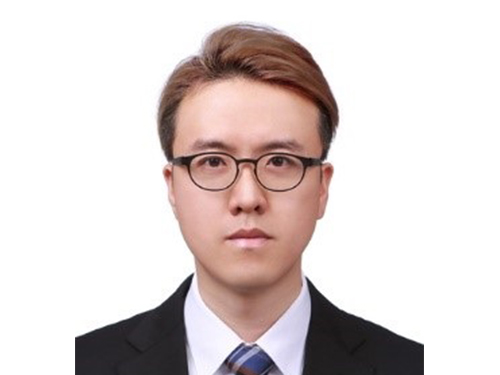
< (From Left) KAIST Dr. Jongchan Kim, Professor Sanghoo Park >
Just as every person has a unique fingerprint, every material has its own unique ‘optical fingerprint.’ Spectroscopy, which has identified materials without contact in fields ranging from semiconductor processes to environmental monitoring, disease diagnosis, and space research, has been called the ‘eyes of science.’ A KAIST research team has implemented spectroscopic analysis, which previously relied on the experience of experts, into AI-based automatic and real-time interpretation technology, greatly expanding its applicability in various industrial fields such as semiconductors, environment, and medicine.
The research team led by Professor Sanghoo Park of our university's Department of Nuclear and Quantum Engineering announced on the 3rd that they have developed ‘AI-based deep spectral interpretation technology’ that allows artificial intelligence to automatically interpret various spectral data in real-time, overcoming limitations such as noise, contamination, defects, and complex overlapping signals.
A spectrum is a graph that spreads out light emitted or absorbed by a material like a rainbow. Existing spectroscopic analysis had to manually analyze signals appearing as numbers in this spectrum by comparing them one by one with well-known reference data. Instead of this method, the research team enabled the artificial intelligence to recognize the entire spectrum as a single ‘image’ and learn its patterns.
< Deep learning-based spectrum technology >
As a result, even in situations where noise was mixed in the data or some parts were lost, the AI accurately identified material information as if it were recognizing an object in a photo. Furthermore, it equipped a function to self-check whether the prediction results are scientifically valid, significantly increasing the reliability of the analysis.
The research team verified this technology by applying it to absorption spectroscopy data widely used in atmospheric and plasma chemistry. As a result, they succeeded in predicting the concentrations of eight chemical substances, including ozone and nitrogen oxides, with very high accuracy even among complexly mixed signals. It was not only more accurate than existing manual analysis but also showed stable performance even in environments with poor data quality.
This research is expected to be a turning point in converting vast amounts of spectroscopic data, which were previously discarded due to the difficulty of analysis, into ‘immediately usable information.’ In particular, it has high potential for use in various high-tech industrial fields, such as improving yield in semiconductor plasma processes, stable control of nuclear fusion plasma, environmental monitoring in smart cities, and non-contact disease diagnosis.
< Research Image >
Professor Sanghoo Park said, “This technology is an achievement that significantly lowers the entry barrier for spectroscopic data analysis, which used to rely on the experience of experts,” and added, “It can be immediately applied to overall industries requiring spectral analysis, such as environmental monitoring, healthcare, and plasma diagnosis.”
In this study, doctoral students Jongchan Kim and Seong-Cheol Huh participated as co-first authors, and Jin Hee Bae and Su-Jin Shin also contributed to the research. The results were published online on January 12th in the prestigious international academic journal in the field of measurement and analytical chemistry, ‘Sensors and Actuators B: Chemical.’
※ Paper title: Deep spectral deconvolution for image-based broadband spectral data analysis DOI: https://doi.org/10.1016/j.snb.2025.139369
Meanwhile, this research was conducted with support from the Ministry of Science and ICT’s Global TOP Strategic Research Group Support Program, the KAIST Leap Research Project, and the Korea Institute of Materials Science (KIMS).
KAIST Takes the Lead in Developing Core Technologies for Generative AI National R&D Project
KAIST announced on the 15th of August that Professor Sanghoo Park of the Department of Nuclear and Quantum Engineering has won two consecutive awards for early-career researchers at two of the world's most prestigious plasma academic conferences.
Professor Park was selected as a recipient of the Early Career Award (ECA) at the Gaseous Electronics Conference (GEC), hosted by the American Physical Society, on August 4. He was also honored with the Young Investigator Award, presented by the International Plasma Chemistry Society (IPCS), on June 19.
The American Physical Society's GEC Early Career Award is given to only one person worldwide every two years, based on a comprehensive evaluation of research excellence, academic influence, and contributions to the field of plasma. The award will be presented at GEC 2025, which will be held at COEX in Seoul from October 13 to 17.
Established in 1948, the GEC is a leading academic conference in the plasma field with a 77-year history of showcasing key research achievements in all areas of plasma, including physics, chemistry, diagnostics, and application technologies. Recently, advanced application research such as eco-friendly chemical processes, next-generation semiconductors, and atomic layer and ultra-low-temperature etching technology for HBM processes have been gaining attention.
To commemorate the award, Professor Park will give an invited lecture at GEC 2025 on the topic of "Deep-Learning-Based Spectroscopic Data Analysis for Advancing Plasma Spectroscopy." In his lecture, he will use case studies to demonstrate a method that allows even non-specialists to easily and quickly perform spectroscopic data analysis—which is essential for spectroscopy, a key analytical method in modern science including plasma diagnostics—by using deep learning technology.
Professor Park also won the Young Investigator Award from the IPCS at the 26th International Symposium on Plasma Chemistry (ISPC 26), which was held in Minneapolis, USA, from June 15 to 20.
First held in 1973, the ISPC (International Symposium on Plasma Chemistry) is a representative international conference in the field of plasma chemistry, held biennially. It covers a wide range of topics, from basic plasma chemical reaction principles to applications in semiconductor processes, green energy, environmental science, and biotechnology. Researchers from industry, academia, and research institutions worldwide share their latest findings at each event. The Young Investigator Award is given to a scientist who has obtained their doctorate within the last 10 years and has demonstrated outstanding achievements in the field.
Professor Park was recognized for his leading research achievements in using plasma-liquid interactions and real-time optical diagnostic technology to environmentally fix nitrogen from the air and precisely control the quantity and types of reactive chemical species that are beneficial to the human body and the environment.
Professor Sanghoo Park stated, "It is very meaningful to receive the Young Investigator Award representing Korea at the GEC event, which is being held in Korea for the first time in its history." He added, "I am happy that my consistent interest in and achievements in fundamental plasma science have been recognized, and it is even more significant that the efforts of the KAIST research team have been acknowledged by the world's top conferences."
The First Recipient of the KPS Award in Plasma Physics
( Research Professor Sanghoo Park)
Research Professor Sanghoo Park received the Young Researcher Award in Plasma Physics during the Korean Physical Society (KPS)’s Spring Meeting from April 25 to 27.
He is a KAIST graduate with a PhD in Physics and currently holds the position of research professor in the Department of Nuclear and Quantum Engineering.
The Young Researcher Award in Plasma Physics is given to a specialist in plasma who has the potential to make a contribution to plasma and accelerator physics in Korea.
Professor Park has gained recognition for his work, including awards, publications in 24 journals, and 12 technical patent registrations of plasma, which led to his selection as the recipient of this award.
He is now conducting a leading role in this field nationally and internationally by delving into the study of partially-ionized plasma.
Professor Park said, “It is my great honor to become the first recipient of the Young Researcher Award in Plasma Physics. I will continue to engage in research to develop the field of plasma in Korea.”