%72%65%63%69%70%69%65%6e%74
-
 2026 Education Innovation Day’ Held… Professor Jemin Hwangbo Receives the Grand Prize
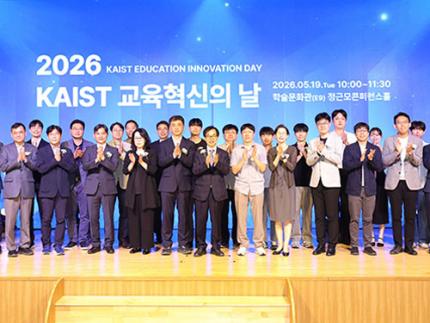
<Photo from the Education Innovation Day event>
KAIST held the “2026 KAIST Education Innovation Day” on May 19 at the Chung Kun Mo Conference Hall in the Academic Culture Complex (E9) on the Daejeon main campus.
Now in its eighth year, the event was organized to recognize faculty members who have contributed to educational innovation and to share outstanding cases within and beyond the university, thereby spreading the value of innovation. The event is supported through a development fund donated by Hyung Gyu Lim, former president of the KAIST Alumni Association.
At this year’s ceremony, Professor Jemin Hwangbo of the Department of Mechanical Engineering received the grand prize of the “Hyung Gyu Lim LINKGENESIS-BEST Teacher Award,” which honors faculty members who have contributed to interdisciplinary education based on KAIST’s core values of creativity, challenge, and consideration. Excellence Awards were presented to Professor Sung Min Kim of the School of Electrical Engineering, Professor Hyun Uk Kim of the Department of Chemical and Biomolecular Engineering, and Professor Yunjae Choi of the Kim Jaechul Graduate School of AI.
Professor Jemin Hwangbo has contributed to advances in robotics by pushing the limits of robot technology through the successful marathon completion of a quadruped robot and by developing reinforcement learning–based control algorithms capable of enabling high-speed locomotion over deformable terrain. He has also devoted himself to cultivating future talent through visualization- and practice-oriented education in dynamics. In recognition of his contributions to creating a virtuous cycle between research and education, he was selected as the recipient of the competition’s highest honor, the grand prize of the “Hyung Gyu Lim LINKGENESIS-BEST Teacher Award.”
<Photo from the Education Innovation Day event>
The grand prize of the “Teaching and Learning Innovation Award,” which recognizes faculty members who have developed learner-centered creative teaching methods and effective pedagogical approaches, was awarded to Professor Donghyuk Shin of the Department of Aerospace Engineering. Excellence Awards in the same category were presented to Professor Sangho Lee of the School of Digital Humanities and Computational Social Sciences, while the team award went to Professors Byungha Shin, Jihun Oh, Seungbeom Hong, and Sung Hoon Kang of the Department of Materials Science and Engineering.
In addition, the “KAIST Educator Award,” which honors faculty members who have fostered students’ autonomous growth, was presented to Professor Jae Hoon Kim of the Department of Biological Sciences and Professor Pil Seung Lee of the Department of Mechanical Engineering. Educational achievements by Professor Hyungsoo Kim, recipient of the Creative Lecture Award, and Professor Beomsoon Park, recipient of the Distinguished Lecture Award, both of whom were honored at the university’s anniversary ceremony in February, were also introduced during the event.
For contributions to strengthening educational competitiveness and internationalization, Professor Soon Sik Kwon of the Department of Mathematical Sciences and 11 other faculty members received the “KAIST Education Innovation Award,” while Professors Miseon Kim and Holly Wang of the School of Digital Humanities and Computational Social Sciences received the “KAIST Education Innovation Contribution Award.”
During the event, Professors Jemin Hwangbo, Pil Seung Lee, Hyungsoo Kim, and Beomsoon Park delivered special lectures sharing innovative educational practices and know-how applied in actual classroom settings. In addition, awards were presented to students who achieved outstanding results in the “2026 KAIST AI Future Challenge,” followed by idea presentation sessions that created opportunities for communication and exchange between students and faculty members.
<Photo from the Education Innovation Day event>
KAIST President Kwang-Hyung Lee stated, “In the era of AI transformation (AX), in which industrial and social structures are being reshaped, cultivating talent capable of leading this transition has become a core mission of universities.” He added, “KAIST will continue to pursue an educational approach centered on encouraging students to ask questions and take on challenges so that they can develop the ability to define and solve problems independently.” He further expressed hope that the event would serve as an opportunity for educational innovation culture to spread throughout the university through the sharing of outstanding field cases and to lead to meaningful industry collaboration.
<Poster for KAIST Education Innovation Day>
2026.05.19 View 112
2026 Education Innovation Day’ Held… Professor Jemin Hwangbo Receives the Grand Prize
<Photo from the Education Innovation Day event>
KAIST held the “2026 KAIST Education Innovation Day” on May 19 at the Chung Kun Mo Conference Hall in the Academic Culture Complex (E9) on the Daejeon main campus.
Now in its eighth year, the event was organized to recognize faculty members who have contributed to educational innovation and to share outstanding cases within and beyond the university, thereby spreading the value of innovation. The event is supported through a development fund donated by Hyung Gyu Lim, former president of the KAIST Alumni Association.
At this year’s ceremony, Professor Jemin Hwangbo of the Department of Mechanical Engineering received the grand prize of the “Hyung Gyu Lim LINKGENESIS-BEST Teacher Award,” which honors faculty members who have contributed to interdisciplinary education based on KAIST’s core values of creativity, challenge, and consideration. Excellence Awards were presented to Professor Sung Min Kim of the School of Electrical Engineering, Professor Hyun Uk Kim of the Department of Chemical and Biomolecular Engineering, and Professor Yunjae Choi of the Kim Jaechul Graduate School of AI.
Professor Jemin Hwangbo has contributed to advances in robotics by pushing the limits of robot technology through the successful marathon completion of a quadruped robot and by developing reinforcement learning–based control algorithms capable of enabling high-speed locomotion over deformable terrain. He has also devoted himself to cultivating future talent through visualization- and practice-oriented education in dynamics. In recognition of his contributions to creating a virtuous cycle between research and education, he was selected as the recipient of the competition’s highest honor, the grand prize of the “Hyung Gyu Lim LINKGENESIS-BEST Teacher Award.”
<Photo from the Education Innovation Day event>
The grand prize of the “Teaching and Learning Innovation Award,” which recognizes faculty members who have developed learner-centered creative teaching methods and effective pedagogical approaches, was awarded to Professor Donghyuk Shin of the Department of Aerospace Engineering. Excellence Awards in the same category were presented to Professor Sangho Lee of the School of Digital Humanities and Computational Social Sciences, while the team award went to Professors Byungha Shin, Jihun Oh, Seungbeom Hong, and Sung Hoon Kang of the Department of Materials Science and Engineering.
In addition, the “KAIST Educator Award,” which honors faculty members who have fostered students’ autonomous growth, was presented to Professor Jae Hoon Kim of the Department of Biological Sciences and Professor Pil Seung Lee of the Department of Mechanical Engineering. Educational achievements by Professor Hyungsoo Kim, recipient of the Creative Lecture Award, and Professor Beomsoon Park, recipient of the Distinguished Lecture Award, both of whom were honored at the university’s anniversary ceremony in February, were also introduced during the event.
For contributions to strengthening educational competitiveness and internationalization, Professor Soon Sik Kwon of the Department of Mathematical Sciences and 11 other faculty members received the “KAIST Education Innovation Award,” while Professors Miseon Kim and Holly Wang of the School of Digital Humanities and Computational Social Sciences received the “KAIST Education Innovation Contribution Award.”
During the event, Professors Jemin Hwangbo, Pil Seung Lee, Hyungsoo Kim, and Beomsoon Park delivered special lectures sharing innovative educational practices and know-how applied in actual classroom settings. In addition, awards were presented to students who achieved outstanding results in the “2026 KAIST AI Future Challenge,” followed by idea presentation sessions that created opportunities for communication and exchange between students and faculty members.
<Photo from the Education Innovation Day event>
KAIST President Kwang-Hyung Lee stated, “In the era of AI transformation (AX), in which industrial and social structures are being reshaped, cultivating talent capable of leading this transition has become a core mission of universities.” He added, “KAIST will continue to pursue an educational approach centered on encouraging students to ask questions and take on challenges so that they can develop the ability to define and solve problems independently.” He further expressed hope that the event would serve as an opportunity for educational innovation culture to spread throughout the university through the sharing of outstanding field cases and to lead to meaningful industry collaboration.
<Poster for KAIST Education Innovation Day>
2026.05.19 View 112 -
 Professor Hyun Myung Selected for Research Grand Prize at ‘2026 Research Day’
< KAIST Research Day Group Photo >
KAIST held the ‘2026 KAIST Research Day’ at the Chung Kunmo Conference Hall in the Academic Cultural Complex at the main Daejeon campus on the morning of the 28th starting at 10:00 AM.
‘Research Day’ is an annual festival for campus researchers that has been held since 2016. It serves as a platform to reward and encourage excellent researchers for their hard work and to exchange R&D information by introducing selected outstanding research achievements.
Notably, this year’s award scale was expanded to further encourage researchers and foster an environment conducive to research immersion. The number of Research Award recipients increased from two to four, and Special Research Award recipients from one to two.
During the event, Professor Hyun Myung (School of Electrical Engineering), who was selected as the recipient of the Research Grand Prize—the highest research honor—delivered a commemorative lecture titled “Spatial AI-based Autonomous Robot Navigation.”
< Professor Hyun Myung Delivering His Lecture >
Professor Hyun Myung developed proprietary autonomous robot navigation technology based on spatial AI and applied it to various robot platforms. Recently, he has also been pursuing commercialization through a startup venture. Since joining KAIST in 2008, he has been dedicated to researching autonomous mobile robot technology, applying it to various platforms such as wheeled robots, walking robots, and drones. Furthermore, he has proven his technical prowess by winning numerous international competitions.
“By focusing on spatial AI and autonomous navigation technology—the core fields of robotics—for the past 17 years, I have been able to contribute to the localization and independence of mobile robot technology in Korea through industry-academic cooperation and startups,” Professor Myung stated in his acceptance speech. “I am grateful and pleased to have had the opportunity to nurture such excellent research talent.”
< Professor Hyun Myung Receiving His Award >
In addition, Professor Jae-Hung Han (Department of Aerospace Engineering), Professor Byung-Kwan Cho (Graduate School of Engineering Biology), Professor Joseph Searing (School of Computing), and Professor Hyun-Joo Lee (Department of Chemical and Biomolecular Engineering) were selected as recipients of the Research Award.
The Special Research Award was presented to Professor Sun-Chang Kim (Graduate School of Engineering Biology) and Professor Woo-Young Cho (School of Electrical Engineering), while Professor Jae Kyoung Kim (Department of Mathematical Sciences) was selected as the recipient of the Innovation Award.
Furthermore, Professor Himchan Cho (Department of Materials Science and Engineering) and Professor Jung-Yong Lee (School of Electrical Engineering) received the Convergence Research Award as a team. Professor Ji-Joon Song (Department of Biological Sciences) was selected for the International Collaborative Research Award, and Professor Bongjin Kim (School of Electrical Engineering) for the QAIST Creative Challenge Research Award.
The ceremony also included awards for the ‘2025 Top 10 KAIST Research Achievements’ and the ‘KAIST 14 Future Leading Technologies,’ recognizing outstanding accomplishments in national strategic technology sectors with significant academic, social, and economic impact.
President Kwong Hyoung Lee remarked, “Today’s Research Day is a meaningful occasion to share challenging and innovative ideas and to celebrate the achievements of our outstanding researchers. KAIST, which aims for the world’s first and best research, will continue to contribute to the development of the nation and human society through research and leap forward as a leading global institution in science and technology.”
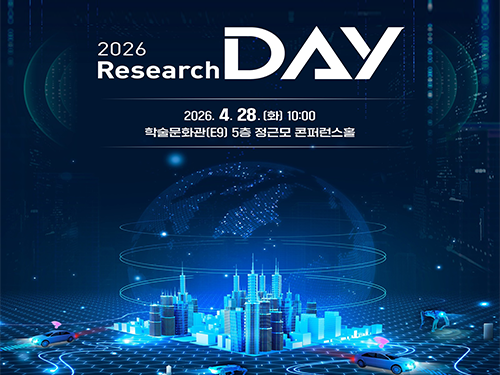
< 2026 Research Day Poster >
2026.04.30 View 672
Professor Hyun Myung Selected for Research Grand Prize at ‘2026 Research Day’
< KAIST Research Day Group Photo >
KAIST held the ‘2026 KAIST Research Day’ at the Chung Kunmo Conference Hall in the Academic Cultural Complex at the main Daejeon campus on the morning of the 28th starting at 10:00 AM.
‘Research Day’ is an annual festival for campus researchers that has been held since 2016. It serves as a platform to reward and encourage excellent researchers for their hard work and to exchange R&D information by introducing selected outstanding research achievements.
Notably, this year’s award scale was expanded to further encourage researchers and foster an environment conducive to research immersion. The number of Research Award recipients increased from two to four, and Special Research Award recipients from one to two.
During the event, Professor Hyun Myung (School of Electrical Engineering), who was selected as the recipient of the Research Grand Prize—the highest research honor—delivered a commemorative lecture titled “Spatial AI-based Autonomous Robot Navigation.”
< Professor Hyun Myung Delivering His Lecture >
Professor Hyun Myung developed proprietary autonomous robot navigation technology based on spatial AI and applied it to various robot platforms. Recently, he has also been pursuing commercialization through a startup venture. Since joining KAIST in 2008, he has been dedicated to researching autonomous mobile robot technology, applying it to various platforms such as wheeled robots, walking robots, and drones. Furthermore, he has proven his technical prowess by winning numerous international competitions.
“By focusing on spatial AI and autonomous navigation technology—the core fields of robotics—for the past 17 years, I have been able to contribute to the localization and independence of mobile robot technology in Korea through industry-academic cooperation and startups,” Professor Myung stated in his acceptance speech. “I am grateful and pleased to have had the opportunity to nurture such excellent research talent.”
< Professor Hyun Myung Receiving His Award >
In addition, Professor Jae-Hung Han (Department of Aerospace Engineering), Professor Byung-Kwan Cho (Graduate School of Engineering Biology), Professor Joseph Searing (School of Computing), and Professor Hyun-Joo Lee (Department of Chemical and Biomolecular Engineering) were selected as recipients of the Research Award.
The Special Research Award was presented to Professor Sun-Chang Kim (Graduate School of Engineering Biology) and Professor Woo-Young Cho (School of Electrical Engineering), while Professor Jae Kyoung Kim (Department of Mathematical Sciences) was selected as the recipient of the Innovation Award.
Furthermore, Professor Himchan Cho (Department of Materials Science and Engineering) and Professor Jung-Yong Lee (School of Electrical Engineering) received the Convergence Research Award as a team. Professor Ji-Joon Song (Department of Biological Sciences) was selected for the International Collaborative Research Award, and Professor Bongjin Kim (School of Electrical Engineering) for the QAIST Creative Challenge Research Award.
The ceremony also included awards for the ‘2025 Top 10 KAIST Research Achievements’ and the ‘KAIST 14 Future Leading Technologies,’ recognizing outstanding accomplishments in national strategic technology sectors with significant academic, social, and economic impact.
President Kwong Hyoung Lee remarked, “Today’s Research Day is a meaningful occasion to share challenging and innovative ideas and to celebrate the achievements of our outstanding researchers. KAIST, which aims for the world’s first and best research, will continue to contribute to the development of the nation and human society through research and leap forward as a leading global institution in science and technology.”
< 2026 Research Day Poster >
2026.04.30 View 672 -
 Formosa Group Chairman Ruey-Yu Wang Awarded Honorary Doctorate
KAIST (President Kwang Hyung Lee) announced that it conferred an Honorary Doctorate in Business Administration upon Ruey-Yu Wang, Executive Management Committee Member of Formosa Group and Chairman of Formosa Biomedical Technology Corporation, at its 2026 Commencement Ceremony held on February 20th.
As the recipient of the honorary degree, Chairman Wang has carried forward the management philosophy of the late Formosa Group founder Yung-Ching Wang, placing corporate sustainability and social responsibility at the core of her leadership while guiding the group’s strategic transformation and growth. Moving beyond its traditional petrochemical manufacturing base, she has expanded the group’s business portfolio into future-oriented industries such as biotechnology, clean energy, energy storage systems (ESS), and resource recycling, practicing long-term, forward-looking management.
KAIST stated, “Chairman Wang has presented a sustainable corporate growth model in which science and technology, industry, and talent cultivation are organically integrated, based on the belief that industrial growth and social responsibility cannot be separated.” KAIST added, “In particular, we are honored to recognize her contributions toward establishing a mid-to-long-term foundation for collaboration centered on biomedical research through strategic partnerships with KAIST, as well as toward expanding research infrastructure in life science and technology and fostering international joint research platforms.”
As part of this collaboration, Chairman Wang played a key role in building a joint research framework between major medical institutions and universities affiliated with Formosa Group and KAIST’s College of Life Science and Bioengineering. The resulting “KAIST–Formosa Biomedical Research Center” serves as a hub for multidisciplinary and international collaborative research, supporting mid- to long-term biomedical research initiatives and enhancing KAIST’s research competitiveness and global standing.
She also institutionalized mechanisms to reinvest corporate achievements into society and has made sustained, long-term investments in research and talent development, thereby fostering a virtuous cycle in which scientific and technological achievements translate into industrial and societal impact. These efforts have been widely recognized as exemplary contributions that go beyond the traditional scope of corporate management, advancing human welfare and promoting a sustainable society through science and technology.
Chairman Wang remarked, “I am deeply honored to receive an Honorary Doctorate in Business Administration from KAIST. I strongly resonate with KAIST’s values and philosophy of contributing to humanity and building a sustainable future through science, technology, and research.”
She added, “I hope that the young talents at KAIST will lead sustainable development for humanity through science and technology. I will continue to support research and talent development over the long term to help create a virtuous cycle in which scientific and technological innovations are translated into industry and society.”
President Kwang Hyung Lee stated, “Chairman Wang has exemplified socially responsible leadership through industry strategies centered on science and technology. We deeply appreciate her substantive support for expanding research infrastructure and strengthening international collaboration through a strategic partnership with KAIST, and we are honored to welcome her as a member of the KAIST family.”
2026.02.21 View 1633
Formosa Group Chairman Ruey-Yu Wang Awarded Honorary Doctorate
KAIST (President Kwang Hyung Lee) announced that it conferred an Honorary Doctorate in Business Administration upon Ruey-Yu Wang, Executive Management Committee Member of Formosa Group and Chairman of Formosa Biomedical Technology Corporation, at its 2026 Commencement Ceremony held on February 20th.
As the recipient of the honorary degree, Chairman Wang has carried forward the management philosophy of the late Formosa Group founder Yung-Ching Wang, placing corporate sustainability and social responsibility at the core of her leadership while guiding the group’s strategic transformation and growth. Moving beyond its traditional petrochemical manufacturing base, she has expanded the group’s business portfolio into future-oriented industries such as biotechnology, clean energy, energy storage systems (ESS), and resource recycling, practicing long-term, forward-looking management.
KAIST stated, “Chairman Wang has presented a sustainable corporate growth model in which science and technology, industry, and talent cultivation are organically integrated, based on the belief that industrial growth and social responsibility cannot be separated.” KAIST added, “In particular, we are honored to recognize her contributions toward establishing a mid-to-long-term foundation for collaboration centered on biomedical research through strategic partnerships with KAIST, as well as toward expanding research infrastructure in life science and technology and fostering international joint research platforms.”
As part of this collaboration, Chairman Wang played a key role in building a joint research framework between major medical institutions and universities affiliated with Formosa Group and KAIST’s College of Life Science and Bioengineering. The resulting “KAIST–Formosa Biomedical Research Center” serves as a hub for multidisciplinary and international collaborative research, supporting mid- to long-term biomedical research initiatives and enhancing KAIST’s research competitiveness and global standing.
She also institutionalized mechanisms to reinvest corporate achievements into society and has made sustained, long-term investments in research and talent development, thereby fostering a virtuous cycle in which scientific and technological achievements translate into industrial and societal impact. These efforts have been widely recognized as exemplary contributions that go beyond the traditional scope of corporate management, advancing human welfare and promoting a sustainable society through science and technology.
Chairman Wang remarked, “I am deeply honored to receive an Honorary Doctorate in Business Administration from KAIST. I strongly resonate with KAIST’s values and philosophy of contributing to humanity and building a sustainable future through science, technology, and research.”
She added, “I hope that the young talents at KAIST will lead sustainable development for humanity through science and technology. I will continue to support research and talent development over the long term to help create a virtuous cycle in which scientific and technological innovations are translated into industry and society.”
President Kwang Hyung Lee stated, “Chairman Wang has exemplified socially responsible leadership through industry strategies centered on science and technology. We deeply appreciate her substantive support for expanding research infrastructure and strengthening international collaboration through a strategic partnership with KAIST, and we are honored to welcome her as a member of the KAIST family.”
2026.02.21 View 1633 -
 2026 KAIST Commencement: Shining Their Own Light on Their Respective Stages
KAIST (President Kwang Hyung Lee) announced that it held its 2026 Commencement Ceremony at 2 p.m. on February 20th at the Sports Complex on its Main Campus in Daejeon.
At this year’s ceremony, a total of 3,334 graduates received degrees, including 817 doctoral, 1,792 master’s, and 725 bachelor’s degrees. Since its founding in 1971, KAIST has now produced a total of 84,490 highly qualified science and technology professionals, including 18,130 Ph.D. recipients, 43,358 master’s graduates, and 23,002 bachelor’s graduates.
KAIST selected three representative graduates who embody the university’s vision of talent. They are Seunghyun Ryu (Department of Bio and Brain Engineering), the doctoral representative known as the “pianist neuroscientist” for his interdisciplinary research bridging brain science and piano performance; Jeanne Choi (School of Computing), the master’s representative who has pursued warm and inclusive technologies for socially vulnerable groups under the themes of accessibility and inclusion; and Mert Yakup Baykan (Department of Aerospace Engineering), the bachelor’s representative from Cyprus holding Turkish nationality, who became the first international recipient of the KAIST Presidential Scholarship.
Seunghyun Ryu, selected as both the doctoral representative and one of the notable graduates, spent 14 years at KAIST completing his undergraduate through doctoral studies while balancing research and music. He organized and managed performances through the campus piano club “PIAST,” expanding artistic activities within the campus community. His research explored the inverse relationship between Alzheimer’s disease and cancer, revealing how disease-related proteins and anticancer drugs act in neurons and offering new perspectives on inter-disease connections.
Jeanne Choi, the master’s representative and another notable graduate, presented research at AAATE 2023 in Paris, analyzing the experiences of visually impaired users engaging with the metaverse and artificial intelligence. Accompanying a visually impaired professor during the conference, Choi gained firsthand insight into mobility and safety challenges, which further expanded the scope of her research. Choi has since continued field-based research, including serving as a teaching assistant at AI and coding camps for visually impaired youth, and plans to pursue a doctoral degree while continuing research for socially vulnerable communities.
Bachelor’s representative Mert Yakup Baykan actively participated in research during his undergraduate studies, publishing four SCI-indexed papers and delivering five conference presentations. He was also selected as a visiting student researcher at King Abdullah University of Science and Technology (KAUST) in Saudi Arabia, gaining international collaborative research experience. As the first international KAIST Presidential Scholar, he plans to pursue a Ph.D. at Stanford University and grow into a leading researcher in space propulsion and combustion.
Awards for outstanding graduates were also presented. Seohyeon Kang (B.S., Brain and Cognitive Sciences) received the Minister of Science and ICT Award (Deputy Prime Minister’s Award). The Chairman of the Board Award was presented to Thai international student Punn Lertjaturaphat (B.S., Industrial Design). The President’s Award went to Kyeongmin Yeo (B.S., School of Computing), while the Alumni Association President’s Award and the KAIST Development Foundation Chairman’s Award were presented to Wonwoo Yoo (B.S., Aerospace Engineering) and Sungbeen Park (B.S., Nuclear and Quantum Engineering), respectively. Hyuk-chae Koo, 1st Vice Minister of Science and ICT, presented the awards on behalf of the Deputy Prime Minister and Minister of Science and ICT.
Seohyeon Kang developed a technology to measure key proteins related to Parkinson’s disease without surgery or tissue damage, opening new possibilities in brain disease research, and was recognized as a model graduate who combined academic excellence with community service. Punn Lertjaturaphat gained recognition at prestigious international conferences such as ACM CHI and co-founded a startup addressing rural elderly care issues, demonstrating creativity in solving social problems through technology and design.
Kyeongmin Yeo published six research papers at leading AI conferences including NeurIPS, ICLR, and CVPR, proposing new theoretical approaches to image generation and demonstrating outstanding academic achievement as a young researcher.
Wonwoo Yoo led the overseas volunteer corps and served as student representative, combining leadership with academic excellence, including winning a grand prize in a rocket launch competition. Sungbeen Park proposed a next-generation beta battery concept, linking it to patents and entrepreneurship, while contributing to public communication and outreach in nuclear technology as student council president and university ambassador.
Commencement addresses were delivered by Dongjae Kang (B.S., Industrial and Systems Engineering) and Gul Osman (Ph.D., Mechanical Engineering), an international student from Türkiye. Kang reflected on how he learned science not merely as an avenue for problem-solving but as a process for exploring the deeper meaning behind phenomena, pledging to remain attentive to unseen challenges faced by others. Osman shared his journey of nurturing his passion for science while working in a factory under difficult economic circumstances, emphasizing that opportunities open to those who persist without giving up. He began his academic journey in Korea through the Korean Government Scholarship Program.
This year, KAIST also spotlighted three notable graduates who forged their own paths encompassing research, the arts, and social value: Seunghyun Ryu, Jeanne Choi, and Daehui Kim (B.S., Civil and Environmental Engineering). Kim led campus environmental organizations and community-based environmental campaigns, earning an Environmental Contribution Award. He plans to pursue a master’s degree focusing on carbon dioxide geological storage research. He also performs as the vocalist of the KAIST metal band “INFINITE,” continuing to balance music and research.
During the ceremony, an Honorary Doctorate in Business Administration was conferred upon uey-Yu Wang, Executive Management Committee Member of Formosa Group and Chairman of Formosa Biomedical Technology Corporation.
President Kwang Hyung Lee encouraged the graduates, saying, “Cherish your dreams, seize opportunities, do not fear failure, and continue to challenge yourselves. I hope you will shine in your own way on your own stage and contribute to society as proud members of the KAIST community.”
2026.02.21 View 2904
2026 KAIST Commencement: Shining Their Own Light on Their Respective Stages
KAIST (President Kwang Hyung Lee) announced that it held its 2026 Commencement Ceremony at 2 p.m. on February 20th at the Sports Complex on its Main Campus in Daejeon.
At this year’s ceremony, a total of 3,334 graduates received degrees, including 817 doctoral, 1,792 master’s, and 725 bachelor’s degrees. Since its founding in 1971, KAIST has now produced a total of 84,490 highly qualified science and technology professionals, including 18,130 Ph.D. recipients, 43,358 master’s graduates, and 23,002 bachelor’s graduates.
KAIST selected three representative graduates who embody the university’s vision of talent. They are Seunghyun Ryu (Department of Bio and Brain Engineering), the doctoral representative known as the “pianist neuroscientist” for his interdisciplinary research bridging brain science and piano performance; Jeanne Choi (School of Computing), the master’s representative who has pursued warm and inclusive technologies for socially vulnerable groups under the themes of accessibility and inclusion; and Mert Yakup Baykan (Department of Aerospace Engineering), the bachelor’s representative from Cyprus holding Turkish nationality, who became the first international recipient of the KAIST Presidential Scholarship.
Seunghyun Ryu, selected as both the doctoral representative and one of the notable graduates, spent 14 years at KAIST completing his undergraduate through doctoral studies while balancing research and music. He organized and managed performances through the campus piano club “PIAST,” expanding artistic activities within the campus community. His research explored the inverse relationship between Alzheimer’s disease and cancer, revealing how disease-related proteins and anticancer drugs act in neurons and offering new perspectives on inter-disease connections.
Jeanne Choi, the master’s representative and another notable graduate, presented research at AAATE 2023 in Paris, analyzing the experiences of visually impaired users engaging with the metaverse and artificial intelligence. Accompanying a visually impaired professor during the conference, Choi gained firsthand insight into mobility and safety challenges, which further expanded the scope of her research. Choi has since continued field-based research, including serving as a teaching assistant at AI and coding camps for visually impaired youth, and plans to pursue a doctoral degree while continuing research for socially vulnerable communities.
Bachelor’s representative Mert Yakup Baykan actively participated in research during his undergraduate studies, publishing four SCI-indexed papers and delivering five conference presentations. He was also selected as a visiting student researcher at King Abdullah University of Science and Technology (KAUST) in Saudi Arabia, gaining international collaborative research experience. As the first international KAIST Presidential Scholar, he plans to pursue a Ph.D. at Stanford University and grow into a leading researcher in space propulsion and combustion.
Awards for outstanding graduates were also presented. Seohyeon Kang (B.S., Brain and Cognitive Sciences) received the Minister of Science and ICT Award (Deputy Prime Minister’s Award). The Chairman of the Board Award was presented to Thai international student Punn Lertjaturaphat (B.S., Industrial Design). The President’s Award went to Kyeongmin Yeo (B.S., School of Computing), while the Alumni Association President’s Award and the KAIST Development Foundation Chairman’s Award were presented to Wonwoo Yoo (B.S., Aerospace Engineering) and Sungbeen Park (B.S., Nuclear and Quantum Engineering), respectively. Hyuk-chae Koo, 1st Vice Minister of Science and ICT, presented the awards on behalf of the Deputy Prime Minister and Minister of Science and ICT.
Seohyeon Kang developed a technology to measure key proteins related to Parkinson’s disease without surgery or tissue damage, opening new possibilities in brain disease research, and was recognized as a model graduate who combined academic excellence with community service. Punn Lertjaturaphat gained recognition at prestigious international conferences such as ACM CHI and co-founded a startup addressing rural elderly care issues, demonstrating creativity in solving social problems through technology and design.
Kyeongmin Yeo published six research papers at leading AI conferences including NeurIPS, ICLR, and CVPR, proposing new theoretical approaches to image generation and demonstrating outstanding academic achievement as a young researcher.
Wonwoo Yoo led the overseas volunteer corps and served as student representative, combining leadership with academic excellence, including winning a grand prize in a rocket launch competition. Sungbeen Park proposed a next-generation beta battery concept, linking it to patents and entrepreneurship, while contributing to public communication and outreach in nuclear technology as student council president and university ambassador.
Commencement addresses were delivered by Dongjae Kang (B.S., Industrial and Systems Engineering) and Gul Osman (Ph.D., Mechanical Engineering), an international student from Türkiye. Kang reflected on how he learned science not merely as an avenue for problem-solving but as a process for exploring the deeper meaning behind phenomena, pledging to remain attentive to unseen challenges faced by others. Osman shared his journey of nurturing his passion for science while working in a factory under difficult economic circumstances, emphasizing that opportunities open to those who persist without giving up. He began his academic journey in Korea through the Korean Government Scholarship Program.
This year, KAIST also spotlighted three notable graduates who forged their own paths encompassing research, the arts, and social value: Seunghyun Ryu, Jeanne Choi, and Daehui Kim (B.S., Civil and Environmental Engineering). Kim led campus environmental organizations and community-based environmental campaigns, earning an Environmental Contribution Award. He plans to pursue a master’s degree focusing on carbon dioxide geological storage research. He also performs as the vocalist of the KAIST metal band “INFINITE,” continuing to balance music and research.
During the ceremony, an Honorary Doctorate in Business Administration was conferred upon uey-Yu Wang, Executive Management Committee Member of Formosa Group and Chairman of Formosa Biomedical Technology Corporation.
President Kwang Hyung Lee encouraged the graduates, saying, “Cherish your dreams, seize opportunities, do not fear failure, and continue to challenge yourselves. I hope you will shine in your own way on your own stage and contribute to society as proud members of the KAIST community.”
2026.02.21 View 2904 -
 Professor Kyung-Jin Lee of the Department of Physics Selected for the KAISTian of the Year’ Award
< Professor Kyung-Jin Lee at the ceremony >
KAIST announced on February 12th that it has selected Professor Kyung-Jin Lee from the Department of Physics as the recipient of the ‘KAISTian of the Year’ award in celebration of the university's 55th anniversary. Established in 2001, the ‘KAISTian of the Year’ award is the university’s highest honor, presented to members who have significantly enhanced KAIST's global prestige through exceptional academic and research milestones.
As the 25th recipient of this award, Professor Kyung-Jin Lee was recognized for his groundbreaking work in identifying the phenomenon of ‘Quantum Spin Pumping,’ effectively overturning 30-year-old conventional assumptions in spin transfer theory. While existing theories treated spin as a classical physical quantity, Professor Lee focused on the fact that spins within materials possess intrinsic quantum properties, much like electrons. To verify this, he researched Iron-Rhodium (FeRh), a magnetic material where spin magnitude changes abruptly under specific conditions. He became the first to observe a quantum transition in which the spin magnitude of Rhodium (Rh) atoms increased suddenly rather than gradually, theorizing that this very change serves as a new mechanism for inducing electron movement. Experimental data showed that this effect is more than 10 times greater than what previous theories had predicted. This achievement is hailed as a major breakthrough that redefines the core premises of spin transfer theory and provides a vital theoretical foundation for next-generation ultra-low-power magnetic memory and quantum information devices. The study gained worldwide acclaim following its publication in the journal ‘Nature’ last year.
The anniversary ceremony also honored 58 faculty members for their excellence in education, research, and international cooperation. Professor Wonho Choe of the Department of Nuclear and Quantum Engineering received the ‘Academic Achievement Grand Prize’ for his world-first identification of physical phenomena in low-temperature atmospheric pressure plasma and his contributions to medical and space technologies. The ‘Creative Teaching Grand Prize’ went to Professor Hyung-soo Kim of the Department of Mechanical Engineering for his innovative sports fluid mechanics curriculum. Professor Park Bum-soon of the Graduate School of Science and Technology Policy was awarded the ‘Outstanding Teaching Grand Prize’ for his interdisciplinary ‘Anthropocene Humanities’ courses that bridge science, art, and policy.
Furthermore, Professor Hyeon-Min Bae of the School of Electrical Engineering received the ‘Distinguished Service Grand Prize’ for his leadership in accelerating deep-tech prototyping and fostering a robust startup ecosystem. Professor Shin-Hyun Kim of the Department of Chemical and Biomolecular Engineering was honored with the ‘International Cooperation Grand Prize’ for establishing the T2KN consortium between Korea, Japan, China, and ASEAN, facilitating global academic exchange for over 120 students.
KAIST President Kwang-Hyung Lee stated, “The true spirit of KAIST lies in the dedication of our members who venture into uncharted territories and strive to transcend existing limits. I hope today serves as a moment for all our members to share in the joy and celebrate the remarkable achievements of our awardees.”
2026.02.12 View 1313
Professor Kyung-Jin Lee of the Department of Physics Selected for the KAISTian of the Year’ Award
< Professor Kyung-Jin Lee at the ceremony >
KAIST announced on February 12th that it has selected Professor Kyung-Jin Lee from the Department of Physics as the recipient of the ‘KAISTian of the Year’ award in celebration of the university's 55th anniversary. Established in 2001, the ‘KAISTian of the Year’ award is the university’s highest honor, presented to members who have significantly enhanced KAIST's global prestige through exceptional academic and research milestones.
As the 25th recipient of this award, Professor Kyung-Jin Lee was recognized for his groundbreaking work in identifying the phenomenon of ‘Quantum Spin Pumping,’ effectively overturning 30-year-old conventional assumptions in spin transfer theory. While existing theories treated spin as a classical physical quantity, Professor Lee focused on the fact that spins within materials possess intrinsic quantum properties, much like electrons. To verify this, he researched Iron-Rhodium (FeRh), a magnetic material where spin magnitude changes abruptly under specific conditions. He became the first to observe a quantum transition in which the spin magnitude of Rhodium (Rh) atoms increased suddenly rather than gradually, theorizing that this very change serves as a new mechanism for inducing electron movement. Experimental data showed that this effect is more than 10 times greater than what previous theories had predicted. This achievement is hailed as a major breakthrough that redefines the core premises of spin transfer theory and provides a vital theoretical foundation for next-generation ultra-low-power magnetic memory and quantum information devices. The study gained worldwide acclaim following its publication in the journal ‘Nature’ last year.
The anniversary ceremony also honored 58 faculty members for their excellence in education, research, and international cooperation. Professor Wonho Choe of the Department of Nuclear and Quantum Engineering received the ‘Academic Achievement Grand Prize’ for his world-first identification of physical phenomena in low-temperature atmospheric pressure plasma and his contributions to medical and space technologies. The ‘Creative Teaching Grand Prize’ went to Professor Hyung-soo Kim of the Department of Mechanical Engineering for his innovative sports fluid mechanics curriculum. Professor Park Bum-soon of the Graduate School of Science and Technology Policy was awarded the ‘Outstanding Teaching Grand Prize’ for his interdisciplinary ‘Anthropocene Humanities’ courses that bridge science, art, and policy.
Furthermore, Professor Hyeon-Min Bae of the School of Electrical Engineering received the ‘Distinguished Service Grand Prize’ for his leadership in accelerating deep-tech prototyping and fostering a robust startup ecosystem. Professor Shin-Hyun Kim of the Department of Chemical and Biomolecular Engineering was honored with the ‘International Cooperation Grand Prize’ for establishing the T2KN consortium between Korea, Japan, China, and ASEAN, facilitating global academic exchange for over 120 students.
KAIST President Kwang-Hyung Lee stated, “The true spirit of KAIST lies in the dedication of our members who venture into uncharted territories and strive to transcend existing limits. I hope today serves as a moment for all our members to share in the joy and celebrate the remarkable achievements of our awardees.”
2026.02.12 View 1313 -
 Distinguished Professor Sang Yup Lee Receives the AIBN Translational Research Award from the University of Queensland, Australia
<Distinguished Professor Sang Yup Lee immediately after receiving the AIBN Medal (AIBN Translational Research Award)>
KAIST announced on February 9th that Sang Yup Lee, Distinguished Professor of Chemical and Biomolecular Engineering (and Vice President for Research), was presented with the AIBN Medal (AIBN Translational Research Award) on February 3rd (local time) at the Australian Institute for Bioengineering and Nanotechnology (AIBN), located at the University of Queensland (UQ) in Brisbane, Australia.
The AIBN Medal is awarded to recognize translational research achievements that extend biotechnological research into industrial and social value. It is often described as an award for "achievements that do not let research end in the laboratory." Rather than focusing solely on the number of papers or citations, the award prioritizes industrial applicability, technology dissemination, international cooperation, and social impact. It is a symbolic global award in the field of translational research presented by AIBN, a world-class research hub for synthetic biology, metabolic engineering, and biomanufacturing. The medal was personally presented by Professor Sue Harrison, Deputy Vice-Chancellor (Research) at the University of Queensland.
<Professor Sue Harrison, Deputy Vice-Chancellor of UQ, personally presenting the medal>
During his commemorative lecture, Distinguished Professor Sang Yup Lee spoke on the topic of "Systems Metabolic Engineering for Chemical Production," presenting a future vision for sustainable biomanufacturing and synthetic biology technologies.
<Vice President for Research giving the award lecture on Systems Metabolic Engineering for Chemical Production>
For approximately 32 years at KAIST, Distinguished Professor Sang Yup Lee has pioneered research in metabolic engineering, synthetic biology, and systems biotechnology. To date, he has accumulated world-class research achievements, including 798 papers in international journals, 868 patents (registered and filed), over 3,000 presentations at domestic and international conferences, and approximately 690 keynote and invited lectures.
Furthermore, he has contributed to establishing the academic framework of the field through numerous publications, such as Metabolic Engineering, Systems Biology and Biotechnology of Escherichia coli, and Systems Metabolic Engineering.
In its official announcement, AIBN stated the background for the award: "Distinguished Professor Sang Yup Lee is a world-renowned scholar in the field of systems metabolic engineering who has made continuous and meaningful contributions not only to academic influence but also to the University of Queensland and the Australian research ecosystem." Notably, Professor Lee played a key role in establishing research strategies during the early days of AIBN (2006–2007). His collaboration has since expanded from sugar-based biomanufacturing to synthetic aviation fuels and waste-gas fermentation-based bioprocessing.
This collaboration led to global joint research with entities such as Amyris (a US-based bio-chemical and fuel company), UC Berkeley, LanzaTech (a global leader in waste-gas fermentation), and SkyNRG (a Dutch company leading the development of Sustainable Aviation Fuel, SAF). These efforts served as a vital foundation for the University of Queensland to become Australia’s representative research hub in synthetic biology and systems metabolic engineering.
Professor Lee is an International Member of the National Academy of Sciences (NAS) and the National Academy of Engineering (NAE) in the US, a Foreign Member of The Royal Society in the UK, and a Foreign Member of the Chinese Academy of Engineering. He also serves as the Co-Chair of the Global Future Council on Biotechnology for the World Economic Forum (WEF), continuing his international activities across academia, policy, and industry.
In his acceptance speech, Vice President Sang Yup Lee remarked, "I believe this AIBN Medal is not just an individual achievement, but the fruit of long-standing cooperation between researchers from KAIST, UQ, and Korea and Australia. It is a meaningful award that demonstrates how research in systems metabolic engineering and synthetic biology can lead to solutions for sustainable industry and social issues." He added, "Moving forward, I will continue to strengthen global research cooperation and translational research to ensure that biotechnology provides tangible value to human life."
KAIST President Kwang Hyung Lee commented, "This award goes beyond the personal excellence of Distinguished Professor Sang Yup Lee; it is a case where KAIST’s research capabilities and international cooperation strategies have been recognized globally. KAIST will continue to lead translational research where results spread to industry and society, contributing to the sustainable bio-industry and the resolution of global challenges through cooperation with global partners."
Meanwhile, Distinguished Professor Sang Yup Lee was originally named the inaugural recipient of the 1st AIBN Medal in 2016. However, the official ceremony was delayed due to scheduling conflicts and the COVID-19 pandemic, leading to his attendance and formal receipt of the award nearly 10 years later.
2026.02.09 View 1529
Distinguished Professor Sang Yup Lee Receives the AIBN Translational Research Award from the University of Queensland, Australia
<Distinguished Professor Sang Yup Lee immediately after receiving the AIBN Medal (AIBN Translational Research Award)>
KAIST announced on February 9th that Sang Yup Lee, Distinguished Professor of Chemical and Biomolecular Engineering (and Vice President for Research), was presented with the AIBN Medal (AIBN Translational Research Award) on February 3rd (local time) at the Australian Institute for Bioengineering and Nanotechnology (AIBN), located at the University of Queensland (UQ) in Brisbane, Australia.
The AIBN Medal is awarded to recognize translational research achievements that extend biotechnological research into industrial and social value. It is often described as an award for "achievements that do not let research end in the laboratory." Rather than focusing solely on the number of papers or citations, the award prioritizes industrial applicability, technology dissemination, international cooperation, and social impact. It is a symbolic global award in the field of translational research presented by AIBN, a world-class research hub for synthetic biology, metabolic engineering, and biomanufacturing. The medal was personally presented by Professor Sue Harrison, Deputy Vice-Chancellor (Research) at the University of Queensland.
<Professor Sue Harrison, Deputy Vice-Chancellor of UQ, personally presenting the medal>
During his commemorative lecture, Distinguished Professor Sang Yup Lee spoke on the topic of "Systems Metabolic Engineering for Chemical Production," presenting a future vision for sustainable biomanufacturing and synthetic biology technologies.
<Vice President for Research giving the award lecture on Systems Metabolic Engineering for Chemical Production>
For approximately 32 years at KAIST, Distinguished Professor Sang Yup Lee has pioneered research in metabolic engineering, synthetic biology, and systems biotechnology. To date, he has accumulated world-class research achievements, including 798 papers in international journals, 868 patents (registered and filed), over 3,000 presentations at domestic and international conferences, and approximately 690 keynote and invited lectures.
Furthermore, he has contributed to establishing the academic framework of the field through numerous publications, such as Metabolic Engineering, Systems Biology and Biotechnology of Escherichia coli, and Systems Metabolic Engineering.
In its official announcement, AIBN stated the background for the award: "Distinguished Professor Sang Yup Lee is a world-renowned scholar in the field of systems metabolic engineering who has made continuous and meaningful contributions not only to academic influence but also to the University of Queensland and the Australian research ecosystem." Notably, Professor Lee played a key role in establishing research strategies during the early days of AIBN (2006–2007). His collaboration has since expanded from sugar-based biomanufacturing to synthetic aviation fuels and waste-gas fermentation-based bioprocessing.
This collaboration led to global joint research with entities such as Amyris (a US-based bio-chemical and fuel company), UC Berkeley, LanzaTech (a global leader in waste-gas fermentation), and SkyNRG (a Dutch company leading the development of Sustainable Aviation Fuel, SAF). These efforts served as a vital foundation for the University of Queensland to become Australia’s representative research hub in synthetic biology and systems metabolic engineering.
Professor Lee is an International Member of the National Academy of Sciences (NAS) and the National Academy of Engineering (NAE) in the US, a Foreign Member of The Royal Society in the UK, and a Foreign Member of the Chinese Academy of Engineering. He also serves as the Co-Chair of the Global Future Council on Biotechnology for the World Economic Forum (WEF), continuing his international activities across academia, policy, and industry.
In his acceptance speech, Vice President Sang Yup Lee remarked, "I believe this AIBN Medal is not just an individual achievement, but the fruit of long-standing cooperation between researchers from KAIST, UQ, and Korea and Australia. It is a meaningful award that demonstrates how research in systems metabolic engineering and synthetic biology can lead to solutions for sustainable industry and social issues." He added, "Moving forward, I will continue to strengthen global research cooperation and translational research to ensure that biotechnology provides tangible value to human life."
KAIST President Kwang Hyung Lee commented, "This award goes beyond the personal excellence of Distinguished Professor Sang Yup Lee; it is a case where KAIST’s research capabilities and international cooperation strategies have been recognized globally. KAIST will continue to lead translational research where results spread to industry and society, contributing to the sustainable bio-industry and the resolution of global challenges through cooperation with global partners."
Meanwhile, Distinguished Professor Sang Yup Lee was originally named the inaugural recipient of the 1st AIBN Medal in 2016. However, the official ceremony was delayed due to scheduling conflicts and the COVID-19 pandemic, leading to his attendance and formal receipt of the award nearly 10 years later.
2026.02.09 View 1529 -
 Selection of the 'Proud Alumni Award' Recipients
<(From left) Donggeun Yoo, CAIO of Lunit / Eun-kang Song, CEO of Capstone Partners / Sang Ouk Kim, Professor of Materials Science and Engineering at KAIST/ Sung-soo Kim, Special Professor at Yonsei University/ Byung Jin Cho, Professor of Electrical Engineering at KAIST/ Joongi Kim, CTO of Lablup>
KAIST announced on January 16th that the Alumni Association has selected the recipients of the 'KAIST Proud Alumni Award.'
Starting this year, the 'KAIST Proud Alumni Award' has been expanded and reorganized into six categories—Innovative Entrepreneurship, Industrial Contribution, Academic Research, Public Innovation, Social Service, and Young Alumni—to broadly highlight the achievements of alumni active in various fields. The award ceremony will be held at the '2026 KAIST New Year's Gala' at 5 p.m. on the 16th at the EL Tower in Seoul.
Donggeun Yoo, Chief Artificial Intelligence Officer (CAIO) of Lunit Inc. (B.S. 2011, M.S. 2013, Ph.D. 2019, School of Electrical Engineering), was selected as the recipient of the Innovative Entrepreneurship category. CAIO Yoo co-founded Lunit, a first-generation deep learning AI startup in Korea, in 2013, leading AI technology in the field of cancer diagnosis and treatment. Recently, he contributed to strengthening national competitiveness in the medical AI industry by leading the 'AI-specialized Foundation Model Project.'
In the Industrial Contribution category, Eun-kang Song, CEO of Capstone Partners (M.S. 1988, School of Computing), was named. CEO Song is the person who established the early-stage investment-centered strategy in the domestic venture capital industry. Over the past 28 years, he has led the development of the venture ecosystem by growing companies into unicorns through more than 200 investments.
The recipient of the Academic Research category, Sang Ouk Kim, Professor of Materials Science and Engineering at KAIST (B.S. 1994, M.S. 1996, Ph.D. 2000, Dept. of Chemical and Biomolecular Engineering), opened a new horizon in new material research by identifying the liquid crystallinity of graphene oxide for the first time in the world. This research is evaluated as a core original technology that enabled the mass production of high-purity graphene, serving as an example of the industrial expansion of basic research.
The Public Innovation category was awarded to Sung-soo Kim, Special Professor at the College of Engineering, Yonsei University (former Chairman of the Science and Technology Professionals Community) (Ph.D. 1988, Dept. of Chemistry). During his tenure as the Vice Minister of Science, Technology, and Innovation, Professor Kim established a pan-governmental technology self-reliance system for materials, parts, and equipment in response to Japanese export restrictions and led the innovation of national R&D governance.
Byung Jin Cho, Professor of the School of Electrical Engineering at KAIST (M.S. 1987, Ph.D. 1991, School of Electrical Engineering), was selected for the Social Service category. Since founding a campus club in 2010, Professor Cho has practiced continuous mentoring and sharing for 15 years, supporting the academic studies and settlement of international students.
Joongi Kim, Chief Technology Officer (CTO) and co-founder of Lablup Inc. (B.S. 2010, M.S. 2012, Ph.D. 2016, School of Computing), who received the Young Alumni award given to talents aged 40 or younger, developed an open-source-based AI infrastructure management platform and proved technological competitiveness in the global market by registering core GPU fractional virtualization technology as patents in Korea, the U.S., and Japan.
Kwang Hyung Lee, President of KAIST, said, "This year's awardees are role models for KAISTians who have contributed to the development of society and the nation with outstanding achievements. These challenges and achievements of our seniors will inspire juniors and contribute to spreading the innovative values of KAIST."
Yun-tae Lee, the 27th President of the KAIST Alumni Association, stated, "The six awardees are the protagonists who have practiced the values of KAISTians across academia, industry, public, and society. The Alumni Association will continue to serve as a link for the achievements of alumni to spread into society."
Meanwhile, the newly elected 28th President of the Alumni Association, Hoo-sik Kim, is scheduled to begin his term in February 2026.
2026.01.16 View 1486
Selection of the 'Proud Alumni Award' Recipients
<(From left) Donggeun Yoo, CAIO of Lunit / Eun-kang Song, CEO of Capstone Partners / Sang Ouk Kim, Professor of Materials Science and Engineering at KAIST/ Sung-soo Kim, Special Professor at Yonsei University/ Byung Jin Cho, Professor of Electrical Engineering at KAIST/ Joongi Kim, CTO of Lablup>
KAIST announced on January 16th that the Alumni Association has selected the recipients of the 'KAIST Proud Alumni Award.'
Starting this year, the 'KAIST Proud Alumni Award' has been expanded and reorganized into six categories—Innovative Entrepreneurship, Industrial Contribution, Academic Research, Public Innovation, Social Service, and Young Alumni—to broadly highlight the achievements of alumni active in various fields. The award ceremony will be held at the '2026 KAIST New Year's Gala' at 5 p.m. on the 16th at the EL Tower in Seoul.
Donggeun Yoo, Chief Artificial Intelligence Officer (CAIO) of Lunit Inc. (B.S. 2011, M.S. 2013, Ph.D. 2019, School of Electrical Engineering), was selected as the recipient of the Innovative Entrepreneurship category. CAIO Yoo co-founded Lunit, a first-generation deep learning AI startup in Korea, in 2013, leading AI technology in the field of cancer diagnosis and treatment. Recently, he contributed to strengthening national competitiveness in the medical AI industry by leading the 'AI-specialized Foundation Model Project.'
In the Industrial Contribution category, Eun-kang Song, CEO of Capstone Partners (M.S. 1988, School of Computing), was named. CEO Song is the person who established the early-stage investment-centered strategy in the domestic venture capital industry. Over the past 28 years, he has led the development of the venture ecosystem by growing companies into unicorns through more than 200 investments.
The recipient of the Academic Research category, Sang Ouk Kim, Professor of Materials Science and Engineering at KAIST (B.S. 1994, M.S. 1996, Ph.D. 2000, Dept. of Chemical and Biomolecular Engineering), opened a new horizon in new material research by identifying the liquid crystallinity of graphene oxide for the first time in the world. This research is evaluated as a core original technology that enabled the mass production of high-purity graphene, serving as an example of the industrial expansion of basic research.
The Public Innovation category was awarded to Sung-soo Kim, Special Professor at the College of Engineering, Yonsei University (former Chairman of the Science and Technology Professionals Community) (Ph.D. 1988, Dept. of Chemistry). During his tenure as the Vice Minister of Science, Technology, and Innovation, Professor Kim established a pan-governmental technology self-reliance system for materials, parts, and equipment in response to Japanese export restrictions and led the innovation of national R&D governance.
Byung Jin Cho, Professor of the School of Electrical Engineering at KAIST (M.S. 1987, Ph.D. 1991, School of Electrical Engineering), was selected for the Social Service category. Since founding a campus club in 2010, Professor Cho has practiced continuous mentoring and sharing for 15 years, supporting the academic studies and settlement of international students.
Joongi Kim, Chief Technology Officer (CTO) and co-founder of Lablup Inc. (B.S. 2010, M.S. 2012, Ph.D. 2016, School of Computing), who received the Young Alumni award given to talents aged 40 or younger, developed an open-source-based AI infrastructure management platform and proved technological competitiveness in the global market by registering core GPU fractional virtualization technology as patents in Korea, the U.S., and Japan.
Kwang Hyung Lee, President of KAIST, said, "This year's awardees are role models for KAISTians who have contributed to the development of society and the nation with outstanding achievements. These challenges and achievements of our seniors will inspire juniors and contribute to spreading the innovative values of KAIST."
Yun-tae Lee, the 27th President of the KAIST Alumni Association, stated, "The six awardees are the protagonists who have practiced the values of KAISTians across academia, industry, public, and society. The Alumni Association will continue to serve as a link for the achievements of alumni to spread into society."
Meanwhile, the newly elected 28th President of the Alumni Association, Hoo-sik Kim, is scheduled to begin his term in February 2026.
2026.01.16 View 1486 -
 Jaewook Myung, First Korean Selected as '40 Under 40 Recognition Program' Next Generation Environmental Engineering Leader
< Professor Jaewook Myung of KAIST Department of Civil and Environmental Engineering >
KAIST announced on December 12th that Professor Jaewook Myung of the Department of Civil and Environmental Engineering was selected as the first Korean recipient of the '40 Under 40 Recognition Program' for Next Generation Environmental Engineering Leaders, organized by the American Academy of Environmental Engineers and Scientists (AAEES).
< The '40 Under 40 Recognition Program' is an international award program selecting next-generation leaders in the field of Environmental Engineering and Science >
This award is presented annually by AAEES to select next-generation environmental engineering researchers who demonstrate innovative research achievements, social contribution, and educational leadership. Professor Myung's selection is particularly significant as he is the first Korean to be chosen since the program's inception. The award ceremony is scheduled to be held in Washington D.C. in April 2026.
AAEES is the world's highest-authority professional organization leading the global environmental engineering sector through operating the Professional Environmental Engineer (PEE) certification system, policy consultation, and international academic exchange. This award is highly regarded for greatly enhancing the international standing of domestic environmental engineering and sustainability research.
Amid the deepening problems of plastic waste increase and greenhouse gas emissions, where existing technologies are showing limitations in providing solutions, Professor Jaewook Myung has garnered significant attention from academia and industry by developing technology to convert greenhouse gases such as methane ($CH_4$) and carbon dioxide ($CO_2$) into biodegradable plastics. His research is highly praised for presenting a new industrial paradigm that fuses environmental microbiology and materials science to convert greenhouse gases into high-value bio-materials.
Professor Myung's research team secured microbial metabolic control technology to transform greenhouse gases into materials, an accelerated process that simultaneously enhances the synthesis and decomposition efficiency of plastics, and pilot process design and engineering technology applicable in industrial settings. This established a sustainable circular technology model capable of simultaneously addressing greenhouse gas reduction and plastic pollution issues.
Furthermore, the research team expanded these foundational technologies to develop various application products, such as biodegradable coating materials that naturally decompose in the ocean, biocompatible bio-based electronic materials, and industrial 3D printing filaments, realizing full-cycle innovation from basic research to application and industrialization. These achievements are recognized as world-class sustainable technology alternatives that can simultaneously overcome the problems of plastic downcycling and the economic limitations of greenhouse gas utilization technology.
Professor Myung also shows excellent performance in nurturing talent. His advised students are growing into next-generation environmental and sustainability researchers, having won major awards both domestically and internationally, including the American Chemical Society (ACS) Environmental Chemistry Graduate Student Award, the Presidential Science Scholarship, the Merck Innovation Cup Prize, and the Republic of Korea Talent Award. He is also establishing himself as a leading researcher in the commercialization of sustainable technology by expanding his research achievements into the social and industrial ecosystem through technology collaboration with industries, patents, and consultation with public institutions.
The AAEES Selection Committee evaluated Professor Jaewook Myung as "a researcher possessing technical excellence, social responsibility, and educational leadership, and an innovator who has pioneered new areas of environmental engineering." Professor Myung expressed his thoughts, saying, "This award is a result made possible by the students who researched and challenged alongside me and the collaborative research culture of KAIST," and added, "I will contribute to brightening the future of humanity and the planet through sustainable resource circulation technology."
2025.12.12 View 2039
Jaewook Myung, First Korean Selected as '40 Under 40 Recognition Program' Next Generation Environmental Engineering Leader
< Professor Jaewook Myung of KAIST Department of Civil and Environmental Engineering >
KAIST announced on December 12th that Professor Jaewook Myung of the Department of Civil and Environmental Engineering was selected as the first Korean recipient of the '40 Under 40 Recognition Program' for Next Generation Environmental Engineering Leaders, organized by the American Academy of Environmental Engineers and Scientists (AAEES).
< The '40 Under 40 Recognition Program' is an international award program selecting next-generation leaders in the field of Environmental Engineering and Science >
This award is presented annually by AAEES to select next-generation environmental engineering researchers who demonstrate innovative research achievements, social contribution, and educational leadership. Professor Myung's selection is particularly significant as he is the first Korean to be chosen since the program's inception. The award ceremony is scheduled to be held in Washington D.C. in April 2026.
AAEES is the world's highest-authority professional organization leading the global environmental engineering sector through operating the Professional Environmental Engineer (PEE) certification system, policy consultation, and international academic exchange. This award is highly regarded for greatly enhancing the international standing of domestic environmental engineering and sustainability research.
Amid the deepening problems of plastic waste increase and greenhouse gas emissions, where existing technologies are showing limitations in providing solutions, Professor Jaewook Myung has garnered significant attention from academia and industry by developing technology to convert greenhouse gases such as methane ($CH_4$) and carbon dioxide ($CO_2$) into biodegradable plastics. His research is highly praised for presenting a new industrial paradigm that fuses environmental microbiology and materials science to convert greenhouse gases into high-value bio-materials.
Professor Myung's research team secured microbial metabolic control technology to transform greenhouse gases into materials, an accelerated process that simultaneously enhances the synthesis and decomposition efficiency of plastics, and pilot process design and engineering technology applicable in industrial settings. This established a sustainable circular technology model capable of simultaneously addressing greenhouse gas reduction and plastic pollution issues.
Furthermore, the research team expanded these foundational technologies to develop various application products, such as biodegradable coating materials that naturally decompose in the ocean, biocompatible bio-based electronic materials, and industrial 3D printing filaments, realizing full-cycle innovation from basic research to application and industrialization. These achievements are recognized as world-class sustainable technology alternatives that can simultaneously overcome the problems of plastic downcycling and the economic limitations of greenhouse gas utilization technology.
Professor Myung also shows excellent performance in nurturing talent. His advised students are growing into next-generation environmental and sustainability researchers, having won major awards both domestically and internationally, including the American Chemical Society (ACS) Environmental Chemistry Graduate Student Award, the Presidential Science Scholarship, the Merck Innovation Cup Prize, and the Republic of Korea Talent Award. He is also establishing himself as a leading researcher in the commercialization of sustainable technology by expanding his research achievements into the social and industrial ecosystem through technology collaboration with industries, patents, and consultation with public institutions.
The AAEES Selection Committee evaluated Professor Jaewook Myung as "a researcher possessing technical excellence, social responsibility, and educational leadership, and an innovator who has pioneered new areas of environmental engineering." Professor Myung expressed his thoughts, saying, "This award is a result made possible by the students who researched and challenged alongside me and the collaborative research culture of KAIST," and added, "I will contribute to brightening the future of humanity and the planet through sustainable resource circulation technology."
2025.12.12 View 2039 -
 Professor Youngjin Kwon's Team Wins Google Award 'Catches Bugs Without a Real CPU
< Professor Youngjin Kwon >
Modern CPUs have complex structures, and in the process of handling multiple tasks simultaneously, an order-scrambling error known as a 'concurrency bug' can occur. Although this can lead to security issues, these bugs were extremely difficult to detect using conventional methods. Our university's research team has developed a world-first-level technology to automatically detect these bugs by precisely reproducing the internal operation of the CPU in a virtual environment without needing a physical chip. Through this, they successfully found and fixed 11 new bugs in the latest Linux kernel.
Our university announced on the 21st that the research team led by Professor Youngjin Kwon of the School of Computing has won the 'Research Scholar Award' (Systems category) presented by Google.
The Google Research Scholar Award is a global research support program, implemented since 2020, to support Early-Career Professors conducting innovative research in various fields such as AI, Systems, Security, and Data Management.
It is known as a highly competitive program, with the selection process conducted directly by Google Research scientists, and only a tiny fraction of the hundreds of applicants worldwide are chosen. In particular, this award is recognized as one of the most prestigious industry research support programs globally in the field of AI and Computer Systems, and domestic recipients are rare.
■ Technology Developed to Detect Concurrency Bugs in the Latest Apple M3 and ARM Servers
Professor Kwon's team developed a technology that automatically detects concurrency bugs in the latest ARM (a CPU design method that uses less power and is highly efficient) based servers, such as the Apple M3 (Apple's latest-generation computer processor chip).
A concurrency bug is an error that occurs when the order of operations gets mixed up while the CPU handles multiple tasks simultaneously. This is a severe security vulnerability that can cause the computer to suddenly freeze or become a pathway for hackers to attack the system. However, these errors were extremely difficult to find with existing testing methods alone.
■ Automatically Detects Bugs by Reproducing CPU Internal Operations Without a Real CPU
The core achievement of Professor Kwon's team is the 'technology to reproduce the internal operation of the CPU exactly in a virtual environment without a physical chip.' Using this technology, it is possible to precisely analyze the order in which instructions are executed and where problems occur using only software, without having to disassemble the CPU or use the actual chip.
By running the Linux operating system based on this system to automatically detect bugs, the research team discovered 11 new bugs in the latest Linux kernel* and reported them to the developer community, where they were all fixed.
*Linux kernel: The core operating system engine that forms the basis of servers, supercomputers, and smartphones (Android) worldwide. It acts as the 'heart' of the system, managing the CPU, memory, and storage devices.
Google recognized this technology as 'very important for its own infrastructure' and conferred the Award.
< Google Scholar Award Recipient Page >
This technology is evaluated to have general applicability, not only to Linux but also to various operating systems such as Android and Windows. The research team has released the software as open-source (GitHub) so that anyone in academia or industry can utilize it.
Professor Youngjin Kwon stated, "This award validates the international competitiveness of KAIST's systems research," and "We will continue our research to establish a safe and highly reliable computing environment."
※ Google Scholar Award Recipient Page: https://research.google/programs-and-events/research-scholar-program/recipients/ GitHub (Technology Open-Source): https://github.com/casys-kaist/ozz
2025.11.21 View 2310
Professor Youngjin Kwon's Team Wins Google Award 'Catches Bugs Without a Real CPU
< Professor Youngjin Kwon >
Modern CPUs have complex structures, and in the process of handling multiple tasks simultaneously, an order-scrambling error known as a 'concurrency bug' can occur. Although this can lead to security issues, these bugs were extremely difficult to detect using conventional methods. Our university's research team has developed a world-first-level technology to automatically detect these bugs by precisely reproducing the internal operation of the CPU in a virtual environment without needing a physical chip. Through this, they successfully found and fixed 11 new bugs in the latest Linux kernel.
Our university announced on the 21st that the research team led by Professor Youngjin Kwon of the School of Computing has won the 'Research Scholar Award' (Systems category) presented by Google.
The Google Research Scholar Award is a global research support program, implemented since 2020, to support Early-Career Professors conducting innovative research in various fields such as AI, Systems, Security, and Data Management.
It is known as a highly competitive program, with the selection process conducted directly by Google Research scientists, and only a tiny fraction of the hundreds of applicants worldwide are chosen. In particular, this award is recognized as one of the most prestigious industry research support programs globally in the field of AI and Computer Systems, and domestic recipients are rare.
■ Technology Developed to Detect Concurrency Bugs in the Latest Apple M3 and ARM Servers
Professor Kwon's team developed a technology that automatically detects concurrency bugs in the latest ARM (a CPU design method that uses less power and is highly efficient) based servers, such as the Apple M3 (Apple's latest-generation computer processor chip).
A concurrency bug is an error that occurs when the order of operations gets mixed up while the CPU handles multiple tasks simultaneously. This is a severe security vulnerability that can cause the computer to suddenly freeze or become a pathway for hackers to attack the system. However, these errors were extremely difficult to find with existing testing methods alone.
■ Automatically Detects Bugs by Reproducing CPU Internal Operations Without a Real CPU
The core achievement of Professor Kwon's team is the 'technology to reproduce the internal operation of the CPU exactly in a virtual environment without a physical chip.' Using this technology, it is possible to precisely analyze the order in which instructions are executed and where problems occur using only software, without having to disassemble the CPU or use the actual chip.
By running the Linux operating system based on this system to automatically detect bugs, the research team discovered 11 new bugs in the latest Linux kernel* and reported them to the developer community, where they were all fixed.
*Linux kernel: The core operating system engine that forms the basis of servers, supercomputers, and smartphones (Android) worldwide. It acts as the 'heart' of the system, managing the CPU, memory, and storage devices.
Google recognized this technology as 'very important for its own infrastructure' and conferred the Award.
< Google Scholar Award Recipient Page >
This technology is evaluated to have general applicability, not only to Linux but also to various operating systems such as Android and Windows. The research team has released the software as open-source (GitHub) so that anyone in academia or industry can utilize it.
Professor Youngjin Kwon stated, "This award validates the international competitiveness of KAIST's systems research," and "We will continue our research to establish a safe and highly reliable computing environment."
※ Google Scholar Award Recipient Page: https://research.google/programs-and-events/research-scholar-program/recipients/ GitHub (Technology Open-Source): https://github.com/casys-kaist/ozz
2025.11.21 View 2310 -
 Professor Sang Yup Lee Selected as IETI 'Laureate Distinguished Fellow'
<Professor Sang Yup Lee of the Department of Chemical and Biomolecular Engineering>
Professor Sang Yup Lee of KAIST Department of Chemical and Biomolecular Engineering has been selected as a 'Laureate Distinguished Fellow,' the highest rank of fellow, by the International Engineering and Technology Institute (IETI).
Professor Lee is a globally renowned biotechnologist who has been leading research on the sustainable production of bio-based chemicals, and he received the 'ENI Award' in 2018. With this selection, he stands shoulder-to-shoulder with the world's top scholars, including recipients of the Nobel, Fields, and Turing Prizes.
IETI is an international academic organization established in Hong Kong in 2015 to promote innovation and international cooperation in the fields of engineering, technology, and science. Each year, the institute selects researchers with significant academic influence worldwide and appoints them into three grades: Laureate Distinguished Fellow, Distinguished Fellow, and Fellow. Professor Lee has been named to the most prestigious grade among these.
<IETI 2025 Fellow Selection Photo>
A total of 70 new fellows were selected in 2025. Among them, 14 individuals were named Laureate Distinguished Fellows, which includes recipients of top honors such as the Nobel, Fields, and Turing Prizes. Besides Professor Lee, this group includes Dudley Herschbach of Harvard University (Nobel Prize in Chemistry), Vint Cerf of Google (Turing Award), and Shigefumi Mori of Kyoto University (Fields Medal).
IETI stated that the selection process involved a rigorous five-step procedure: nomination, qualification review, document screening, expert voting, and final evaluation. It also expressed hope that the newly appointed fellows will demonstrate academic leadership in their respective research fields and contribute to global scientific and technological innovation and the promotion of international cooperation.
2025.11.10 View 2334
Professor Sang Yup Lee Selected as IETI 'Laureate Distinguished Fellow'
<Professor Sang Yup Lee of the Department of Chemical and Biomolecular Engineering>
Professor Sang Yup Lee of KAIST Department of Chemical and Biomolecular Engineering has been selected as a 'Laureate Distinguished Fellow,' the highest rank of fellow, by the International Engineering and Technology Institute (IETI).
Professor Lee is a globally renowned biotechnologist who has been leading research on the sustainable production of bio-based chemicals, and he received the 'ENI Award' in 2018. With this selection, he stands shoulder-to-shoulder with the world's top scholars, including recipients of the Nobel, Fields, and Turing Prizes.
IETI is an international academic organization established in Hong Kong in 2015 to promote innovation and international cooperation in the fields of engineering, technology, and science. Each year, the institute selects researchers with significant academic influence worldwide and appoints them into three grades: Laureate Distinguished Fellow, Distinguished Fellow, and Fellow. Professor Lee has been named to the most prestigious grade among these.
<IETI 2025 Fellow Selection Photo>
A total of 70 new fellows were selected in 2025. Among them, 14 individuals were named Laureate Distinguished Fellows, which includes recipients of top honors such as the Nobel, Fields, and Turing Prizes. Besides Professor Lee, this group includes Dudley Herschbach of Harvard University (Nobel Prize in Chemistry), Vint Cerf of Google (Turing Award), and Shigefumi Mori of Kyoto University (Fields Medal).
IETI stated that the selection process involved a rigorous five-step procedure: nomination, qualification review, document screening, expert voting, and final evaluation. It also expressed hope that the newly appointed fellows will demonstrate academic leadership in their respective research fields and contribute to global scientific and technological innovation and the promotion of international cooperation.
2025.11.10 View 2334 -
 KAIST President Kwang Hyung Lee Receives France's Highest Honor, the 'Légion d'Honneu
<(From left) French Ambassador Philippe Bertoux, KAIST President Kwang Hyung Lee>
KAIST announced on Thursday, September 11 that president Kwang Hyung Lee will be awarded the Officier (Officer) medal of the Légion d'Honneur, France's highest honor, at 3 p.m. at the French Ambassador's residence in Korea.
The Légion d'Honneur is the highest-ranking order of merit bestowed by the French government to individuals who have contributed to the development of France and the international community in various fields such as military, academia, culture, science, and industry. The award recognizes President Lee's academic and scientific achievements as the head of KAIST and his significant contributions to strengthening the close cooperative relationship between Korea and France.
<Légion d’Honneur “Officier” Badge>
As an alumnus of the Institut National des Sciences Appliquées de Lyon (INSA Lyon), President Kwang Hyung Lee has long led Franco-Korean cooperation in research and innovation. In 2003, he was awarded the Chevalier (Knight) medal of the French Ordre des Palmes Académiques (Order of Academic Palms)
Since taking office as president, he has further focused on global collaboration, expanding joint projects and academic exchanges with French universities and research institutions, including École Polytechnique. He has also encouraged interdisciplinary convergence research and emphasized entrepreneurship to ensure that research outcomes lead to commercialization and industrialization. He has expanded international cooperation, including establishing a partnership with New York University (NYU) and securing a Silicon Valley campus, and has contributed to the development of friendly relations between the two countries as a member of the Korea-France Club.
<President Kwang Hyung Lee Receiving the Medal from the French Ambassador>
In a congratulatory letter, French Ambassador to Korea Philippe Bertoux stated, "This award is a tribute to President Kwang Hyung Lee's exceptional academic and scientific achievements, and we highly appreciate his forward-looking vision demonstrated through the promotion of Franco-Korean cooperation and the strengthening of international partnerships." He added, "We hope this will serve as a catalyst for further strengthening the cooperation between our two countries."
President Lee expressed his feelings by saying, "It is a great honor to receive France's highest-ranking order of merit. Based on the spirit of open science that KAIST pursues, I will further expand global research cooperation to prepare for the future of humanity with France, Korea, and the international community."
The Légion d'Honneur was established by Napoleon Bonaparte in 1802 and has since been awarded to prominent figures from around the world. In the field of science, recipients include Marie Curie (a two-time Nobel laureate) and Alexander Fleming (discoverer of penicillin). Political and diplomatic recipients include Nelson Mandela and Queen Elizabeth II. In the cultural and artistic fields, Audrey Hepburn, Steven Spielberg, and Elton John have received the medal.
<Group Photo at French Medal Awarding Ceremony>
With this award, KAIST plans to further strengthen its cooperation with France and, building on this, expand joint research and talent exchanges with the international community to establish itself as a leading model for global scientific and technological cooperation.
2025.09.11 View 2192
KAIST President Kwang Hyung Lee Receives France's Highest Honor, the 'Légion d'Honneu
<(From left) French Ambassador Philippe Bertoux, KAIST President Kwang Hyung Lee>
KAIST announced on Thursday, September 11 that president Kwang Hyung Lee will be awarded the Officier (Officer) medal of the Légion d'Honneur, France's highest honor, at 3 p.m. at the French Ambassador's residence in Korea.
The Légion d'Honneur is the highest-ranking order of merit bestowed by the French government to individuals who have contributed to the development of France and the international community in various fields such as military, academia, culture, science, and industry. The award recognizes President Lee's academic and scientific achievements as the head of KAIST and his significant contributions to strengthening the close cooperative relationship between Korea and France.
<Légion d’Honneur “Officier” Badge>
As an alumnus of the Institut National des Sciences Appliquées de Lyon (INSA Lyon), President Kwang Hyung Lee has long led Franco-Korean cooperation in research and innovation. In 2003, he was awarded the Chevalier (Knight) medal of the French Ordre des Palmes Académiques (Order of Academic Palms)
Since taking office as president, he has further focused on global collaboration, expanding joint projects and academic exchanges with French universities and research institutions, including École Polytechnique. He has also encouraged interdisciplinary convergence research and emphasized entrepreneurship to ensure that research outcomes lead to commercialization and industrialization. He has expanded international cooperation, including establishing a partnership with New York University (NYU) and securing a Silicon Valley campus, and has contributed to the development of friendly relations between the two countries as a member of the Korea-France Club.
<President Kwang Hyung Lee Receiving the Medal from the French Ambassador>
In a congratulatory letter, French Ambassador to Korea Philippe Bertoux stated, "This award is a tribute to President Kwang Hyung Lee's exceptional academic and scientific achievements, and we highly appreciate his forward-looking vision demonstrated through the promotion of Franco-Korean cooperation and the strengthening of international partnerships." He added, "We hope this will serve as a catalyst for further strengthening the cooperation between our two countries."
President Lee expressed his feelings by saying, "It is a great honor to receive France's highest-ranking order of merit. Based on the spirit of open science that KAIST pursues, I will further expand global research cooperation to prepare for the future of humanity with France, Korea, and the international community."
The Légion d'Honneur was established by Napoleon Bonaparte in 1802 and has since been awarded to prominent figures from around the world. In the field of science, recipients include Marie Curie (a two-time Nobel laureate) and Alexander Fleming (discoverer of penicillin). Political and diplomatic recipients include Nelson Mandela and Queen Elizabeth II. In the cultural and artistic fields, Audrey Hepburn, Steven Spielberg, and Elton John have received the medal.
<Group Photo at French Medal Awarding Ceremony>
With this award, KAIST plans to further strengthen its cooperation with France and, building on this, expand joint research and talent exchanges with the international community to establish itself as a leading model for global scientific and technological cooperation.
2025.09.11 View 2192 -
 Professor Jae-woong Jeong Wins September's Scientist and Engineer of the Month Award
<Professor Jae-Woong Jeong from Department of Electrical and Electronic Engineering>
The Ministry of Science and ICT and the National Research Foundation of Korea have announced that Professor Jae-Woong Jeong from KAIST Department of Electrical and Electronic Engineering has been selected as the September recipient of the "Scientist of the Month" award.
The "Scientist of the Month" award recognizes researchers who have made a significant contribution to the development of science and technology by creating unique R&D achievements over the past three years. The award is given to one person each month and includes a commendation from the Minister of Science and ICT and a 10 million KRW prize, funded by the Science and Technology Promotion Fund/Lottery Fund of the Ministry of Science and ICT. In the lead-up to "World Patient Safety Day (September 17)," the Ministry of Science and ICT and the National Research Foundation selected Professor Jeong Jae-Woong as the award recipient for his contribution to healthcare innovation through convergence research on wearable and implantable electronic devices and medical instruments, including the development of an intravenous (IV) needle that softens in response to body temperature to enhance patient safety.
Intravenous injection is a treatment method that involves directly injecting medication into a blood vessel. It is widely used in the medical field due to its ability to provide rapid and continuous drug effects. However, conventional IV needles, made of rigid metal or plastic, can damage blood vessel walls or cause complications like phlebitis. Furthermore, there is a risk of needle-stick injuries and subsequent disease transmission for medical professionals during the disposal process.
Professor Jae-Woong Jeong developed a variable-stiffness* needle that is rigid at room temperature but softens like biological tissue when inserted into the body. This innovation utilizes the unique property of the liquid metal gallium, which changes from a solid to a liquid phase in response to body temperature. * Variable-stiffness: The characteristic of being able to adjust the level of rigidity (stiffness) according to a situation or condition.
The variable-stiffness needle not only ensures a patient's free movement but also maintains a soft state at room temperature after use, preventing needle-stick accidents for medical professionals and fundamentally eliminating the issue of unethical needle reuse.
< An intravenous needle that softens with body temperature. Intravenous injection is a treatment method that involves directly injecting medication into a blood vessel, which allows for a rapid and continuous supply of drugs, making it a globally accepted form of patient care. This research utilized the property of liquid metal gallium, which changes from a solid to a liquid state in response to body temperature, to develop a variable-stiffness intravenous needle that is rigid but softens like tissue upon insertion into the body. This needle allows for stable drug delivery without damaging blood vessels, even when the patient moves. Furthermore, the irreversible softening due to the supercooling phenomenon of gallium can fundamentally prevent post-use needle-stick injuries or unethical reuse, contributing to the safety of both patients and medical staff. This variable-stiffness technology is expected to be widely utilized in the implementation of various wearable and implantable devices that can change their properties according to different situations and purposes. >
Furthermore, Professor Jae-woong Jung focused on the phenomenon in which the temperature of surrounding tissue decreases when a drug leaks during intravenous (IV) injection. He developed a function that enables real-time monitoring of local body temperature by integrating a nanofilm temperature sensor into an IV needle, thereby allowing real-time detection of IV drug leakage.
This research achievement, which presents a new vision for promoting patient health and ensuring medical staff safety as required by the World Health Organization (WHO), was published as the cover article of the international journal Nature Biomedical Engineering in August 2024.
Professor Jae-Woong Jeong stated, “This research is highly significant as it proposes a way to overcome the problems caused by conventional rigid medical needles and solves the infection risks from needle-stick injuries or reuse.” He added, “I will continue to dedicate my efforts to R&D so that variable-stiffness needle technology can evolve into a core technology in the medical field, enhancing the safety of both patients and medical professionals.
To provide more robust support to researchers who lead such outstanding achievements, the Ministry of Science and ICT has prepared a record-high R&D budget of 11.8 trillion KRW (government proposal), including the Life Sciences (Bio) Medical Technology Development Project (361.1 billion KRW in '25 → 434.3 billion KRW in '26, proposed). The Ministry plans to strengthen investment in future industries, such as advanced life sciences, and will further reinforce rewards and recognition for researchers who produce excellent results to foster a researcher-centric R&D ecosystem.
2025.09.05 View 2787
Professor Jae-woong Jeong Wins September's Scientist and Engineer of the Month Award
<Professor Jae-Woong Jeong from Department of Electrical and Electronic Engineering>
The Ministry of Science and ICT and the National Research Foundation of Korea have announced that Professor Jae-Woong Jeong from KAIST Department of Electrical and Electronic Engineering has been selected as the September recipient of the "Scientist of the Month" award.
The "Scientist of the Month" award recognizes researchers who have made a significant contribution to the development of science and technology by creating unique R&D achievements over the past three years. The award is given to one person each month and includes a commendation from the Minister of Science and ICT and a 10 million KRW prize, funded by the Science and Technology Promotion Fund/Lottery Fund of the Ministry of Science and ICT. In the lead-up to "World Patient Safety Day (September 17)," the Ministry of Science and ICT and the National Research Foundation selected Professor Jeong Jae-Woong as the award recipient for his contribution to healthcare innovation through convergence research on wearable and implantable electronic devices and medical instruments, including the development of an intravenous (IV) needle that softens in response to body temperature to enhance patient safety.
Intravenous injection is a treatment method that involves directly injecting medication into a blood vessel. It is widely used in the medical field due to its ability to provide rapid and continuous drug effects. However, conventional IV needles, made of rigid metal or plastic, can damage blood vessel walls or cause complications like phlebitis. Furthermore, there is a risk of needle-stick injuries and subsequent disease transmission for medical professionals during the disposal process.
Professor Jae-Woong Jeong developed a variable-stiffness* needle that is rigid at room temperature but softens like biological tissue when inserted into the body. This innovation utilizes the unique property of the liquid metal gallium, which changes from a solid to a liquid phase in response to body temperature. * Variable-stiffness: The characteristic of being able to adjust the level of rigidity (stiffness) according to a situation or condition.
The variable-stiffness needle not only ensures a patient's free movement but also maintains a soft state at room temperature after use, preventing needle-stick accidents for medical professionals and fundamentally eliminating the issue of unethical needle reuse.
< An intravenous needle that softens with body temperature. Intravenous injection is a treatment method that involves directly injecting medication into a blood vessel, which allows for a rapid and continuous supply of drugs, making it a globally accepted form of patient care. This research utilized the property of liquid metal gallium, which changes from a solid to a liquid state in response to body temperature, to develop a variable-stiffness intravenous needle that is rigid but softens like tissue upon insertion into the body. This needle allows for stable drug delivery without damaging blood vessels, even when the patient moves. Furthermore, the irreversible softening due to the supercooling phenomenon of gallium can fundamentally prevent post-use needle-stick injuries or unethical reuse, contributing to the safety of both patients and medical staff. This variable-stiffness technology is expected to be widely utilized in the implementation of various wearable and implantable devices that can change their properties according to different situations and purposes. >
Furthermore, Professor Jae-woong Jung focused on the phenomenon in which the temperature of surrounding tissue decreases when a drug leaks during intravenous (IV) injection. He developed a function that enables real-time monitoring of local body temperature by integrating a nanofilm temperature sensor into an IV needle, thereby allowing real-time detection of IV drug leakage.
This research achievement, which presents a new vision for promoting patient health and ensuring medical staff safety as required by the World Health Organization (WHO), was published as the cover article of the international journal Nature Biomedical Engineering in August 2024.
Professor Jae-Woong Jeong stated, “This research is highly significant as it proposes a way to overcome the problems caused by conventional rigid medical needles and solves the infection risks from needle-stick injuries or reuse.” He added, “I will continue to dedicate my efforts to R&D so that variable-stiffness needle technology can evolve into a core technology in the medical field, enhancing the safety of both patients and medical professionals.
To provide more robust support to researchers who lead such outstanding achievements, the Ministry of Science and ICT has prepared a record-high R&D budget of 11.8 trillion KRW (government proposal), including the Life Sciences (Bio) Medical Technology Development Project (361.1 billion KRW in '25 → 434.3 billion KRW in '26, proposed). The Ministry plans to strengthen investment in future industries, such as advanced life sciences, and will further reinforce rewards and recognition for researchers who produce excellent results to foster a researcher-centric R&D ecosystem.
2025.09.05 View 2787