%4b%44%44
-
 KAIST Develops AI that Automatically Detects Defects in Smart Factory Manufacturing Processes Even When Conditions Change
Recently, defect detection systems using artificial intelligence (AI) sensor data have been installed in smart factory manufacturing sites. However, when the manufacturing process changes due to machine replacement or variations in temperature, pressure, or speed, existing AI models fail to properly understand the new situation and their performance drops sharply. KAIST researchers have developed AI technology that can accurately detect defects even in such situations without retraining, achieving performance improvements up to 9.42%. This achievement is expected to contribute to reducing AI operating costs and expanding applicability in various fields such as smart factories, healthcare devices, and smart cities.
KAIST (President Kwang Hyung Lee) announced on the 26th of August that a research team led by Professor Jae-Gil Lee from the School of Computing has developed a new “time-series domain adaptation” technology that allows existing AI models to be utilized without additional defect labeling, even when manufacturing processes or equipment change.
Time-series domain adaptation technology enables AI models that handle time-varying data (e.g., temperature changes, machine vibrations, power usage, sensor signals) to maintain stable performance without additional training, even when the training environment (domain) and the actual application environment differ.
Professor Lee’s team paid attention to the fact that the core problem of AI models becoming confused by environmental (domain) changes lies not only in differences in data distribution but also in changes in defect occurrence patterns (label distribution) themselves. For example, in semiconductor wafer processes, the ratio of ring-shaped defects and scratch defects may change due to equipment modifications.
The research team developed a method for decomposing new process sensor data into three components—trends, non-trends, and frequencies—to analyze their characteristics individually. Just as humans detect anomalies by combining pitch, vibration patterns, and periodic changes in machine sounds, AI was enabled to analyze data from multiple perspectives.
In other words, the team developed TA4LS (Time-series domain Adaptation for mitigating Label Shifts) technology, which applies a method of automatically correcting predictions by comparing the results predicted by the existing model with the clustering information of the new process data. Through this, predictions biased toward the defect occurrence patterns of the existing process can be precisely adjusted to match the new process.
In particular, this technology is highly practical because it can be easily combined like an additional plug-in module inserted into existing AI systems without requiring separate complex development. That is, regardless of the AI technology currently being used, it can be applied immediately with only simple additional procedures.
In experiments using four benchmark datasets of time-series domain adaptation (i.e., four types of sensor data in which changes had occurred), the research team achieved up to 9.42% improvement in accuracy compared to existing methods.[TT1]
Especially when process changes caused large differences in label distribution (e.g., defect occurrence patterns), the AI demonstrated remarkable performance improvement by autonomously correcting and distinguishing such differences. These results proved that the technology can be used more effectively without defects in environments that produce small batches of various products, one of the main advantages of smart factories.
Professor Jae-Gil Lee, who supervised the research, said, “This technology solves the retraining problem, which has been the biggest obstacle to the introduction of artificial intelligence in manufacturing. Once commercialized, it will greatly contribute to the spread of smart factories by reducing maintenance costs and improving defect detection rates.”
This research was carried out with Jihye Na, a Ph.D. student at KAIST, as the first author, with Youngeun Nam, a Ph.D. student, and Junhyeok Kang, a researcher at LG AI Research, as co-authors. The research results were presented in August 2025 at KDD (the ACM SIGKDD Conference on Knowledge Discovery and Data Mining), the world’s top academic conference in artificial intelligence and data.
※Paper Title: “Mitigating Source Label Dependency in Time-Series Domain Adaptation under Label Shifts”
※DOI: https://doi.org/10.1145/3711896.3737050
This technology was developed as part of the research outcome of the SW Computing Industry Original Technology Development Program’s SW StarLab project (RS-2020-II200862, DB4DL: Development of Highly Available and High-Performance Distributed In-Memory DBMS for Deep Learning), supported by the Ministry of Science and ICT and the Institute for Information & Communications Technology Planning & Evaluation (IITP).
2025.08.26 View 4324
KAIST Develops AI that Automatically Detects Defects in Smart Factory Manufacturing Processes Even When Conditions Change
Recently, defect detection systems using artificial intelligence (AI) sensor data have been installed in smart factory manufacturing sites. However, when the manufacturing process changes due to machine replacement or variations in temperature, pressure, or speed, existing AI models fail to properly understand the new situation and their performance drops sharply. KAIST researchers have developed AI technology that can accurately detect defects even in such situations without retraining, achieving performance improvements up to 9.42%. This achievement is expected to contribute to reducing AI operating costs and expanding applicability in various fields such as smart factories, healthcare devices, and smart cities.
KAIST (President Kwang Hyung Lee) announced on the 26th of August that a research team led by Professor Jae-Gil Lee from the School of Computing has developed a new “time-series domain adaptation” technology that allows existing AI models to be utilized without additional defect labeling, even when manufacturing processes or equipment change.
Time-series domain adaptation technology enables AI models that handle time-varying data (e.g., temperature changes, machine vibrations, power usage, sensor signals) to maintain stable performance without additional training, even when the training environment (domain) and the actual application environment differ.
Professor Lee’s team paid attention to the fact that the core problem of AI models becoming confused by environmental (domain) changes lies not only in differences in data distribution but also in changes in defect occurrence patterns (label distribution) themselves. For example, in semiconductor wafer processes, the ratio of ring-shaped defects and scratch defects may change due to equipment modifications.
The research team developed a method for decomposing new process sensor data into three components—trends, non-trends, and frequencies—to analyze their characteristics individually. Just as humans detect anomalies by combining pitch, vibration patterns, and periodic changes in machine sounds, AI was enabled to analyze data from multiple perspectives.
In other words, the team developed TA4LS (Time-series domain Adaptation for mitigating Label Shifts) technology, which applies a method of automatically correcting predictions by comparing the results predicted by the existing model with the clustering information of the new process data. Through this, predictions biased toward the defect occurrence patterns of the existing process can be precisely adjusted to match the new process.
In particular, this technology is highly practical because it can be easily combined like an additional plug-in module inserted into existing AI systems without requiring separate complex development. That is, regardless of the AI technology currently being used, it can be applied immediately with only simple additional procedures.
In experiments using four benchmark datasets of time-series domain adaptation (i.e., four types of sensor data in which changes had occurred), the research team achieved up to 9.42% improvement in accuracy compared to existing methods.[TT1]
Especially when process changes caused large differences in label distribution (e.g., defect occurrence patterns), the AI demonstrated remarkable performance improvement by autonomously correcting and distinguishing such differences. These results proved that the technology can be used more effectively without defects in environments that produce small batches of various products, one of the main advantages of smart factories.
Professor Jae-Gil Lee, who supervised the research, said, “This technology solves the retraining problem, which has been the biggest obstacle to the introduction of artificial intelligence in manufacturing. Once commercialized, it will greatly contribute to the spread of smart factories by reducing maintenance costs and improving defect detection rates.”
This research was carried out with Jihye Na, a Ph.D. student at KAIST, as the first author, with Youngeun Nam, a Ph.D. student, and Junhyeok Kang, a researcher at LG AI Research, as co-authors. The research results were presented in August 2025 at KDD (the ACM SIGKDD Conference on Knowledge Discovery and Data Mining), the world’s top academic conference in artificial intelligence and data.
※Paper Title: “Mitigating Source Label Dependency in Time-Series Domain Adaptation under Label Shifts”
※DOI: https://doi.org/10.1145/3711896.3737050
This technology was developed as part of the research outcome of the SW Computing Industry Original Technology Development Program’s SW StarLab project (RS-2020-II200862, DB4DL: Development of Highly Available and High-Performance Distributed In-Memory DBMS for Deep Learning), supported by the Ministry of Science and ICT and the Institute for Information & Communications Technology Planning & Evaluation (IITP).
2025.08.26 View 4324 -
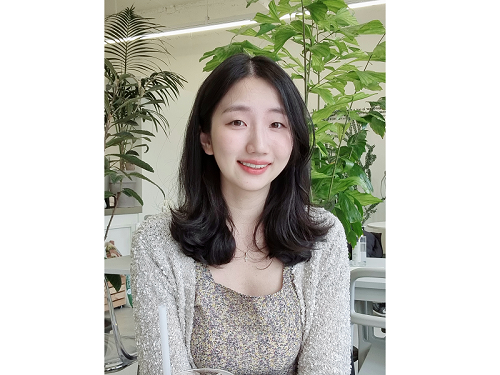 Yuji Roh Awarded 2022 Microsoft Research PhD Fellowship
KAIST PhD candidate Yuji Roh of the School of Electrical Engineering (advisor: Prof. Steven Euijong Whang) was selected as a recipient of the 2022 Microsoft Research PhD Fellowship.
< KAIST PhD candidate Yuji Roh (advisor: Prof. Steven Euijong Whang) >
The Microsoft Research PhD Fellowship is a scholarship program that recognizes outstanding graduate students for their exceptional and innovative research in areas relevant to computer science and related fields. This year, 36 people from around the world received the fellowship, and Yuji Roh from KAIST EE is the only recipient from universities in Korea. Each selected fellow will receive a $10,000 scholarship and an opportunity to intern at Microsoft under the guidance of an experienced researcher.
Yuji Roh was named a fellow in the field of “Machine Learning” for her outstanding achievements in Trustworthy AI. Her research highlights include designing a state-of-the-art fair training framework using batch selection and developing novel algorithms for both fair and robust training. Her works have been presented at the top machine learning conferences ICML, ICLR, and NeurIPS among others. She also co-presented a tutorial on Trustworthy AI at the top data mining conference ACM SIGKDD. She is currently interning at the NVIDIA Research AI Algorithms Group developing large-scale real-world fair AI frameworks.
The list of fellowship recipients and the interview videos are displayed on the Microsoft webpage and Youtube.
The list of recipients: https://www.microsoft.com/en-us/research/academic-program/phd-fellowship/2022-recipients/
Interview (Global): https://www.youtube.com/watch?v=T4Q-XwOOoJc
Interview (Asia): https://www.youtube.com/watch?v=qwq3R1XU8UE
[Highlighted research achievements by Yuji Roh: Fair batch selection framework]
[Highlighted research achievements by Yuji Roh: Fair and robust training framework]
2022.10.28 View 24105
Yuji Roh Awarded 2022 Microsoft Research PhD Fellowship
KAIST PhD candidate Yuji Roh of the School of Electrical Engineering (advisor: Prof. Steven Euijong Whang) was selected as a recipient of the 2022 Microsoft Research PhD Fellowship.
< KAIST PhD candidate Yuji Roh (advisor: Prof. Steven Euijong Whang) >
The Microsoft Research PhD Fellowship is a scholarship program that recognizes outstanding graduate students for their exceptional and innovative research in areas relevant to computer science and related fields. This year, 36 people from around the world received the fellowship, and Yuji Roh from KAIST EE is the only recipient from universities in Korea. Each selected fellow will receive a $10,000 scholarship and an opportunity to intern at Microsoft under the guidance of an experienced researcher.
Yuji Roh was named a fellow in the field of “Machine Learning” for her outstanding achievements in Trustworthy AI. Her research highlights include designing a state-of-the-art fair training framework using batch selection and developing novel algorithms for both fair and robust training. Her works have been presented at the top machine learning conferences ICML, ICLR, and NeurIPS among others. She also co-presented a tutorial on Trustworthy AI at the top data mining conference ACM SIGKDD. She is currently interning at the NVIDIA Research AI Algorithms Group developing large-scale real-world fair AI frameworks.
The list of fellowship recipients and the interview videos are displayed on the Microsoft webpage and Youtube.
The list of recipients: https://www.microsoft.com/en-us/research/academic-program/phd-fellowship/2022-recipients/
Interview (Global): https://www.youtube.com/watch?v=T4Q-XwOOoJc
Interview (Asia): https://www.youtube.com/watch?v=qwq3R1XU8UE
[Highlighted research achievements by Yuji Roh: Fair batch selection framework]
[Highlighted research achievements by Yuji Roh: Fair and robust training framework]
2022.10.28 View 24105 -
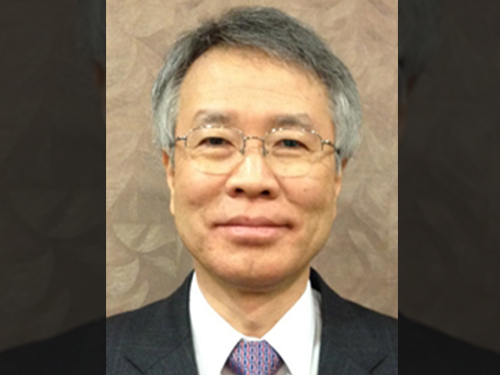 Professor Kyu-Young Whang receives the PAKDD Distinguished Contributions Award
Professor Kyu-Young Whag
Dr. Kyu-Young Whang, Distinguished Professor from the Department of Computer Science, KAIST, has received the 2014 Distinguished Contributions Award from the Pacific-Asia Conference on Knowledge Discovery and Data Mining (PAKDD). PAKDD is the leading academic international conference on data mining held in Asia/Pacific. This year’s international conference was held from 13th to 15th May at Tainan, Taiwan.
As a life member of the PAKDD Steering Committee, Professor Whang worked for the development of the data mining field in the Asia-Pacific region, and his contribution to the international database and data-mining field has been widely recognized.
The PAKDD Distinguished Contributions Award has been awarded to a total of six people until now, including Professor Whang, and he is the first Korean to receive this award.
Professor Whang has also a history of receiving the Outstanding Contributions Award in 2011 from the Database Systems for Advanced Applications (DASFAA), the prestigious database academic conference in the Asia-Pacific region. The database and data mining field in the region was barren 20 years ago, but through the efforts and contributions of many researchers, including Professor Whang, it has now leapt to the level of being the equal of North American and European researchers.
In fact, three academic organizations in the current international database field are led by professors in the Asia-Pacific region. The IEEE ICDE (Institute of Electrical and Electronics Engineers Technical Committee on Data Engineering) is led by Professor Whang; the VLDB (Very Large Data Base) Endowment by Professor Beng Chin Ooi from National University of Singapore (NUS); and the ACM SIGMOD (Association for Computing Machinery Special Interest Group on Management of Data) by Professor Don Kossmann from ETH Zurich.
2014.05.26 View 12582
Professor Kyu-Young Whang receives the PAKDD Distinguished Contributions Award
Professor Kyu-Young Whag
Dr. Kyu-Young Whang, Distinguished Professor from the Department of Computer Science, KAIST, has received the 2014 Distinguished Contributions Award from the Pacific-Asia Conference on Knowledge Discovery and Data Mining (PAKDD). PAKDD is the leading academic international conference on data mining held in Asia/Pacific. This year’s international conference was held from 13th to 15th May at Tainan, Taiwan.
As a life member of the PAKDD Steering Committee, Professor Whang worked for the development of the data mining field in the Asia-Pacific region, and his contribution to the international database and data-mining field has been widely recognized.
The PAKDD Distinguished Contributions Award has been awarded to a total of six people until now, including Professor Whang, and he is the first Korean to receive this award.
Professor Whang has also a history of receiving the Outstanding Contributions Award in 2011 from the Database Systems for Advanced Applications (DASFAA), the prestigious database academic conference in the Asia-Pacific region. The database and data mining field in the region was barren 20 years ago, but through the efforts and contributions of many researchers, including Professor Whang, it has now leapt to the level of being the equal of North American and European researchers.
In fact, three academic organizations in the current international database field are led by professors in the Asia-Pacific region. The IEEE ICDE (Institute of Electrical and Electronics Engineers Technical Committee on Data Engineering) is led by Professor Whang; the VLDB (Very Large Data Base) Endowment by Professor Beng Chin Ooi from National University of Singapore (NUS); and the ACM SIGMOD (Association for Computing Machinery Special Interest Group on Management of Data) by Professor Don Kossmann from ETH Zurich.
2014.05.26 View 12582